
When doctors combine valproate and lamotrigine, they’re not just adding two medications-they’re mixing a chemical pair that can turn a safe treatment into a dangerous one if not handled carefully. The biggest risk? A serious skin rash that can escalate into life-threatening conditions like Stevens-Johnson syndrome or toxic epidermal necrolysis. But here’s the good news: this risk isn’t random. It’s predictable. And it’s preventable-with the right dosing.
Why This Combination Is Risky
Valproate doesn’t just work alongside lamotrigine-it changes how your body processes it. Specifically, valproate blocks the enzyme that breaks down lamotrigine, cutting its clearance by about 50%. That means if you take both drugs, lamotrigine builds up in your blood faster and higher than it should. And when lamotrigine levels spike too quickly, your immune system can react violently. The result? A rash. This isn’t just theory. In the early 1990s, reports of severe rashes and deaths linked to lamotrigine started pouring in. The pattern? Almost all cases happened when lamotrigine was started at normal doses while the patient was already on valproate. Once doctors realized the interaction and changed the dosing rules, the number of serious rashes dropped by over 80%.The Dose That Saves Lives
The standard starting dose for lamotrigine in adults not taking valproate is 25 mg daily. But if you’re on valproate? That dose is too high-and dangerous. The correct starting dose when combining these two drugs is 25 mg every other day. That’s half the usual amount, given only every 48 hours. Why? Because your body can’t clear lamotrigine as fast, so you need to give it more time to process each dose. After the first two weeks, you can increase by 25 mg every two weeks. So:- Weeks 1-2: 25 mg every other day (12.5 mg daily average)
- Weeks 3-4: 25 mg daily
- Weeks 5-6: 50 mg daily
- Weeks 7-8: 75 mg daily
- And so on, slowly
Who’s Most at Risk?
The risk isn’t the same for everyone. Children and adolescents are more vulnerable. Studies show they’re more likely to develop rashes than adults, even when dosed correctly. That’s why some clinics now start as low as 12.5 mg every other day in younger patients. Another big risk factor? Having had a rash from another antiepileptic drug before. If you’ve ever broken out from carbamazepine, phenytoin, or any other seizure med, your odds of reacting to lamotrigine jump by more than three times. Your history matters. And yes-rashes can show up even after you’ve been on the drugs for weeks. Most appear within the first 8 weeks, but cases have been reported as late as 12 weeks. That’s why you can’t just stop checking after the first month.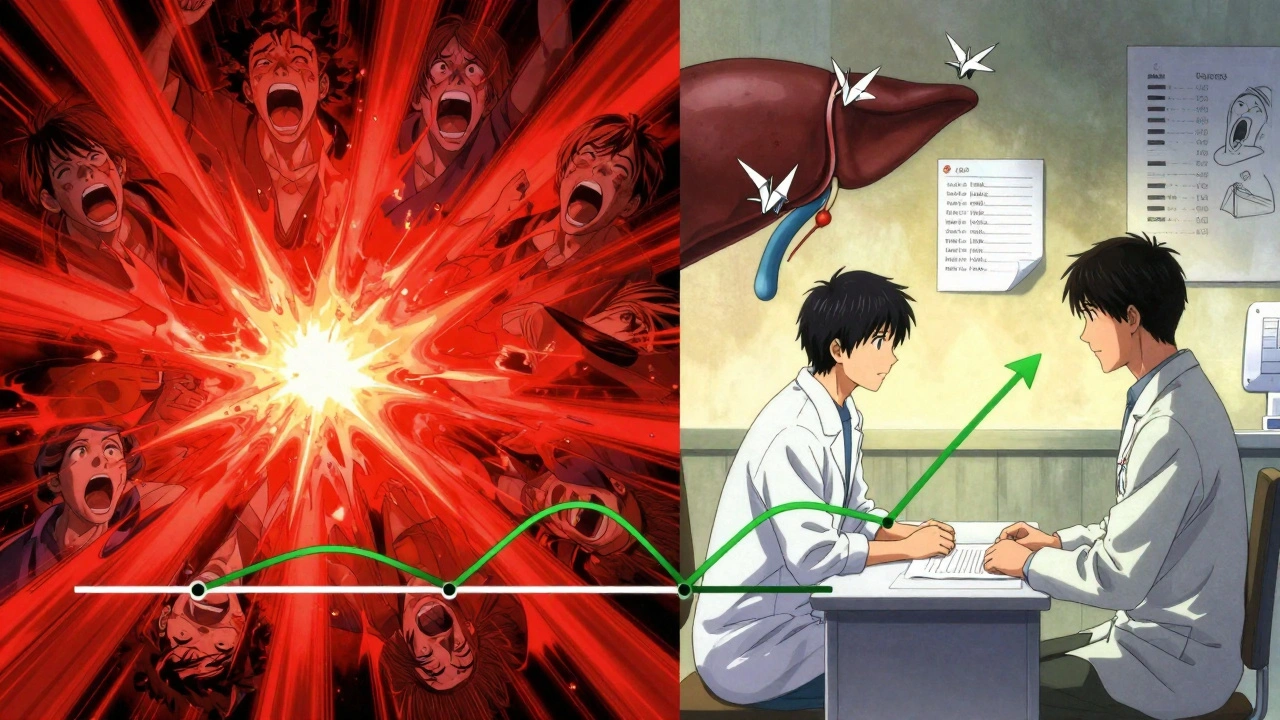
What Does a Dangerous Rash Look Like?
Not all rashes are equal. A mild, itchy red patch might just be a nuisance. But here’s what to watch for:- Rash spreading quickly across the body
- Blisters or peeling skin
- Fever, sore throat, or swollen lymph nodes
- Red or swollen eyes, mouth sores
What Happens After the Rash?
In mild cases, stopping the drugs and taking antihistamines or a short course of steroids can clear things up within days or weeks. No long-term damage. But in severe cases-like Stevens-Johnson syndrome-hospitalization is required. Skin can slough off like a burn. Organs can fail. Mortality rates for the worst cases hit 25-35%. The good news? These severe outcomes are rare now. Since the dosing guidelines changed, the rate of serious lamotrigine rashes in adults has dropped to 0.08-0.13%. That’s less than one in a thousand. But only if the rules are followed.What About Other Medications?
Valproate isn’t the only drug that affects lamotrigine. Other medications like carbamazepine and phenytoin speed up lamotrigine clearance, meaning you might need higher doses. But they don’t raise rash risk the same way valproate does. The interaction with valproate is unique because it’s a metabolic blocker-not a promoter. Also, don’t assume that adding valproate to an already stable lamotrigine dose is safe. That’s a common mistake. Even if you’ve been on lamotrigine for months, adding valproate still changes how your body handles it. You still need to lower the lamotrigine dose and titrate slowly.
Real-World Experience
A 2025 study of 80 young patients on both drugs found only two cases of rash-2.5%. That sounds low. But look closer: those patients were closely monitored. Dosing was conservative. Parents and doctors watched for early signs. That’s the difference between a rare side effect and a medical emergency. In contrast, case reports from before 1993 showed rash rates over 10% when lamotrigine was started at full dose with valproate. The difference isn’t luck. It’s protocol.What Doctors Should Do
If you’re prescribing this combo:- Start lamotrigine at 25 mg every other day
- Never exceed 25 mg weekly increases
- Check in weekly during titration
- Ask about past drug rashes
- Warn patients to stop immediately if rash appears
- Document the dosing plan clearly
The Bottom Line
Valproate and lamotrigine are powerful, effective drugs. Used alone, they’re generally safe. Together, they’re a high-stakes pair. But the risk isn’t about the drugs themselves-it’s about how they’re used. The data is clear: slow, careful dosing cuts rash risk by more than 90%. The guidelines have been around for decades. The science is solid. The deaths have dropped. But they haven’t disappeared. This isn’t a mystery. It’s a lesson. And the lesson is simple: when valproate and lamotrigine are used together, never start high. Always start low. And go slow.Can I take lamotrigine and valproate together safely?
Yes, but only with strict dose adjustments. Lamotrigine must start at 25 mg every other day and be increased slowly-no more than 25 mg every two weeks. Starting at normal doses or increasing too fast greatly increases the risk of a dangerous rash. Always follow your doctor’s titration plan exactly.
How long after starting lamotrigine can a rash appear?
Most rashes appear within the first 8 weeks, but cases have been reported up to 12 weeks after starting. Even after stopping lamotrigine, symptoms can still develop, as seen in a 2023 case where a rash worsened after discontinuation. Stay alert for the first three months.
Is the rash risk higher in children?
Yes. Children and teens are more likely to develop rashes than adults, even with proper dosing. Some clinics now start with 12.5 mg every other day in younger patients. Close monitoring is essential, and any rash should be treated as a medical emergency.
What should I do if I get a rash while on these drugs?
Stop taking lamotrigine immediately and contact your doctor. Do not wait. Do not try over-the-counter creams or antihistamines first. A rash that spreads, blisters, or comes with fever or swollen lymph nodes could be life-threatening. Emergency care may be needed.
Does valproate cause rashes on its own?
Valproate can cause mild skin reactions, but it’s not linked to severe rashes like Stevens-Johnson syndrome. The dangerous skin reactions are almost always tied to lamotrigine. However, when valproate is added to lamotrigine, it increases lamotrigine levels-and that’s what triggers the high-risk reaction.
Are there alternatives to this drug combo?
Yes. If the risk is too high, doctors may switch to other mood stabilizers like lithium or carbamazepine, or use lamotrigine alone. For epilepsy, levetiracetam or oxcarbazepine may be options. The choice depends on your diagnosis, past responses, and other health factors. Never switch meds without medical supervision.




Comments (13)
Sangram Lavte
Just had a patient on this combo last month. Started her at 25mg every other day like the guidelines say. No rash, no issues. Honestly, if more doctors followed this, we wouldn't be having these horror stories. It's not rocket science, just common sense.
Olivia Hand
I've seen this play out in real time. A colleague of mine-brilliant neurologist, terrible at dosing-started a teen on lamotrigine at 50mg daily while she was on valproate. Within 10 days, she had a full-body rash, fever, and ended up in the ICU. It wasn't a fluke. It was negligence dressed up as confidence. The fact that this still happens in 2025 is terrifying.
Ashley Farmer
To anyone reading this: if you're on either of these meds, please don't panic. But do pay attention. Talk to your prescriber. Ask if they're aware of the interaction. If they aren't, it's not your fault-they might not have been trained on it. But you can be the one to bring it up. That one conversation could save your skin-literally.
Louis Llaine
Wow. A whole post about not giving people too much medicine. Groundbreaking. Next up: 'How to avoid drowning by not swimming in the ocean.' I'm sure the FDA is drafting an emergency alert right now.
Jane Quitain
OMG this is so important!! I just started lamotrigine last week and my doc didn't mention anything about valproate! I'm gonna call them right now!! Thank you thank you thank you!! 💕🙏
Sam Mathew Cheriyan
lol the real danger is Big Pharma hiding the truth. Valproate is fine. Lamotrigine is fine. But together? Nah. That's when the FDA starts pushing 'slow titration' like it's some kind of secret. They're just trying to sell you more follow-up visits. I started mine at 100mg day one. Still alive. Just sayin'.
Ernie Blevins
So what? People die. Big deal. The system is broken. You think this post is gonna change anything? Nah. Doctors still dose wrong. Patients still don't read. Nothing changes. Just another clickbait article.
Nancy Carlsen
This is such a vital reminder! 💗 I'm a nurse and I’ve seen too many scary rashes. I always print out this dosing chart and give it to patients. Seriously, if you're on both meds, please, please, please take it slow. Your skin will thank you. 🌸
Ted Rosenwasser
It's amusing how this is presented as some novel insight. The 1993 FDA advisory on lamotrigine-valproate interactions is publicly accessible. The pharmacokinetics were published in JAMA in 1995. Anyone with a PubMed account could've known this. The fact that this is still news in 2025 speaks volumes about medical education-or lack thereof.
Helen Maples
Stop. Just stop. If you're prescribing lamotrigine with valproate and not following this dosing schedule, you're not just being careless-you're endangering lives. Document it. Educate your patients. Follow the protocol. There is no excuse. I've seen the aftermath. It's not worth it.
David Brooks
I almost died from this. I was 19. Started lamotrigine at 50mg, valproate already on board. Rash hit day 8. Fever. Blisters. My skin peeled off my arms like a sunburn. I spent three weeks in the burn unit. My parents cried. I lost a year of school. Don't be me. Start low. Go slow. Your life isn't a gamble.
Jennifer Anderson
i just wanted to say thank you for this. my sister had a rash last year and we had no idea why. now we know. we're gonna show her doctor this. <3
Sadie Nastor
Thank you for sharing this. I'm so glad there are people out there who care enough to write this. I've been on both meds for 2 years now-started slow like you said-and zero issues. I'm alive because of these guidelines. 🌻