Most people think melatonin is a sleeping pill. It’s not. It’s a melatonin signal - your body’s way of saying, "It’s dark. Time to wind down." If you’ve ever taken 5mg or 10mg of melatonin and woke up groggy, had weird dreams, or still couldn’t fall asleep, you’re not alone. You’re just using it wrong. Melatonin doesn’t knock you out like Ambien. It doesn’t force sleep. It quietly shifts your internal clock. And when used right, it can fix jet lag, shift work chaos, or a delayed sleep schedule in weeks - not nights. The problem? Most supplements on the shelf are wildly overdosed. The average person’s body makes less than 0.3mg of melatonin naturally at night. Yet you can walk into any drugstore and grab a 5mg, 10mg, or even 20mg pill. That’s like pouring a gallon of water into a coffee cup and wondering why it spills everywhere. Here’s what actually works - backed by science, not marketing.
How Melatonin Actually Works in Your Body
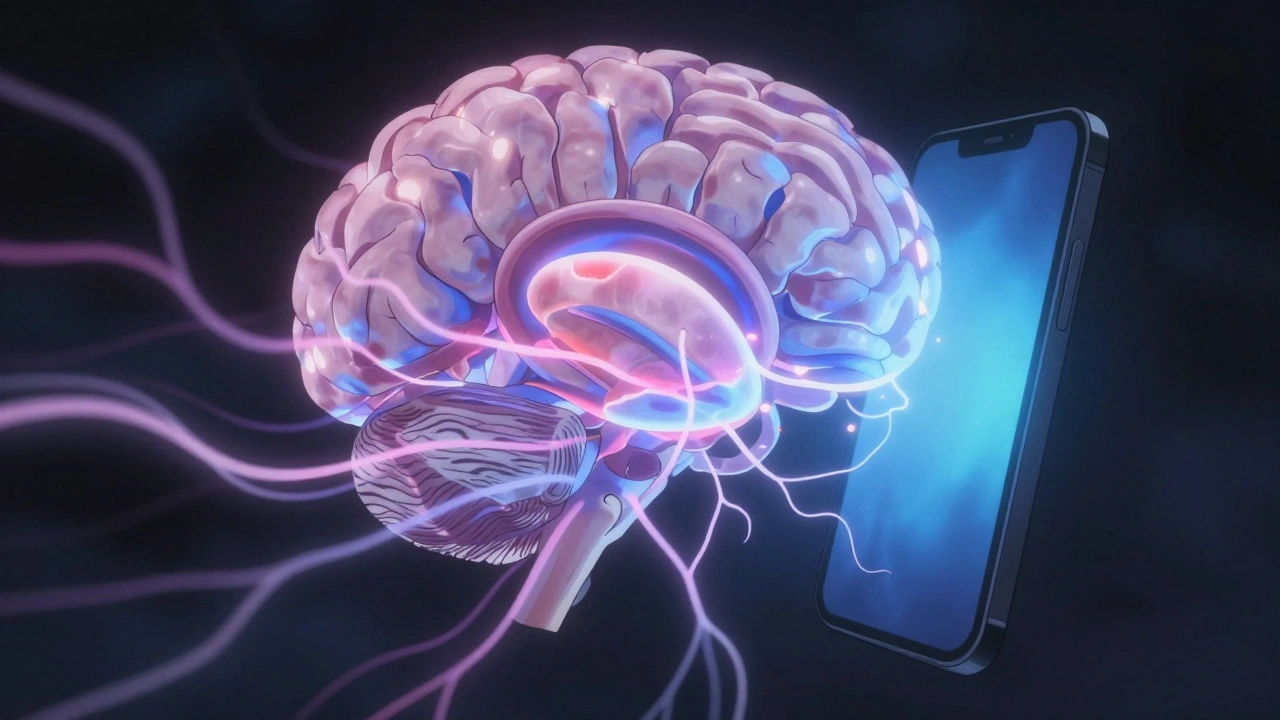
Melatonin is made in your pineal gland, a tiny pea-sized structure deep in your brain. It’s not a sedative. It’s a timekeeper. Every night, as the sun sets and light fades, your body starts producing melatonin. Levels begin rising around 9 PM, peak between 2 and 4 AM, and drop before sunrise. This rhythm isn’t random. It’s tied to light. Even a little blue light from your phone or LED lamp can shut melatonin production down. That’s why scrolling in bed makes it harder to fall asleep - your brain thinks it’s still daytime. Melatonin works by binding to two receptors in your brain’s master clock: MT1 and MT2. MT1 tells your brain to calm down, lower your core body temperature by about half a degree, and make you feel sleepy. MT2 resets your internal clock. That’s why timing matters more than dose. Take melatonin too late, and you push your sleep cycle even later. Take it too early, and you might wake up too soon. Unlike prescription sleep pills that flood your brain with GABA (a calming chemical), melatonin works with your natural biology. That’s why it doesn’t cause dependence, withdrawal, or next-day brain fog - when used correctly.When Melatonin Actually Works (and When It Doesn’t)
Melatonin isn’t a cure-all. It’s a precision tool. Here’s where it shines:- Jet lag (especially eastbound): Flying from New York to Tokyo? Your body thinks it’s 8 PM when it’s really 8 AM. Taking 0.5mg of melatonin at local bedtime for 2-3 days after arrival can shift your clock forward by 1-2 hours. Studies show people adjust in 2-3 days instead of 5-7.
- Delayed sleep phase syndrome (DSPS): If you’re the type who can’t fall asleep until 2 AM and can’t wake up before noon, you likely have DSPS. Melatonin taken 2-3 hours before your desired bedtime - say, 9 PM if you want to sleep at 11 PM - can gradually move your sleep schedule earlier. Research shows it can shift sleep onset by up to 40 minutes and melatonin release by over an hour.
- Shift work disorder: If you work nights and need to sleep during the day, melatonin can help signal nighttime to your brain - especially when paired with blackout curtains and avoiding morning light.
But here’s where it fails:
- General insomnia without a circadian issue: If you lie awake because you’re anxious, stressed, or your bedroom is too bright or noisy, melatonin won’t fix that. It doesn’t reduce racing thoughts or calm a hyperactive mind.
- Chronic sleep maintenance problems: If you fall asleep fine but wake up at 3 AM and can’t get back to sleep, melatonin isn’t the answer. It doesn’t help you stay asleep.
Studies show melatonin reduces sleep onset time by about 7 minutes on average - not enough to matter for most people with normal sleep cycles. But for those with misaligned clocks? That 7 minutes can mean the difference between sleeping and staying up all night.
The Dose That Actually Works
Forget the 5mg pills. You don’t need them. Your body naturally produces between 0.1mg and 0.3mg of melatonin at night. That’s the amount your receptors are designed to respond to. Studies show that doses as low as 0.3mg are just as effective as 3mg for shifting circadian rhythms - and far less likely to cause side effects. The American Academy of Sleep Medicine recommends starting with 0.3mg to 0.5mg, taken 2-3 hours before your target bedtime. If that doesn’t help after 3-5 days, go up to 1mg. Anything above 3mg? No extra benefit. Just more risk. Why do so many people take too much? Because most supplements are labeled with 3mg, 5mg, or 10mg. That’s not because it’s better - it’s because it sells better. ConsumerLab tested 25 top-selling melatonin products in 2022 and found that 60% contained more than what was listed on the label. One pill claimed 3mg but actually had 10.4mg. Stick to brands that use third-party testing (like NSF Certified or USP Verified). Look for “sublingual” or “slow-release” forms if you want a steadier effect. And never take more than 1mg unless you’re under a doctor’s supervision.
Timing Is Everything
Dosing wrong is the #1 reason melatonin fails. If you take melatonin at 11 PM and you want to sleep at 11 PM, you’re too late. You’re already in your biological night. You’re not resetting your clock - you’re just making yourself drowsy. And if you take it at 1 AM? You might delay your rhythm even more. For jet lag east: Take melatonin at your destination’s bedtime, 1-2 days before you leave and for 3-4 days after arrival. For jet lag west: Take it at bedtime after you arrive. You don’t need to shift forward - just avoid bright light in the morning. For DSPS: Take it 2-3 hours before your desired bedtime. If you want to sleep at 11 PM, take it at 8 PM. Do this daily for 2-3 weeks. Your body will start to anticipate it. And here’s a pro tip: Take it in complete darkness. Even a nightlight can interfere. Use blackout curtains. Put your phone in another room. Your pineal gland doesn’t care if you think you’re “just checking one thing.” It sees the light.Side Effects and Risks
Melatonin is safe for short-term use in most adults. But it’s not harmless. The most common side effects (reported in over 3,000 user reviews):- Next-day drowsiness (28%)
- Vivid dreams or nightmares (22%)
- Headaches (15%)
- Dizziness or nausea (8%)
These are almost always linked to high doses. If you’re waking up foggy, cut your dose in half.
Long-term use? Some people report reduced effectiveness after 4-8 weeks. This might be due to receptor desensitization - your brain gets used to the signal. That’s why many experts recommend cycling: 2-4 weeks on, 1-2 weeks off.
Melatonin isn’t for everyone. Avoid it if you’re pregnant, breastfeeding, or have an autoimmune disease. It can interact with blood thinners, diabetes meds, and immunosuppressants. Talk to your doctor if you’re on any regular medication.
Why the Market Is a Mess
In the U.S., melatonin is sold as a dietary supplement. That means the FDA doesn’t test it for purity, potency, or safety before it hits shelves. A 2023 Consumer Reports analysis found that only 28% of top-selling melatonin products gave clear instructions on when to take them. Many didn’t even mention dosage timing. Meanwhile, in the UK, Canada, and most of Europe, melatonin is a prescription drug. That’s because regulators there understand: this isn’t candy. It’s a hormone. The U.S. market is booming - sales hit $1.17 billion in 2022. But with little oversight, you’re gambling on quality. Look for products with “USP Verified” or “NSF Certified” on the label. Those brands undergo independent testing.What’s Next for Melatonin?
Researchers are now developing smarter versions of melatonin. Agomelatine, used in Europe for depression and sleep, targets specific receptors to avoid drowsiness. Tasimelteon helps blind people with no light perception maintain a sleep schedule. The National Institutes of Health is funding trials to see if melatonin helps with Alzheimer’s-related sleep disruption, long COVID fatigue, and even IBS. Early results are promising. The future isn’t about bigger doses. It’s about personalized timing. Some people’s melatonin levels peak at 9 PM. Others at 11 PM. Specialized clinics can test your “dim light melatonin onset” (DLMO) to find your exact rhythm. That’s the real frontier - using melatonin not as a blunt tool, but as a precision instrument.What to Do Right Now
If you’re struggling with sleep:- Ask yourself: Is my problem falling asleep too late? Or just not being able to fall asleep at all?
- If it’s the former - you’re a night owl who can’t shift earlier - try melatonin.
- Buy a 0.5mg or 1mg tablet. Not 5mg. Not 10mg.
- Take it 2-3 hours before your target bedtime. In the dark.
- Stick with it for 2-3 weeks. Don’t expect magic on night one.
- If you feel groggy the next day, lower the dose.
If you’re still awake at 2 AM after a week? Melatonin isn’t your answer. Look at sleep hygiene: no screens before bed, cool room, consistent wake time. Those matter more than any supplement.
Can melatonin help with jet lag?
Yes - especially for eastward travel. Take 0.3mg to 1mg at your destination’s bedtime for 2-3 days before and after flying. This helps your body adjust faster than waiting for natural adaptation. Studies show travelers recover in 2-3 days instead of 5-7.
Is 5mg of melatonin too much?
Yes. Your body naturally produces less than 0.3mg at night. Doses above 1mg offer no extra benefit for most people and increase the risk of next-day drowsiness, vivid dreams, and headaches. Many supplements contain far more than labeled - so 5mg could actually be 10mg. Start with 0.5mg.
Can you become dependent on melatonin?
Unlike prescription sleep pills, melatonin doesn’t cause physical dependence or withdrawal. But some people report reduced effectiveness after weeks of daily use, possibly due to receptor desensitization. Cycling - taking it for 2-4 weeks, then stopping for 1-2 weeks - can help maintain effectiveness.
Does melatonin help with insomnia?
Only if your insomnia is tied to a circadian rhythm issue, like delayed sleep phase syndrome. For general insomnia caused by stress, anxiety, or poor sleep habits, melatonin has little to no effect. Focus on sleep hygiene, light exposure, and routine instead.
When should I take melatonin for best results?
Take it 2-3 hours before your desired bedtime. For example, if you want to sleep at 11 PM, take it at 8 PM. Taking it too late (after 10 PM) can delay your sleep cycle instead of advancing it. Always take it in darkness - even small amounts of light can interfere.
Are melatonin supplements regulated?
In the U.S., melatonin is sold as a dietary supplement, so the FDA doesn’t test it for accuracy or safety before sale. A 2022 ConsumerLab study found that 60% of products contained more than labeled amounts - some up to 478% more. Look for USP Verified or NSF Certified labels for reliable dosing.
Can kids take melatonin?
Some pediatricians prescribe low-dose melatonin for children with autism or ADHD who have sleep onset issues. But it should only be used under medical supervision. Long-term effects on developing brains aren’t fully known. Never give melatonin to a child without consulting a doctor.




Comments (14)
Mellissa Landrum
lol so now the gov is putting fluoride in the water AND melatonin in the supplements to make us docile? 5mg pills? that's exactly what they want you to take so you're too zombied out to question anything. i took 0.5mg and woke up screaming at my ceiling like i'd seen the matrix. they're testing us.
Manish Shankar
Thank you for this meticulously researched and scientifically grounded exposition. The distinction between circadian regulation and pharmacological sedation is profoundly important, and your clarification regarding physiological melatonin production versus commercial dosage inflation is both timely and commendable. One must exercise great caution with endocrine modulation, especially in the absence of regulatory oversight.
luke newton
People are just too lazy to fix their sleep hygiene so they pop a chemical crutch like it's candy. You think your phone light is the problem? Nah. It's because you're a 32-year-old man still scrolling TikTok at 2am like a teenager. Go to bed at a decent hour. Turn off the screens. Read a book. Or better yet-get a real job with real hours. Stop blaming the supplement industry for your lack of discipline.
Lynette Myles
60% of supplements are mislabeled. That's not a glitch. That's a crime.
Marvin Gordon
Finally someone who gets it. I used to take 10mg like it was a gummy bear. Woke up like a zombie who lost a fight with a toaster. Tried 0.5mg at 8pm, no screens after 9, blackout curtains. Slept like a baby by week two. No more 3am panic-scrolling. It’s not magic. It’s biology. And your brain isn’t broken-it’s just confused.
ashlie perry
they're putting it in the water and the supplements because they know we're waking up too early and seeing too much
Juliet Morgan
omg i was taking 5mg and wondering why i had nightmares about talking squirrels. switched to 0.5mg and now i just feel... quiet. like my brain finally got the memo. also i started putting my phone in the kitchen. best decision ever. you’re not failing sleep. the system is just rigged.
Harry Nguyen
Oh wow. A 1500-word essay on why you shouldn't take melatonin. And yet you still sell it. How generous. Maybe if you didn't live in a country where everything is a supplement and nothing is a medicine, you'd understand that this isn't a moral failing-it's a regulatory failure. But hey, at least you can buy it at Walmart next to the energy drinks.
Deborah Jacobs
It’s like your body’s whispering, "hey, it’s dark now," and instead of listening, you scream into the void with a megaphone made of sugar-coated pills. I used to think melatonin was my sleep fairy. Turns out it was just a shy little ghost trying to turn off the lights-and I kept shining a flashlight in its face. Now I take a pea-sized dose at dusk, and for the first time in years, I don’t feel like I’m fighting my own brain.
Kylee Gregory
It’s fascinating how we’ve turned a biological rhythm into a consumer product. We don’t just want to sleep-we want to optimize sleep. But maybe the answer isn’t more precision, but less interference. Let the dark do its work. The body knows more than the label.
Lucy Kavanagh
you know the NHS in the uk won’t give you melatonin without a prescription? that’s because they know what’s really going on. here in the us you can buy it next to the gummy vitamins like it’s a candy bar. but i bet you didn’t know the same companies that make melatonin also make the blue light filters they tell you to use? it’s all one big loop. they want you dependent on their products to fix the problems their products created.
Krishan Patel
It is a profound tragedy of modernity that the human organism, which has evolved over eons to synchronize with celestial cycles, is now forced to self-medicate with synthetic hormonal analogues due to the collective moral decay of screen addiction and circadian neglect. You do not need melatonin. You need a conscience. You need discipline. You need to turn off the damn phone.
sean whitfield
0.5mg? how cute. i take 10mg and still wake up at 3am wondering if the moon is watching me. also my cat meows louder now. coincidence? i think not.
Carole Nkosi
you think this is about sleep? it's about control. they don't want you to be awake at night thinking. they want you tired. docile. asleep before you can question anything. melatonin is the new kool-aid. and you're drinking it.