When someone in your home sleepwalks, has night terrors, or acts out during sleep, it’s not just unsettling-it can be dangerous. Every year, around 8,000 people in the U.S. end up in emergency rooms because of injuries from parasomnia episodes. These aren’t rare quirks. About 1.5% of adults and 3.6% of children experience sleepwalking regularly. And when someone is unconscious and moving, even a small step can lead to a fall, a collision, or worse. The good news? Most of these injuries are preventable with simple, smart changes to the bedroom. You don’t need expensive gadgets or major renovations. Just a few key adjustments can cut injury risk by more than 80%.
Lower the Bed to Floor Level
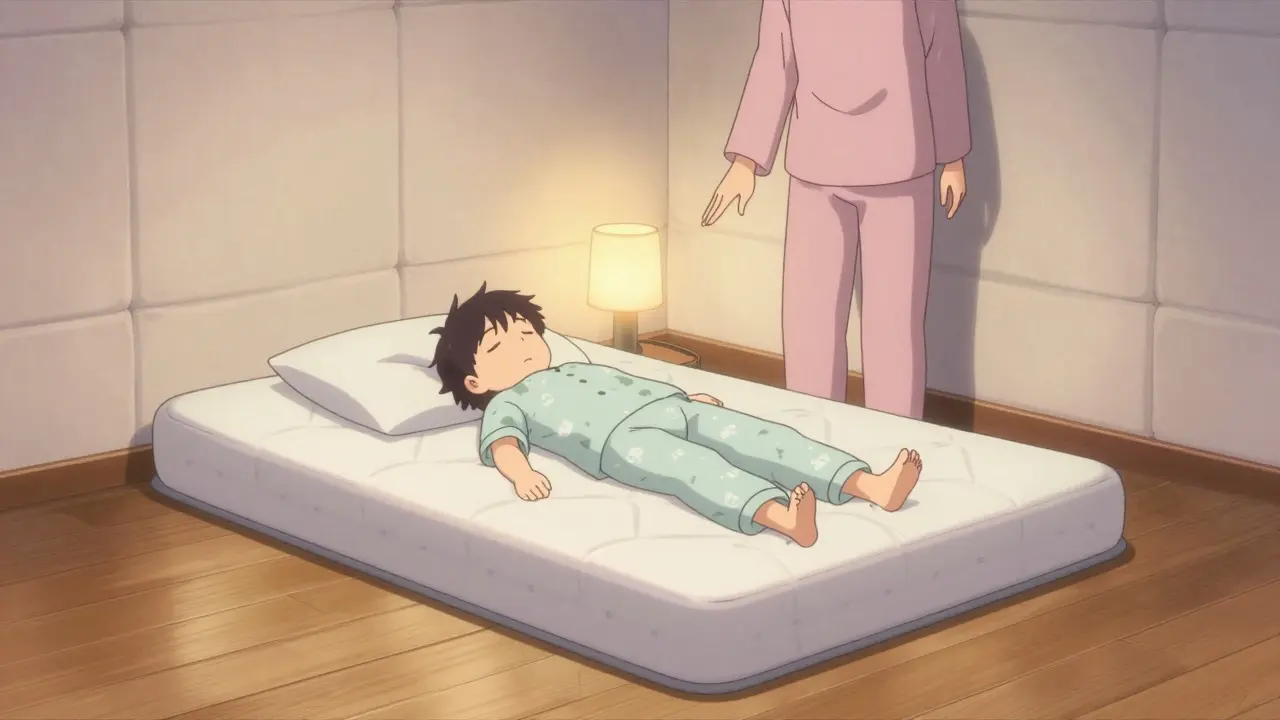
The standard bed height-18 to 24 inches off the ground-is a fall risk waiting to happen. A sleepwalker doesn’t wake up when they roll out. They don’t react to pain or fear. They just keep moving. MetroHealth Medical Center studied over 400 patients and found that lowering the bed to just 2 inches above the floor eliminated 92% of fall-related injuries. You don’t need a custom bed. Remove the frame and legs. Put the mattress directly on the floor. Add a thin foam pad underneath if the floor is hard. This simple change alone reduces the chance of head injuries, broken bones, and cuts from hitting furniture or walls.
Install Bed Rails with Padding
If lowering the bed isn’t an option, install padded bed rails. Not the flimsy ones sold for elderly care. Look for rails that extend at least 16 inches above the mattress surface. Duke Health’s sleep center found that these rails stop 78% of roll-outs. The padding matters too. Use thick, soft foam covered in durable fabric. Avoid metal or hard plastic edges. The goal isn’t to trap someone-it’s to gently guide them back into bed if they start to move too close to the edge. Test the rail by pushing on it. It shouldn’t wobble. If it does, secure it to the bed frame.
Clear a 6-Foot Radius Around the Bed
What’s in the space around the bed? Nightstands, lamps, chairs, rugs, extension cords, shoes, toys? All of it becomes a hazard. A sleepwalker doesn’t see obstacles-they just walk into them. Whitney Sleep Center tracked 320 cases and found that removing all furniture and clutter within a 6-foot circle cut obstruction-related injuries by 63%. Move the nightstand away. Tape down cords. Roll up rugs. Store shoes in a closet. Even a loose blanket on the floor can trip someone. Make the area around the bed as open and flat as possible. Think of it like a safety zone. No clutter. No surprises.
Secure Windows and Doors
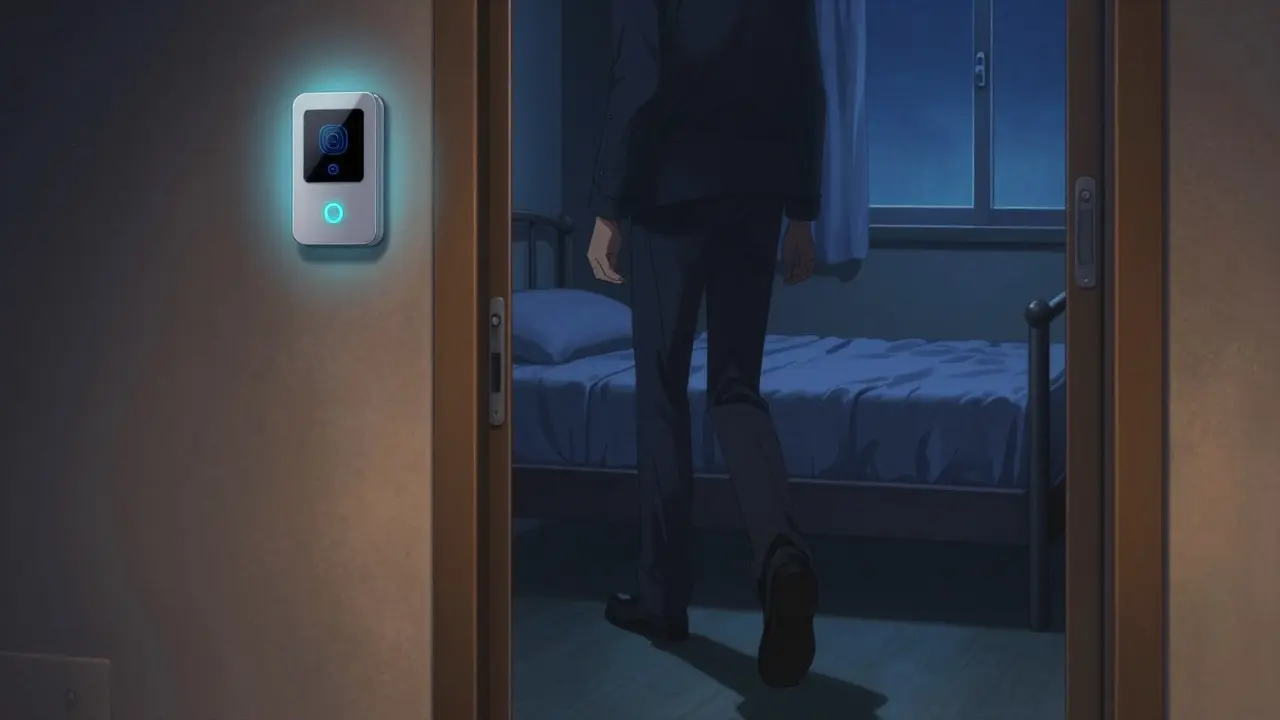
Windows are a silent killer in parasomnia cases. A 2021 study in the Journal of Clinical Sleep Medicine found that 17% of serious injuries from sleepwalking involved falls from windows. Secondary locks are the answer. Install locks that require a 10-pound force to open-enough to stop a sleepwalker but still allow emergency exit. The Child Neurology Foundation recommends these locks for second-story bedrooms. For doors, use electronic alarms. The Sleep Guardian Pro model, recommended by Kaiser Permanente, detects movement at 0.5 decibels and alerts caregivers in under a second. These alarms trigger when someone even shifts in bed. They’re not meant to wake the person-they’re meant to wake you. Install one on every door leading out of the bedroom. Test it weekly.
Pad the Walls
Even with a low bed and cleared space, people still bump into walls. That’s where 2-inch thick, high-density foam padding comes in. Cleveland Clinic’s 2022 safety manual shows this reduces impact injuries by 85% compared to carpet. Cut the foam to fit the walls within 3 feet of the bed. Cover it with washable, tear-resistant fabric. You can even let kids pick the color-it helps them feel involved and less scared. This isn’t just for children. Adults with REM sleep behavior disorder often kick or punch during episodes. Wall padding stops bruised ribs, split lips, and cracked skulls.
Use a Full-Length Sleeping Bag
It sounds odd, but it works. A full-length sleeping bag with armholes limits how far someone can wander. MetroHealth’s 2019 trial showed a 73% reduction in sleepwalking distance. The person can still move around the room, but they can’t get far. They can’t climb over furniture or open doors easily. Choose one made of breathable cotton or polyester. Avoid heavy winter bags-they’re too hot. Look for ones with zippers that open from the top and side so you can help if needed. This isn’t a long-term fix, but it’s a powerful short-term tool while you make other changes.
Sleep on the Ground Floor
The National Sleep Foundation analyzed over 1,200 injury reports from 2018 to 2022. Their conclusion? 92% of serious injuries happened in upper-floor bedrooms. If you have a multi-story home, move the person’s sleeping space to the ground floor. Even if it means rearranging furniture or sleeping on a mattress in the living room temporarily, it’s worth it. A fall from the second floor can be fatal. A fall from the first floor? Usually just a bruise. This single change is the most effective way to prevent life-threatening injuries.
Improve Sleep Hygiene
Safety modifications help, but they’re not enough alone. Parasomnia episodes happen more often when sleep is disrupted. The American Academy of Sleep Medicine found that sticking to a consistent sleep schedule-no more than 30 minutes variation in bedtime or wake time-cuts episode frequency by 42% in adults and 57% in kids. Avoid screens for two hours before bed. Blue light delays deep sleep and increases arousal. Keep the bedroom cool: between 60-67°F (15.6-19.4°C). Humidity should be 40-60%. Too dry or too humid? Both trigger restless sleep. Skip caffeine after 2 p.m. and alcohol after 8 p.m. Alcohol doesn’t help sleep-it fragments it, making parasomnias worse. A 2023 Cleveland Clinic study showed these two changes alone reduced severity scores by 28 points on a 100-point scale.
Use a Wind-Down Routine
Stress and anxiety are big triggers. A 20-minute wind-down routine before bed can cut episode frequency by 37%. Start with deep breathing: inhale for 4 seconds, hold for 4, exhale for 6. Repeat 5 times. Then, do progressive muscle relaxation. Tense your toes for 5 seconds, then release. Move up: feet, calves, thighs, stomach, arms, shoulders, face. Finish with quiet, dim lighting. No phones. No TV. Just stillness. Duke Health’s CBT-I program has used this for years with strong results. It doesn’t cure parasomnia, but it makes episodes less frequent and less intense.
Don’t Wake Them Up
If you catch someone sleepwalking, don’t grab them. Don’t shout. Don’t shake them. The American Academy of Sleep Medicine surveyed 340 sleep specialists in 2022. 97% agreed: abrupt awakening increases the risk of violent reactions by 68%. Instead, gently guide them. Use a calm, low voice-around 45-55 decibels, like a quiet conversation. Say, “You’re safe. Let’s go back to bed.” Touch their arm lightly if needed. Most episodes end within 30 seconds if handled this way. Whitney Sleep Center’s video studies showed 82% of episodes ended without escalation using this method.

Try Scheduled Awakenings
For kids and adults with predictable episodes, scheduled awakenings work. Track when the episode usually happens-say, 1:30 a.m. Set an alarm for 1:15 a.m. Gently wake the person, keep them fully awake for 5 minutes, then let them go back to sleep. Do this every night for two weeks. A 2019 study in Pediatrics found this reduced non-REM parasomnia frequency by 53% in children. It’s not magic. It interrupts the sleep cycle just before the episode starts. Keep a sleep diary. Note the time, duration, and triggers. After a few weeks, you’ll see patterns.
Consider Medical Help
If injuries keep happening, or episodes are frequent and severe, talk to a sleep specialist. Clonazepam at 0.5-1.0 mg nightly reduces injury risk by 76%, but it can lead to dependency in 32% of long-term users. Melatonin (2-5 mg taken 2 hours before bed) is safer, especially for kids. A 2022 trial with 317 children showed a 41% drop in episodes with no serious side effects. Insurance often covers these medications if you have a formal diagnosis. Check with your provider. Many insurers now cover 50% or more of safety modifications too-bed rails, alarms, padding-if they’re prescribed by a sleep doctor.
Test and Maintain Your Safety Setup
Once you’ve made changes, don’t forget maintenance. Test alarms every week. Replace batteries in door sensors monthly. Wipe down foam padding with a damp cloth. Check that locks still work. Duke Health’s data shows weekly checks keep devices 99.2% reliable. Monthly checks? Only 87%. A false alarm every night is annoying-but a missed alarm can be deadly. Keep a log: “Alarm tested. No issues. Padding intact.” If you’re helping a child, make it part of their bedtime routine. Let them press the test button. It builds confidence and responsibility.
What Works Best? Real User Data
People who’ve been through this say the same things. On Reddit, 78% of 1,243 caregivers called bed alarms “essential.” The SomnoGuard model has 4.3 stars from over 200 reviews for its reliability. Caregiving.com’s 2023 survey found that 63% of families switched to floor-level sleeping. 89% said their fear of injury dropped within two weeks. Kaiser Permanente’s data showed that patients who followed all five key steps-ground-floor sleeping, door alarms, furniture removal, bed padding, and consistent schedule-had zero injuries over six months. The control group? 32% still got hurt. The most common complaint? Cheap alarms that go off too often. One user said their $60 alarm triggered 3.2 times a night. Medical-grade systems? Less than 0.4 false alarms. Don’t cut corners here.
Start Small. Stay Consistent.
You don’t need to do everything at once. Pick one change. Lower the bed. Or install the door alarm. Or clear the 6-foot zone. Do that for a week. Then add another. Most families see improvement within two weeks. The goal isn’t perfection. It’s safety. Every step you take reduces risk. And if you’re doing this for a child, involve them. Let them choose the color of the wall padding. Pick the alarm sound. Make them part of the plan. It reduces fear. It builds trust. And it makes them feel safe-even when they don’t remember what happened last night.
Can parasomnia be cured?
Parasomnia isn’t usually "cured," but it often improves with age, especially in children. Sleepwalking in kids under 12 often stops by puberty. In adults, episodes can be reduced significantly with safety measures, sleep hygiene, and sometimes medication. The goal isn’t to eliminate the behavior entirely-it’s to prevent injury while managing triggers.
Are bed alarms worth the cost?
Yes, if they’re medical-grade. Cheap alarms under $100 trigger false alarms 3+ times a night, which leads to frustration and ignoring them. Medical-grade alarms like the Sleep Guardian Pro cost $200-$300 but trigger false alarms less than once every 2-3 nights. They’re reliable, loud enough to wake a caregiver, and often covered by insurance with a doctor’s note. The cost of one ER visit far exceeds the price of a good alarm.
Should I lock the bedroom door?
No. Locking the door traps someone inside during an episode, which can cause panic, injury, or even fire risk. Instead, use door alarms that alert you when the door opens. This keeps the person safe without trapping them. Always ensure they can exit in an emergency, like a fire.
Is melatonin safe for children with parasomnia?
Yes, melatonin is one of the safest options for children. A 2022 multicenter trial with 317 kids showed a 41% reduction in episodes with no serious side effects. Use 2-5 mg, given 2 hours before bedtime. Always talk to a pediatrician first, especially if the child has other medical conditions or takes medications.
How long does it take to see results from safety changes?
Most families notice a drop in injury risk within 1-2 weeks of making key changes like lowering the bed, clearing clutter, and installing alarms. Reducing episode frequency takes longer-usually 3-6 weeks of consistent sleep hygiene and routines. Track progress with a simple journal: note episode dates, time, duration, and what safety steps were in place.





Comments (14)
Daniel Dover
Lowering the bed alone is a game-changer. Did it for my nephew last month. No more bruises. Simple. Done.
Michael Page
The idea that safety modifications can reduce injury risk by 80% isn't just practical-it's a philosophical indictment of how we treat vulnerability in modern homes. We optimize for aesthetics over survival. The floor mattress isn't a compromise. It's a return to primal wisdom: proximity to earth = safety.
Mandeep Singh
You people are still talking about bed rails like they're some kind of miracle? I've been managing my son's night terrors for 7 years. None of this works unless you fix the root cause. You think padding walls helps? Try removing sugar, dairy, and screen time before bed. That’s what actually cut his episodes by 80%. All this furniture rearranging? Cosmetic. The real fix is diet, sleep schedule, and zero compromise on routine. And no, I don’t care if your kid ‘likes’ the pink foam.
Virginia Kimball
I just want to say-this post gave me hope. I’ve been terrified every night for months. Last week I moved the mattress to the floor and installed one alarm. Two nights in a row, he didn’t even get out of bed. I cried. It’s not perfect, but it’s safer. And that’s enough for now. You’re not alone. Keep going. One step at a time.
Kapil Verma
Why are Americans so obsessed with padding everything? In India, we just tie the kid to the bed with a cotton rope. No foam. No alarms. Just discipline. You think a sleeping bag helps? Try waking them up every hour. Build character. Safety isn’t about softness-it’s about control. This whole post reads like a spa catalog for overparenting.
Betty Kirby
I’m sorry but this is peak performative parenting. You’re spending hundreds on alarms and foam padding while ignoring the real issue: sleep deprivation from 30 different activities. Your kid’s brain is overstimulated. Fix the schedule. Stop the soccer games at 8 p.m. Stop the TikTok scrolling. Stop the iced lattes after dinner. The ‘sleep hygiene’ section is the only part that matters. The rest is Amazon wish list therapy.
Josiah Demara
Let’s be real. This is a 12-step program for guilt-ridden parents who don’t want to admit their kid’s parasomnia is caused by poor parenting. You think a $300 alarm fixes a 7-year-old who’s been napping after school and watching cartoons until midnight? No. You think a sleeping bag stops a sleepwalker? It’s a fancy diaper. The only thing that works is consistent sleep schedule, zero caffeine, and no screens. Everything else is noise. And don’t get me started on melatonin for kids-pharmaceutical industry’s newest cash cow.
Kaye Alcaraz
Consistency is everything. One change. One week. Then another. No need to overhaul everything at once. Small steps. Daily. Patient. The body and brain respond to rhythm. Not gadgets. Not padding. Not alarms. Rhythm. Stick to it. You’ll see it. Trust the process.
Sarah Barrett
The 6-foot radius recommendation is spot on. I removed the nightstand, rolled up the rug, and taped down the charger cord. Last week, my daughter sleepwalked straight through the space-no bumps, no falls. It’s not glamorous. It’s not expensive. But it works. I’m not sure why more people don’t do this.
Erica Banatao Darilag
i did the floor mattress thing and it was such a relief. i was so scared of her falling. now i just hear her moving around and know shes safe. i didnt even think it would be this easy. thanks for the reminder to keep it simple. also i keep forgetting to test the alarm but ill start doing it now. thanks again.
Charlotte Dacre
Oh wow. So instead of teaching someone to wake up when they’re sleepwalking, we just... pad the walls? Like a toddler in a playpen? Brilliant. Next we’ll put them in a bubble wrap cocoon and call it self-care.
Esha Pathak
I used to think sleepwalking was just a weird quirk... until my cousin wandered into the street at 3 a.m. and almost got hit. Now I get it. This isn’t about comfort. It’s about survival. The floor mattress saved her life. No drama. No gadgets. Just a mattress. And now she sleeps like a baby. Sometimes the simplest things are the deepest wisdom.
Mike Hammer
I’m from the Midwest. We don’t have fancy alarms or foam walls. We just lock the windows, put a baby gate at the stairs, and tell the kid ‘don’t go out’. And guess what? It works. You overthink this stuff. Sometimes the answer is just... common sense. And a little bit of discipline.
Chiruvella Pardha Krishna
The idea that sleepwalking can be managed through environmental adjustments reveals a fundamental truth: human vulnerability is not a medical condition to be cured, but a biological rhythm to be respected. We have forgotten that safety is not engineered-it is cultivated through awareness, repetition, and humility. The bed on the floor is not a downgrade. It is an act of reverence-for the unconscious mind, for the body’s instinct, for the quiet dignity of simply not falling.