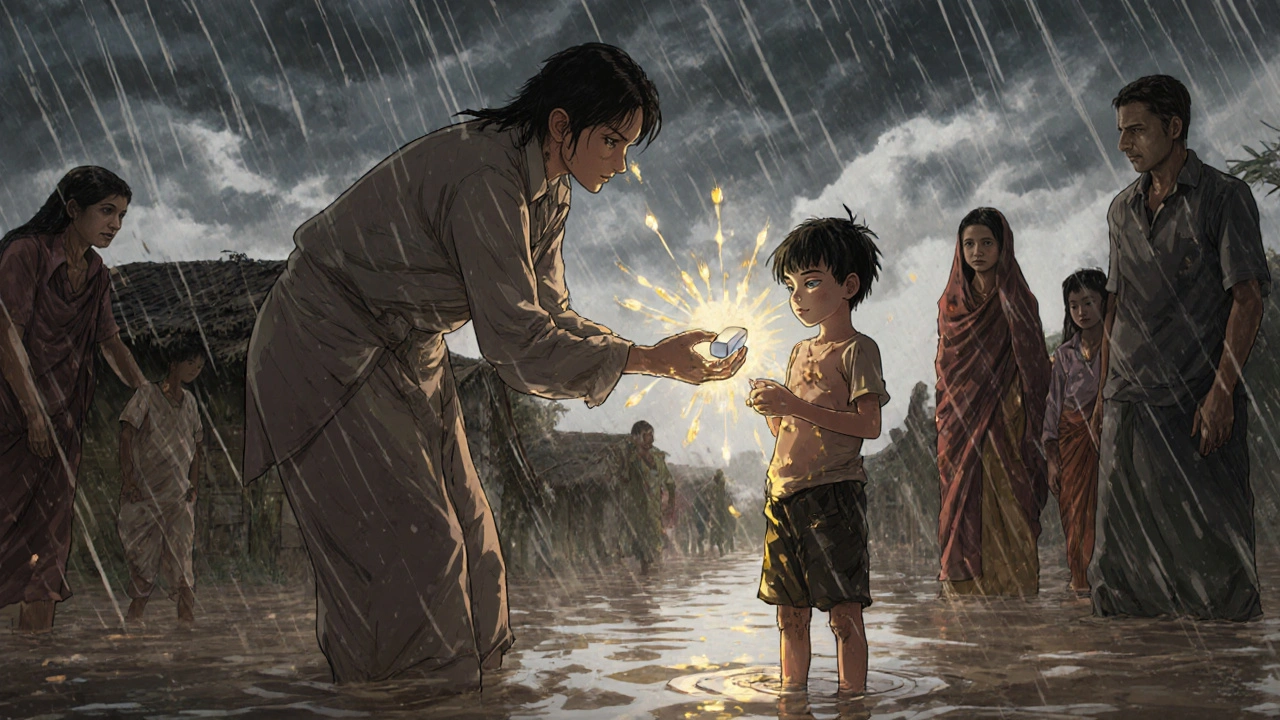
When a flood sweeps through a remote village in Bangladesh, or a war displaces thousands in Sudan, one of the first health threats isn’t always the injury or the lack of clean water-it’s the parasites. Hookworms. River blindness. Scabies. Lymphatic filariasis. These aren’t just uncomfortable-they’re debilitating, contagious, and often deadly in crowded, unsanitary conditions. That’s where ivermectin comes in.
What Ivermectin Actually Does
Ivermectin isn’t a cure-all. It doesn’t treat viruses, bacteria, or most common infections. But for a specific group of parasites-roundworms, mites, and lice-it’s one of the most effective tools available. It works by paralyzing and killing the larvae and adult forms of these organisms inside the body. A single oral dose can clear scabies in days. In areas where river blindness (onchocerciasis) is common, it stops the microfilariae from spreading through biting flies, preventing blindness for years.
The drug was developed in the 1970s from a soil bacterium found in Japan. By the 1980s, Merck began donating it globally for river blindness. Today, more than 3 billion doses have been distributed worldwide, mostly in low-income countries. It’s on the WHO’s List of Essential Medicines. It’s cheap, stable at room temperature, and safe for most people-even children over 15 kg and pregnant women after the first trimester.
Why It’s Critical in Humanitarian Crises
In normal settings, parasitic infections are managed over time. In crisis zones, they explode. Displacement means people sleep in overcrowded tents. Sanitation collapses. Clean water disappears. Lice and scabies spread through shared blankets. Hookworms infect children who walk barefoot in contaminated soil. River blindness spreads when displaced populations settle near fast-flowing rivers where blackflies breed.
Without intervention, these infections become epidemics. Scabies outbreaks in refugee camps can affect over 50% of the population. In Yemen in 2018, after years of war, scabies cases jumped 300% in just six months. Lymphatic filariasis, which causes extreme swelling of limbs, can become endemic in displaced communities within a single year.
Ivermectin is one of the few drugs that can be distributed quickly, safely, and at scale. Health workers don’t need labs, refrigeration, or IVs. Just a tablet, a checklist, and a community meeting. In 2021, during the Rohingya refugee response in Cox’s Bazar, over 800,000 people received ivermectin in a single month as part of a mass drug administration (MDA) program.
How It’s Used in the Field
Mass drug administration isn’t just giving out pills. It’s a carefully planned operation. Teams map affected areas. They identify high-risk groups-children, pregnant women, elderly, people with HIV. They train local volunteers to distribute the drug and monitor for side effects like dizziness or nausea, which are rare but possible.
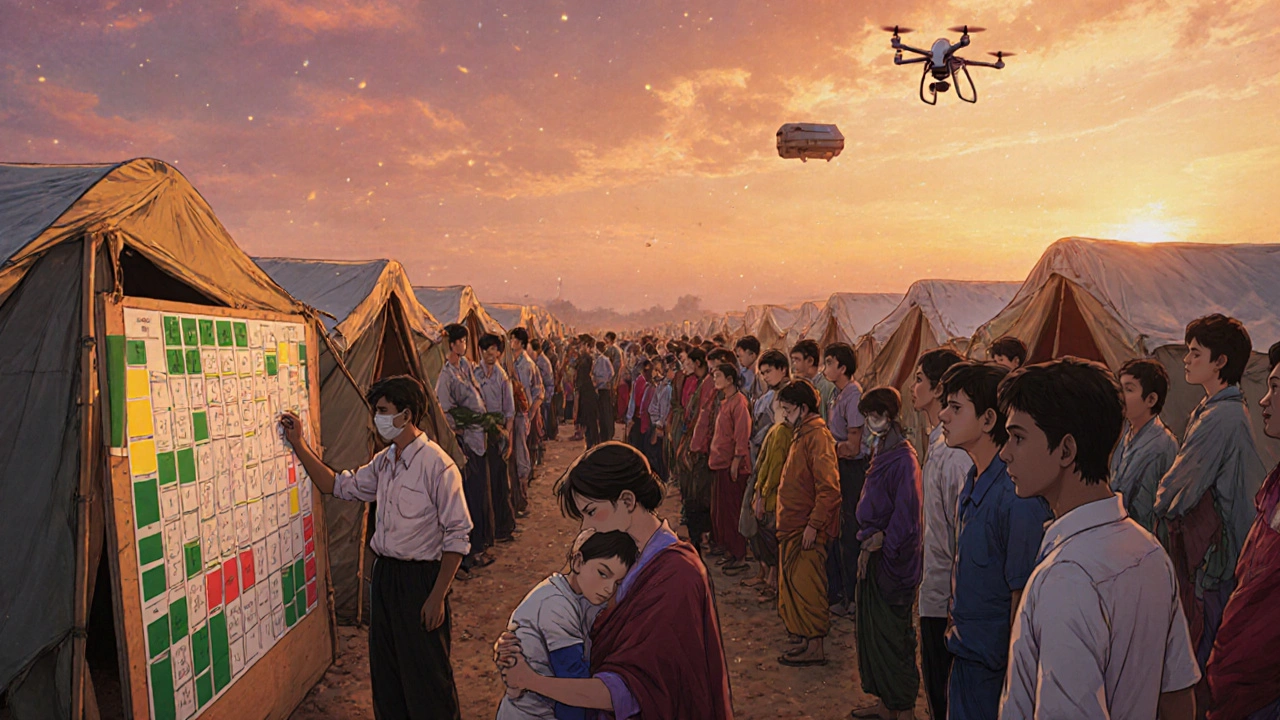
Standard dosing is simple: 150-200 micrograms per kilogram of body weight, taken on an empty stomach. For an adult, that’s usually one 3 mg or 6 mg tablet. In children, dosing is weight-based, not age-based. In refugee camps, health workers often use a color-coded chart taped to the wall: green for safe, red for caution, yellow for need further review.
Timing matters. In river blindness areas, ivermectin is given every 6 to 12 months for years. For scabies outbreaks, a single dose is often enough, but repeat doses after two weeks are recommended if new cases appear. In conflict zones, logistics can be chaotic. Aid groups sometimes use mobile clinics, motorcycles, or even drones to reach isolated communities.
What It Can’t Do-and What It’s Not
Ivermectin isn’t a miracle drug for every illness. It doesn’t work against malaria, dengue, or COVID-19. During the pandemic, false claims about ivermectin as a COVID treatment led to dangerous misuse. Some people took veterinary formulations-highly concentrated, meant for cows and horses-and ended up in emergency rooms with seizures and liver damage.
Humanitarian organizations strictly use only pharmaceutical-grade ivermectin approved for human use. They follow WHO and CDC guidelines. They don’t promote it for off-label uses. In fact, many aid groups now include educational sessions when distributing ivermectin: “This medicine treats worms and mites. It does not treat fever or cough. Do not take animal versions.”
It also doesn’t replace clean water, sanitation, or mosquito nets. It’s one part of a larger strategy. In South Sudan, where river blindness and scabies overlap, aid groups combine ivermectin with soap distribution, latrine building, and health education. The drug helps. But without hygiene, the infections come back.
Challenges in the Field
Even with its benefits, ivermectin deployment isn’t easy. In some areas, people distrust outsiders. In others, there’s stigma. A mother might hide her child’s scabies because she fears being shunned. In Myanmar, after the 2021 coup, health workers couldn’t reach 40% of targeted villages for over a year.
Supply chains break. Ivermectin isn’t expensive-about 10 cents per dose-but getting it to a war zone requires coordination with governments, UN agencies, and local NGOs. Storage is rarely an issue, but transportation is. In northern Nigeria, flooding washed out roads for months. Aid groups had to switch to boats and foot patrols.
And then there’s resistance. While no widespread resistance to ivermectin has been confirmed in human parasites yet, scientists are watching closely. In livestock, resistance is growing. In human hookworms in Southeast Asia, some studies show reduced sensitivity. That’s why aid groups rotate drugs when possible and avoid overuse.

Success Stories That Changed Lives
In 2019, a joint program by the Carter Center and the Nigerian government reached 12 million people in 30 states with ivermectin and albendazole. Within five years, river blindness transmission dropped by 95% in 18 of those areas. Children who once couldn’t go to school because their eyes were failing could now read. Women who spent hours each day scraping ticks off their skin could return to farming.
In Colombia, after decades of conflict, displaced communities in the Cauca region had scabies rates above 60%. After two rounds of ivermectin distribution in 2022, rates fell to under 5%. Local health workers reported fewer school absences, less skin infection in hospitals, and a noticeable drop in anxiety among mothers.
These aren’t theoretical wins. They’re measured in real people. A 7-year-old boy in Syria who stopped scratching his arms raw. A grandmother in Uganda who could finally sleep through the night without itching. A schoolteacher in Haiti who returned to class after being quarantined for scabies.
The Bigger Picture
Ivermectin is more than a pill. It’s a symbol of what’s possible when science meets compassion. It costs almost nothing. It’s easy to deliver. And it changes lives in ways that aren’t always visible on a news feed. But in humanitarian aid, those quiet victories matter most.
The challenge isn’t finding the drug. It’s finding the will to deliver it. In a world where headlines focus on war, famine, and disease outbreaks, ivermectin is one of the quietest heroes. It doesn’t make headlines. But it keeps children in school. It keeps mothers working. It keeps communities intact.
For every crisis, there’s a solution waiting in a small white tablet. The question isn’t whether it works. It’s whether we’ll keep showing up to give it out.
Is ivermectin safe for children in humanitarian settings?
Yes, when given at the correct weight-based dose. WHO recommends ivermectin for children over 15 kg (about 33 pounds) and older than 5 years. For younger or lighter children, it’s used only if the benefits clearly outweigh risks-like during a scabies outbreak with high transmission. Health workers always check weight before dosing. Side effects are rare and mild, like dizziness or nausea, and usually pass within hours.
Can ivermectin be used during pregnancy?
Generally, it’s avoided in the first trimester due to limited data. After the first trimester, it’s considered safe for use in pregnant women when treating scabies or strongyloidiasis, especially if the infection poses a greater risk than the drug. In humanitarian emergencies, decisions are made case by case with medical oversight. In mass campaigns, pregnant women are often excluded from the first round and offered treatment later if needed.
Why not just use antibiotics instead?
Antibiotics don’t kill parasites. They target bacteria. Ivermectin works on worms, mites, and lice-organisms that antibiotics can’t touch. Using antibiotics for parasitic infections doesn’t work and contributes to antibiotic resistance. In crisis zones, preserving antibiotics for bacterial infections like pneumonia or sepsis is critical. Ivermectin fills a unique, irreplaceable role.
Is ivermectin effective against lice and scabies in crowded camps?
Yes. For scabies, a single dose clears the mites in most cases, but a second dose two weeks later reduces reinfection risk. For head lice, it’s less commonly used than topical treatments, but in mass outbreaks-especially where people share bedding-it’s highly effective. In Rohingya camps, ivermectin reduced scabies cases by 70% in four weeks. It’s preferred over topical creams because it’s easier to distribute and doesn’t require application to every part of the body.
What happens if someone takes too much ivermectin?
Overdose is rare in humanitarian settings because dosing is controlled. But if someone takes multiple doses or uses veterinary ivermectin (which is much stronger), symptoms can include severe dizziness, vomiting, low blood pressure, confusion, or seizures. Treatment is supportive-fluids, monitoring, and sometimes activated charcoal. In most cases, people recover fully with medical care. That’s why training local volunteers to recognize overdose signs is part of every distribution program.
How do aid groups ensure ivermectin reaches the most vulnerable?
They use community mapping and door-to-door distribution. In refugee camps, health workers identify households with children, elderly, pregnant women, and people with chronic illnesses. They partner with local leaders to build trust. In conflict zones, they coordinate with UNHCR and ICRC to access hard-to-reach areas. Some programs use mobile health apps to track who’s been treated and who needs follow-up. The goal isn’t just to distribute-it’s to make sure no one is left behind.



Comments (14)
Sherri Naslund
ok but like... why are we giving out pills like candy in war zones? someone’s gotta be profitin’ off this. i mean, merck donates? sure. but who’s really gettin’ paid to truck it in? and why’s no one talkin’ about how the WHO just loves a cheap fix that keeps the real problems-like clean water-on the back burner? this ain’t charity, it’s band-aids on a gunshot wound.
Ashley Miller
lol so ivermectin is ‘safe’ but only if you’re not a cow? funny how the same drug that ‘cures’ parasites is also the one they told us was a miracle covid cure… until it wasn’t. now it’s back in vogue as long as you don’t ask why. i smell a pharma puppet show.
Martin Rodrigue
While the humanitarian deployment of ivermectin is indeed a commendable public health intervention, one must recognize the limitations of its mechanistic scope. It is not a panacea, nor is it a substitute for systemic infrastructure development. The reliance on single-dose pharmaceuticals in contexts of chronic deprivation may inadvertently perpetuate a cycle of dependency, wherein structural failures are mitigated pharmacologically rather than remediated sociopolitically. The efficacy of distribution is not in question; the ethical sustainability of such models is.
william volcoff
People forget how insane it is that a 10-cent pill can stop blindness in millions. I’ve seen field teams in South Sudan-no refrigeration, no labs, just a guy with a clipboard and a sack of tablets. That’s not magic. That’s science doing its quiet job while the world screams about something else. Also, no, it doesn’t cure COVID. Stop Googling random blogs.
Freddy Lopez
There’s something profoundly human about this: a drug discovered in soil, donated by a corporation, used by volunteers who don’t speak the same language as the people they’re helping-and yet, it works. It doesn’t ask for ID, religion, or political alignment. It just… works. Maybe that’s the real miracle. Not the molecule, but the fact that we still, sometimes, choose to care enough to deliver it.
Lauren Hale
As someone who’s worked in refugee camps, I’ve seen scabies turn entire families into walking sores. Ivermectin doesn’t just treat-it restores dignity. A child stops scratching. A mother sleeps. A teacher returns to class. That’s not a statistic. That’s a life. And yes, it’s not a replacement for clean water or sanitation-but it buys time. Time to build latrines. Time to train local health workers. Time to hope.
Hannah Machiorlete
everyone’s acting like this is some noble crusade but let’s be real-this is just pharma’s way of looking good while the world burns. you think they’d give a damn if this wasn’t cheap and easy to push? i’ve seen kids get it and still die of dehydration because no one brought water. this is virtue signaling with a pill bottle.
Bette Rivas
It’s important to note that mass drug administration (MDA) programs using ivermectin are guided by WHO guidelines that include rigorous safety monitoring, community engagement, and post-distribution surveillance. The drug’s pharmacokinetics are well-characterized, and adverse events are exceedingly rare when administered correctly. In fact, the risk-benefit ratio in endemic and crisis settings is among the most favorable of any public health intervention. The logistical challenges are significant, but the data supporting its impact on morbidity reduction is robust and longitudinal.
prasad gali
Let’s not romanticize this. Ivermectin MDA is a stopgap in a broken system. In regions where helminthiasis prevalence exceeds 70%, you’re not curing disease-you’re managing epidemiological entropy. The real failure is not in distribution-it’s in the absence of integrated WASH (water, sanitation, hygiene) infrastructure. Without vector control and environmental remediation, you’re just delaying the inevitable. This is palliative medicine for broken states.
Paige Basford
sooo… if it’s so safe and cheap, why do we hear so little about it in the news? like, imagine if this was a new cancer drug-there’d be parades. but it’s just… a little white pill? kinda sad? i just wish more people knew how cool this is. like, imagine your kid stops scratching because of a 10-cent tablet. that’s wild.
Ankita Sinha
my cousin in rural India got ivermectin during a scabies outbreak-just one pill, and her whole family stopped itching in 3 days. she said it felt like magic. but honestly? it’s not magic. it’s science that cares. we need more of this. not less. if we can give this to millions, why are we still arguing about vaccines and masks? this is the kind of thing that actually saves lives, quietly.
Kenneth Meyer
It’s interesting how we assign moral weight to medicine. Ivermectin doesn’t care if you’re Christian, Muslim, refugee, or citizen. It doesn’t ask for your passport. It just works. In a world that’s obsessed with borders, identities, and ideologies, here’s a molecule that says: ‘you are human, and you deserve to be free of this.’ Maybe that’s the real lesson here-not the drug, but the quiet radical act of treating everyone as if they matter.
Donald Sanchez
ok but i saw a video where some guy took horse ivermectin and now he’s in a coma?? like… why are we giving this to kids?? also why does everyone act like it’s a miracle? it’s just a worm pill?? 🤡
Abdula'aziz Muhammad Nasir
In Northern Nigeria, we’ve seen ivermectin reduce scabies transmission by over 80% in three rounds. But the real win? When local women-many of whom were once too ashamed to leave their homes-became the ones distributing the tablets. That’s not just health. That’s empowerment. The drug is simple. The change? That’s the miracle.