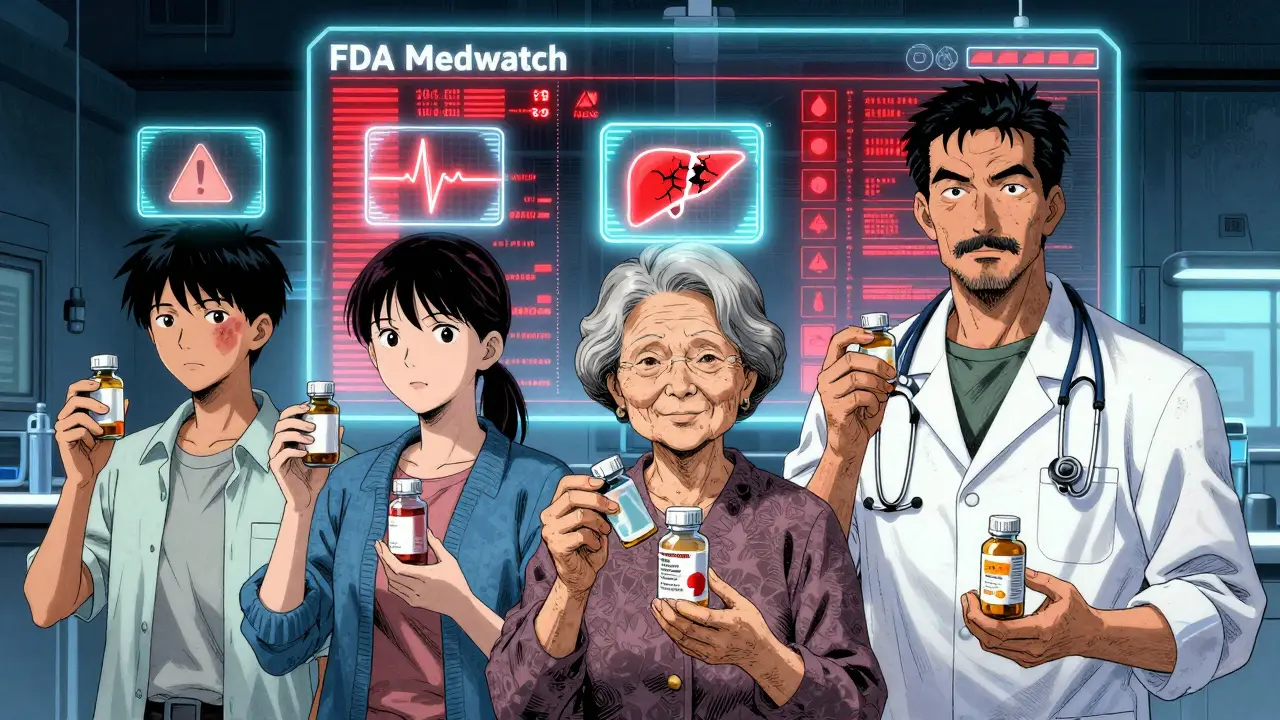
Every year, millions of people take prescription drugs, over-the-counter medicines, and dietary supplements without issue. But for some, a medication that’s supposed to help ends up hurting. A rash that won’t go away. A sudden drop in blood pressure. Liver damage. Even death. These aren’t rare outliers-they’re adverse drug reactions, and they’re happening right now, often without anyone telling the FDA.
That’s where MedWatch comes in. It’s not a fancy app or a government hotline. It’s the U.S. Food and Drug Administration’s main system for collecting real-world reports about harmful side effects from drugs, medical devices, and even foods and cosmetics. And it only works if people like you report what they see.
You don’t need to be a doctor. You don’t need to prove the drug caused the problem. You just need to notice something unusual and speak up.
What Exactly Is MedWatch?
MedWatch, officially called the FDA Safety Information and Adverse Event Reporting Program, has been around since 1993. It’s the FDA’s eyes and ears after a drug hits the market. Clinical trials test drugs on thousands of people-but real life involves millions, with different ages, health conditions, and combinations of medications. That’s where hidden dangers show up.
MedWatch collects reports from three groups: healthcare professionals (doctors, nurses, pharmacists), patients and consumers, and drug manufacturers. Manufacturers are legally required to report serious side effects. But the real power of MedWatch comes from the people who use the products every day.
Each year, about 1.3 million reports come into MedWatch. Around 85% come from drug companies. The other 15%? That’s you.
These reports don’t prove a drug caused a problem. But they’re the first warning sign. When enough people report the same issue-like sudden heart rhythm changes after taking a new antibiotic-the FDA starts digging. That’s how dangerous drugs get black box warnings, recalls, or even pulled off the market.
What Counts as a Reportable Reaction?
You don’t have to be an expert to know when something’s wrong. The FDA defines a serious adverse event as any reaction that:
- Results in death
- Requires hospitalization
- Causes persistent or significant disability
- Leads to a birth defect
- Is life-threatening
- Needs medical or surgical intervention to prevent one of the above
Even if you’re not sure the drug caused it, report it anyway. The FDA says: “If you’re uncertain whether the product caused the event, report it anyway.” That’s the whole point.
Examples of reportable events:
- A 68-year-old man develops severe liver inflammation two weeks after starting a new cholesterol drug.
- A 22-year-old woman has a seizure after taking a new migraine medication she’s never tried before.
- An elderly patient falls and breaks a hip after starting a new blood pressure pill that made them dizzy.
- A child develops a full-body rash after taking a new OTC allergy medicine.
- A diabetic patient’s blood sugar crashes after adding a new supplement labeled “natural.”
It doesn’t matter if the reaction isn’t listed on the label. In fact, if it’s not listed, that’s even more reason to report it. That’s how new safety signals are found.
How to File a Report: Step by Step
Filing a report takes less than 20 minutes. Here’s how to do it, whether you’re a patient, caregiver, or provider.
Option 1: Online Reporting (Fastest and Recommended)
Go to www.fda.gov/medwatch. Click “Report a Problem.”
- If you’re a healthcare professional, use FDA Form 3500.
- If you’re a patient or family member, use FDA Form 3500B. It’s written in plain language, available in English and Spanish.
Fill out the form. You’ll need:
- Patient’s age and gender (no name required)
- Drug name (brand or generic)
- Dosage and how long they took it
- When the reaction started
- What happened (describe symptoms clearly)
- What was done (did they go to the ER? Stop the drug?)
- Outcome (recovered, hospitalized, died)
- Other medications or supplements they’re taking
Don’t worry if you don’t know all the details. The FDA says incomplete reports are still valuable. Better to report with partial info than not at all.
Option 2: Phone or Mail
If you can’t get online, call 1-800-FDA-1088. A representative will take your report over the phone. You can also download and print Form 3500 or 3500B from the MedWatch site, fill it out by hand, and mail it to:
FDA MedWatch
5600 Fishers Lane
Rockville, MD 20852
Mail takes longer, but it works.
What Happens After You Submit?
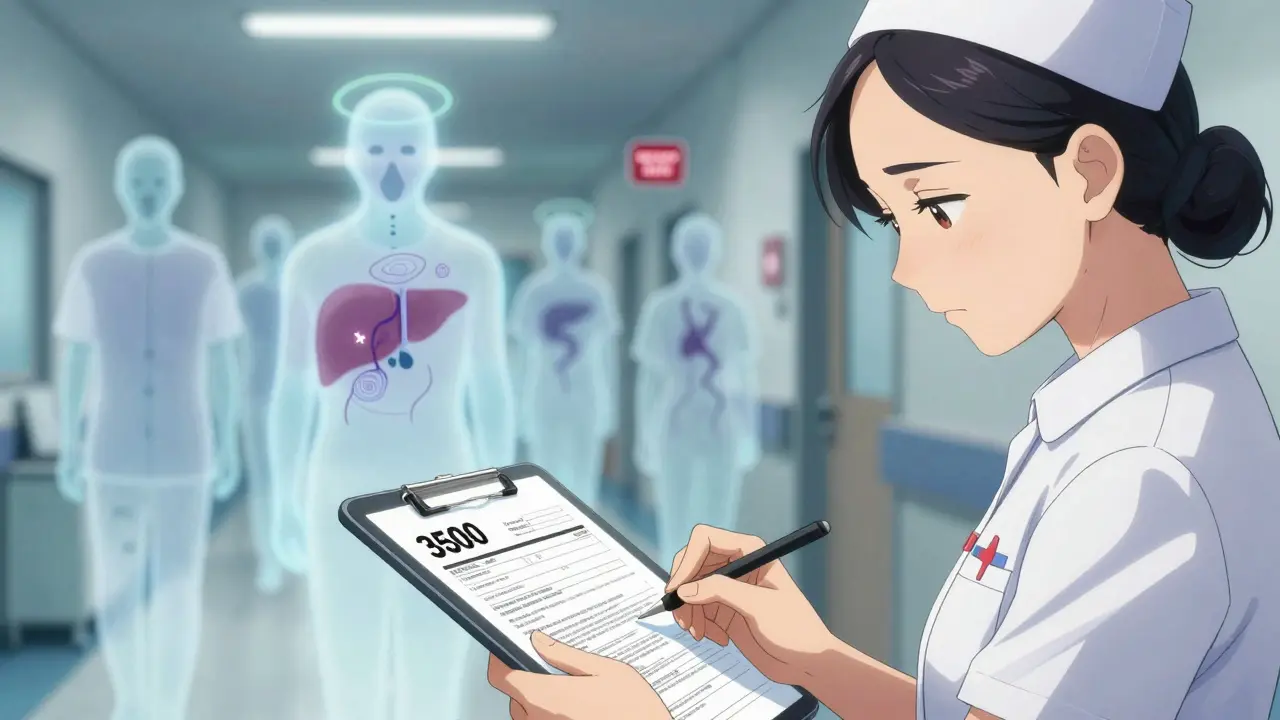
Once you hit “submit,” your report goes into the FDA Adverse Event Reporting System (FAERS)-a database with over 15 million reports since 1968. Trained analysts review it. If your report matches others describing the same reaction, it gets flagged.
That’s how the FDA finds patterns. For example:
- In 2011, dozens of reports of severe skin reactions from the diabetes drug Avandia led to major restrictions.
- Reports of blood clots in young women using certain birth control pills helped trigger updated warnings in 2013.
- After multiple reports of liver injury from herbal weight-loss supplements, the FDA issued alerts in 2020.
But here’s the hard truth: you’ll probably never hear back.
A 2022 survey by the American Society of Health-System Pharmacists found that 87% of healthcare professionals who reported to MedWatch never received any follow-up. That’s frustrating-but it doesn’t mean your report didn’t matter.
The FDA doesn’t respond to individual reports because they’re analyzing millions. Your report is one piece of a puzzle. But if enough people report the same thing, it becomes a signal-and that signal can save lives.
Why So Few People Report
Studies show only 1% to 10% of serious adverse reactions are ever reported. Why?
- Time: Doctors say it takes 12-15 minutes to file a report. In a busy clinic, that’s hard to find.
- Doubt: “Was it really the drug?” “Maybe it was something else.”
- Confusion: “Do I report this?” “Who do I tell?”
- Helplessness: “It won’t make a difference anyway.”
Here’s the reality: if you don’t report, no one else will. Manufacturers only report what they’re legally required to. Patients? Most don’t know MedWatch exists.
That means the FDA is flying blind on half the data. And the consequences? Drugs stay on the market longer. People keep getting hurt.
What’s Changing in MedWatch?
The FDA knows the system is outdated. In 2023, they launched MedWatch Plus, a new initiative to boost reporting by 30% by 2025.
- Mobile-friendly reporting tools
- Automatic pop-ups in electronic health records that ask doctors: “Did this reaction happen?”
- Integration with pharmacy systems to flag potential reactions at the point of sale
- Expanded coverage to include more dietary supplements and medical foods
They’re also using AI to scan the 1.3 million annual reports faster, looking for hidden patterns. But AI can’t replace human observation. Only a patient who notices their hands shaking after a new pill can flag that early sign.
Your Role Matters More Than You Think
You might think: “I’m just one person. What difference can I make?”
Consider this: in 2019, a nurse in Ohio reported that three of her patients developed a rare heart rhythm disorder after taking a common antibiotic. No one had seen this before. The FDA reviewed all similar reports. Within months, they added a new warning to the drug’s label. Doctors started prescribing it differently. People stopped getting sick.
That nurse didn’t get a medal. She didn’t get a thank-you note. But she saved lives.
Every report you file adds to the collective knowledge. It helps the FDA see what’s happening out in the real world-not just in labs and trials.
Don’t wait for someone else to report it. Don’t assume it’s “not serious enough.” If it felt wrong to you, it’s worth reporting.
It’s not about blame. It’s about safety.
Common Misconceptions
Let’s clear up some myths:
- Myth: “Only doctors can report.”
Truth: Anyone can. Patients, family members, caregivers-your report counts. - Myth: “I need proof the drug caused it.”
Truth: The FDA accepts suspected reactions. You don’t need to be a scientist. - Myth: “It’s too complicated.”
Truth: The consumer form is designed for non-experts. It’s simple, clear, and takes under 20 minutes. - Myth: “Reporting won’t change anything.”
Truth: Every major drug safety alert in the last 20 years started with a report like yours.
MedWatch isn’t perfect. It’s slow. It’s underused. But it’s the only system of its kind in the U.S. And without it, we’d be even more in the dark.
Next time you or someone you care about has a strange reaction to a medication, don’t shrug it off. Don’t wait for the doctor to notice. Take five minutes. Go to MedWatch. Report it.
It’s not just paperwork. It’s protection.
Do I need to give my name when reporting to MedWatch?
No, you don’t have to give your name. MedWatch accepts anonymous reports. You can report as a patient, caregiver, or healthcare provider without revealing your identity. However, providing contact information can help the FDA follow up if they need more details. If you’re unsure, it’s better to include your name and phone number-it doesn’t affect privacy and may help improve the report.
Can I report a reaction to a supplement or OTC medicine?
Yes. MedWatch covers not just prescription drugs, but also over-the-counter medicines, dietary supplements, medical foods, and infant formulas. Many people don’t realize that herbal supplements and vitamins can cause serious reactions. If you or someone you know had a bad reaction to a supplement-like liver damage from a weight-loss pill or high blood pressure from a pre-workout-report it. The FDA tracks these closely, especially since the 2019 FDA Reauthorization Act strengthened reporting rules for supplements.
How long does it take for the FDA to act on a report?
There’s no set timeline. Some reports lead to quick warnings-within weeks-if multiple similar cases appear. Others take months or years if the signal is weak or rare. The FDA doesn’t act on a single report. They look for patterns across hundreds or thousands of reports. That’s why consistent reporting matters. One report might not change anything-but 50 similar reports can trigger a safety review.
Is MedWatch the same as VAERS?
No. MedWatch is for all FDA-regulated products: drugs, devices, supplements, and foods. VAERS (Vaccine Adverse Event Reporting System) is only for vaccines and is run by the CDC and FDA. If you have a reaction to a flu shot, COVID vaccine, or tetanus shot, you report it to VAERS. If you have a reaction to a painkiller, blood pressure pill, or weight-loss supplement, you report it to MedWatch. They’re separate systems with different purposes.
What if I report something and later find out it wasn’t the drug’s fault?
That’s still valuable information. The FDA knows not every report means a drug caused the reaction. They look for trends, not individual causes. If you later learn the reaction was due to another medication, an infection, or an underlying condition, you can file a follow-up report to update the information. Even incorrect reports help the FDA understand what’s being confused with drug reactions.



Comments (12)
shiv singh
Why do we even bother? The FDA doesn’t care. They’re just collecting data to look like they’re doing something while Big Pharma keeps raking in cash. I reported my mom’s liver failure from that ‘safe’ herbal supplement and got a robot email saying ‘Thank you for your submission.’ Like wow, thanks for the autograph.
Vicky Zhang
Oh my gosh, this is so important!! I just want to hug you for writing this!! I had my cousin report her daughter’s rash after the new allergy med and it literally saved another kid down the street!! You’re a hero!! Everyone needs to do this!! It’s not just paperwork-it’s love in action!!
Susie Deer
USA has the best drug safety system in the world. If you’re not reporting you’re unamerican. If you’re not using MedWatch you’re part of the problem. Period. No excuses. Just report it. That’s the American way.
says haze
MedWatch is a structural epistemological failure disguised as civic duty. The very notion that individual phenomenological experiences can be aggregated into a reliable signal assumes a Cartesian separation between subject and object that no postmodern pharmacologist would endorse. The FDA doesn’t ‘detect patterns’-they perform narrative reconstruction on data that is inherently noisy, biased, and mediated by institutional power. Your report is a performative act of faith in a broken system.
Alvin Bregman
cool post. i never knew you could report supplements too. i had a weird headache after that protein powder i bought on amazon. i think it was the creatine but who knows. i’ll try to file it later. thanks for the heads up man.
Sarah -Jane Vincent
Of course the FDA doesn’t respond. They’re in bed with Pfizer. This whole system is a scam to make you think you have power while they quietly approve more deadly drugs. Did you know they bury reports from foreign countries? And the ‘AI’ they use? It’s just a glorified keyword scanner that deletes anything that mentions ‘cancer’ or ‘death.’ Wake up.
Henry Sy
Man I had this one time where I took that new sleep aid and woke up screaming because my left arm felt like it was melting. I didn’t report it. I was too scared. But now I’m mad at myself. That shit haunted me for months. If I could go back, I’d file that report with my eyes closed. Don’t be like me. Report it. Even if you think you’re crazy. You’re not.
Anna Hunger
While the intent of MedWatch is commendable, its operational efficacy remains severely constrained by systemic underutilization and lack of standardized data entry protocols. The absence of mandatory integration with electronic health record systems perpetuates a reactive, rather than proactive, pharmacovigilance paradigm. I urge all healthcare institutions to institutionalize MedWatch reporting as a standard of care.
Jason Yan
I love how this post makes it clear that reporting isn’t about proving anything-it’s about leaving a trace. Like dropping a pebble in a river. You don’t see the ripple, but the water changes. I’ve reported three things over the years: a weird rash, a dizzy spell, and a supplement that made my heart race. I never heard back. But I sleep better knowing I didn’t just shrug it off. Maybe one day, someone else’s report will connect to mine and someone won’t die because of it. That’s enough.
Robert Way
wait so you dont need your name? i thought theyd track you. i just reported my dads stroke after his blood pressure med. i put fake info. hope that’s ok. i dont trust the fda. they might use my info to sell me ads or something. lol
Sarah Triphahn
People think reporting is heroic. It’s not. It’s a distraction. The real problem is that drugs are approved on 3-month trials with 200 people. If you really want to fix this, shut down the FDA and let insurance companies run safety reviews. At least they’d have skin in the game.
Allison Deming
It is imperative that citizens recognize the moral obligation inherent in the act of adverse event reporting. To remain silent in the face of potential harm is not merely negligence-it is complicity. The ethical weight of inaction far exceeds the minimal time investment required to submit a report. One must ask oneself: if the victim were your child, would you remain silent? The answer, in conscience, must be no.