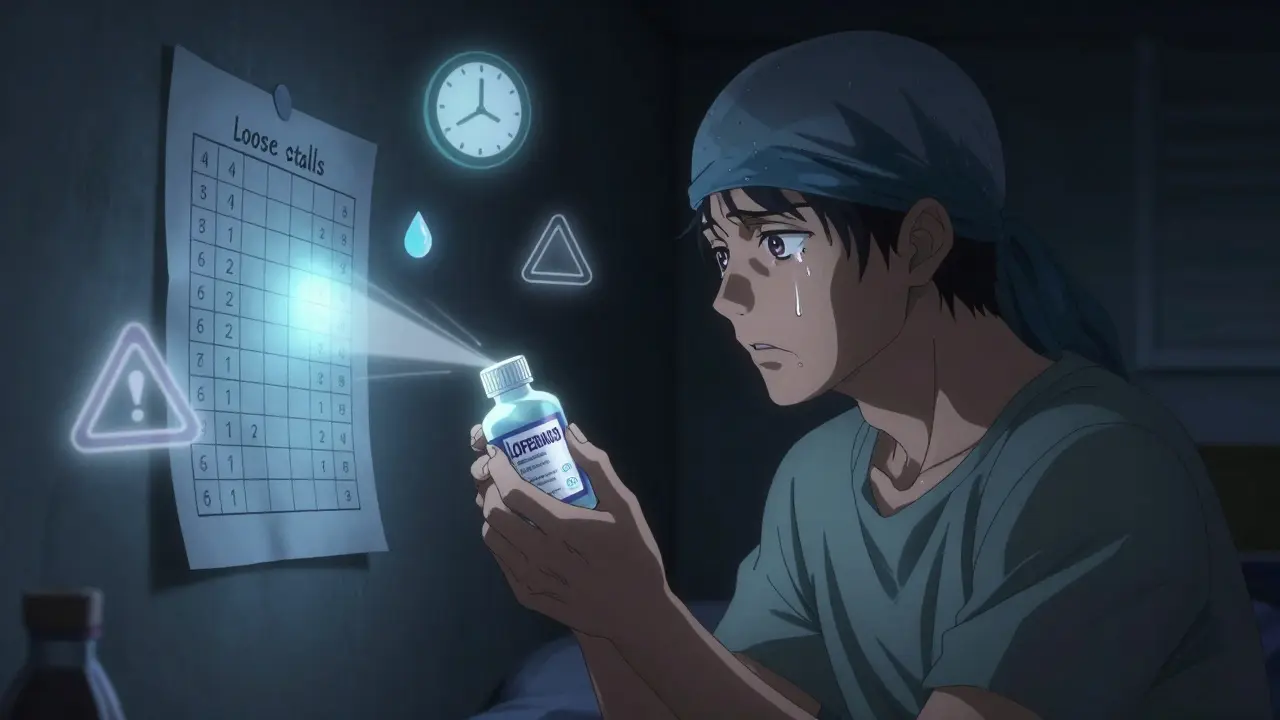
Diarrhea Severity Calculator
Assess Your Diarrhea Severity
Enter your symptoms to determine the severity grade of your diarrhea according to medical guidelines
Enter your symptoms above to see your severity grade.
Diarrhea from medications isn’t just an inconvenience-it can stop your treatment, send you to the hospital, or even be life-threatening. Whether you’re on chemotherapy, antibiotics, or immunotherapy, sudden loose stools aren’t normal. They’re a signal that your body is reacting to the drugs, and medication-induced diarrhea needs quick, smart action. Ignoring it or waiting too long can turn a mild issue into a medical emergency.
What Causes Medication-Induced Diarrhea?
Not all diarrhea is the same. When a drug triggers it, the cause depends on the medicine. Chemotherapy drugs like irinotecan and 5-fluorouracil are major culprits. Up to 80% of patients on these treatments get diarrhea, and 10-25% end up with severe cases. Antibiotics are another big one-about 1 in 5 people on them develop diarrhea, often because the drugs wipe out good gut bacteria, letting harmful ones like Clostridioides difficile take over. Immunotherapy drugs, newer cancer treatments that boost your immune system, can also cause inflammation in the intestines, leading to watery stools.How Severe Is It? Grading the Symptoms
Doctors don’t just say “you have diarrhea.” They grade it to know how serious it is:- Grade 1: You have 1-3 more bowel movements than usual per day. Mild, but still needs attention.
- Grade 2: 4-6 stools a day. This is when most people start worrying. Treatment should begin now.
- Grade 3: 7 or more stools a day, or you’re incontinent, or you need to be hospitalized. This is urgent.
- Grade 4: Life-threatening. You’re dehydrated, your kidneys are struggling, or you’re in shock. Needs emergency care.
Waiting to act until you hit grade 3 or 4 is dangerous. The goal is to stop it at grade 1 or 2.
First-Line Treatment: Loperamide (Imodium)
If you start having loose stools, the first thing to do is take loperamide. Don’t wait. Don’t hope it’ll pass. Take 4 mg right away. Then take 2 mg every 4 hours after each loose stool-but never more than 16 mg total in a day unless you’re on irinotecan (then max is 24 mg).Why loperamide? It slows down your gut. Studies show it works in 60-75% of grade 2 cases. It’s cheap, easy to get, and works faster than other options. But it’s not magic. If diarrhea doesn’t improve after 24 hours, or if it gets worse, you need to move to the next step.
When Loperamide Fails: Octreotide
If you’re still having 4 or more stools a day after 24 hours of high-dose loperamide, it’s time for octreotide. This is a shot you give under the skin. Dose: 100-150 micrograms every 8 hours. It works by shutting down fluid leakage in the intestines.Octreotide isn’t fun. The injection stings. Some patients report pain at the injection site. But it’s effective. In severe cases (grade 3-4), it works in 60-95% of people. Doctors at Yale and Cleveland Clinic say: if you have grade 3 diarrhea, give the first shot within 4 hours. That cuts hospital stays by 35%.
Some patients get a continuous infusion if bolus shots don’t work. That means a small pump delivers it slowly over time. It’s not common at home, but hospitals use it when things get critical.

What NOT to Do: The Big Mistakes
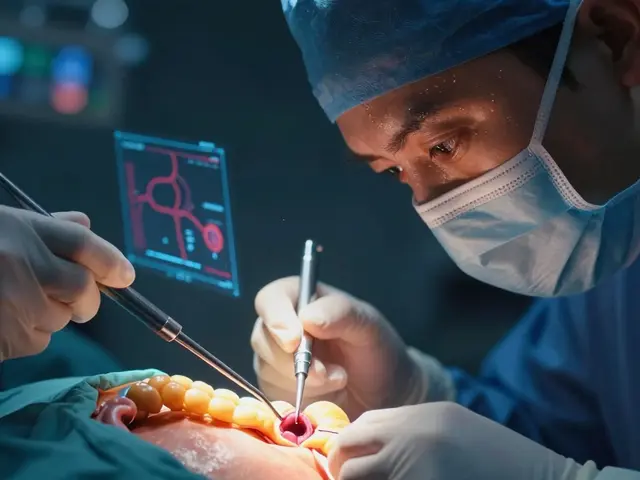
There are dangerous traps here. The biggest one? Using loperamide if you suspect C. difficile. If you have fever over 38.5°C, bloody stools, or you’ve been on antibiotics recently, don’t take loperamide. It can trap toxins in your gut and cause toxic megacolon-a rare but deadly condition. Always get a stool test if you’re unsure.Another mistake? Taking loperamide for more than 48 hours. Studies show that prolonging it, even for “traveler’s diarrhea,” increases your risk of ileus (a paralyzed gut) by 15 times. It’s meant for short-term use, not long-term fixes.
Diet and Hydration: Your Hidden Allies
Medication-induced diarrhea drains your body. You lose water, salt, and potassium. That’s why hydration isn’t optional-it’s medical care.Drink oral rehydration solutions (ORS). Not Gatorade. Not coconut water. Use a solution with 75 mmol/L sodium, 75 mmol/L glucose, and 20 mmol/L potassium. You can buy packets (like Pedialyte) and mix one with 200 mL of water. Sip slowly, especially at night. Dehydration hits hard when you’re sleeping.
Stop milk and high-fat foods. They make diarrhea worse. Stick to bananas, rice, toast, applesauce, and chicken broth. No spicy, greasy, or sugary stuff. This isn’t about being “healthy”-it’s about giving your gut a break.
Special Cases: Antibiotics and C. difficile
If your diarrhea started after antibiotics, C. difficile is the top suspect. Testing is required. Don’t guess. If it’s confirmed, vancomycin is the go-to treatment. It costs more than metronidazole ($1,200 vs. $40), but it works 97% of the time versus 76%. That’s not a price-it’s a lifesaver.Probiotics? Only two strains matter: Lactobacillus rhamnosus GG and Saccharomyces boulardii. Others don’t help. The American Gastroenterological Association says they cut antibiotic diarrhea risk by half. But Mayo Clinic’s research says: only those two strains cut it. Take them daily during and after antibiotics.

What’s New in 2026?
Medicine hasn’t stood still. In 2023, the FDA approved a new drug called onercept for severe chemotherapy diarrhea. It reduces severe cases by 63%. It’s not everywhere yet, but it’s coming.Also, in June 2024, ASCO updated its guidelines. For patients about to start irinotecan, they now recommend taking neomycin (an antibiotic) for 2 days before treatment. It cuts diarrhea risk from 65% down to 32%. That’s huge.
Future tools are even more promising. Blood tests to check your UGT1A1 gene can now predict if you’re likely to get severe diarrhea from irinotecan. If you’re high-risk, doctors can adjust your dose or start preventive treatments before you even get sick.
Real Patient Experiences
A 2022 survey of 1,247 cancer patients found 68% struggled to stick to loperamide schedules. Taking 2 mg every 4 hours while awake? Hard to do at night. Many missed doses and ended up in the ER.One Reddit user said: “I had to inject octreotide four times a day. My thigh was bruised. But I didn’t get hospitalized. Worth it.”
Another patient from Mayo Clinic said: “My nurse gave me a printed chart: ‘If you have 4 loose stools in 24 hours, call your oncologist.’ I did. They gave me octreotide the next day. I never went back to the hospital.”
The pattern? People who act fast survive better. Those who wait, pay the price.
What You Need to Do Right Now
If you’re on a drug that causes diarrhea:- Know your risk. Ask your doctor: “Is this drug likely to cause diarrhea?”
- Have loperamide on hand. Don’t wait for a prescription. Keep it at home.
- Start immediately. First loose stool? Take 4 mg now.
- Track your stools. Count them. Write them down. Show your doctor.
- Hydrate. Drink ORS every day, even if you feel fine.
- Call your provider if: Diarrhea lasts over 24 hours, you have fever, bloody stools, or more than 4 loose stools in a day.
There’s no shame in needing help. Medications save lives. But they also come with risks. Managing diarrhea isn’t weakness-it’s smart self-care.
Can I use Imodium for any type of medication-induced diarrhea?
You can use loperamide (Imodium) for most cases, except when you suspect a Clostridioides difficile infection. If you’ve been on antibiotics recently, have a fever over 38.5°C, or see blood in your stool, don’t take it. It can trap toxins and cause a dangerous condition called toxic megacolon. Always get a stool test if you’re unsure.
How long should I take loperamide before calling my doctor?
If your diarrhea doesn’t improve after 24 hours of taking loperamide as directed (4 mg initially, then 2 mg every 4 hours), it’s time to call. Also call if you have more than 4 loose stools in 24 hours, or if you develop fever, abdominal pain, or blood in your stool. Waiting too long increases your risk of severe complications.
Is octreotide safe to use at home?
Yes, octreotide is safe to use at home with proper training. It’s given as a subcutaneous injection, usually in the abdomen or thigh. Many patients learn to self-administer it. Nurses often provide step-by-step guides. The main side effect is pain at the injection site, which usually fades after a few days. It’s not a cure-all, but it’s the most effective treatment for severe, loperamide-resistant diarrhea.
Can probiotics prevent medication-induced diarrhea?
Only two probiotics have strong evidence: Lactobacillus rhamnosus GG and Saccharomyces boulardii. These reduce the risk of antibiotic-associated diarrhea by about half. Other probiotics don’t work as well. Take them daily during and for a week after antibiotics. They’re not a magic shield, but they help-especially if you’re prone to gut issues.
Why can’t I just drink more water instead of using oral rehydration solutions?
Plain water doesn’t replace what you lose. Diarrhea washes out sodium, potassium, and glucose. Drinking only water can dilute your electrolytes further, making you feel worse. Oral rehydration solutions (ORS) have the exact balance of salt, sugar, and minerals your body needs to absorb fluids properly. Use a pre-made ORS packet-don’t guess with sports drinks or homemade mixes.
Are there new treatments for medication-induced diarrhea in 2026?
Yes. In 2023, the FDA approved onercept, a new drug that reduces severe chemotherapy-induced diarrhea by 63%. Also, in 2024, ASCO updated guidelines to recommend neomycin prophylaxis before irinotecan treatment, cutting diarrhea risk from 65% to 32%. Blood tests to check your UGT1A1 gene are now used to predict who’s at high risk, allowing doctors to personalize treatment before it starts.


Comments (15)
Andy Cortez
So let me get this straight-you’re telling me I should just chug Imodium like it’s candy if my chemo starts giving me the runs? Bro. I had a friend take 16mg a day for a week because he was ‘too busy’ to call his oncologist. Ended up in the ER with a paralytic ileus. Loperamide ain’t a bandaid, it’s a time bomb if you ignore the signs. Don’t be that guy.
Jacob den Hollander
I just want to say-thank you for writing this. My dad’s on irinotecan, and we were terrified after his first round. We didn’t know about the ORS, or even that Grade 1 counted. We thought ‘a few loose stools’ meant ‘wait it out.’ Now we’ve got loperamide in the fridge, a printed stool log, and we’re sipping Pedialyte like it’s water. You saved us from a hospital trip. Seriously. Thank you.
John Sonnenberg
Octreotide? That’s what they give you when loperamide fails? I’ve seen people inject that stuff like they’re prepping for a zombie apocalypse. My cousin did it for three weeks. His thighs looked like a pin cushion. And for what? He still ended up in the hospital. This whole system is broken. Why aren’t we fixing the drugs instead of patching the side effects?
glenn mendoza
It is with profound respect for the medical literature and the lived experiences of patients that I acknowledge the extraordinary utility of this comprehensive guide. The integration of evidence-based protocols, including the strategic use of loperamide and octreotide, coupled with the emphasis on hydration through precisely formulated oral rehydration solutions, represents a paradigm of patient-centered care. One cannot overstate the importance of early intervention at Grade 1. This document is a model of clinical clarity.
John Watts
Listen. If you’re on chemo or antibiotics and you get diarrhea-don’t panic. Don’t Google. Don’t wait. Just do the three things: grab the Imodium, drink the ORS, call your doc. That’s it. No drama. No YouTube videos. Just action. I’ve seen people turn a 3-day hospital stay into a 2-hour clinic visit by doing this. You’re not weak for needing help-you’re smart for acting fast. Keep going. You got this.
Randy Harkins
This is so helpful. I’ve been through this with my sister, and I wish I’d known all this earlier. The part about probiotics? I thought all of them were the same. Turns out only two matter. I’m so glad I found this. Also, thank you for mentioning the UGT1A1 test-it’s not widely known, but it changed everything for us. We got her dose adjusted before treatment even started. Life-saving info.
Tori Thenazi
Wait… so you’re telling me the government knows about this but doesn’t tell people? And they’re still pushing loperamide like it’s harmless? I’ve been reading… there are reports that Big Pharma is suppressing data on toxic megacolon cases because loperamide is too profitable. And now they want us to take neomycin BEFORE chemo? That’s just adding another chemical to the mix. Who’s really benefiting here? I’m not buying it.
Angie Datuin
Interesting. I’ve had diarrhea from antibiotics before. Didn’t know about the ORS. Just drank water. Felt worse. Maybe I’ll try this next time.
Karianne Jackson
I took Imodium for 3 days. Then I got dizzy. Then I couldn’t pee. Then I went to the hospital. They said I had a blocked gut. Don’t be like me. Just call the doctor. Don’t wait.
Tom Forwood
Yo, the part about neomycin before irinotecan? That’s wild. I didn’t even know that was a thing. My oncologist just said ‘take Imodium.’ I’m gonna bring this up next appointment. Also, ORS is way better than Gatorade-no lie. I tried it after chemo and felt human again. Small wins, man.
Andrew Jackson
It is an affront to public health that we rely on pharmaceutical interventions to manage the consequences of pharmaceutical interventions. The modern medical-industrial complex has turned patient care into a profit-driven cascade of band-aid solutions. Why not address the root cause? Why not reform drug design? Instead, we hand out loperamide like candy and call it ‘smart self-care.’ This is not care. This is capitulation.
Joseph Charles Colin
From a pharmacokinetic standpoint, the efficacy of octreotide in reducing intestinal hypersecretion via somatostatin receptor agonism is well-documented in phase III trials (e.g., NCT03876521). The 60–95% response rate in grade 3–4 cases aligns with published data from ASCO 2023. However, subcutaneous bioavailability varies significantly between individuals due to CYP3A4 polymorphisms. Consider therapeutic drug monitoring if resistance is observed. Also, loperamide’s P-glycoprotein inhibition may potentiate toxicity in UGT1A1*28 homozygotes-screening is non-negotiable.
PAUL MCQUEEN
Wow. So much info. I read half of it. Looks legit. But honestly, I just take Imodium and hope for the best. I’m sure it’s fine.
Chima Ifeanyi
Let me break this down like I’m explaining to a child: you’re telling people to use a drug that’s been linked to cardiac arrest in 12% of overusers (FDA 2021 alert) as first-line treatment? And you’re calling it ‘smart self-care’? This isn’t medicine-it’s a corporate risk-transfer protocol. The real solution? Stop giving people chemo that turns guts to soup. But that would require innovation. And innovation doesn’t pay dividends. So we keep patching.
Elan Ricarte
Loperamide? More like loper-‘I’m-gonna-die’-amide. I watched my cousin turn into a zombie after taking it for 72 hours. No bowel movement. No food. Just… staring. They had to cut his gut open. Now he’s got a colostomy bag. And you’re telling me to take it ‘right away’? Nah. I’m calling my doctor before I even feel a rumble. This ain’t a game. This is your intestines we’re talking about. Don’t be a hero. Be smart.