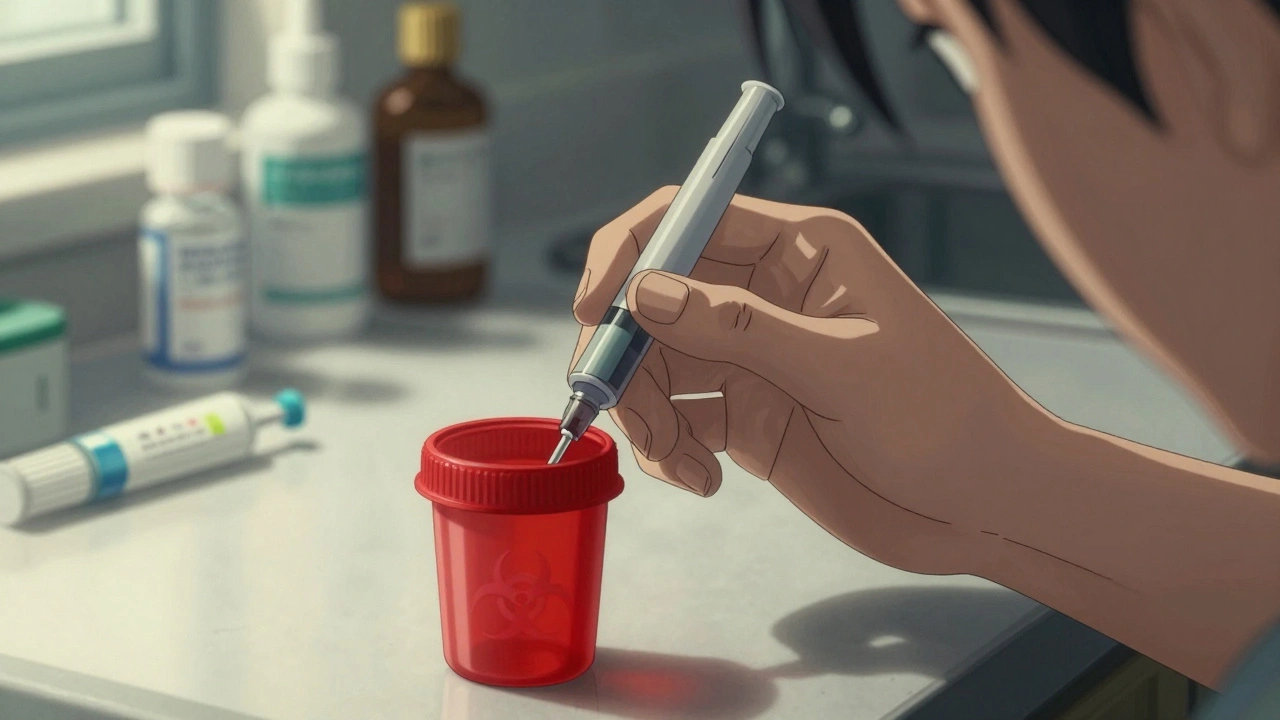
Every year, millions of people in Canada and the U.S. use injectable medications like insulin, blood thinners, or biologics for chronic conditions. But after the injection, what do you do with the needle? Throwing it in the trash, tossing it in the recycling, or even bending it before disposal isn’t just unsafe-it’s illegal in many places. Improper disposal puts kids, sanitation workers, and even pets at risk of needlestick injuries that can spread HIV, hepatitis B, or hepatitis C. The good news? Safe disposal is simple, legal, and often free.
What Counts as a Sharp?
A sharp isn’t just a needle. It includes any medical device that can puncture or cut skin after use. That means:
- Insulin syringes and pen needles
- Lancets used for blood glucose testing
- Auto-injectors like EpiPens or Humira pens (after use)
- IV catheters and butterfly needles
- Needles from vaccine shots or hormone injections
Even if the needle looks clean, it’s still contaminated with blood or bodily fluids. That’s why it’s classified as regulated medical waste. Never assume a used sharp is safe to handle.
Why You Can’t Just Toss It in the Trash
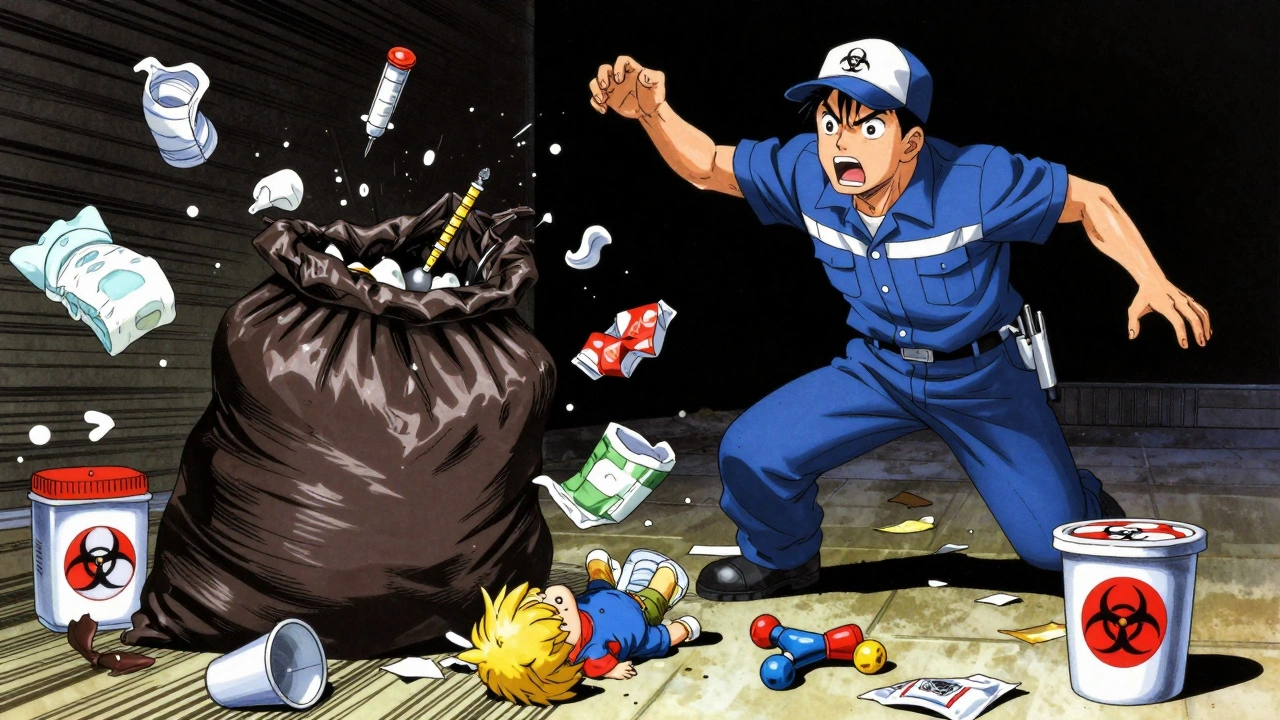
Every year, over 385,000 needlestick injuries happen to healthcare workers in the U.S. alone, according to the CDC. But home users are at risk too. The FDA reports that 68% of sharps-related injuries in public spaces happen because needles ended up in household trash. That’s a parent finding a needle in the diaper bin. A dog digging through the curb-side bin. A sanitation worker getting stuck while sorting recycling.
Here’s the real cost: if you get a needlestick injury from a used sharp, the average cost of post-exposure treatment-blood tests, antiviral drugs, follow-ups-is over $3,200. That’s on top of the emotional toll. And if you’re the one who threw it away improperly, you could be held liable if someone else gets hurt.
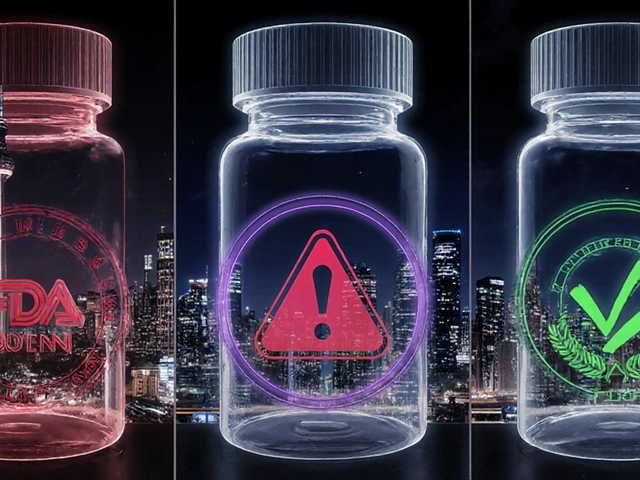
What You Need: FDA-Cleared Sharps Containers
You can’t use a soda bottle, a coffee can, or a plastic yogurt tub. These aren’t just discouraged-they’re dangerous. Only containers designed and tested to meet FDA standards should be used.
Here’s what makes an FDA-cleared sharps container safe:
- Thick, puncture-resistant plastic (at least 0.04 inches thick)
- A tight-fitting lid that won’t pop open under pressure
- A clear fill line-you must stop at 3/4 full
- A biohazard symbol and warning label in red or orange
- Stable base so it doesn’t tip over
Popular brands like BD Redi-Sharp, Sharps Compliance Safe•Drop, and Stericycle containers all meet these specs. A 1.5-gallon countertop container costs about $10-$13. Wall-mounted units run $15-$25. Larger 6-gallon containers for heavy users are $30-$45. Yes, it’s an added cost-but it’s far cheaper than a hospital visit after an injury.
How to Use the Container Correctly
Even with the right container, mistakes happen. Here’s how to do it right:
- Immediately after use, place the sharp into the container. Don’t wait. Don’t set it down.
- Never recap, bend, or break the needle. That’s how most injuries happen.
- Keep the container within arm’s reach while injecting-ideally on a table or counter, not on the floor.
- Stop filling when the contents reach the 3/4 mark. Even if it looks like there’s space, don’t push more in.
- Keep the lid closed at all times. If it’s a flip-top, snap it shut after each use.
- Store the container out of reach of children and pets. A locked cabinet or high shelf works.
Pro tip: If you use sharps daily, keep two containers on hand-one in use, one ready. That way, you never have to delay disposal because you’re waiting for a new one.
Where to Drop Off Used Sharps Containers
Once your container is full, you can’t throw it in the regular trash. But you don’t need to call a hazardous waste company. Here are your legal, safe options:
- Pharmacies: Many pharmacies like Walgreens, Shoppers Drug Mart, and Rexall offer free sharps collection bins. Just drop off your sealed container and take a new one. No appointment needed.
- Hospitals and clinics: Most public hospitals and doctor’s offices accept used sharps from patients, even if you didn’t get the medication there.
- Public health units: In Halifax and across Nova Scotia, local public health offices often have drop-off programs. Call your regional health authority to find the nearest site.
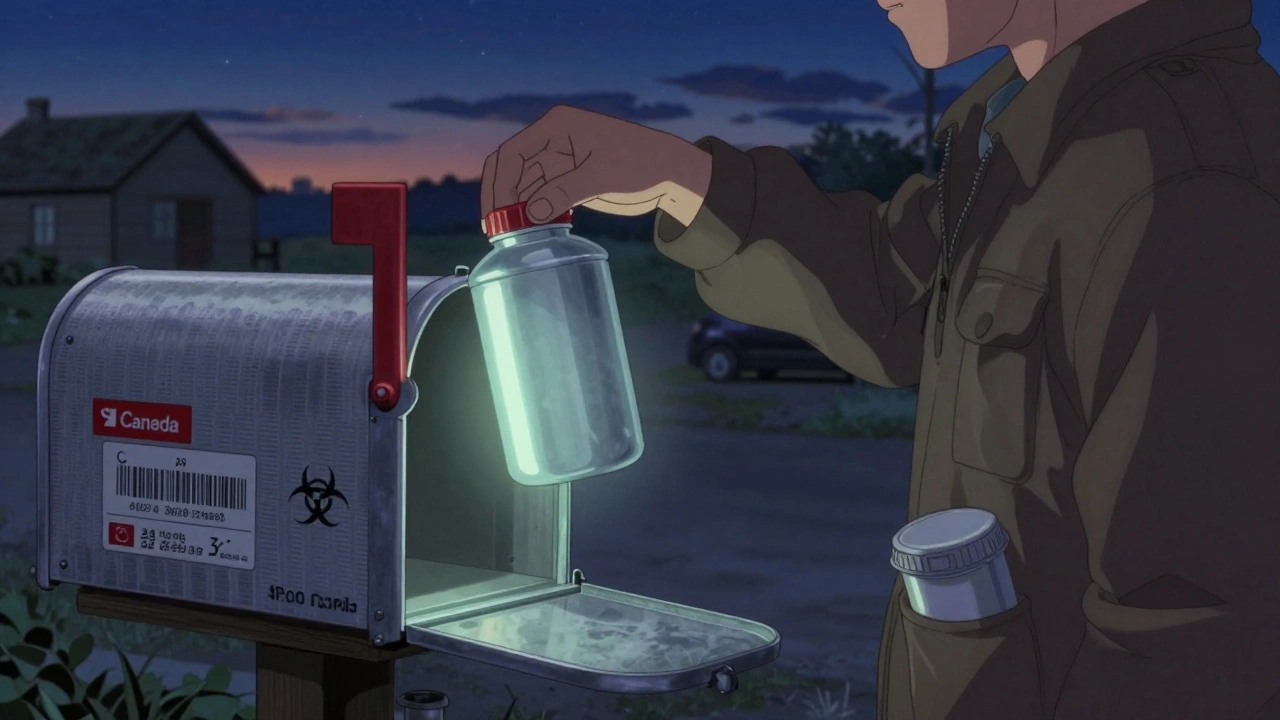
- Mail-back programs: Companies like Sharps Compliance and BD offer prepaid mailers. You seal your container, put it in the box, and drop it in the mailbox. Cost: usually $20-$40 per box.
- Household hazardous waste depots: Many municipalities have designated days or locations for medical waste. Check your city’s website for details.
Pro tip: Some pharmacies will exchange a full container for a new one at no cost. Ask when you pick up your prescription.
What Not to Do
People try to cut corners. Don’t be one of them. Here’s what never works:
- Don’t reuse containers. Even if you wash them, plastic weakens after use. A reused container can crack or leak.
- Don’t use glass jars. They break. Easily.
- Don’t flush needles. That clogs pipes and contaminates water systems.
- Don’t put sharps in recycling bins. Recycling plants aren’t designed to handle medical waste.
- Don’t wait until the container is full to dispose of it. If you’ve had it for over 3 months, even if it’s not full, it’s time to drop it off. Bacteria can grow, and containers can degrade.
Special Cases: Traveling, Camping, or Living in Rural Areas
If you’re on the road, staying in a cabin, or living in a remote area without easy access to drop-off sites, you still need to dispose of sharps safely.
Here’s what to do:
- Carry a small, portable sharps container (many are under 6 inches tall).
- If you can’t find a drop-off, store the full container securely in your car or bag until you reach a pharmacy or clinic.
- Some mail-back kits come with insulated shipping boxes-perfect for road trips.
- In rural areas without local programs, contact your provincial health authority. Nova Scotia offers a free sharps disposal mail-back program for residents who can’t access drop-off sites.
Never leave a sharps container in a public park, rest stop, or roadside trash can. It’s not just irresponsible-it’s a public health violation.
What Happens After You Drop It Off?
Once you drop your container at a pharmacy or health center, it doesn’t go to the landfill. It’s collected by licensed medical waste haulers and taken to high-temperature incinerators or autoclave sterilization facilities. The plastic is melted down and recycled into non-medical products like park benches or pallets. The metal parts are separated and recycled as scrap.
This process is tightly regulated. Every step-from collection to disposal-is tracked. That’s why you can’t just toss it in the trash. The system exists to protect you, your community, and the environment.
Support and Resources
If you’re unsure where to go, here are free tools to help:
- Health Canada’s Medical Waste Guidelines - Lists approved disposal methods by province.
- Halifax Regional Municipality Waste Management - Offers free drop-off locations for residents.
- FDA’s Sharps Disposal Guide (2023) - Clear visuals and step-by-step instructions.
- PatientsLikeMe and Reddit’s r/Type1Diabetes - Real stories from people managing daily injections.
If cost is a barrier, ask your pharmacist or doctor about patient assistance programs. Some manufacturers offer free or discounted sharps containers for low-income users.
Final Reminder: One Rule to Remember
When you use a sharp, it’s not trash yet. It’s a hazard. And hazards need a safe home.
Put it in the right container. Don’t delay. Drop it off. That’s it. No exceptions. No shortcuts. Your safety-and the safety of everyone around you-depends on it.
Can I reuse a sharps container after emptying it?
No. Even if you clean it, the plastic weakens over time and can crack or leak. Reusable containers are only approved for healthcare facilities and must be professionally sterilized. Home users should never attempt to reuse or refill containers.
What if I don’t have a sharps container yet?
Use a rigid plastic bottle with a screw-top lid-like a laundry detergent or bleach bottle. Label it clearly with "USED SHARPS-DO NOT RECYCLE." Seal it tightly and drop it off at a pharmacy or health center as soon as possible. This is a temporary solution only. Never use glass, aluminum cans, or thin plastic containers.
Is it legal to dispose of sharps in the regular trash in Nova Scotia?
No. Under Nova Scotia’s Medical Waste Regulations, all sharps must be placed in approved containers and disposed of through designated collection programs. Throwing sharps in household trash is a violation and can result in fines.
Can I mail my full sharps container to a disposal company?
Yes. Companies like Sharps Compliance and BD offer prepaid mail-back kits. You seal your container in the provided box, affix the label, and drop it in any Canada Post mailbox. These kits cost $20-$40 and are ideal for rural residents or those with limited mobility.
Do pharmacies really accept sharps containers from non-customers?
Yes. Most pharmacies in Nova Scotia and across Canada accept sharps containers from anyone, regardless of whether you bought your medication there. Just ask at the counter. Many have dedicated bins near the pharmacy entrance.
Next Steps: What to Do Today
- If you use sharps: Check your container. Is it full? Is it in a safe place?
- Find your nearest drop-off location using Health Canada’s website or by calling your local pharmacy.
- Order a new container if you’re running low-don’t wait until you’re out.
- Talk to your doctor or pharmacist if cost is an issue. Financial help is available.
- Teach anyone who helps you with injections the same rules. Safety is a team effort.
Safe disposal isn’t complicated. It just requires attention. One needle, one container, one drop-off. Do it right every time. It’s the only way to protect yourself and everyone else.



Comments (10)
Anna Roh
I just throw mine in a coffee can. No one's ever gotten hurt.
Katherine Chan
This is such an important topic and I'm so glad someone laid it out clearly. Small steps like this save lives. Keep spreading the word!
Simran Chettiar
The philosophical underpinning of sharps disposal is not merely logistical but existential. Each needle, once used, becomes a silent testament to human vulnerability, a physical manifestation of the delicate balance between life and risk. To discard it carelessly is to ignore the moral weight of our bodily interventions. The container is not merely plastic but a covenant with community, a ritual of responsibility that transcends utility. We are not merely disposing of objects-we are honoring the fragility of others. The 3/4 fill line is not arbitrary; it is the threshold of ethical restraint.
Richard Eite
Canada and the US are so soft. In my day you just buried them in the backyard and moved on. Now we need special containers and mailers like we're launching a rocket. Pathetic.
Tim Tinh
I used a soda bottle for months til my dog got a scratch. Never again. Got a real container from Walgreens for free after asking. Best $0 I ever spent.
Olivia Portier
Just want to say thank you to everyone who takes the time to dispose of sharps properly. It’s easy to forget but your actions protect strangers, kids, even the garbage guys. You’re doing good work even if no one says it out loud.
Philippa Barraclough
I find it curious that while the guidelines are meticulously detailed regarding container specifications, the availability of drop-off locations remains inconsistent across urban and rural regions. In the UK, local authority websites often lack updated maps or contact details for sharps disposal, forcing individuals to rely on pharmacy goodwill. This asymmetry between policy and practical access raises questions about equity in public health infrastructure. One wonders whether the burden of compliance is disproportionately placed on the individual rather than systematized through municipal collection services.
om guru
Follow the rules. Use the container. Drop it off. Do not delay. Safety is not optional. This is basic human responsibility
Asset Finance Komrade
The irony is that we’ve turned a simple act into a bureaucratic spectacle. A needle is a needle. Incineration is fine. But now we have branded containers, mail-back fees, and compliance checklists. Capitalism has weaponized safety. 🤡
Tiffany Sowby
I’m so tired of being shamed for trying to survive. My insulin costs more than my rent. Now I’m supposed to buy a $15 container? And drive across town to drop it off? Who even made these rules? This isn’t safety-it’s punishment.