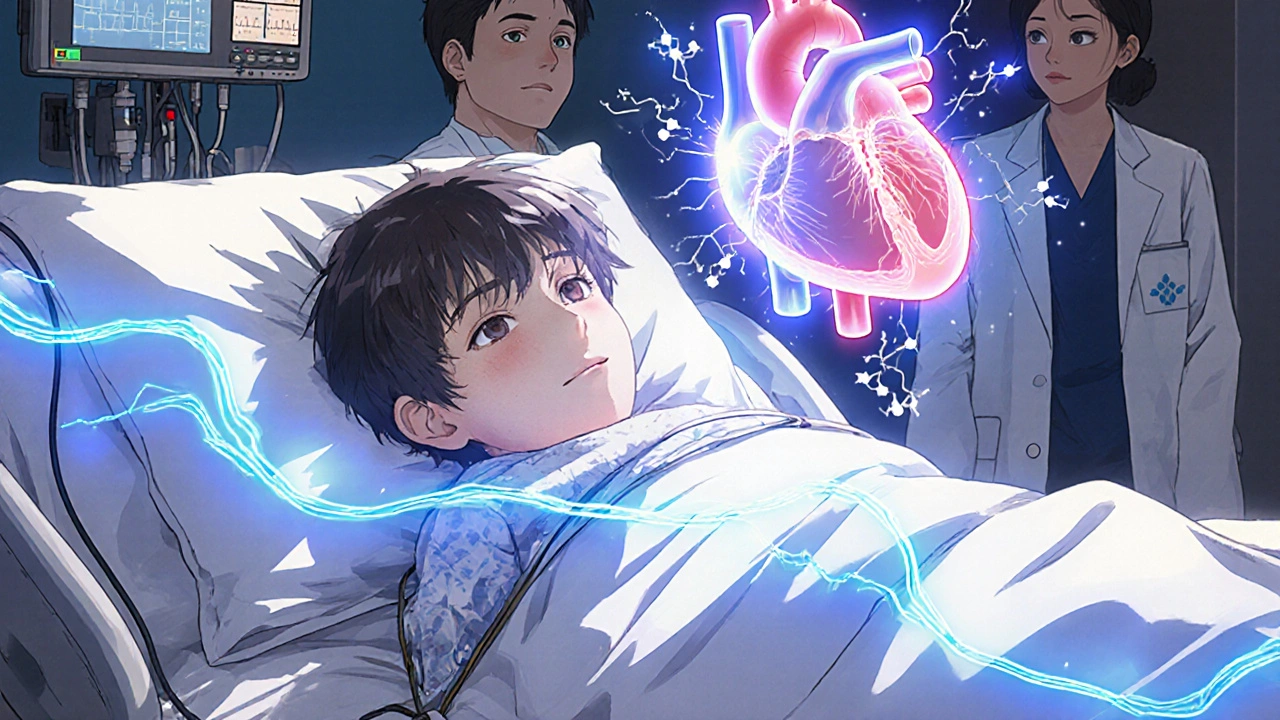
When a child is born with congenital heart disease, their heart doesn’t just have structural problems-it often has electrical problems too. Irregular heartbeats, or arrhythmias, are common in these patients. And when those arrhythmias become life-threatening, doctors turn to one drug that’s stood the test of time: amiodarone.
Why Amiodarone Is Different
Amiodarone isn’t like other antiarrhythmic drugs. Most of them target one specific part of the heart’s electrical system. Amiodarone hits multiple targets at once. It blocks sodium, potassium, and calcium channels. It also slows down the heart’s response to adrenaline. This broad action makes it uniquely effective in complex cases, especially when the heart’s anatomy is messed up from birth.In kids with congenital heart disease, arrhythmias often come from abnormal pathways or scar tissue left behind after surgeries. Drugs like flecainide or propafenone can make things worse in these cases. But amiodarone? It’s less likely to trigger dangerous rhythms. That’s why it’s often the first choice when a child develops ventricular tachycardia or atrial flutter after a Fontan procedure or repair of tetralogy of Fallot.
Real-World Use in Pediatric Patients
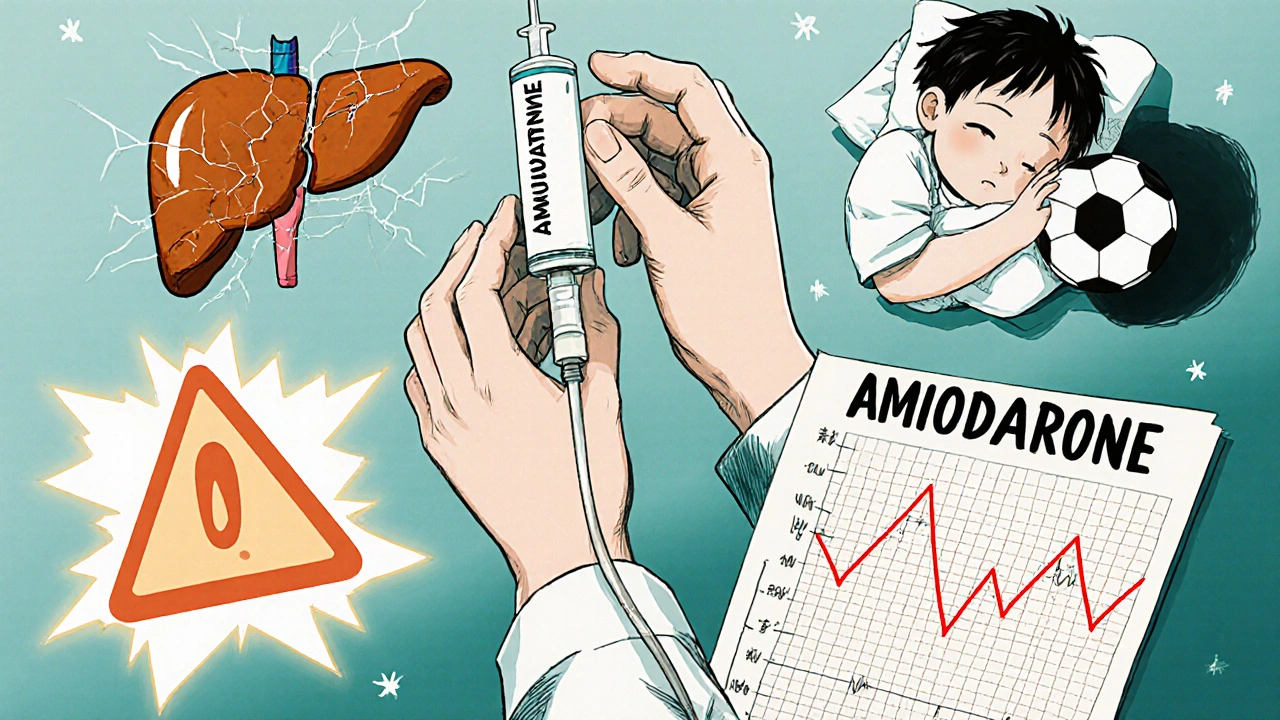
A 2023 study from the American Heart Association tracked 412 children with congenital heart disease who were treated for sustained arrhythmias. Of those, 68% were given amiodarone. Nearly 70% saw their rhythm stabilize within two weeks. Only 12% needed to switch to another drug or get a device like an ICD.One case from Boston Children’s Hospital involved a 9-year-old with repaired transposition of the great arteries. After multiple episodes of ventricular tachycardia, she couldn’t tolerate exercise or even walk to school. She was started on low-dose amiodarone-150 mg per day. Within 10 days, her episodes dropped from 12 a week to zero. Her parents said she started playing soccer again. That’s the kind of outcome that keeps amiodarone in the toolbox.
Dosing Is Tricky-But Manageable
Giving amiodarone to kids isn’t like giving it to adults. There’s no standard dose. It’s based on weight, heart function, and whether the child has had prior heart surgery.Typical starting doses for children range from 5 to 10 mg per kilogram per day, split into two doses. For a 20 kg child, that’s 100 to 200 mg daily. Many doctors start low and go slow, especially in infants. Some use a loading dose over 3-5 days, then drop to maintenance. Others skip the loading phase entirely and just use daily maintenance, especially if the child is stable.
The biggest mistake? Overdosing. Amiodarone builds up in fat and liver tissue. It can take weeks to clear. So if a child starts feeling tired, nauseous, or develops a slow heart rate, it’s not always the arrhythmia coming back-it could be the drug itself.

The Side Effects Nobody Talks About
Yes, amiodarone works. But it’s not harmless. The most common side effect in kids is thyroid trouble. About 15-20% of long-term users develop either an overactive or underactive thyroid. That’s why every child on amiodarone needs thyroid tests every 3-6 months.Liver damage is another risk. Liver enzymes can rise without symptoms. That’s why blood tests are mandatory. A 2024 paper from the European Journal of Pediatrics found that 1 in 8 children on amiodarone for more than six months had elevated liver enzymes. Most were mild, but 3% needed to stop the drug.
Then there’s lung toxicity. It’s rare in children-less than 2%-but it’s serious. A cough that won’t go away, shortness of breath during play, or unexplained fever could be signs. If it happens, the drug must stop immediately. Chest X-rays and CT scans help confirm it.
And yes, the skin turns blue-gray after months of use. It’s harmless, but parents panic. It’s not a sign of poisoning. It’s just iodine from the drug settling in the skin. It fades slowly after stopping.
When Not to Use It
Amiodarone isn’t for every arrhythmia. If a child has a simple, occasional premature beat that doesn’t cause symptoms, you don’t need it. The risks outweigh the benefit.It’s also not the first choice for newborns with supraventricular tachycardia. Adenosine or digoxin often work better and faster. Amiodarone is slow to kick in-it can take days to reach full effect. That’s a problem in emergencies.
And if the child has severe liver disease or a known allergy to iodine, skip it. There are alternatives like sotalol or dofetilide, though they come with their own risks.
Long-Term Use and Monitoring
Many children with congenital heart disease stay on amiodarone for years. Some for life. That’s why monitoring isn’t optional-it’s essential.Here’s what every care team should track every 3-6 months:
- Thyroid function (TSH, free T4)
- Liver enzymes (ALT, AST, bilirubin)
- Chest X-ray or low-dose CT if there’s cough or breathing trouble
- ECG to check for prolonged QT or bradycardia
- Eye exam-amiodarone can cause corneal deposits, though they rarely affect vision
Some families worry about stopping the drug. But if the child’s heart has healed-like after a successful ablation or if the arrhythmia hasn’t returned for over a year-doctors may try to taper it slowly. Abruptly stopping amiodarone can cause rebound arrhythmias. Tapering over weeks reduces that risk.
Alternatives and When to Consider Them
Amiodarone isn’t the only option. Sotalol is popular for atrial arrhythmias. It’s easier to monitor because it doesn’t build up in the body. But it can still prolong the QT interval. Flecainide works well for some, but it’s risky in kids with structural heart disease.For kids who don’t respond to meds, catheter ablation is becoming more common. It’s not a cure-all, but in centers with pediatric expertise, success rates are over 80% for certain arrhythmias like AVNRT or WPW syndrome.
ICDs are reserved for those at highest risk of sudden death. Amiodarone often buys time until a child is big enough for one.
The Bottom Line
Amiodarone is not a magic pill. It’s a powerful, complex tool. Used right, it saves lives. Used carelessly, it causes harm. In children with congenital heart disease, it’s often the best shot at keeping their hearts beating steadily through surgeries, growth spurts, and unpredictable changes.The key? Start low. Monitor closely. Don’t ignore the signs. And always remember-it’s not about eliminating every extra beat. It’s about keeping the child alive, active, and growing.
Is amiodarone safe for babies with congenital heart disease?
Yes, but with extreme caution. Amiodarone is used in newborns and infants when arrhythmias are life-threatening, like persistent ventricular tachycardia or severe atrial flutter. Dosing is based on weight and heart function, and monitoring for thyroid, liver, and lung side effects starts immediately. It’s not a first-line drug for simple arrhythmias in babies-adenosine or digoxin are preferred when possible.
How long does it take for amiodarone to work in children?
It can take anywhere from a few days to several weeks. Unlike drugs like adenosine that work in seconds, amiodarone builds up slowly in the body. Most children show improvement within 7-14 days, but full effect may take 3-6 weeks. That’s why doctors often combine it with a faster-acting drug during the first few days.
Can amiodarone cure congenital heart disease?
No. Amiodarone treats the electrical problems-arrhythmias-that come with congenital heart disease. It doesn’t fix the structural defects like a hole in the heart or a narrowed valve. Those require surgery or catheter procedures. Amiodarone helps manage symptoms and prevent sudden events while the child grows or waits for further interventions.
What happens if a child stops taking amiodarone suddenly?
Stopping amiodarone abruptly can cause rebound arrhythmias-even if the child was doing well. Because the drug stays in the body for months, suddenly removing it can destabilize the heart’s rhythm. Doctors always taper the dose slowly over weeks or even months, especially if the child has been on it for more than a few months.
Are there newer drugs replacing amiodarone in children?
Not yet. While drugs like sotalol, dofetilide, and ranolazine are used, none match amiodarone’s broad effectiveness in complex congenital heart cases. Newer drugs are being studied, but they’re still in early trials for pediatric use. Amiodarone remains the most reliable option for life-threatening arrhythmias in children with structural heart disease.




Comments (9)
joe balak
Amiodarone works but it's a sledgehammer. Why not try ablation first if the anatomy allows? We're overmedicating kids because we're scared to do the hard stuff.
Ryan Tanner
This is such a clear breakdown. Seriously though, the fact that kids are back playing soccer after starting amiodarone? That’s everything. 🙌
Cornelle Camberos
Let me be perfectly clear: amiodarone is not a medicine. It is a chemical containment protocol. The FDA approved it in 1985 for life-threatening arrhythmias in adults. Now it's being pumped into infants like it's pediatric Gatorade. The iodine load alone should trigger alarm bells. Are we really okay with turning children into walking thyroid labs? And don't get me started on the liver toxicity data. This is not medicine. This is pharmacological triage disguised as care.
Amina Kmiha
Of course they don’t talk about the side effects 😒 Look at the skin turning blue-gray - that’s not harmless, that’s a warning sign they’re ignoring. And thyroid issues? 20%?! That’s not a side effect, that’s a full-body betrayal. Why are we still using this in kids? Because Big Pharma doesn’t want to fund real alternatives. 🤡
Vrinda Bali
Amiodarone is a relic of Western medical arrogance. In India, we manage arrhythmias with Ayurvedic herbs, controlled breathing, and cardiac yoga. We do not poison children with iodine-laced chemical cocktails. This drug is a testament to the failure of allopathic medicine to understand the body as a whole. The blue skin? That is the body screaming for balance. The doctors hear nothing.
Sara Allen
so like… amiodarone makes kids blue? like literally? that sounds so scary. my cousin’s kid got on it and now he’s kinda grayish and his mom freaks out every time he sweats. and the thyroid thing? yeah she had to get blood drawn every month. like why can’t they just use something normal? why does it have to be so… gross? and why do doctors act like it’s fine? i think they just don’t care. also i heard it’s because the drug is cheap and pharma doesn’t wanna spend money on new stuff. 🤷♀️
John Rendek
Good summary. The key is matching the tool to the problem. Amiodarone isn't for every arrhythmia. But when the heart is structurally broken and the rhythm is falling apart, it's often the only thing that buys time. Monitoring isn't optional. It's part of the treatment. And yes - tapering matters. Abrupt stops can kill.
Iván Maceda
🇺🇸 We don’t need to be copying European protocols. Amiodarone is American innovation at its finest. Other countries panic over side effects. We save lives. If a kid’s skin turns blue, fine. He’s alive. That’s what matters. 💪
Jessica Adelle
It is morally indefensible to subject pediatric patients to amiodarone without first exhausting every possible alternative. The fact that this drug is being used as a first-line agent in children with congenital heart disease reflects a systemic failure of medical ethics, regulatory oversight, and professional accountability. The long-term neurological, endocrine, and hepatic consequences are not merely risks - they are predictable, documented, and avoidable. This is not medicine. This is negligence dressed in white coats.