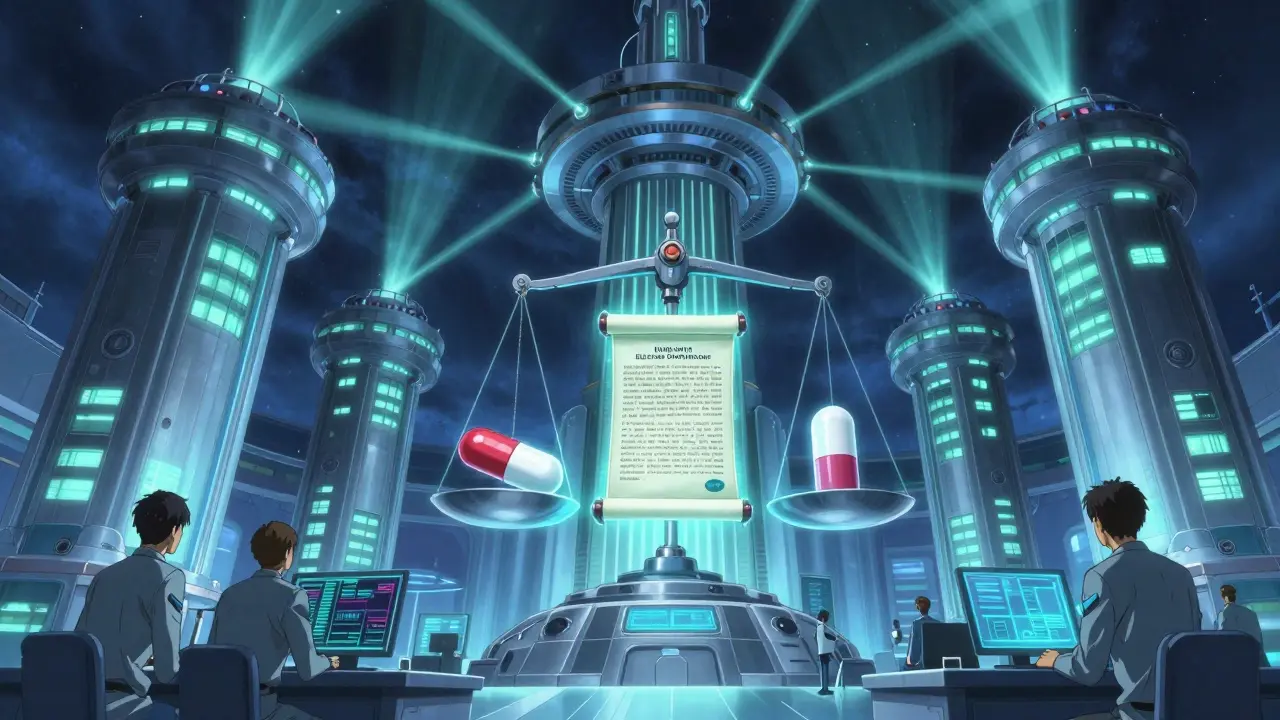
The U.S. Food and Drug Administration (FDA) doesn’t just approve brand-name drugs. Every day, millions of Americans rely on generic medications that cost a fraction of the original. Behind that accessibility is the FDA Office of Generic Drugs (OGD)-a critical but often overlooked division that makes sure these drugs are safe, effective, and available when needed.
What Is the FDA Office of Generic Drugs?
The FDA Office of Generic Drugs (OGD) is a specialized unit within the Center for Drug Evaluation and Research (CDER). It’s not just another department-it was elevated in 2013 to a "super office" that reports directly to the CDER director. This change gave OGD more authority, better resources, and clearer accountability to handle the growing demand for generic drugs.
Before 2013, generic drug reviews were scattered across different teams. Now, OGD brings everything under one roof: science, policy, regulation, and global coordination. Its mission is simple but powerful: to ensure high-quality, affordable generic drugs reach the American public without delay.
How OGD Makes Generic Drugs Available
Generic drugs aren’t copies-they’re scientifically proven equivalents. OGD reviews Abbreviated New Drug Applications (ANDAs), which are the formal requests from manufacturers to sell a generic version of a brand-name drug. For a generic to be approved, it must have the same active ingredient, strength, dosage form, and route of administration as the original. But more than that, it must perform the same way in the body.
This is where bioequivalence comes in. OGD’s Office of Bioequivalence determines if the generic drug releases the same amount of active ingredient at the same rate as the brand. If it doesn’t, it’s not approved. That’s not just a technicality-it’s a safety requirement. A drug that absorbs too quickly or too slowly can cause harm.
OGD doesn’t just review applications. It manages the entire timeline. Under the Generic Drug User Fee Amendments (GDUFA), generic drugmakers pay fees to fund the review process. In return, OGD commits to meeting strict deadlines-usually 10 months for standard applications and 6 months for priority ones. These aren’t empty promises. In 2023, OGD met or exceeded its GDUFA goals for the 10th year in a row.
The Structure of OGD: Five Sub-Offices and One Mission
OGD isn’t a monolith. It’s made up of six key parts, each with a specific role:
- Immediate Office (IO): The nerve center. It sets strategy, coordinates all sub-offices, and handles communications with Congress, the White House, and international regulators. It also includes the Division of Legal and Regulatory Support, which advises on the Hatch-Waxman Act-the law that balances patent protection for brand drugs with faster access to generics.
- Office of Bioequivalence (OB): Focuses on the science of how drugs behave in the body. This office runs clinical studies, sets bioequivalence standards, and manages the Safety and Surveillance Team that watches for unexpected side effects after generics hit the market.
- Office of Generic Drug Policy: Writes the rules. This team interprets complex laws like Hatch-Waxman, decides on patent exclusivity periods, and resolves disputes between brand and generic manufacturers over who gets to market first.
- Office of Regulatory Operations (ORO): The engine room. Its Regulatory Project Managers (RPMs) oversee every ANDA review from start to finish. They assign reviewers, track deadlines, and ensure nothing falls through the cracks. They also handle labeling reviews and filing checks to make sure applications are complete before they even get to the science team.
- Office of Research and Standards (ORS): Builds the tools for the future. This group develops new testing methods, improves modeling for drug absorption, and researches how manufacturing changes affect drug quality. Their work keeps OGD ahead of emerging science.
- Office of Safety and Clinical Evaluation: Monitors real-world safety. When a generic drug is linked to an adverse event, this office investigates. They work with healthcare providers, analyze data from national databases, and decide if a warning label needs updating-even years after approval.
Each of these offices talks to each other constantly. A change in policy from the Office of Generic Drug Policy affects how the Office of Bioequivalence designs its studies. A new manufacturing technique flagged by the Office of Research and Standards might require a revision in labeling reviewed by ORO. This integration is what makes OGD so effective.
The Hatch-Waxman Act and GDUFA: The Rules of the Game
OGD doesn’t operate in a vacuum. Two laws shape everything it does:
The Hatch-Waxman Act of 1984 created the modern generic drug system. It allowed generic manufacturers to prove their drugs are equivalent without repeating all the expensive clinical trials done by the brand. In exchange, it gave brand companies extra patent protection to make up for time lost during FDA review. OGD’s Legal Division is the expert on this law. They track patent certifications, decide on 180-day exclusivity periods for first generic filers, and resolve legal challenges that delay approvals.
The Generic Drug User Fee Amendments (GDUFA) started in 2012. Before GDUFA, FDA was underfunded and overwhelmed. Generic drug reviews took years. Now, manufacturers pay user fees-over $300 million annually-to fund OGD’s operations. That money pays for staff, technology, and training. In return, OGD must meet strict review timelines. GDUFA isn’t just about speed-it’s about transparency. OGD publishes performance reports every year, showing exactly how many applications were reviewed, delayed, or approved.
Why OGD Matters to You
If you’ve ever saved money on a prescription, you’ve benefited from OGD. In 2024, generics made up 90% of all prescriptions filled in the U.S.-but only 20% of total drug spending. That’s $300 billion in annual savings for patients and the healthcare system.
But OGD doesn’t just approve drugs. It protects them. In 2022, OGD halted the approval of a generic version of a blood thinner after lab tests showed inconsistent potency. That decision prevented potentially dangerous products from reaching pharmacies.
OGD also steps in during drug shortages. When a brand-name drug runs out, OGD fast-tracks the first generic applicant. In 2023, they approved 14 first generics for drugs in shortage, including critical antibiotics and cancer treatments.
And it’s not just domestic. OGD’s Global Generic Drug Affairs Team works with regulators in Europe, Canada, India, and China to align standards. That means a generic drug approved in the U.S. is more likely to be accepted abroad-and vice versa. This coordination helps prevent global supply chain disruptions.
What Happens After Approval?
Approval isn’t the end. OGD keeps watching. The Office of Safety and Clinical Evaluation monitors adverse event reports from the FDA’s MedWatch system. If a pattern emerges-say, multiple reports of dizziness linked to a specific generic-OGD investigates. It might require the manufacturer to change the label, run additional studies, or even pull the product.
Manufacturers can’t just change ingredients or suppliers without telling OGD. Even small changes to the formulation or manufacturing process require a prior approval supplement. OGD reviews those too. That’s how they ensure a generic drug you bought last year is the same as the one you buy today.
Common Misconceptions About Generic Drugs
Some people think generics are "inferior" because they’re cheaper. That’s false. OGD requires generics to meet the same strict standards as brand drugs. The inactive ingredients might differ-like the color or filler-but those don’t affect how the drug works.
Others believe generics take longer to work. Not true. Bioequivalence studies prove they work the same way, in the same time frame. If a generic didn’t work like the brand, it would be rejected before it ever reached the pharmacy shelf.
And no, generics aren’t made in "lesser" factories. OGD inspects all manufacturing sites-whether they’re in the U.S., India, or Germany-with the same standards. In 2023, OGD conducted over 1,200 inspections globally. Nearly 95% passed.
What’s Next for OGD?
OGD is adapting to new challenges. More complex generics-like injectables, inhalers, and biosimilars-are entering the market. These aren’t simple pills. They require new testing methods and more expertise. OGD is investing in advanced modeling tools and training its staff to handle them.
They’re also working on digital tools to make the application process smoother. In 2025, OGD rolled out a new electronic portal that lets manufacturers submit documents faster and get real-time feedback on missing information. This reduces delays caused by paperwork errors.
And with global supply chains still fragile, OGD is strengthening partnerships with international regulators to share inspection data and avoid duplicate reviews. That means faster approvals and fewer shortages.
What does the FDA Office of Generic Drugs actually do?
The FDA Office of Generic Drugs (OGD) reviews and approves generic drug applications (ANDAs), ensures they’re bioequivalent to brand-name drugs, sets safety and quality standards, manages patent and exclusivity issues under the Hatch-Waxman Act, and monitors drug safety after approval. It also coordinates global regulatory efforts and oversees the GDUFA review process.
How is OGD different from the rest of the FDA?
Unlike other FDA divisions that focus on brand-name drugs or medical devices, OGD specializes exclusively in generic medications. It has its own dedicated staff, policies, and funding through GDUFA. Its structure-divided into five specialized offices-allows it to handle the unique scientific, legal, and regulatory challenges of generics more efficiently than a general drug review team could.
Are generic drugs as safe as brand-name drugs?
Yes. OGD requires generics to have the same active ingredient, strength, dosage form, and route of administration as the brand. They must also prove bioequivalence-meaning they work the same way in the body. OGD inspects manufacturing sites globally and monitors post-market safety data. If a generic fails to meet these standards, it’s not approved.
How long does it take for OGD to approve a generic drug?
Under GDUFA, OGD aims to complete standard ANDA reviews within 10 months. Priority applications-like first generics or those for drugs in shortage-are reviewed in 6 months. These are targets, not guarantees. Delays can happen if applications are incomplete or if safety concerns arise. But OGD meets its deadlines over 90% of the time.
What is the Hatch-Waxman Act and how does OGD use it?
The Hatch-Waxman Act of 1984 created the legal framework for generic drug approval. It allows generic manufacturers to rely on the brand’s safety data while giving brand companies extended patent protection. OGD’s Division of Legal and Regulatory Support interprets this law to determine patent status, exclusivity periods, and whether a generic can be approved before a patent expires. It’s the foundation of how generics reach the market.
Does OGD inspect generic drug manufacturing plants?
Yes. OGD inspects all facilities that make generic drugs-whether in the U.S. or overseas. In 2023, it conducted over 1,200 inspections worldwide. These inspections are unannounced and follow the same standards as those for brand-name drugs. Plants that fail inspections can’t ship products to the U.S. until they fix the issues.
Can a generic drug be pulled from the market after approval?
Yes. If post-market safety data shows a generic drug causes unexpected side effects, or if manufacturing issues are found-like contamination or inconsistent potency-OGD can require a recall or suspend approval. This has happened multiple times since 2013, including for certain antibiotics and blood pressure medications.
Who pays for OGD’s operations?
Generic drug manufacturers pay user fees under the Generic Drug User Fee Amendments (GDUFA). These fees-totaling over $300 million annually-fund OGD’s staff, inspections, and technology. This system ensures the agency has the resources to review applications quickly and thoroughly without relying on taxpayer dollars.


Comments (10)
Lisa Dore
Just wanted to say thank you for explaining this so clearly. I’ve been on generic blood pressure meds for years and never knew how much work went into making sure they were safe. OGD is basically the unsung hero of my monthly prescription.
People who think generics are ‘cheap junk’ need to read this. It’s not magic-it’s science, and it’s working.
Sharleen Luciano
Oh please. You’re acting like OGD is some kind of saintly guardian of public health. The truth? They’re overworked, under-resourced bureaucrats who approve drugs based on outdated bioequivalence models while Indian factories cut corners. GDUFA didn’t fix the system-it just made it faster and more corporate.
And don’t get me started on the ‘1,200 inspections’-how many of those are actually thorough, or just PowerPoint audits with translators?
Jim Rice
Actually, the whole ‘bioequivalence’ thing is a scam. I’ve personally had generics that made me dizzy for days while the brand didn’t. Your ‘same active ingredient’ nonsense ignores pharmacokinetics. OGD doesn’t test real-world outcomes-they test lab rats in controlled conditions.
And that ‘95% pass rate’? That’s because they let manufacturers fix stuff after the inspection. It’s not compliance-it’s a game.
Henriette Barrows
Wow, this is the most reassuring thing I’ve read about my meds in years. I used to be scared to switch from brand to generic, but now I get it-OGD is doing the heavy lifting so we don’t have to.
And that part about them fast-tracking generics during shortages? That’s huge. My dad was on a life-saving chemo drug last year and the generic came through right before they ran out. OGD literally saved his life.
Thank you for writing this. I’m sharing it with everyone I know.
Alex Ronald
One thing people don’t realize: the Office of Research and Standards is quietly revolutionizing how we test complex generics. They’re using AI models to predict drug absorption instead of relying on old clinical trials.
For example, they’ve started simulating how a drug behaves in patients with liver disease-something traditional bioequivalence studies ignore. That’s the future. And it’s happening right now, not in 5 years.
OGD’s not perfect, but they’re adapting. That’s more than most agencies can say.
Teresa Rodriguez leon
I’ve worked in pharmacy for 18 years. I’ve seen patients cry because they couldn’t afford their brand. Then the generic came in-same pill, same effect, 80% cheaper.
And yes, sometimes there are batches that feel ‘off.’ But that’s not OGD’s fault-it’s the manufacturer. OGD catches 99% of bad ones before they hit shelves. The rest? We report them. They investigate. They act.
Don’t hate the system. Hate the greedy middlemen who jack up brand prices.
Manan Pandya
Excellent breakdown. The integration between the Office of Generic Drug Policy and the Office of Bioequivalence is particularly well-articulated. The Hatch-Waxman Act’s 180-day exclusivity window remains one of the most strategically leveraged provisions in pharmaceutical regulation.
It is worth noting that OGD’s global harmonization efforts with EMA and CDSCO have significantly reduced redundant inspections, thereby accelerating access in low-resource settings. This is regulatory excellence.
Aliza Efraimov
Okay, but let’s be real-OGD is the only reason I’m alive right now. My asthma inhaler? Generic. My insulin? Generic. My heart med? Generic.
I’ve been on 12 different generics over the last 7 years. One time, the new batch made me feel like I was underwater. I called my pharmacist. She flagged it. OGD pulled it within 72 hours.
That’s not bureaucracy. That’s a safety net. And I will fight anyone who says otherwise.
OGD: you’re doing god’s work.
Nisha Marwaha
From a manufacturing standpoint, the GDUFA fee structure has created a perverse incentive: manufacturers now optimize for regulatory efficiency over innovation. The emphasis on ‘same active ingredient’ and ‘bioequivalence’ discourages formulation improvements that could enhance patient adherence-like enteric coatings or extended-release profiles.
OGD’s rigid adherence to ANDA pathways stifles next-gen generics. We need adaptive pathways for complex drug delivery systems, not just ‘copy-paste’ approvals.
Duncan Careless
good post. i never knew all this. i just thought generics were cheaper. turns out theyre basically the same but with less marketing.
also i live in the uk and we dont have this office. we just get generics from india and hope for the best. kinda scary.