
Antidepressant Risk Timeline Tool
Understand Your Risk Timeline
This tool shows the timing and magnitude of suicidal thought risk during the first 8 weeks of antidepressant treatment based on your age and the medication you're taking.
Important Notes
The FDA black box warning applies to all antidepressants for patients under 25. This tool shows the relative risk based on evidence from clinical studies.
When you start taking an antidepressant, you expect to feel better. But for some people-especially teens and young adults-something unexpected happens: they feel worse. Suicidal thoughts can appear, sometimes within days of starting treatment. It’s not common, but it’s real. And it’s why the FDA put a black box warning on nearly every antidepressant sold in the U.S.
What Is a Black Box Warning?
A black box warning is the strongest safety alert the FDA can give a drug. It’s printed in bold, black borders at the top of the drug’s official prescribing information. It doesn’t mean the drug is dangerous or should be avoided. It means: there’s a serious risk you need to know about before you start taking it. In 2004, after reviewing data from 24 clinical trials involving over 4,400 patients, the FDA found that children and teens taking antidepressants had twice the risk of suicidal thoughts or behaviors compared to those taking a placebo. No one died in those studies, but the increase in suicidal thinking was clear enough to demand action. By 2006, the warning was expanded to include young adults up to age 24. The warning applies to all antidepressants-SSRIs like fluoxetine (Prozac), sertraline (Zoloft), and escitalopram (Lexapro), as well as SNRIs like venlafaxine (Effexor), and even bupropion (Wellbutrin).Why Does This Happen?
It’s not that antidepressants cause depression or make people want to die. Instead, they can trigger a surge of energy before mood improves. Someone who’s been too depressed to move, speak, or even get out of bed might suddenly have the physical ability to act on suicidal thoughts. That’s the danger. Think of it like this: imagine you’re stuck in deep snow. You can’t move. You feel hopeless. Then, someone gives you a shovel. You still feel hopeless-but now you can dig. And if you’re thinking about ending your life, you might use that shovel to try. This is why the risk is highest in the first few weeks of treatment. The brain is adjusting. Energy levels rise before emotional pain lifts. That’s why doctors tell patients to check in every week during the first month.Who’s at Risk?
The warning targets people under 25. But not everyone in that group is affected the same way. - Teens (12-17): Highest observed risk. Studies show about 4% of teens on antidepressants had suicidal thoughts or behaviors compared to 2% on placebo. - Young adults (18-24): Slightly lower risk than teens, but still elevated. - Adults 25+: No increased risk. In fact, some studies show antidepressants reduce suicide risk in older adults. There are exceptions. Fluoxetine (Prozac) has been studied more than any other antidepressant in youth and has shown the most consistent benefit without a major increase in suicidality. Sertraline and fluvoxamine also have better safety profiles in teens for OCD. But the FDA still applies the warning to all drugs in the class-because the mechanism is similar across them.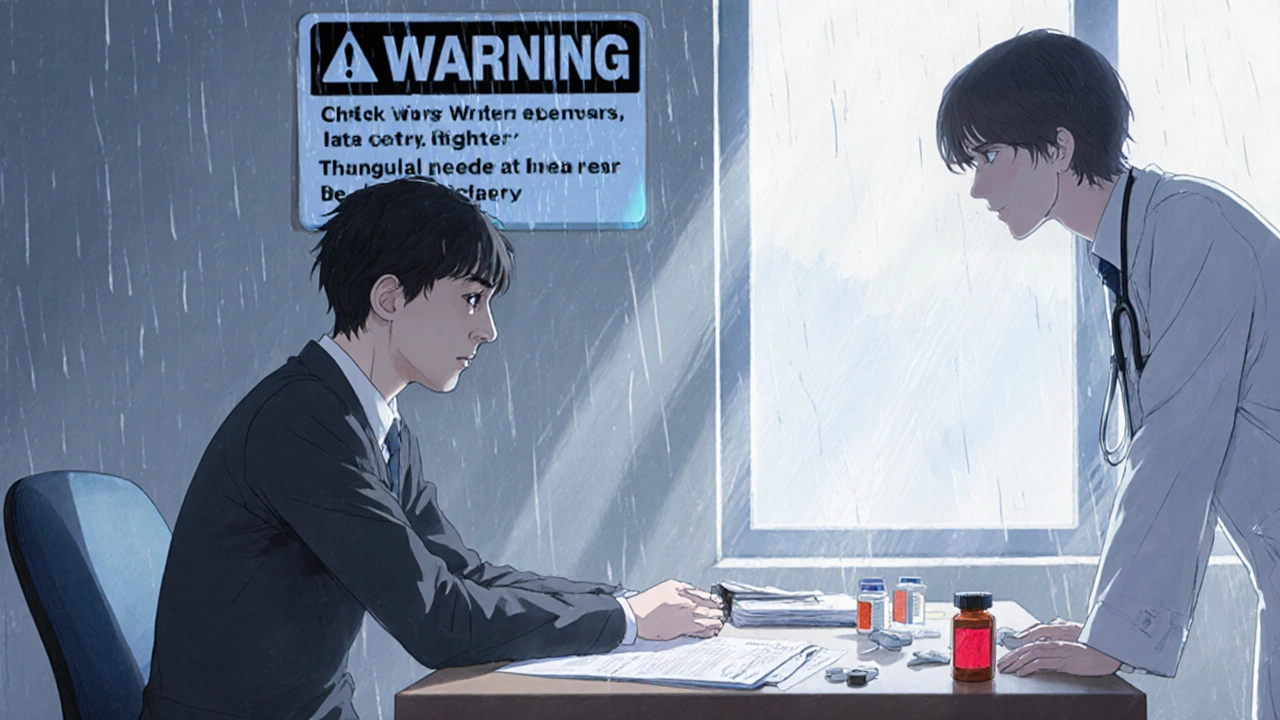
The Unintended Consequences
Here’s the part no one talks about enough: the warning may be hurting more people than it helps. After the FDA issued the black box warning in 2004, prescriptions for antidepressants in teens dropped by 22%. Psychotherapy visits fell too. And guess what happened? Suicide rates among U.S. teens went up by nearly 15% between 2003 and 2005. A 2023 study in Health Affairs tracked over 15 years of data. It found that fewer prescriptions led to:- 14.5% fewer doctor visits for depression
- 19.7% fewer depression diagnoses
- 22.3% fewer antidepressant prescriptions
- 17.1% fewer therapy visits
- 28.6% more emergency room visits for drug poisonings
- 14.9% more youth suicides
What Do Experts Really Think?
There’s no consensus. The FDA stands by the warning. So do many psychiatrists. But an increasing number of researchers argue the warning is outdated and dangerous. David Healy, a leading psychopharmacologist, says the original studies were flawed. He points out that the trials were short, didn’t measure long-term outcomes, and didn’t account for how severely depressed patients were when they started. He also notes that suicide attempts and deaths increased in the years after prescriptions dropped. Meanwhile, the American Psychiatric Association says this: Untreated depression kills. Antidepressants save lives. For most people, the benefits outweigh the risks. The key is monitoring. A 2021 meta-analysis in JAMA Psychiatry found that not all antidepressants carry the same risk. Paroxetine had the highest association with suicidal behavior in youth. Fluoxetine had the lowest. That’s why experts now say: Don’t treat all antidepressants the same.What Should You Do?
If you or someone you love is considering antidepressants, here’s what matters:- Don’t skip treatment because of the warning. Depression is the leading cause of disability in teens. Left untreated, it increases suicide risk by 20 times.
- Ask your doctor which medication they recommend and why. Fluoxetine and sertraline are often first choices for youth.
- Plan for close follow-up. The first 4 weeks are critical. Schedule weekly check-ins. Call the doctor if you notice increased agitation, panic, insomnia, or talk of self-harm.
- Watch for changes, not just sadness. Look for sudden energy, restlessness, irritability, or talking about death. These can be early signs of increased risk.
- Never stop abruptly. Stopping an antidepressant suddenly can cause withdrawal symptoms that mimic worsening depression.

What About Therapy?
Antidepressants aren’t the only option. For mild to moderate depression, cognitive behavioral therapy (CBT) is just as effective-and has no risk of suicidal thoughts. For teens, combining therapy with medication often works best. The problem? Therapy is hard to get. Insurance doesn’t always cover it. Waitlists are long. That’s why many people turn to pills. But if you can access therapy, use it. It’s not a backup. It’s a partner.Where Do We Go From Here?
The FDA still keeps the black box warning. But in 2022, their advisory committee admitted the current wording is confusing. Patients think it means “antidepressants cause suicide.” The FDA now says it means: “There’s a small chance your suicidal thoughts may increase in the first weeks of treatment. Watch closely. Call your doctor.” Experts agree: the future is personalized. Instead of one warning for all antidepressants, we need warnings tied to specific drugs, specific ages, and specific risk factors. We need better tools to predict who’s vulnerable. We need better education for families. Right now, the warning is a blunt instrument. And blunt instruments can do more harm than good.Frequently Asked Questions
Do antidepressants cause suicide?
No. Antidepressants don’t cause suicide. But in a small number of young people, they can increase the risk of suicidal thoughts during the first few weeks of treatment. This is not because the drug makes someone want to die-it’s because the person gains energy before their mood improves, which can make them more likely to act on existing thoughts. The risk drops sharply after 4-6 weeks.
Is it safe to take antidepressants if I’m under 25?
Yes, for most people. The benefits of treating moderate to severe depression usually outweigh the small risk of increased suicidal thinking. Fluoxetine (Prozac) and sertraline (Zoloft) have the strongest safety record in teens. The key is working with a doctor who monitors you closely, especially in the first month.
What should I do if I start having suicidal thoughts after starting an antidepressant?
Call your doctor immediately. Don’t wait. Don’t stop the medication on your own. If you’re in crisis, call or text 988 (the Suicide & Crisis Lifeline). If you’re in immediate danger, go to the nearest emergency room. Suicidal thoughts during early treatment are a medical signal-not a reason to quit-but they need urgent attention.
Why does the warning say “up to age 24” and not just “children”?
The FDA expanded the warning to include young adults because data showed the same pattern of increased suicidality in people aged 18-24. Their brains are still developing, and they’re often in transition-college, jobs, relationships-which can make depression harder to manage. The risk drops after 25, which is why the warning doesn’t apply to older adults.
Are there antidepressants that don’t carry this warning?
No. All antidepressants approved in the U.S. carry the black box warning for patients under 25. That includes SSRIs, SNRIs, atypical antidepressants, and even bupropion. The warning is based on the entire class of drugs, not individual ones. But research shows the risk varies-fluoxetine is safer than paroxetine, for example.
Can I avoid the risk by using natural remedies instead?
Natural remedies like St. John’s wort, omega-3s, or exercise can help with mild depression. But for moderate to severe depression, they’re not enough. St. John’s wort can interact dangerously with other medications and isn’t regulated like prescription drugs. Skipping proven treatment for unproven alternatives increases suicide risk. Always talk to a doctor before switching.



Comments (10)
Erika Lukacs
It’s funny how we treat mental health like a math problem-add drug, subtract sadness. But the mind isn’t a calculator. It’s a storm you’re trying to map with a flashlight. The black box warning feels like a legal footnote on a life-or-death poem.
Rebekah Kryger
Let’s be real-the FDA’s black box is performative risk management. They didn’t ban the drugs, they just slapped a sticker on them so they can say they ‘tried.’ Meanwhile, the real tragedy is the kids who never got the script because Mom saw ‘suicide’ and freaked out. Fear doesn’t cure depression-it just delays the inevitable.
Victoria Short
So... antidepressants can make you wanna kill yourself? Cool. I’ll just meditate.
Eric Gregorich
Look, I’ve been on six different SSRIs over twelve years. I’ve had the energy surge. I’ve had the nights where I stared at the ceiling thinking, ‘I could jump.’ But here’s the thing nobody admits-the depression was already there, screaming silently. The meds didn’t create the thought. They just gave my body the strength to finally scream back. And that’s terrifying. But it’s also the first time in years I felt like I was alive enough to fight. The warning is necessary, sure-but it’s not the whole story. The real danger isn’t the pill. It’s the silence that comes after you’re told not to take it. That’s when people vanish. Not because they got worse. Because they stopped being seen.
Phil Best
Y’all act like this is some new revelation. In India, we have a phrase: ‘Dard ka ilaj dard se hi hota hai.’ The cure for pain is pain. Antidepressants are the shovel in the snow. You don’t blame the shovel because the snow was deep. You blame the blizzard that buried you. And yet, here we are, blaming the shovel while the blizzard rages on. The black box warning? It’s the FDA’s version of a ‘be careful’ sticker on a defibrillator. Useful? Maybe. But if you don’t use it, people die. And we’re already losing too many.
Parv Trivedi
I come from a place where mental health is still whispered about. But I’ve seen friends take fluoxetine and slowly come back to life. One of them told me, ‘It didn’t make me happy. It just made me able to try.’ That’s all we need sometimes. The warning is scary, yes. But silence is scarier. I’m glad someone wrote this clearly. Thank you.
Willie Randle
It’s worth noting that the FDA’s 2004 meta-analysis included trials with inadequate placebo controls and short durations-some as brief as eight weeks. Longitudinal data from the UK and Scandinavia show that when SSRIs are prescribed appropriately with follow-up, youth suicide rates decline. The problem isn’t the medication-it’s the lack of infrastructure to support it. We need more therapists, not fewer prescriptions.
Connor Moizer
Yeah, I got on Zoloft at 19. First week? Felt like my brain was rewiring itself with a chainsaw. Second week? Couldn’t sleep. Third week? Started thinking, ‘What if I just… didn’t?’ I called my doctor. He didn’t panic. He just said, ‘That’s normal. We’re watching.’ Four weeks in, I cried for the first time in a year-and it felt good. The warning? Real. But the panic around it? That’s the real killer.
kanishetti anusha
I’m from a small town in India where therapy is a luxury and pills are seen as ‘weakness.’ But I watched my cousin take fluoxetine after years of silence. She didn’t become ‘happy’-but she started cooking again. She started answering texts. That’s not magic. That’s medicine. The black box is scary, but the silence before it? That’s what kills.
roy bradfield
Let’s not pretend this is about safety. The pharmaceutical industry knew this was coming. They funded the studies. They pushed the narrative. The black box warning? A distraction. A smokescreen. They profit from the fear, the confusion, the endless cycle of prescriptions, withdrawals, and relapses. The real cure? Stop treating depression like a chemical imbalance and start treating it like the societal collapse it often is. Poverty. Isolation. Trauma. The system doesn’t want you healed-it wants you medicated. And the FDA? Just the janitor cleaning up the mess they made.