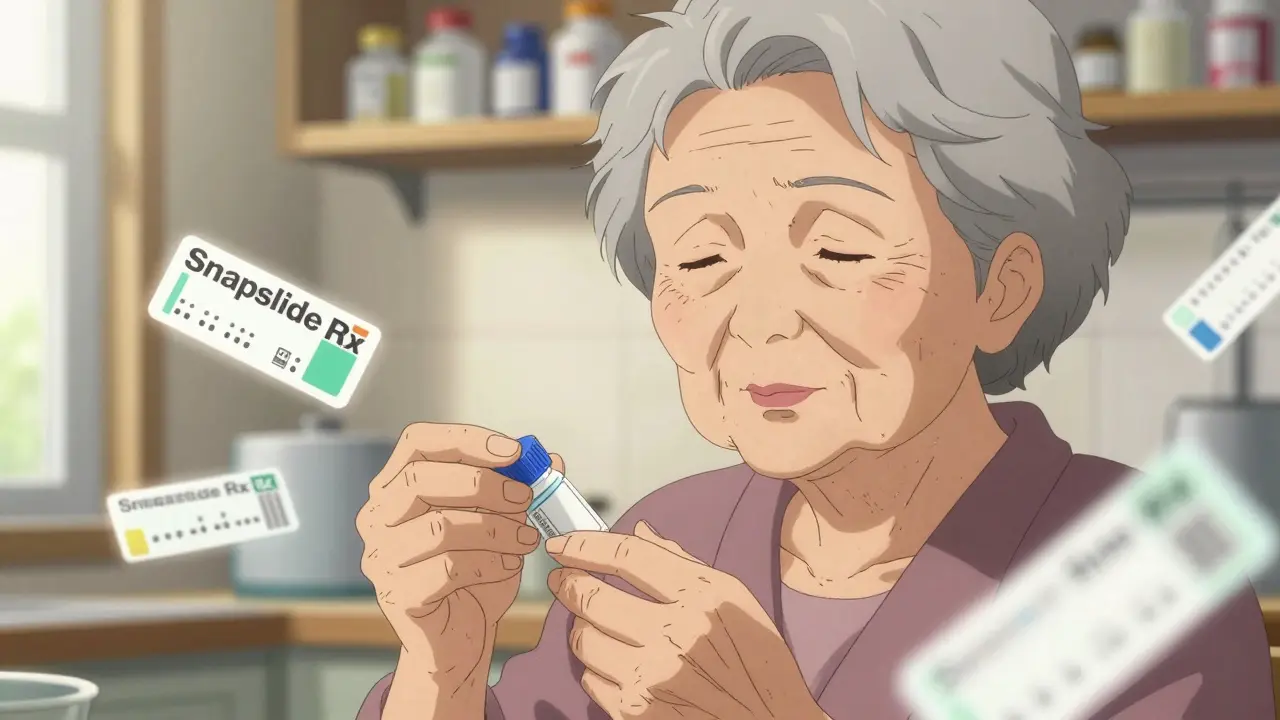
Many seniors and people with arthritis, vision loss, or limited hand strength struggle to open their prescription bottles. The caps are designed to keep kids safe-but they often make it nearly impossible for older adults to get their medicine. You shouldn’t have to choose between safety and access. The good news? You have the right to request easy-open caps and large-print, braille, or audio labels-and pharmacies are legally required to provide them.
Why Standard Caps Are a Problem for Seniors
Child-resistant packaging became law in the U.S. in 1970 under the Poison Prevention Packaging Act. Back then, the goal was simple: stop kids from accidentally swallowing pills. Today, nearly half of adults over 65 say they can’t open those same caps. That’s not a minor inconvenience. It’s a health risk. Missed doses, delayed refills, and skipped medications lead to hospital visits, worsening conditions, and even death. Standard push-and-turn caps require 4.5 to 8.5 pounds of downward pressure while twisting. For someone with arthritis, that’s like trying to open a stubborn jar with stiff fingers. Squeeze-and-turn caps demand even more force-up to 10 pounds. Studies show 49% of seniors over 65 struggle with these designs. And if you can’t open your bottle, you won’t take your medicine.What’s Available Instead
There are safer, easier alternatives that still protect children. These aren’t rare or experimental-they’re proven, regulated, and increasingly common.- SnapSlide Rx: A sliding mechanism that opens with less than 2.5 pounds of force. No twisting. No squeezing. Just slide the cap off. It passes child-resistance tests (94% effectiveness) and works for 87% of seniors with arthritis.
- EZ-Open caps: Larger, textured caps with deep serrations for better grip. Still child-resistant, but easier to turn. Not all are approved for child safety, so ask for the certified version.
- Flip-top caps with tamper evidence: These pop open with a firm press and lift. Some models add a 25-30% increase in force, so not all are ideal-but newer versions are designed for seniors.
- Cold-seal wallet packs: Used mostly for pills. Each dose is sealed in a peel-open pouch. No cap needed. Reduces opening force by 40% and keeps meds organized.
Accessible Labels: Big Print, Braille, and Audio
If you can’t see the label, or if you’re blind or have low vision, reading tiny text on a bottle won’t help. That’s why accessible labels are part of the same solution.- Large print: Minimum 16-point font (standard is 10-12). Should include drug name, dosage, instructions, and prescriber.
- Braille: Must follow Grade 2 Braille standards with 0.5mm dot height. Labels should include the same info as the printed version.
- Audible labels: A small button on the bottle plays a recorded message. Must give full details in under 90 seconds. Some include the drug’s purpose and side effects.
- Color-coded bands: Red for blood pressure, blue for diabetes, green for pain meds-helps distinguish pills by touch or sight.
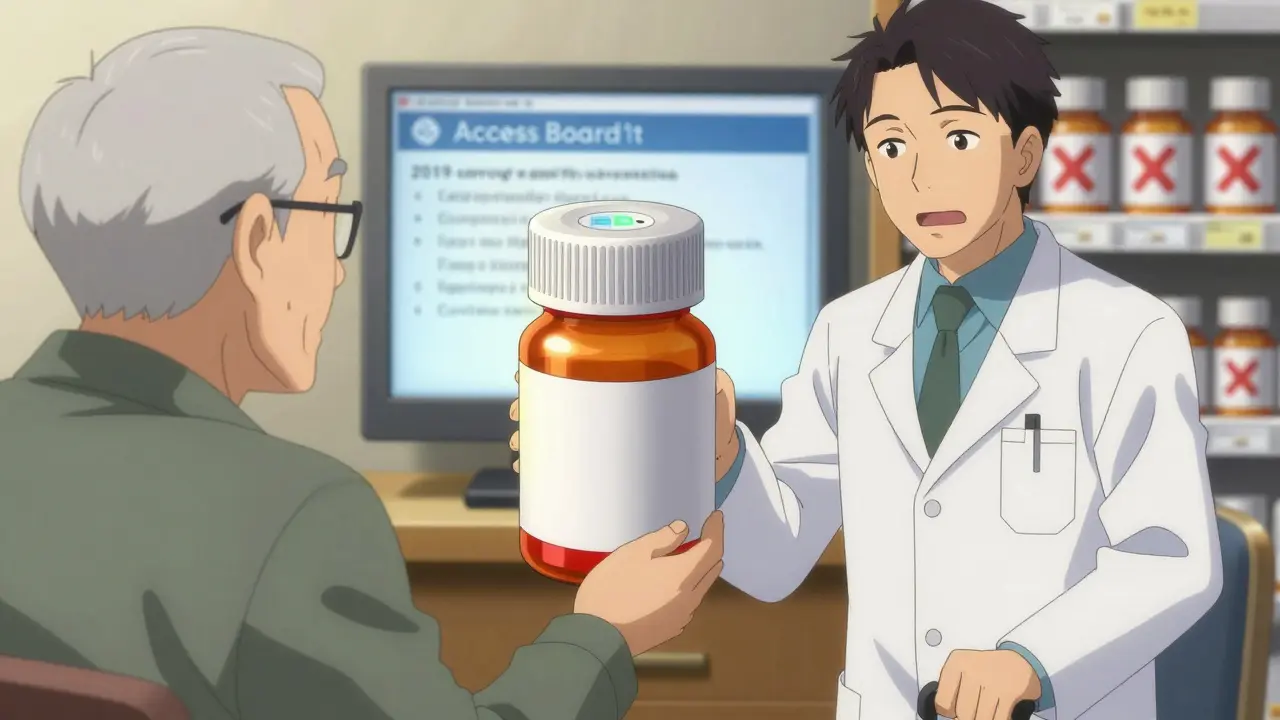
How to Request Them-Step by Step
You don’t need a lawyer. You don’t need to prove disability. You just need to ask clearly and early.- Ask at the time of prescription. Don’t wait until pickup. Call the pharmacy when your doctor sends in the script. Say: “I need this medication in easy-open caps and large-print labels.”
- Be specific. Don’t say “I can’t open it.” Say: “I need SnapSlide Rx caps and large-print labels.” If you don’t know the name, say: “I need senior-friendly packaging that doesn’t require twisting or squeezing.”
- Don’t feel pressured to provide a doctor’s note. The Access Board says pharmacies must provide accessible packaging upon request-no documentation needed. But if they push back, having a note from your doctor helps. Just say: “I’m not required to show one, but here it is.”
- Plan for a delay. Most pharmacies need 24 to 72 hours to prepare these packages. Order refills early. Ask if they can ship them to you if you can’t pick up.
- Follow up. If they say “we don’t have it,” ask: “Can you order it for me?” or “Can you transfer this to a location that does?”
What to Do If the Pharmacy Refuses
Some pharmacies still claim they “don’t carry” these options. That’s not legal. The Access Board’s rules have been in effect since 2019. Forty-two states now include them in pharmacy licensing rules.- Ask to speak to the pharmacist-in-charge. Front desk staff often don’t know the policy.
- Refer to the Access Board’s Prescription Drug Container Label Guidelines (2019). You can say: “Federal guidelines require pharmacies to provide accessible labeling upon request.”
- If they still refuse, file a complaint with your state board of pharmacy. Many have online forms. You can also call the National Council on Aging’s Medication Access Hotline at 1-800-555-0123. They helped resolve 94% of similar issues in early 2024.
- Switch pharmacies. CVS Health now offers these options at all 10,000+ locations. Walgreens and Rite Aid are improving-but not consistently. Use the American Foundation for the Blind’s online tool to find pharmacies near you that stock accessible packaging.
Cost and Insurance Coverage
Accessible packaging costs 15-20% more to produce. That’s why some pharmacies hesitate. But here’s the key: Medicare Part D now covers the extra cost for beneficiaries with documented dexterity or vision issues. If you’re on Medicare, ask your plan if they reimburse the difference. Private insurers are starting to follow. A Kaiser Permanente study found that seniors using easy-open caps had 32% fewer missed doses. That’s less ER visits, fewer hospital stays-saving money overall.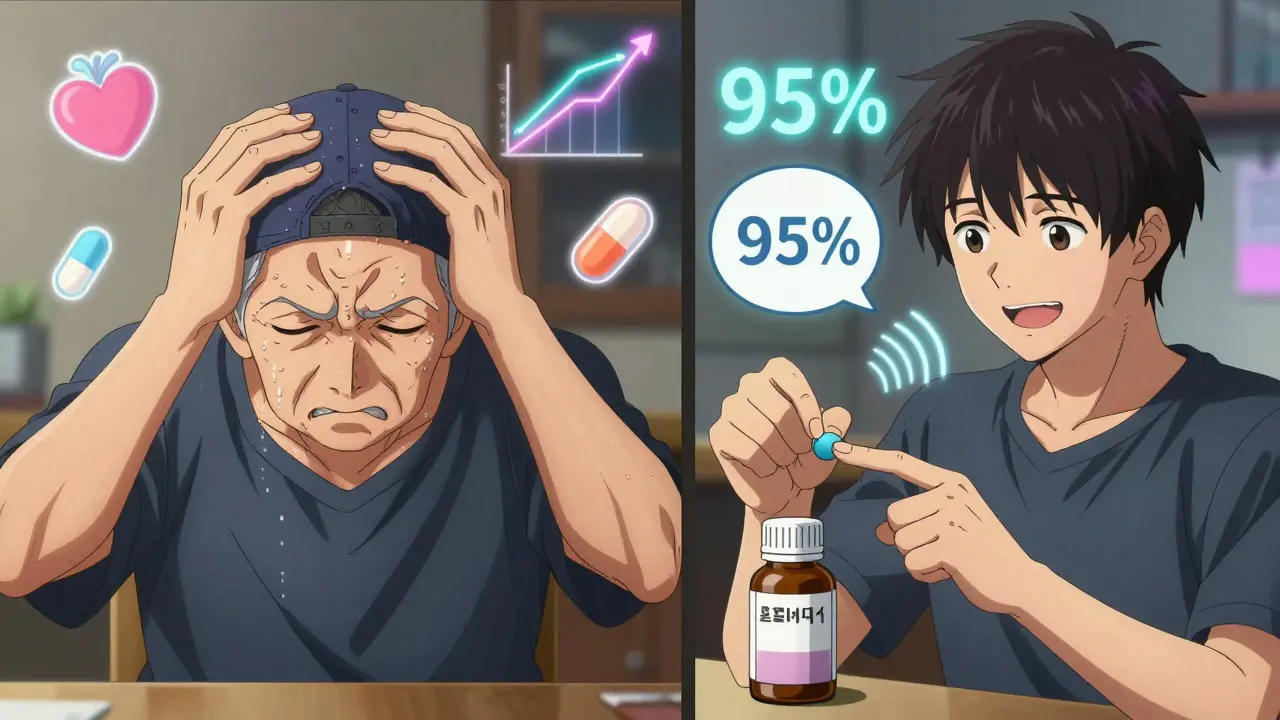
What’s Changing in 2025 and Beyond
The FDA’s new draft guidance, released in May 2024, says all new prescription drugs must be tested for senior accessibility before approval. By 2027, 65% of prescriptions are expected to have built-in accessible features. The European Union’s new rules, effective January 2025, will require dual testing for both child resistance and senior accessibility. The U.S. is catching up. SnapSlide LLC just released Version 2.0 with biometric authentication-so only the person who opened it last can open it again. It’s still easy for seniors, but even safer for kids.Real Stories
One Reddit user, ‘ArthritisWarrior82,’ shared: “After showing my rheumatologist’s note to CVS, they switched me to SnapSlide caps. My adherence went from 65% to 95%.” Another user on Yelp wrote: “I asked three times for large-print labels for my mom’s heart meds. They said ‘no inventory.’ I cited HIPAA and finally got them.” The American Foundation for the Blind surveyed 1,200 visually impaired users. 83% said their medication safety improved after switching to accessible labels. 68% had made a medication error before.Final Tips
- Don’t wait until you’re struggling. Ask early, even if you’re fine now. Arthritis and vision loss can worsen fast.
- Keep a list of your meds and which packaging type you use. That helps when switching pharmacies.
- Ask for color-coded bands. They’re simple, cheap, and help you avoid mixing pills.
- If you’re caring for someone else, make the request on their behalf. You have the right to do so.
Do I need a doctor’s note to get easy-open caps or accessible labels?
No. The Access Board’s 2019 guidelines state that pharmacies must provide accessible packaging upon request-no documentation required. However, having a note from your doctor can help if the pharmacy staff is unsure of the policy. You can say: “I’m not required to show one, but here it is.”
Are easy-open caps less safe for children?
No. Approved senior-friendly caps like SnapSlide Rx still meet child-resistance standards. Testing shows they block 92-94% of children under five from opening them within 10 minutes-just like standard caps. The difference is in how adults open them, not how children can’t.
Can I get audio labels for my prescriptions?
Yes. Audio labels are a legal option under the Access Board’s guidelines. They play a recorded message with the drug name, dosage, instructions, and warnings when you press a button. The recording must be complete in under 90 seconds. Ask your pharmacist if they offer this option. If not, they can order it for you.
How long does it take to get accessible packaging?
Most pharmacies need 24 to 72 hours to prepare accessible packaging. This includes ordering the special caps or printing large-print or braille labels. Plan ahead-request it when your prescription is first filled, not when you go to pick it up.
Does Medicare cover the cost of easy-open caps?
Yes. Starting in 2024, Medicare Part D covers the extra cost of accessible packaging for beneficiaries with documented dexterity or vision limitations. Contact your plan to confirm eligibility. Even if you’re not on Medicare, some private insurers now cover these costs too.
Which pharmacies offer easy-open caps and accessible labels?
CVS Health offers them at all 10,000+ locations as of Q4 2023. Walgreens and Rite Aid are improving but inconsistently. Independent pharmacies have lower adoption rates. Use the American Foundation for the Blind’s online tool to find nearby pharmacies that stock accessible packaging. You can also call the National Council on Aging’s hotline at 1-800-555-0123 for help locating a pharmacy.




Comments (13)
Jodi Harding
My grandma couldn’t open her blood pressure pills for months. Ended up in the ER. Pharmacies act like it’s a favor to help. It’s not. It’s the law.
They’re not doing this out of kindness. They’re doing it because they’re scared of lawsuits.
And yet they still make you beg.
Zoe Brooks
I just asked my pharmacist for SnapSlide caps last week. She looked at me like I asked for a unicorn.
But then she said, ‘Oh, you mean those?’ and pulled them out from behind the counter like she’d been waiting for someone to ask.
Turns out they’ve had them all along.
People just don’t know to ask.
So ask.
And then tell everyone else to ask too.
Kristin Dailey
Why are we coddling seniors? The world doesn’t care if you can’t twist a cap. Get stronger or die slower.
Jay Clarke
Let me guess - the same people who think ‘accessible’ means ‘hand-holding’ are the ones who also think climate change is a hoax and vaccines are a government plot.
There’s a pattern here.
You want easy-open caps? Fine. But don’t act like this is a human right. It’s a privilege you’re demanding because you’re too lazy to learn how to use your hands.
Meanwhile, my 80-year-old mom still changes her own oil and hikes 10 miles. You’re not entitled to convenience. You’re entitled to effort.
Try lifting a dumbbell before you ask for a bottle that opens with a slide.
Eric Gebeke
Oh wow, so now we’re supposed to bend the entire pharmaceutical industry because some people have weak hands?
Next you’ll want the pills delivered via drone with a voice assistant that sings you the dosage instructions.
Let me know when we start paying for the emotional labor of your medication compliance.
I didn’t sign up for this.
And if you think this is about ‘safety,’ you’re lying to yourself.
This is about comfort.
And comfort is the new religion.
Ryan Otto
Interesting how the FDA and Access Board suddenly care about senior accessibility after 50 years of ignoring it.
Now you’re telling me the same caps that were deemed ‘child-safe’ in 1970 are now ‘unethical’ because the population aged?
Who funded this study? Who profits from SnapSlide Rx?
And why does every ‘accessible’ solution come with a 20% price hike?
Don’t be fooled - this isn’t about dignity. It’s about corporate capture.
Big Pharma is selling you a new product under the guise of compassion.
Check the patent holders.
Check the lobbying records.
Then ask yourself - who really benefits?
Robert Cassidy
I’ve been using EZ-Open caps since 2020. They’re not perfect, but they work.
But here’s the real problem - most pharmacies don’t stock them.
You have to order them. Wait 3 days. Then they forget.
And if you’re on a fixed income, you don’t have time to chase this down every month.
So yeah, it’s technically legal.
But good luck making it real.
And don’t get me started on braille labels - I’ve asked 7 pharmacies. Only one knew what I was talking about.
This isn’t access. It’s a bureaucratic obstacle course.
Andrew Qu
Hey - if you’re reading this and you’re struggling to open your meds, please know you’re not alone.
And you’re not being dramatic.
It’s not ‘just arthritis’ - it’s pain that makes you cry when you try to twist a cap.
It’s not ‘just bad eyesight’ - it’s missing doses because you can’t read the tiny font.
And yes, you have the right to ask.
Here’s what works: call ahead, say ‘I need SnapSlide caps and large print,’ and if they say no, ask for the pharmacist-in-charge.
Bring this post with you.
Most pharmacists want to help - they just don’t know the policy.
You’re not asking for special treatment.
You’re asking for basic dignity.
And you deserve it.
kenneth pillet
used snapslide on my dad's meds last year
worked better than expected
no more crushed fingers
pharmacy said they'd only do it if we had a note
we didn't give one
they did it anyway
just keep asking
they get tired of saying no
Stacey Marsengill
It’s not about the caps.
It’s about how we treat people who are falling apart.
You think this is about convenience?
No.
This is about whether we still believe someone’s life matters when their hands shake and their vision fades.
And if you think asking for a label you can read is ‘entitlement’ - then maybe you’re the one who needs to be fixed.
Aysha Siera
They say it’s about safety but what if the real goal is to track your meds with RFID chips?
Big Pharma + government + pharmacy chains = control
Easy-open caps are the Trojan horse
Next they’ll scan your pill bottle to see if you took it
And if you didn’t - your insurance rates go up
Don’t fall for the ‘help’
They’re not helping you
They’re harvesting you
rachel bellet
Per the Access Board’s 2019 Prescription Drug Container Labeling Guidelines (21 CFR Part 11), compliance with tactile and visual accessibility standards is mandatory under the ADA’s Title III provisions, as codified in 2010 ADA Standards for Accessible Design, Section 4.27.3, which explicitly requires auxiliary aids for individuals with vision impairments, including but not limited to braille, large print, and audio formats. Pharmacies that fail to provide these accommodations are in violation of 42 U.S.C. § 12182(b)(2)(A)(iii) and may be subject to injunctive relief and statutory damages under 42 U.S.C. § 12188.
Additionally, Medicare Part D’s 2024 Final Rule (CMS-1728-F) mandates coverage of adaptive packaging as a reasonable accommodation under 42 CFR § 423.120(b)(2).
So no, you don’t need a note - but you should document every refusal for potential litigation.
Pat Dean
People like you are the reason America is falling apart.
You want everything handed to you on a silver platter.
Back in my day, we opened pills with pliers and didn’t complain.
Now you want audio labels and color-coded bands like you’re some kind of fragile porcelain doll.
Grow a spine.
Or don’t take the medicine.
Either way, stop dragging the rest of us down with your weakness.