High cholesterol isn’t just a number on a lab report-it’s a silent risk factor that can lead to heart attacks, strokes, and blocked arteries. For millions of people, statins are the go-to solution. But what if they don’t work for you? Or worse-what if they make you feel worse? That’s where alternatives come in. This isn’t about avoiding statins because they’re scary. It’s about knowing your options when statins aren’t the right fit.
How Statins Actually Work
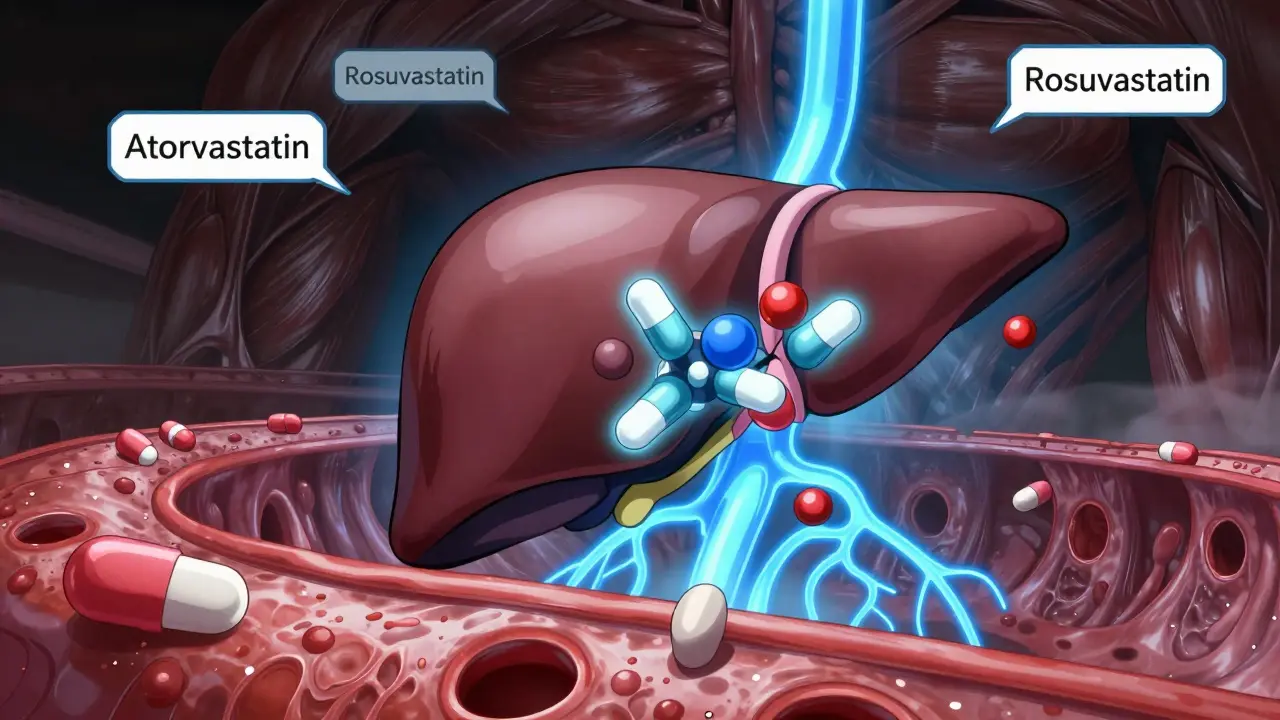
Statins aren’t magic pills. They work by blocking an enzyme in your liver called HMG-CoA reductase. That enzyme is responsible for making cholesterol. When it’s slowed down, your liver starts pulling more LDL (the "bad" cholesterol) out of your blood to make up for the shortage. The result? LDL levels drop, often by 30% to over 40%, depending on the dose and type.The most common statins you’ll hear about are atorvastatin (a high-potency statin also known as Lipitor), rosuvastatin (Crestor, one of the most studied and widely used), and simvastatin (Zocor, often prescribed as a generic). These aren’t interchangeable. Rosuvastatin and atorvastatin are stronger and have fewer drug interactions. Simvastatin and lovastatin are processed by the same liver enzyme (CYP3A4), which means they can clash with common medications like certain antibiotics or grapefruit juice.
Here’s the catch: doubling your statin dose doesn’t double your results. Going from 20 mg to 40 mg of atorvastatin might only drop your LDL another 6%. That’s why doctors don’t just keep cranking up the dose. It’s not worth the extra risk for minimal gain.
Why People Stop Taking Statins
About 25% of people quit statins within the first year. Why? Muscle pain. Not everyone gets it, but for those who do, it’s real. It’s not just soreness-it’s deep aches, weakness, or cramps that make climbing stairs or carrying groceries feel impossible. Studies show 5% to 10% of users experience this at standard doses. For some, it’s mild. For others, it’s enough to stop the pill.But here’s the twist: many people who blame statins for muscle pain aren’t actually having a statin-related reaction. Sometimes it’s aging, lack of movement, or another medication. The trick? Switching to a different statin. Pravastatin and rosuvastatin are less likely to cause muscle issues because they’re not processed through the same liver pathway. Or try lowering the dose and taking it every other day. A lot of people find relief without losing the benefit.
Ezetimibe: The Gentle Alternative
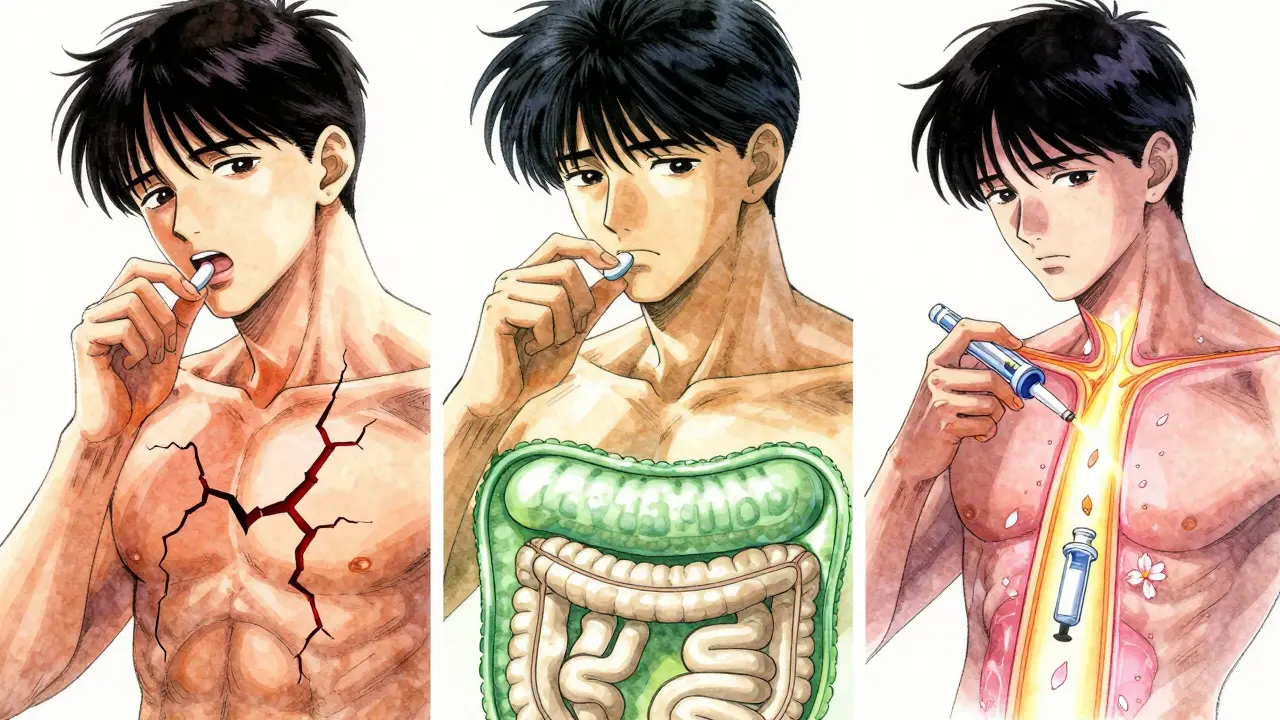
If statins don’t sit right, ezetimibe (Zetia) is often the next step. It doesn’t touch your liver. Instead, it blocks cholesterol from being absorbed in your gut. Think of it as a bouncer at the intestinal door-cholesterol doesn’t get in, so less makes its way into your bloodstream.Alone, ezetimibe lowers LDL by about 15% to 22%. That’s not as strong as a statin, but it’s not nothing. When paired with a statin, it pushes LDL down another 21% to 27%. Many patients report fewer side effects than with statins. One user on a heart health forum said, "Zetia alone got my LDL from 190 to 160, but adding it to my low-dose simvastatin brought it down to 110. No muscle pain at all."
Ezetimibe is taken as a pill, once a day. No injections. No special training. It’s simple, safe, and often covered by insurance. The American Heart Association and NICE both recommend it for people who can’t tolerate statins-or need an extra boost.
PCSK9 Inhibitors: The Power Players
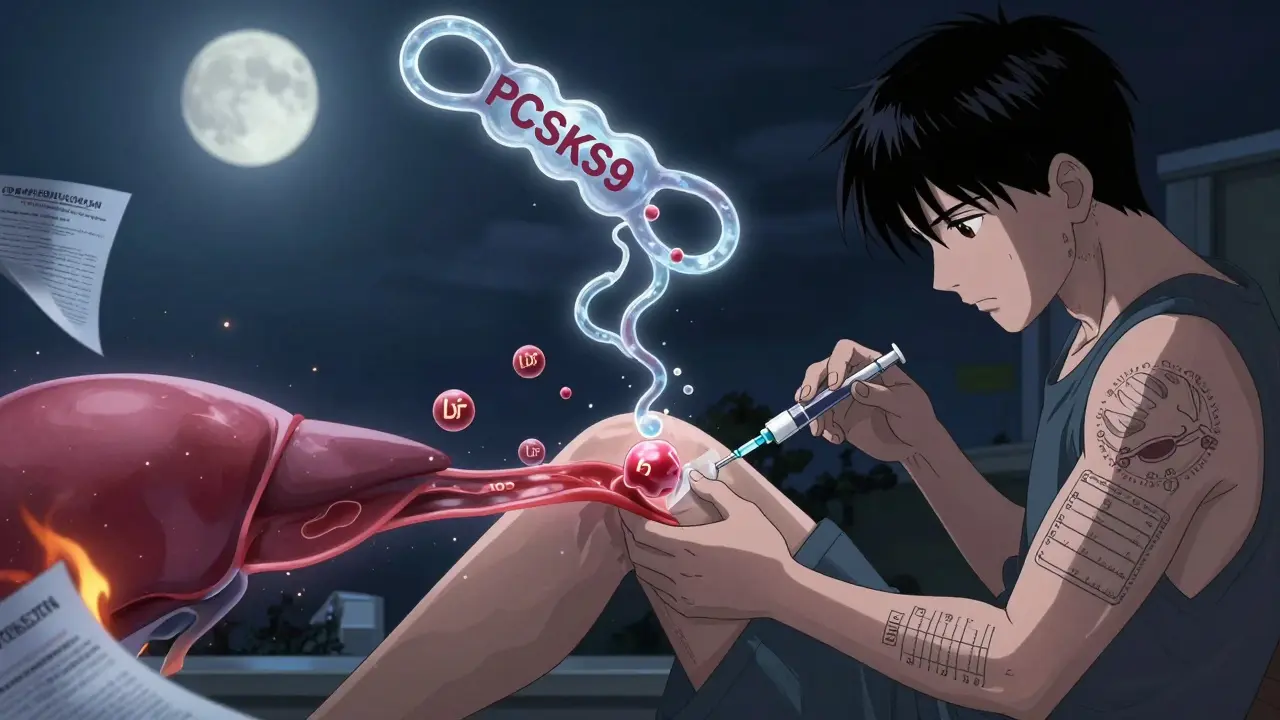
Then there’s the heavy artillery: PCSK9 inhibitors (alirocumab (Praluent) and evolocumab (Repatha)). These are injectable drugs introduced around 2015. They work by disabling a protein called PCSK9, which normally tells the liver to stop removing LDL from the blood. Block PCSK9, and your liver goes into overdrive cleaning out cholesterol.The results? LDL drops by up to 60%. That’s more than most statins can do. For people with genetic high cholesterol or those who’ve already had a heart attack, this can be life-changing. UCLA research found that unlike statins, PCSK9 inhibitors don’t raise the risk of hemorrhagic stroke-a key advantage for people with a history of brain bleeds.
But there’s a catch: cost and delivery. These drugs cost around $5,850 a year. That’s 1,000 times more than a generic statin ($4/month). Insurance approvals can take months. One Reddit user wrote, "Repatha lowered my LDL from 220 to 60 in 3 months, but my insurance denied coverage three times before approving it."
They’re given as a shot every two or four weeks. Most people learn to self-inject easily, but it’s still a barrier for some. Still, studies show they cut heart attacks and strokes by 20% in high-risk patients. For the right person, it’s worth the fight.
Newer Options: Bempedoic Acid and Inclisiran
In 2020, the FDA approved bempedoic acid (Nexletol). It’s an oral pill that blocks cholesterol production earlier in the liver’s pathway than statins. It lowers LDL by about 17% on its own. It’s often used with ezetimibe or a low-dose statin. A big plus? It’s much less likely to cause muscle pain than statins.Even newer is inclisiran (Leqvio). Approved in late 2021, it’s a once-in-six-months injection that silences the gene responsible for making PCSK9. It cuts LDL by 40% to 50% when used with a statin. Imagine getting a shot twice a year instead of daily pills or monthly injections. That’s a game-changer for adherence.
These newer drugs aren’t first-line. But for people who’ve tried statins, ezetimibe, and still aren’t at goal, they’re powerful tools. The challenge? Access. They’re expensive. And not all doctors are familiar with them yet.
What About Supplements?
You’ve seen the ads: red yeast rice, garlic pills, omega-3s, plant sterols. They sound natural. They sound safe. But here’s the truth: they don’t come close to statins.Red yeast rice contains a compound similar to lovastatin, so it can cause the same muscle side effects-without the safety monitoring. Omega-3s help with triglycerides, not LDL. Plant sterols might lower LDL by 5% to 10% if you take them with meals daily. That’s nice, but not enough for someone at high risk.
Harvard Health put it bluntly: "The results clearly show that if you need to lower your LDL, a statin works, and these supplements do not."
How Doctors Decide What’s Right for You
There’s no one-size-fits-all. Your doctor doesn’t just pick the strongest drug. They look at:- Your LDL number and target goal (based on heart disease risk)
- Your history of heart attacks, strokes, or diabetes
- Other medications you’re taking
- Any muscle pain or liver issues
- Cost and insurance coverage
Most guidelines say: start with a statin. If you can’t tolerate it, try another statin. If that still doesn’t work, add ezetimibe. If you’re still not at goal, consider PCSK9 inhibitors or bempedoic acid. And if you’ve had a stroke or have a high risk of one, PCSK9 inhibitors might be the safer pick.
The American College of Cardiology recommends trying at least two different statins before giving up on the class. Many people who think they "can’t take statins" just haven’t found the right one yet.
What You Can Do Today
If you’re on a statin and feel off, don’t quit cold turkey. Talk to your doctor. Ask:- Could I switch to a different statin?
- Would a lower dose or alternate-day dosing help?
- Should I add ezetimibe instead of stopping?
- Am I at risk for hemorrhagic stroke? If so, should I consider PCSK9 inhibitors?
If you’re not on medication but your LDL is high, don’t wait. Lifestyle changes-eating more fiber, moving daily, losing weight-help. But if you’re at high risk, they’re not enough. Medication saves lives.
Cholesterol isn’t about fear. It’s about control. Statins are the most proven tool. But they’re not the only one. The right option for you depends on your body, your risk, and your life-not just a pill bottle.
Can I take ezetimibe instead of a statin?
Yes, but it’s usually not the first choice. Ezetimibe lowers LDL by 15% to 22% on its own, which is less than most statins. It’s best used either when statins aren’t tolerated, or added to a statin for extra lowering. For people with very high risk-like those with prior heart attacks-ezetimibe alone usually isn’t enough.
Are PCSK9 inhibitors better than statins?
They’re stronger-lowering LDL by up to 60%-but not necessarily "better." Statins have 30+ years of data showing they cut heart attacks and deaths. PCSK9 inhibitors are newer, more expensive, and require injections. They’re best for people who can’t reach their LDL goal on statins, or who have specific risks like prior brain bleeds. For most, statins still come first.
Do cholesterol supplements really work?
Not like prescription meds. Supplements like red yeast rice, garlic, or plant sterols may lower LDL by 5% to 10%, but they’re not regulated like drugs. They don’t have the same safety data, and they won’t protect you like statins do. Harvard Health and the American Heart Association agree: if you need to lower LDL, supplements aren’t a replacement.
Why do statins cause muscle pain?
The exact reason isn’t fully known, but it’s linked to how statins affect muscle cells and energy production. It’s not an allergy-it’s a side effect. Some people are more sensitive than others. Switching statins, lowering the dose, or taking it every other day often helps. Rarely, it can lead to serious muscle damage (rhabdomyolysis), which is why doctors check kidney function and muscle enzymes if symptoms are severe.
How long does it take for cholesterol meds to work?
Statins usually take 4 to 6 weeks to reach full effect. Ezetimibe works in about the same time. PCSK9 inhibitors and inclisiran show results in weeks, with peak effect around 12 weeks. Blood tests are typically done 6 to 12 weeks after starting to see if you’re at goal. Don’t expect overnight changes-this is a long-term game.




Comments (8)
tynece roberts
i just took zetia for 6 months and my ldl went from 185 to 150. no muscle pain, no weird side effects. honestly? way easier than dealing with statin weirdness. i still eat junk food but at least i feel like i’m not poisoning myself. 🤷♀️
Leah Dobbin
It is, frankly, astonishing how many individuals persist in conflating pharmacological efficacy with moral virtue. The notion that one can achieve cardiovascular health through dietary supplements-those unregulated, commercially haphazard concoctions-is not merely misguided; it is a profound epistemological failure. One cannot out-supplement atherosclerosis. The data are unequivocal: statins reduce mortality. Period. To dismiss them in favor of red yeast rice is not holistic-it is hubris masquerading as wellness.
Ali Hughey
⚠️⚠️⚠️ STOP. LISTEN. THE PHARMA COMPANIES ARE HIDING THE TRUTH ABOUT PCSK9 INHIBITORS. THEY’RE NOT JUST EXPENSIVE-THEY’RE DESIGNED TO MAKE YOU DEPENDENT. I READ A BLOG POST (LINK IN COMMENTS) THAT SAID THE FDA WAS PAID OFF TO APPROVE THEM. AND DON’T EVEN GET ME STARTED ON INCLISIRAN-THAT’S A 6-MONTH INJECTION?! THAT’S A CHIP. THEY’RE PUTTING CHIPS IN THE SHOTS. I’M NOT KIDDING. I SAW A VIDEO OF A DOCTOR WHISPERING ‘TRIGGER’ TO A PATIENT. 🤫💉👁️🗨️
Aaron Leib
If you’re experiencing muscle pain on statins, don’t give up. Try pravastatin or rosuvastatin first. Lower the dose. Go every other day. Many people don’t realize how many options exist before jumping to injections or supplements. You’re not failing-you’re just not on the right one yet. Talk to your doc. Seriously.
Hugh Breen
I’m so glad this thread exists. My dad had a stroke at 58, LDL was 240. We tried three statins-he couldn’t handle any. Then we added ezetimibe. His LDL dropped to 110. No pain. No drama. Now he’s hiking again. 🙌 If you’re scared of meds, I get it. But don’t let fear stop you from finding what works. There’s a path. It just takes patience and a good doctor. #HeartHealthMatters
rakesh sabharwal
The fundamental flaw in contemporary lipidology is the reductionist paradigm that privileges pharmacological intervention over systemic metabolic reconfiguration. Statins, as exogenous inhibitors of HMG-CoA reductase, represent a symptomatic palliation rather than a pathophysiological resolution. One must interrogate the epistemic hegemony of pharmaceutical corporatism and recenter the discourse upon dietary phytochemical modulation, circadian alignment, and mitochondrial bioenergetic optimization. Ezetimibe? Merely a band-aid on a hemorrhaging vessel.
Byron Boror
This whole article is just a Big Pharma sales pitch. Statins are poison. I’ve seen too many guys in my VA group with rhabdo. Why not just eat more butter and lift weights? America’s been lied to for 30 years. If you’re healthy, don’t take pills. If you’re not, maybe you need to stop eating microwave burritos. Real men don’t need statins. 🇺🇸
Lorna Brown
It’s fascinating how we treat cholesterol like a villain. What if it’s not the problem, but a symptom? What if inflammation, insulin resistance, and endothelial damage are the real drivers-and statins just happen to reduce inflammation as a side effect? Maybe we’re fixing the wrong thing. I’m not saying ditch meds. But maybe we need to ask deeper questions before we prescribe a lifetime of pills. Just… thinking out loud.