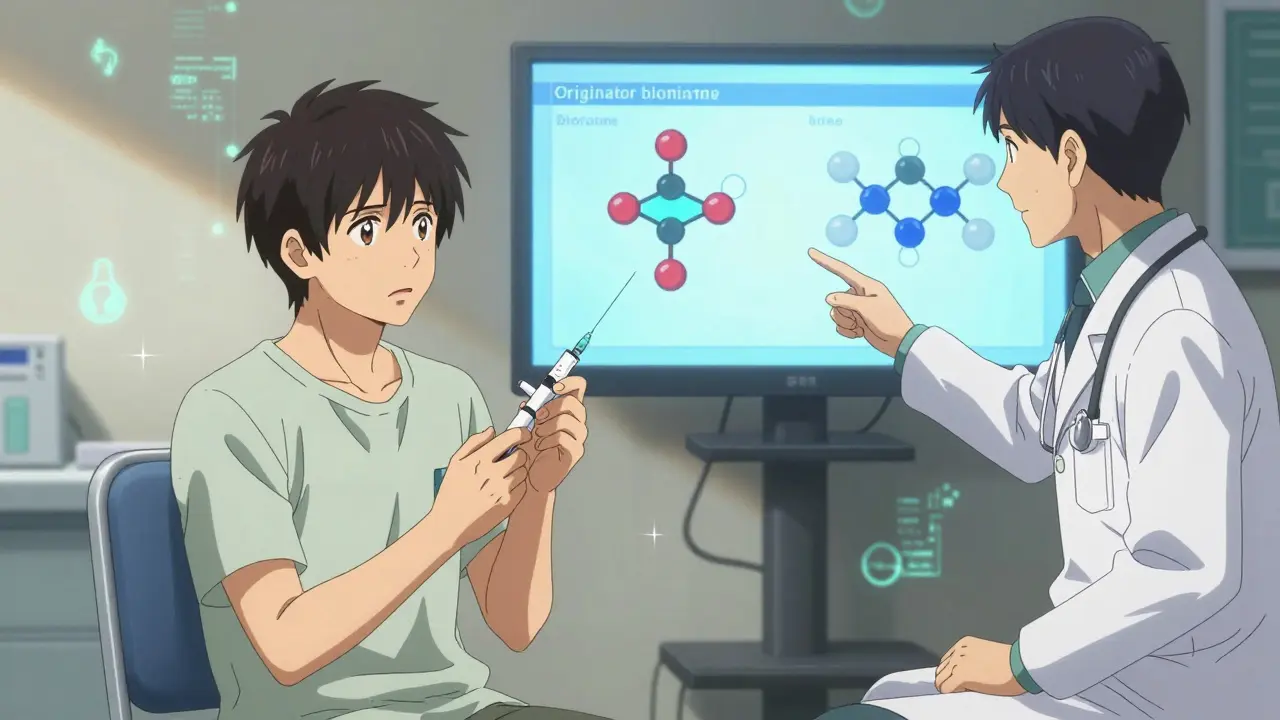
When you’ve been on a biologic drug for years-maybe infliximab or adalimumab-to manage rheumatoid arthritis, Crohn’s disease, or psoriasis, your body gets used to it. You know how it feels. You know when your symptoms are under control. Then your doctor says, "We’re switching you to a biosimilar." Suddenly, you’re not just changing a pill. You’re changing the entire experience. And that’s where confusion, fear, and questions start.
What exactly is a biosimilar?
A biosimilar isn’t a generic. That’s the first thing to understand. Generics are exact copies of small-molecule drugs like aspirin or metformin. Biosimilars are copies of complex biologic drugs made from living cells-proteins, antibodies, or other molecules that are harder to replicate perfectly. The FDA and EMA say a biosimilar must be highly similar to the original, with no clinically meaningful differences in safety, purity, or potency. But small differences in inactive ingredients? Those are allowed. And that’s where the debate starts.The first biosimilar approved in the U.S. was Zarxio (filgrastim-sndz) in 2015. Since then, 37 biosimilars have been approved, mostly targeting TNF inhibitors like infliximab and adalimumab. These drugs treat chronic inflammatory diseases. They’re expensive-Humira alone cost over $70,000 a year before biosimilars hit the market. Now, biosimilars launch at 15% to 35% lower prices. That’s why insurers and governments are pushing switches.
What happens when you switch from the originator?
You might expect your symptoms to flare up. Maybe you feel different. You might even think the new drug isn’t working. But the science says otherwise. A major study called NOR-Switch followed 481 patients with inflammatory arthritis or IBD who switched from originator infliximab to its biosimilar, CT-P13. After one year, 52.6% stayed on the biosimilar. The original group? 60%. The difference wasn’t statistically significant. In other words, the switch didn’t make people worse.Another study looked at patients switching from originator adalimumab to its biosimilar, GP2017. After one year, 79% stayed on the biosimilar. The original group had 81.3% retention. Again, no real difference in effectiveness. Even more telling: trough levels-the amount of drug in your blood-stayed nearly identical before and after the switch. One study showed 4.3 μg/mL before, 4.1 μg/mL after. That’s a 5% drop. Not enough to affect how the drug works.
What about side effects?
Some people report new or worse symptoms after switching. Skin rashes. Fatigue. Joint pain. But are these caused by the drug-or by the mind?A 2021 study in Frontiers in Psychology found that 32.7% of patients believed they felt worse after a switch, even though lab tests showed no change in disease activity. This is called the nocebo effect. It’s the opposite of placebo. You expect something bad to happen, so your brain makes you feel it. Reddit threads from patients with rheumatoid arthritis are full of posts like: "I switched to the biosimilar and now I feel like I’m back to square one." But when doctors checked their DAS28 scores (a standard measure of arthritis activity), most were unchanged.
Actual adverse events tied to the biosimilar? Rare. In a study of patients switching from infliximab to CT-P13, then to another biosimilar (SB2), immunogenicity-your body making antibodies against the drug-occurred at a rate of just 3 per 100 patient-years. That’s lower than the rate of losing response to the originator itself. In fact, about 20% of IBD patients lose response to infliximab every year, no matter which version they’re on. So if you flare after switching, it might not be the biosimilar. It might be your disease.
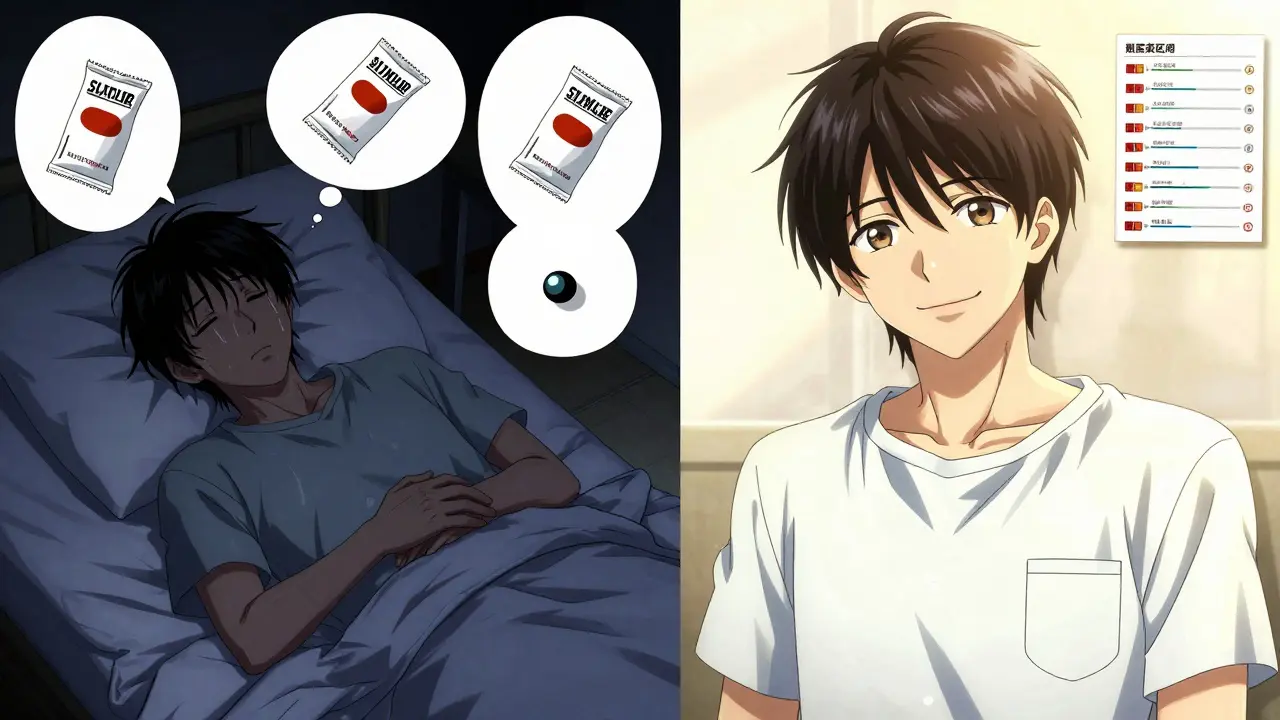
What about switching between biosimilars?
This is where things get trickier. Some patients switch from one biosimilar to another. Maybe your insurance changes its preferred drug. Or your pharmacy substitutes without telling you.A 2022 Spanish study tracked IBD patients who switched from CT-P13 to SB2. Fifteen percent stopped the new drug within a year. That’s higher than the 8.7% discontinuation rate in patients who stayed on the same biosimilar. But here’s the twist: blood levels of infliximab didn’t drop. Neither did inflammation markers. So why did they stop? Patients said they felt worse. Again, perception, not biology.
On the flip side, a 2020 study in Germany switched 100 patients from one biosimilar (SB4) to another (GP2015). Ninety percent stayed on the new drug. No flares. No drop in effectiveness. So why the difference? It’s messy. Patient expectations. How the switch was explained. Whether they were involved in the decision.
Why do some patients stop?
It’s not always about the drug. The biggest reason patients discontinue after a switch? Perceived loss of effectiveness. In one study, 12.6% stopped because they felt the drug wasn’t working. But when researchers checked their disease scores, 80% of them were still in remission. The second reason? Injection site reactions. About 7.8% of patients on adalimumab biosimilars reported redness or itching. Still, most of these were mild and didn’t require stopping.Real immunogenicity? Only 1.7 events per 100 patient-years. That’s less than 2% of people over a year. Compare that to the 20% annual loss of response to originator biologics. The real threat isn’t the biosimilar. It’s the fear of switching.
How can switching go better?
The key isn’t just the drug. It’s the conversation. The PERFUSE study showed that when patients got a 20-minute counseling session before switching, discontinuation dropped from 18% to just 6.4%. Here’s what works:- Explain the science: "This isn’t a generic. It’s been tested in dozens of studies. Your blood levels will stay the same."
- Use shared decision-making: "This is your treatment. We’re doing this because it’s safe and saves money, but your comfort matters."
- Monitor closely: Check DAS28 or PASI scores at 1, 3, and 6 months. Measure trough levels if needed.
Doctors who skip this step? They see higher dropout rates. Those who take time? Their patients stay on treatment. The drug doesn’t change. The experience does.
Regulations: FDA vs. EMA
In Europe, any biosimilar can be switched without special approval. The EMA says: if it’s approved, it’s switchable. In the U.S., it’s different. The FDA has a special designation: interchangeable. Only interchangeable biosimilars can be swapped at the pharmacy without the doctor’s permission. As of 2024, Cyltezo (adalimumab biosimilar) became the first interchangeable one. Others are coming. But most biosimilars still require a doctor’s order to switch.That’s why in the U.S., only 24% of infliximab prescriptions are for biosimilars. In Europe, it’s 67%. The difference? Regulation, pricing, and how much trust doctors and patients have in the system.
What’s the bottom line?
Switching from an originator biologic to a biosimilar is safe for most people. The data from over 80 studies confirms it. Efficacy stays the same. Safety stays the same. Even immunogenicity doesn’t spike. The biggest risk? The fear that comes with change.Health systems want to save money. Biosimilars cut costs by billions. But if patients stop taking their meds because they think the new drug doesn’t work, the cost goes up again-through ER visits, hospitalizations, and lost productivity.
The solution isn’t to force switches. It’s to support them. Educate. Listen. Monitor. Let patients be part of the decision. That’s how you keep people on treatment. Not just switching drugs-but keeping their lives stable.
For the vast majority, switching doesn’t mean losing control. It means keeping control-with a more affordable option that works just as well.





Comments (10)
bhushan telavane
Been on infliximab for 6 years, switched to biosimilar last year. No flare, no drama. My wallet is happier, and my joints are chill. Funny how the body doesn’t care what the label says as long as the drug works.
Connie Zehner
OMG I switched and NOW I’M DYING 😭😭😭 My DAS28 was fine but I felt like a zombie for 3 weeks!! My doctor said it’s all in my head but I KNOW it’s the biosimilar. I’m going back to Humira even if I have to sell a kidney. 💸💔 #NoceboIsRealToMe
holly Sinclair
It’s fascinating how deeply our neurobiology intersects with pharmaceutical perception. The nocebo effect isn’t just psychological-it’s a physiological cascade mediated by anticipatory anxiety and cortisol dysregulation. When patients are primed to expect failure, their autonomic nervous system amplifies somatic signals, misattributing normal fluctuations as disease recurrence. The data shows equivalence, but the lived experience is shaped by narrative, not just pharmacokinetics. We need to reframe the switch not as a substitution, but as a recalibration of trust in the medical system itself.
mark shortus
SO THIS IS WHAT HAPPENS WHEN YOU LET BIG PHARMA CONTROL YOUR LIFE?? 😱 I switched and now I can’t even walk to my mailbox. My rheumatologist didn’t even ASK me if I was okay with it. They just slapped me with a new prescription like I’m a vending machine. I’m not a cost-saving algorithm, I’m a PERSON. This is medical gaslighting. I’m filing a complaint. #BiosimilarBetrayal
Emily P
Has anyone tracked long-term immunogenicity after multiple switches? Like, switching from originator → biosimilar A → biosimilar B? I’m curious if cumulative exposure increases antibody risk over time.
Vicki Belcher
You got this 💪✨ Seriously, I switched twice and my psoriasis is better than ever! The key? Talking to your doc, not just accepting it. You’re not losing control-you’re upgrading. And hey, saving $$$ means more coffee, right? ☕❤️
Jedidiah Massey
Let’s be clear: biosimilars are not equivalent. The FDA’s ‘highly similar’ standard is a regulatory fiction. Protein folding, glycosylation profiles, and excipient interactions are non-linear and context-dependent. To claim clinical equivalence without head-to-head phase 3 trials in every indication is a disservice to patient autonomy. This isn’t aspirin. This is monoclonal antibody engineering at the edge of biological complexity. We’re playing Russian roulette with cytokine networks.
Lynsey Tyson
I get why people are scared. I was too. But after talking to my nurse and reading the studies, I realized I wasn’t being replaced-I was being supported. The drug’s still doing the same job. Maybe the fear isn’t about the medicine… but about losing something familiar. That’s okay. It’s human.
Sarah McQuillan
Why are we even talking about this? In Europe, they’ve been doing this for a decade. We’re behind because we let Big Pharma scare people. Biosimilars aren’t ‘cheap drugs’-they’re smart medicine. If you’re still on Humira in 2024 just because you’re scared of a label change, you’re not being brave-you’re being exploited. Time to grow up.
Kitt Eliz
Just switched from CT-P13 to SB2 last month-no issues, DAS28 stayed at 1.8, trough levels identical. 💯 The real problem? Poor patient education. Docs need to stop dumping papers on you and start having CONVERSATIONS. I’m a nurse practitioner, and I’ve seen 47 patients switch in the last year. Only 3 dropped out-and all of them were told ‘it’s the same’ without context. Knowledge is the real biosimilar. 🚀❤️