Statin Exercise Intensity Calculator
Calculate Your Safe Exercise Zone
Determine your target heart rate range for safe exercise while taking statins
Millions of people take statins to lower their cholesterol and protect their hearts. But many of them stop exercising because they’re afraid it’ll make their muscles hurt more. It’s a real concern. You take your pill every day, then go for a run or lift weights, and suddenly your legs feel like they’ve been hit by a truck. Is it the statin? The workout? Or both?
Statins and Muscle Pain: What’s Really Going On?
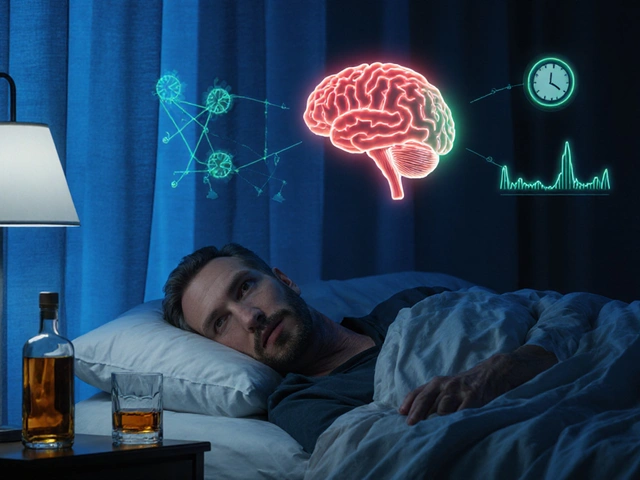
Statins work by blocking an enzyme in your liver that makes cholesterol. But that same enzyme is also involved in making other important compounds-like coenzyme Q10 (CoQ10), which helps your muscles produce energy. When CoQ10 drops, some people feel more tired or sore after physical activity. That’s not the same as muscle damage, but it can feel like it.
Research shows that about 1 in 10 statin users report muscle aches. But here’s the twist: in controlled studies, most of those people feel just as sore after exercise whether they’re on statins or not. The difference isn’t always in the pain level-it’s in how long it lasts. If your muscles are still aching after 72 hours, or if your urine turns dark (like cola), that’s a red flag. That’s not normal soreness. That’s something your doctor needs to check.
Not All Exercise Is Created Equal
One of the biggest myths is that you have to give up working out if you’re on statins. That’s not true. In fact, the opposite is true. A major 2023 study published in the Journal of the American College of Cardiology followed 100 adults aged 55 to 73 who took statins. They all did 45 minutes of cycling at a moderate pace-about 60% of their maximum effort. The results? No drop in strength. No increase in serious muscle damage. The only change? A slight delay in how fast their muscles relaxed after contracting. That’s a technical detail. It doesn’t mean you can’t move, walk, or bike.
But here’s where things change: intense exercise. The Boston Marathon study found that runners on statins had significantly higher levels of creatine kinase (CK)-a marker of muscle breakdown-after finishing the race. Older runners were especially affected. So if you’re doing HIIT, heavy lifting, or long-distance running, your risk goes up. That doesn’t mean you can’t do it. It means you need to be smarter about it.
What Kind of Exercise Is Safe?
Stick to moderate-intensity activities. That means:
- Brisk walking-fast enough that you can talk but not sing
- Cycling on flat ground or light hills
- Swimming at a steady pace
- Light resistance training with higher reps and lower weights
Use the Borg Scale to measure effort: aim for a 5 or 6 out of 10. You should feel like you’re working, but not gasping. If you’re pushing yourself to exhaustion, you’re probably going too hard.
One of the best pieces of advice from real users? Switch from high-intensity interval training to steady, continuous movement. People on Reddit who made that change reported a 60% drop in muscle discomfort within weeks. That’s not magic. It’s biology.

How to Train Smart on Statins
Here’s what actually works based on research and real-world experience:
- Start slow and build up. Don’t jump into a 10K run or a new weightlifting routine. Increase your workout time by no more than 10% per week. This gives your muscles time to adapt. One mouse study showed that animals trained for two weeks before starting statins didn’t lose muscle strength at all.
- Time your workouts. Most statins peak in your bloodstream 2 to 4 hours after you take them. If you take your pill in the evening, try exercising in the morning. If you take it in the morning, wait until after lunch to work out. It’s not proven, but it’s low-risk and makes sense.
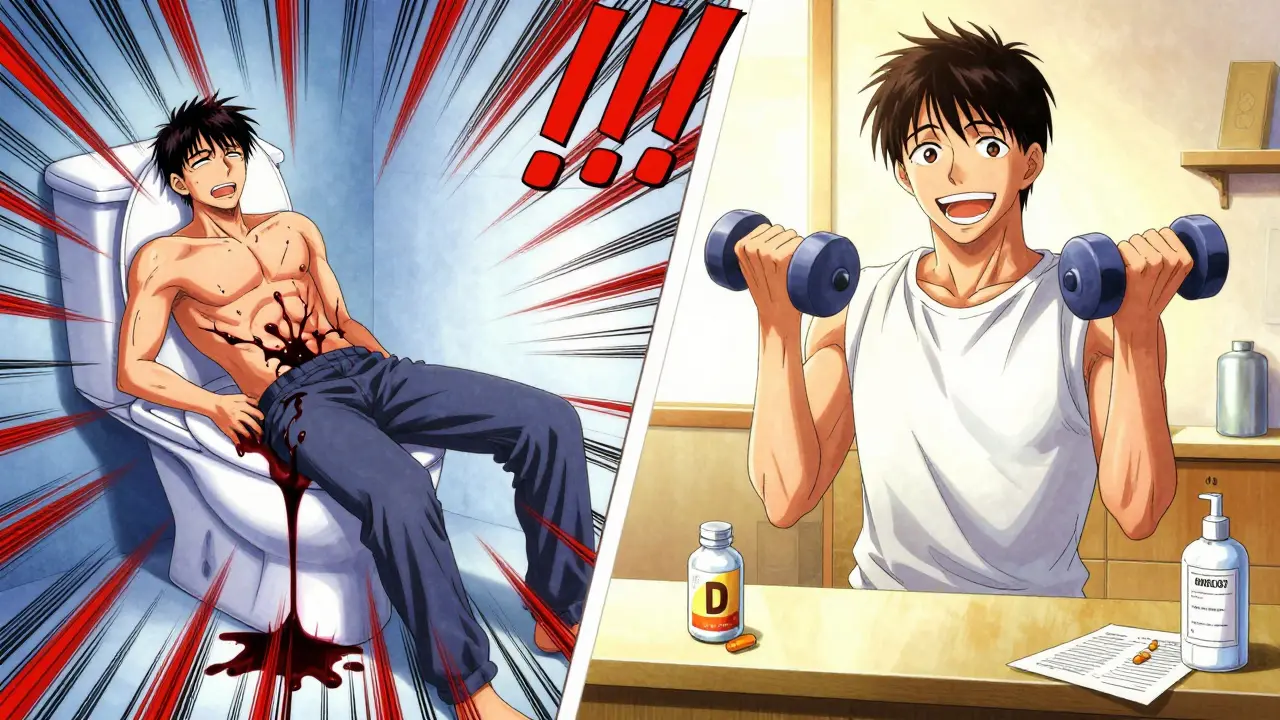
- Check your vitamin D. Low vitamin D is linked to worse muscle symptoms on statins. Get your levels checked. If you’re under 30 ng/mL, your doctor may recommend a supplement. It’s simple, cheap, and often makes a big difference.
- Avoid mixing with other drugs. Fibrates (like gemfibrozil) can multiply your risk of muscle damage by 3 to 5 times. Talk to your doctor before taking any new medication or supplement, especially if you’re already on statins.
- Try a different statin. Not all statins are the same. Hydrophilic ones-like pravastatin and rosuvastatin-tend to cause fewer muscle problems than lipophilic ones like simvastatin or atorvastatin. If you’re struggling, ask if switching might help. Some people do well on rosuvastatin 20 mg every other day instead of daily.
When to Worry-and When to Keep Going
Most muscle soreness after exercise is normal. But here’s how to tell if it’s something more:
- Normal soreness: Starts 12-24 hours after exercise, peaks at 48 hours, fades by 72 hours. Feels like stiffness, not sharp pain.
- Warning signs: Pain lasting longer than 72 hours, weakness in your arms or legs that doesn’t improve, dark urine, fever, nausea. These could mean rhabdomyolysis-a rare but serious condition where muscle breaks down and can damage your kidneys.
If you have warning signs, stop exercising and call your doctor. Don’t wait. But if it’s just regular soreness? Keep moving. The benefits of exercise-better heart health, lower blood pressure, improved mood-far outweigh the risks.
Why Stopping Exercise Is Riskier Than Taking Statins
Here’s the truth no one tells you: stopping exercise because you’re afraid of muscle pain is more dangerous than the statin itself. Statins reduce your risk of heart attack and stroke by 25-35%. Regular exercise reduces it by 20-30%. Together, they’re a powerhouse. If you quit moving, you lose that protection.
Doctors at Mount Sinai and Hartford Hospital have said it clearly: Don’t stop exercising because of muscle aches. Stop taking statins only if your doctor tells you to.
The American Heart Association’s 2023 guidelines say it plainly: the benefits of physical activity outweigh any potential muscle side effects from statins. And the CDC reports that people who stay active on statins are far less likely to quit their medication than those who stop exercising.
Final Takeaway: Move With Confidence
You don’t have to choose between your heart and your muscles. You can have both. Statins are one of the most studied drugs in history. Exercise is one of the most proven health interventions ever. They work together.
Don’t let fear stop you. Start with walking. Keep it steady. Listen to your body. If something feels wrong, talk to your doctor. But don’t give up on movement. Your heart-and your future self-will thank you.

Comments (9)
Ambrose Curtis
I was terrified of statins until I started walking 45 mins a day and switching to pravastatin. No more muscle bombs. My knees feel better than they have in 10 years. Don’t overthink it. Just move.
Amber Daugs
People who blame statins for every little ache are just lazy. I’ve been on them for 12 years and run marathons. If your body can’t handle moderate exercise, maybe you should stop pretending you’re an athlete. It’s not the pill-it’s your fitness level.
Linda O'neil
This is the most practical advice I’ve seen on this topic. I started swimming 3x a week after reading this and my aches dropped by 80%. Vitamin D was the missing piece-I was at 22 ng/mL. Supplemented for 3 months and now I feel like I’m 30 again. Thank you for the real talk.
Robert Cardoso
The entire premise is flawed. You’re conflating correlation with causation. Muscle soreness is a natural response to mechanical stress. Statins don’t cause it-they just make people notice it more because they’re hyper-vigilant about side effects. The real issue is the medicalization of normal physiological responses. You’re creating a culture of fragility.
James Dwyer
You don’t have to be a gym rat to stay healthy. I’m 68, on simvastatin, and I just walk my dog twice a day. That’s it. No fancy routines. No supplements. Just consistency. My doctor says my numbers are better than most 40-year-olds. Keep it simple.
Timothy Davis
Let’s not ignore the elephant in the room: the pharmaceutical industry profits from fear. Statins are overprescribed. The real solution isn’t ‘exercise smarter’-it’s questioning why we’re on these drugs in the first place. Cholesterol isn’t the villain. Sugar is. But that’s not a profitable narrative.
Brittany Fiddes
I find it absolutely ridiculous that Americans think they can just ‘walk more’ and fix everything. In the UK, we have proper cardiovascular rehab programs, not this DIY nonsense. You need structured, monitored training-not some Reddit guru telling you to drink vitamin D and hope for the best. This is embarrassing.
doug b
I used to do CrossFit every day. Then I got on statins. First week, I couldn’t lift my arms. I switched to cycling and light weights. No more pain. No more fear. I’m stronger now than I was at 35. It’s not about intensity-it’s about sustainability. Keep going. You got this.
Mindee Coulter
I tried everything. Then I started taking my statin at night and working out in the morning. Changed everything. No more soreness. Just keep moving. Seriously.