
HAS-BLED Bleeding Risk Calculator
HAS-BLED Risk Assessment
The HAS-BLED score helps identify patients at high risk of bleeding while taking blood thinners. Each factor adds 1 point. A score of 3 or higher indicates high bleeding risk.
Score 0-2: Low risk (1.0% annual bleeding rate)
Score 3-4: Moderate risk (1.7% annual bleeding rate)
Score ≥5: High risk (2.9% annual bleeding rate)
Critical Warning Signs (Go to ER immediately)
If you experience any of these signs, call emergency services immediately.
When you're prescribed a blood thinner-whether it's warfarin, apixaban, rivaroxaban, or dabigatran-you're told it’s to prevent strokes, clots, or heart attacks. But few patients are fully prepared for the flip side: severe bleeding. It doesn’t always come with a siren. Sometimes it starts as a nosebleed that won’t stop, or dark stools you brush off as indigestion. By the time you realize something’s wrong, you could be losing blood faster than your body can replace it.
Why Blood Thinners Cause Severe Bleeding
Blood thinners don’t actually thin your blood. They slow down the clotting process. That’s good when you’re at risk of a clot blocking an artery. But it’s dangerous when you get cut, fall, or develop an internal bleed. Even minor injuries can turn serious. According to the American Heart Association, people on antiplatelet drugs like clopidogrel have an 0.8% higher chance of moderate or severe bleeding over two years compared to those not taking them. For anticoagulants, the numbers are even more telling: about 3.1% of atrial fibrillation patients on direct oral anticoagulants (DOACs) experience a bleeding event in the first year.Who’s at Highest Risk?
Not everyone on these meds will bleed. But some groups are far more vulnerable. Age is a big one. People over 80 have more than three times the risk of major bleeding compared to those under 60. Kidney problems double or even triple the risk-because many of these drugs are cleared through the kidneys. If your creatinine clearance is low, your body holds onto the drug longer, turning a normal dose into a dangerous one. Taking more than one blood thinner at a time? That’s another red flag. Combining warfarin with aspirin or clopidogrel doubles your bleeding risk. A history of bleeding? That’s the strongest predictor of future events. If you’ve had a GI bleed before, your chance of having another one on a DOAC is 4.2 times higher.When Does Bleeding Usually Happen?
It’s not random. Most bleeding events happen early. In fact, over 60% occur within the first three months of starting the medication. The first 90 days are the most dangerous. Why? Because your body is still adjusting, your dosing might not be perfect, and you might not yet recognize the warning signs. A 2024 study found that 30% of bleeding cases happened in patients with the highest drug levels in their blood. But here’s the twist: 58% of bleeding events happened in people on low-dose regimens. That’s because doctors often lower doses for older or sicker patients-but if those patients still have high drug levels due to poor kidney function or drug interactions, the risk doesn’t go down. It just gets harder to predict.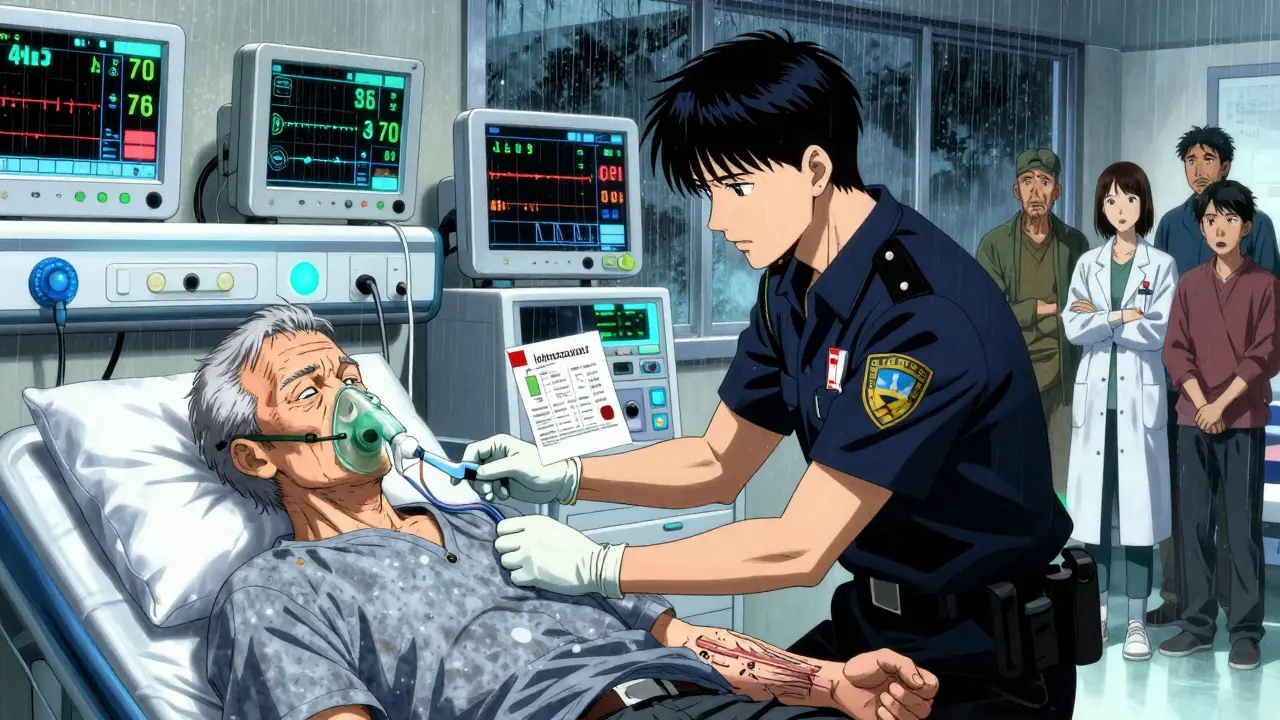
What Are the Warning Signs?
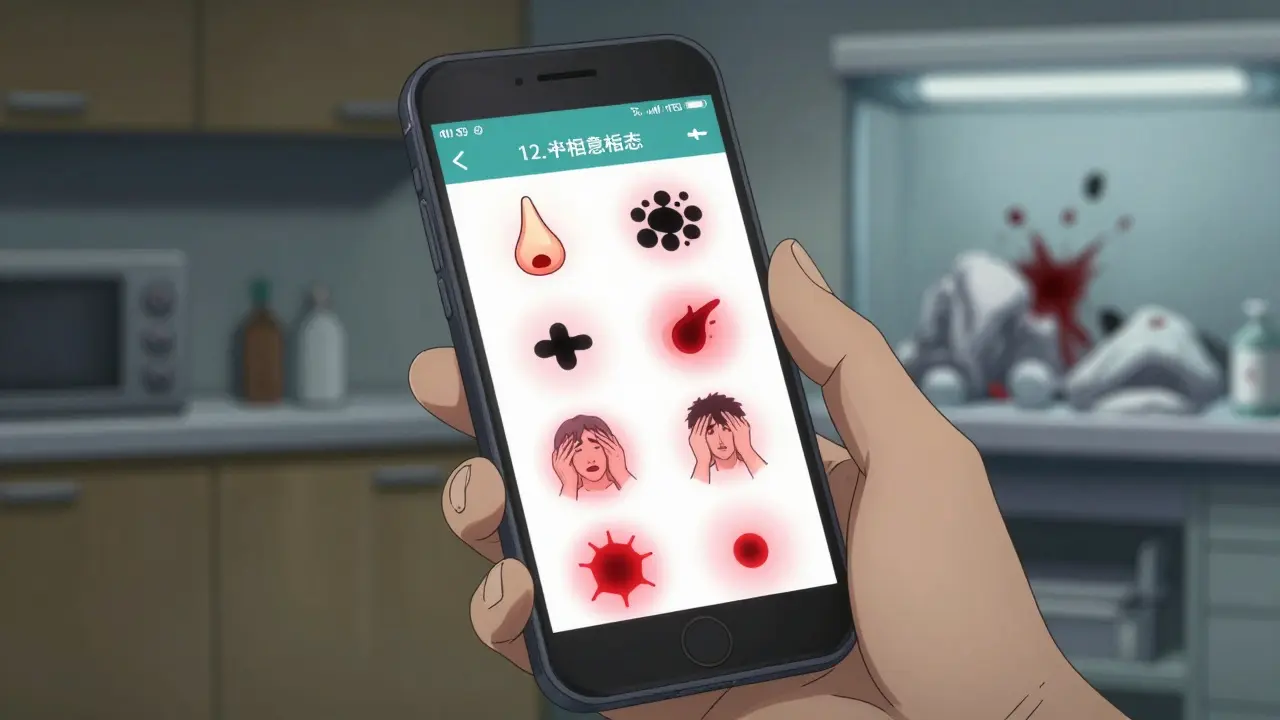
You need to know these signs inside and out. Waiting too long can be deadly. The American Heart Association lists 12 critical symptoms that mean you need to go to the ER now:- Nosebleeds lasting more than 10 minutes
- Red or brown urine
- Black, tarry, or bloody stools
- Unexplained bruising-especially large patches or bruises without injury
- Coughing or vomiting blood
- Sudden, severe headache (could mean brain bleed)
- Dizziness, fainting, or feeling like you’re about to pass out
- Weakness in arms or legs
- Blurred or double vision
- Unusually heavy menstrual bleeding
- Joint pain or swelling after a minor injury
- A cut that won’t stop bleeding after 10 minutes of pressure
One patient on Reddit described noticing black stools for three days before ending up in the ER with a bleeding ulcer and needing two units of blood. He didn’t think it was serious until he felt weak. That’s the problem. These symptoms creep up slowly. You might think, "It’s just a little blood," or "I must have eaten something dark." But when it comes to internal bleeding, there’s no such thing as "a little."
How Emergency Teams Respond
If you show up at the ER with suspected medication-related bleeding, they’ll act fast. First, they’ll check your vital signs: blood pressure, heart rate, oxygen levels. Then they’ll order blood tests-hemoglobin to see how much blood you’ve lost, and coagulation panels to measure how well your blood clots. For warfarin users, they’ll give vitamin K and possibly fresh frozen plasma to reverse the effect. But for DOACs, it’s more specific. If you’re on dabigatran, they’ll use idarucizumab-a drug that neutralizes it in minutes. It costs about $3,500 per dose. If you’re on rivaroxaban or apixaban, they’ll use andexanet alfa, which costs $12,500 per treatment. These drugs work, but they’re expensive and not always available in small hospitals.What You Can Do Before It Happens
Prevention starts at the doctor’s office. Ask for your HAS-BLED score. This tool looks at your age, blood pressure, kidney and liver function, history of bleeding, and other meds. A score of 3 or higher means you’re at high risk-and your doctor should have a plan. That includes:- Reviewing all your medications (including OTC painkillers like ibuprofen)
- Checking your kidney function before starting and every few months
- Teaching you the 12 warning signs
- Providing a written emergency plan
A 2023 study showed that when doctors spent just 15 to 20 minutes explaining these signs, patients were 34% less likely to delay care. That’s huge. Many people wait hours-sometimes over six-because they’re unsure if it’s serious. One woman had a nosebleed that lasted 45 minutes. She didn’t go to the ER until she got dizzy. By then, she’d lost enough blood to need a transfusion.
New Tools Are Coming
In January 2024, the FDA approved the first point-of-care test that can measure DOAC levels in your blood right in the clinic. No waiting for a lab. If your drug level is too high, they can adjust your dose before you bleed. This is a game-changer, especially for older adults or those with kidney issues. Research is also moving toward safer drugs. Two new anticoagulants-milvexian and asundexian-are showing promise in trials with 20-25% lower bleeding rates than current options. And a universal reversal agent called Ciraparantag is in late-stage testing. If it works, it could reverse all DOACs with one drug, cutting costs and saving time in emergencies.The Bigger Picture
More than 4.7 million Americans are on DOACs today. And the number is climbing. The CDC says over 10% of people over 65 now take blood thinners-up from 3.7% in 2010. That’s a massive demographic shift. With more people on these drugs, and more of them elderly, bleeding complications are rising. In 2022, there were over 128,000 emergency room visits in the U.S. because of anticoagulant bleeding-a 27% jump since 2018. Each major bleed costs an average of $18,500. A brain bleed? That’s over $52,000. And many of these are preventable. The key isn’t stopping the meds-it’s knowing when to act.What to Do Right Now
If you’re on a blood thinner:- Know your HAS-BLED score. Ask your doctor for it.
- Write down the 12 warning signs. Keep them on your fridge or phone.
- Don’t take NSAIDs like ibuprofen or naproxen unless your doctor says yes.
- Get your kidney function checked every 3-6 months.
- Carry a medical alert card or app listing your meds and emergency contacts.
- If you see any of the warning signs-go to the ER. Don’t wait. Don’t call your doctor first. Go.
These drugs save lives. But they demand respect. The difference between a minor incident and a life-threatening emergency often comes down to one thing: how quickly you respond.
Can I stop taking my blood thinner if I’m worried about bleeding?
No. Stopping your blood thinner without medical supervision can be life-threatening. If you’re at risk of stroke or a clot, the danger of stopping is often greater than the risk of bleeding. Talk to your doctor about adjusting your dose, switching meds, or improving monitoring instead. Never stop on your own.
Do all blood thinners cause the same level of bleeding risk?
No. Apixaban has consistently shown lower bleeding rates than warfarin, rivaroxaban, and dabigatran in clinical trials. For example, in the ARISTOTLE trial, apixaban had a 2.13% annual major bleeding rate compared to warfarin’s 3.09%. If you’ve had a GI bleed before, apixaban is also safer than rivaroxaban, cutting your risk of recurrence by 31%. But no drug is risk-free.
How often should I get my blood tested if I’m on warfarin?
When you first start warfarin, you’ll need weekly INR tests for the first month. Once stable, you can go to biweekly for months 2-3, then monthly. If your INR is stable for over six months, your doctor may extend it to every 6-8 weeks. But if you change meds, start antibiotics, or have a new illness, you’ll need to test more often.
Can I drink alcohol while on blood thinners?
Moderate alcohol (one drink per day for women, two for men) is usually okay, but heavy drinking increases bleeding risk. Alcohol can interfere with how your liver processes warfarin, making your INR unstable. It can also irritate your stomach lining, raising the chance of GI bleeding. If you drink regularly, talk to your doctor about safer limits.
What should I do if I fall and hit my head?
Even if you feel fine, go to the ER. A head injury on a blood thinner can lead to a slow, silent brain bleed. Symptoms might not show up for hours or even days. A CT scan can catch it early. Don’t wait for a headache or dizziness. If you’re on a DOAC and you hit your head hard, call your doctor immediately and ask if you need imaging.
Are there any foods I need to avoid on blood thinners?
If you’re on warfarin, you need to keep vitamin K intake consistent-not avoid it. Leafy greens like spinach, kale, and broccoli contain vitamin K, which counteracts warfarin. Sudden changes in how much you eat can make your INR swing. DOACs like apixaban and rivaroxaban aren’t affected by diet, so you don’t need to worry about this with those.



Comments (15)
Chris & Kara Cutler
This is so important!! 🚨 I had no idea bleeding risk spiked in the first 90 days. My grandma started on apixaban and we didn’t realize she was bruising from tiny bumps until she passed out. Now she carries a card with the 12 signs. Life saver. 🙏
Lisa Rodriguez
I’m a nurse and I see this all the time. People dismiss black stools as "just spicy food" or nosebleeds as "dry air." But when you’ve got a DOAC in your system, there’s no such thing as "just a little." I tell my patients: if it’s weird and it won’t stop - go to the ER. No second guesses.
Also - YES to the HAS-BLED score. If your doc doesn’t run it, ask. It’s free and it’s your best predictor.
Donna Macaranas
I’m on rivaroxaban for AFib and I read this whole thing with tears in my eyes. I thought I was being paranoid when I started tracking every bruise. Turns out I wasn’t. This article made me feel seen. Thank you for writing this.
Ishmael brown
Wait - so you’re telling me I shouldn’t just stop my blood thinner because I’m scared? Newsflash: I’ve been on warfarin for 7 years and I’ve never bled. But I’ve had 3 ER trips because they couldn’t reverse it fast enough. Maybe the real problem is the drugs, not the patients.
June Richards
Ugh. Another "just go to the ER" article. Like that’s always an option. My insurance denies ambulance rides unless you’re "actively dying." And idarucizumab? Good luck finding it in rural Ohio. This is privileged advice.
Also - who says you can’t drink alcohol? I had 2 glasses of wine last night and my INR was fine. Maybe stop scaring people and start fixing the system?
Rachel Liew
I’m so glad you mentioned kidney checks. My mom’s creatinine clearance dropped to 38 and no one told her to adjust her dose. She ended up in the hospital with a GI bleed. Please - if you’re over 65 or have diabetes - get your kidneys tested every 3 months. It’s not optional.
Jamie Allan Brown
There’s a quiet epidemic here. We focus on the meds, but we forget the people. The elderly, the isolated, the ones who don’t have someone to notice their bruises or dark stools. This isn’t just about patient education - it’s about community care. Who’s checking in on your neighbor? Who’s helping them read the warning signs?
Maybe the real solution isn’t a new drug - it’s a phone call.
Nicki Aries
Let’s be real: the cost of reversal agents is outrageous. $12,500 for one dose? And hospitals still don’t stock them? That’s not medicine - that’s a lottery. If you’re rich, you live. If you’re not? You hope you don’t bleed out before the ambulance gets there.
And don’t get me started on how long it takes to get a DOAC level test. I had to wait 5 days. Five days. My dad was on apixaban and had a head injury. We were terrified. They said, "Wait for symptoms." But symptoms are too late.
Naresh L
It’s fascinating how we’ve outsourced bodily awareness to pharmaceuticals. We trust molecules to protect us, yet we fear the natural consequences of their action. The bleeding isn’t the failure of the drug - it’s the failure of our relationship with medicine. We want a pill that prevents clots without consequence. But biology doesn’t work that way.
Perhaps the real question isn’t how to stop bleeding - but how to live with vulnerability.
Sami Sahil
My uncle took apixaban after a stroke and he’s been fine for 2 years. But he never misses his kidney test. He’s 82. He doesn’t take ibuprofen. He carries a card. He tells his grandkids the signs. That’s the secret. Knowledge + discipline = safety. No magic pills needed.
franklin hillary
Here’s the truth no one says: 80% of bleeding events happen because someone didn’t tell their doctor about their new OTC painkiller or their new supplement. Turmeric. Ginger. Fish oil. Garlic pills. They think it’s "natural" so it’s safe. Nope. It’s a blood thinner too. Your doc needs the full picture - not the edited version.
And yes - apixaban is safer. But if you’re on warfarin and your INR’s stable? Don’t switch unless you have to. More meds = more risk.
Nidhi Rajpara
As a medical professional from India, I appreciate the thoroughness of this article. However, in low-resource settings, the concept of "go to the ER immediately" is a luxury. Many patients lack transportation, insurance, or even awareness of emergency services. The focus should shift to community-based education, low-cost point-of-care tools, and training local health workers to recognize early signs. The science is sound - but implementation requires equity.
Lu Gao
Wait - so apixaban is safer? I’ve been on it for 3 years and I’ve had zero bleeding. But my doctor never explained the HAS-BLED score. Why is this not standard? And why do we still use warfarin at all? If apixaban has lower bleeding AND fewer food interactions - why is it not first-line everywhere?
Also - the FDA approved that point-of-care test? That’s huge. Why isn’t every clinic getting one? 🤔
Ed Di Cristofaro
People are so scared of bleeding they forget the real killer: stroke. I had a cousin who stopped his blood thinner because he was "too scared" of bleeding. Guess what? He had a massive stroke at 58. Left side paralyzed. Never walked again. Don’t be stupid. These meds save lives. Just don’t be lazy about monitoring.
Nancy Nino
How poetic. We live in an age where we can reverse anticoagulants in minutes - yet still, people die because they waited too long to say "I think something’s wrong."