Respiratory Drug Interaction Checker
Select Your Medications
Choose the blood thinner you are currently taking and the treatment prescribed for your respiratory infection.
Ready to Check
Select medications on the left to see potential risks.
Imagine this scenario: You are taking a daily blood thinner to prevent strokes or clots. Then, you test positive for COVID-19 or develop a severe respiratory infection. Your doctor prescribes an antiviral like Paxlovid, the standard treatment for high-risk patients. But here is the catch-this life-saving medication can dangerously alter how your blood thinner works in your body. For millions of people on anticoagulants, this intersection of respiratory illness and blood-thinning therapy creates a complex medical puzzle that requires careful navigation.
The relationship between respiratory infections, particularly those caused by SARS-CoV-2, and blood clotting is not straightforward. These infections trigger a hypercoagulable state, meaning your blood becomes more prone to forming clots. This increases the risk of dangerous events like pulmonary embolisms or deep vein thrombosis. However, treating the infection with certain drugs can simultaneously increase the risk of bleeding if your anticoagulant levels spike too high. Understanding these interactions is critical for staying safe during treatment.
Why Respiratory Infections Change Blood Clotting Risk
When your body fights off a severe respiratory infection, it launches an intense inflammatory response. This inflammation doesn't just target the virus; it affects your blood vessels and clotting mechanisms. Research published in PMC reviews indicates that diffuse microthrombi-tiny clots in the lung's blood vessels-account for approximately 70% of critical cases in severe respiratory illnesses. This phenomenon, often called "COVID coagulopathy," means that patients with severe infections often need stronger anticoagulation than usual to prevent these clots from causing organ damage.
This reality shifted clinical guidelines significantly. The American Society of Hematology (ASH) updated its draft guidelines in 2021 to recommend therapeutic-intensity anticoagulation over prophylactic-intensity for hospitalized patients with acute respiratory illness related to SARS-CoV-2. The logic is simple: the risk of clotting outweighs the risk of bleeding in many severe cases. However, this increased dosage requirement makes drug interactions even more dangerous because any fluctuation in drug levels has a magnified effect on your health.
The Direct Oral Anticoagulant (DOAC) Challenge
Most modern blood thinners fall under the category of Direct Oral Anticoagulants (DOACs). Common examples include apixaban, rivaroxaban, edoxaban, and dabigatran. Unlike older medications, DOACs do not require daily blood tests, which makes them convenient. But they rely heavily on specific liver enzymes and transport proteins to be processed correctly by your body. Specifically, they interact with the Cytochrome P450 (CYP3A4) enzyme system and the P-glycoprotein (P-gp) transporter.
Here is where the problem arises. Many antiviral and anti-inflammatory drugs used to treat respiratory infections interfere with these exact pathways. A study documented in PMC9284020 found that 100% of patients who continued their DOACs while taking certain antivirals experienced markedly increased serum levels of the blood thinner. This happens because drugs like lopinavir/ritonavir inhibit the CYP3A4 enzyme and P-gp transporter. When these "gatekeepers" are blocked, the blood thinner stays in your system longer and at higher concentrations, drastically increasing your risk of severe bleeding.
| Anticoagulant | Interacting Drug Class | Effect on Blood Thinner | Clinical Risk |
|---|---|---|---|
| Rivaroxaban / Apixaban | Paxlovid (Ritonavir) | Levels increase significantly | High risk of major bleeding |
| Dabigatran | Paxlovid (Ritonavir) | Levels increase significantly | High risk of gastrointestinal bleeding |
| Rivaroxaban / Apixaban | Dexamethasone | Levels decrease by up to 50% | Increased risk of blood clots (thrombosis) |
| Warfarin | Various Antibiotics/Antivirals | INR may rise or fall unpredictably | Bleeding or clotting depending on direction |
Understanding the Paxlovid Interaction Crisis
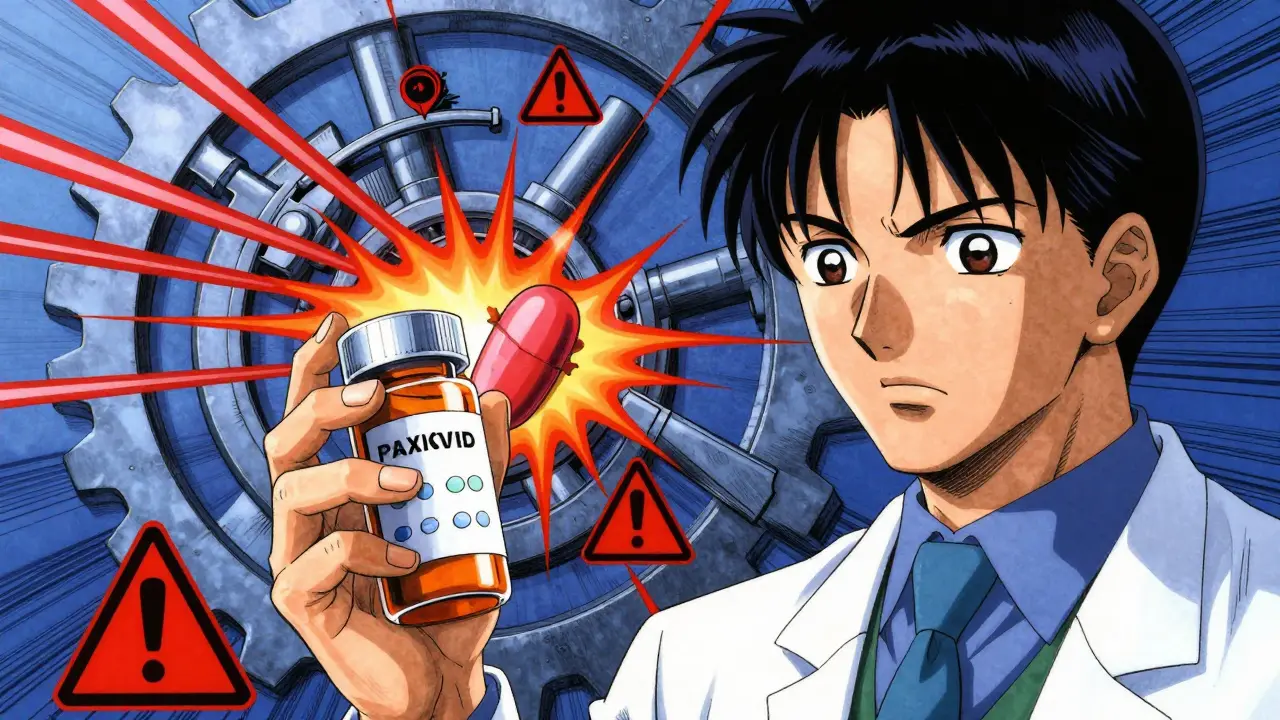
Paxlovid, containing nirmatrelvir and ritonavir, became a cornerstone of COVID-19 treatment after receiving emergency use authorization from the FDA in December 2021. While highly effective at reducing hospitalization, ritonavir is a potent inhibitor of CYP3A4. This creates a perfect storm for patients on DOACs. The International Society on Thrombosis and Haemostasis (ISTH) issued guidelines warning against using strong CYP3A4 inhibitors like ritonavir with DOACs due to potential 3-5 fold increases in anticoagulant exposure.
The real-world consequences have been significant. Community pharmacist surveys conducted by the American Pharmacists Association revealed that 63% of outpatient pharmacists encountered at least one significant anticoagulant-COVID-19 drug interaction monthly in mid-2022. Dabigatran-Paxlovid interactions represented 42% of these cases. One documented case involved a patient who continued full-dose rivaroxaban during Paxlovid treatment, resulting in gastrointestinal bleeding that required hospitalization and blood transfusions. Conversely, failing to manage these interactions can lead to clotting. If you take dexamethasone, a steroid often used for severe inflammation, it acts as an inducer of CYP3A4, potentially reducing your blood thinner's effectiveness by half. This dual risk-bleeding if levels get too high, clotting if they drop too low-is why close monitoring is non-negotiable.
Warfarin: The Old Guard with New Challenges
If you are on Warfarin, your situation is different but still risky. Warfarin is a vitamin K antagonist that requires regular monitoring via the International Normalized Ratio (INR) test. While it does not have the same direct metabolic clash with ritonavir as DOACs, it interacts with almost everything else. Antibiotics, antivirals, and even changes in diet due to illness can swing your INR wildly.
A case study published in Frontiers in Pharmacology described a 70-year-old male whose baseline INR was stable at 2.0-3.0. After starting azvudine and dexamethasone alongside his warfarin, his INR spiked to 3.2, pushing him into a higher bleeding risk zone. During the peak of the pandemic, data showed that time spent in the therapeutic INR range decreased by 18-22% across multiple clinics, largely due to reduced in-person visits and lab access. For warfarin users, frequent INR checks are essential when fighting a respiratory infection. Do not assume your dose is still correct just because you haven't changed it recently.

Practical Management Strategies for Patients
So, what should you actually do? First, never stop or change your anticoagulant dose without explicit instructions from your healthcare provider. Abruptly stopping blood thinners can lead to fatal clots, especially since respiratory infections themselves increase clotting risk. Instead, follow these evidence-based steps:
- Disclose All Medications: When you test positive for a respiratory infection, immediately tell your doctor about every medication and supplement you take. Include over-the-counter drugs like ibuprofen or aspirin, which also affect bleeding risk.
- Ask About Bridging Therapy: For patients on DOACs requiring Paxlovid, guidelines from the American Society of Health-System Pharmacists (ASHP) suggest holding the DOAC for the 5-day treatment period and resuming two days after completion. In some high-risk cases, doctors may switch you temporarily to enoxaparin (a injectable heparin) because it does not interact with CYP3A4. This is known as bridging.
- Monitor for Bleeding Signs: Watch for unusual bruising, nosebleeds that won't stop, blood in urine or stool, or coughing up blood. If you experience these, seek emergency care immediately.
- Check Regional Guidelines: Be aware that recommendations can vary. European guidelines sometimes permit dose adjustments for dabigatran with ritonavir, while US guidelines often recommend complete avoidance. Always follow the advice of your local specialist who knows your specific kidney function (creatinine clearance) and medical history.
The Role of Healthcare Providers and Future Outlook
Managing these interactions is not just a patient responsibility; it requires a coordinated effort from the entire healthcare team. Pharmacists play a crucial role here. Data from the Mayo Clinic showed a 37% increase in anticoagulation-related emergency department visits during the first year of the pandemic, with nearly a third directly linked to drug interactions. To combat this, institutions like the University of Michigan implemented specialized training for pharmacists, dedicating 20-30 hours to mastering these complex protocols.
Resources like the Liverpool COVID-19 Drug Interactions website have become indispensable tools, processing over 1.2 million queries since 2020. As we move forward, the landscape is improving. Newer antiviral agents are being developed with reduced interaction profiles. For instance, next-generation drugs in clinical trials show minimal CYP3A4 inhibition, which could eliminate many current conflicts. Additionally, machine learning models are being trained to predict interaction severity with high accuracy, helping doctors make faster, safer decisions.
Despite these advancements, the core message remains unchanged: communication is key. The intersection of respiratory health and anticoagulation is delicate. By understanding the mechanisms behind these interactions-how enzymes like CYP3A4 process your meds, and how viruses alter your clotting-you empower yourself to ask the right questions and advocate for your safety. Stay informed, stay monitored, and always keep your care team in the loop.
Can I take Paxlovid if I am on Eliquis (apixaban)?
Generally, no, not without modification. Paxlovid contains ritonavir, which significantly increases apixaban levels, raising bleeding risk. Doctors often pause apixaban during the 5-day Paxlovid course and may bridge with a non-interacting anticoagulant like enoxaparin, especially if you are at high risk for clots. Always consult your physician before starting either medication.
Does dexamethasone reduce the effectiveness of blood thinners?
Yes, dexamethasone is a strong inducer of CYP3A4 and P-gp, which can lower the concentration of DOACs like rivaroxaban and apixaban in your blood by up to 50%. This reduction increases the risk of blood clots. Close monitoring or temporary adjustment of the anticoagulant dose is necessary when taking steroids for respiratory infections.
Why do respiratory infections increase the risk of blood clots?
Severe respiratory infections cause systemic inflammation and damage to the lining of blood vessels (endothelium). This triggers a hypercoagulable state where the blood clots more easily. In conditions like severe COVID-19, microthrombi can form in the lungs, leading to complications. This is why therapeutic anticoagulation is often recommended for hospitalized patients.
What are the signs of bleeding while on anticoagulants?
Watch for unusual or excessive bruising, prolonged bleeding from cuts, nosebleeds, coughing up blood, vomiting blood or material that looks like coffee grounds, red or black/tarry stools, and heavier than normal menstrual periods. If you experience any of these, seek immediate medical attention.
Is warfarin safer than DOACs during COVID-19 treatment?
Not necessarily safer, but easier to monitor. Warfarin does not have the same direct metabolic conflict with ritonavir as DOACs, but it interacts with many other drugs and dietary changes common during illness. Because INR can be tested frequently, doctors can adjust the dose quickly. DOACs lack this easy monitoring option, making management more complex when interactions occur.
How long should I continue anticoagulation after recovering from a respiratory infection?
For patients hospitalized with severe respiratory illness, ASH guidelines suggest continuing therapeutic anticoagulation for at least 7 days after discharge, as the hypercoagulable state can persist. Some studies show elevated D-dimer levels for 14-21 days post-discharge. Your doctor will determine the duration based on your individual risk factors and recovery status.