
Imagine landing in a tropical paradise only to spend your first week battling a preventable fever or a debilitating stomach bug. It's a nightmare scenario, but for many, it's the result of relying on a quick Google search instead of professional medical advice. Getting your travel medications right isn't just about packing a few pills; it's about a strategic medical plan tailored to the exact coordinates of your trip. That's where specialized travel health clinics come in.
Quick Wins for Your Pre-Trip Planning
- Timeline: Book your appointment 4 to 8 weeks before you fly.
- Documentation: Bring your full itinerary and a current list of all medications you take.
- Specialization: Use a travel clinic over a general GP for higher accuracy in destination-specific risks.
- Timing: Start antimalarials and vaccines exactly when prescribed to ensure immunity.
What Exactly is a Travel Health Clinic?
A Travel Health Clinic is a specialized medical facility focused on preventing illness and ensuring medication readiness for international travelers. Unlike a standard doctor's office, these clinics focus exclusively on the intersection of geography and health. They don't just treat you when you're sick; they map out a preventive shield based on where you're going, how long you'll stay, and what you'll actually be doing on the ground.
These clinics act as a bridge between your general health history and the volatile health landscapes of foreign countries. According to data from the Journal of Travel Medicine, people who use these specialized services see a reduction in travel-related illnesses by up to 72%. This is because they aren't just giving general advice-they are providing a personalized risk assessment.
The Medication Planning Process: Step-by-Step
When you walk into a travel clinic, you aren't just getting a prescription; you're entering a clinical workflow designed to cover every blind spot in your itinerary. Here is how the process usually unfolds:
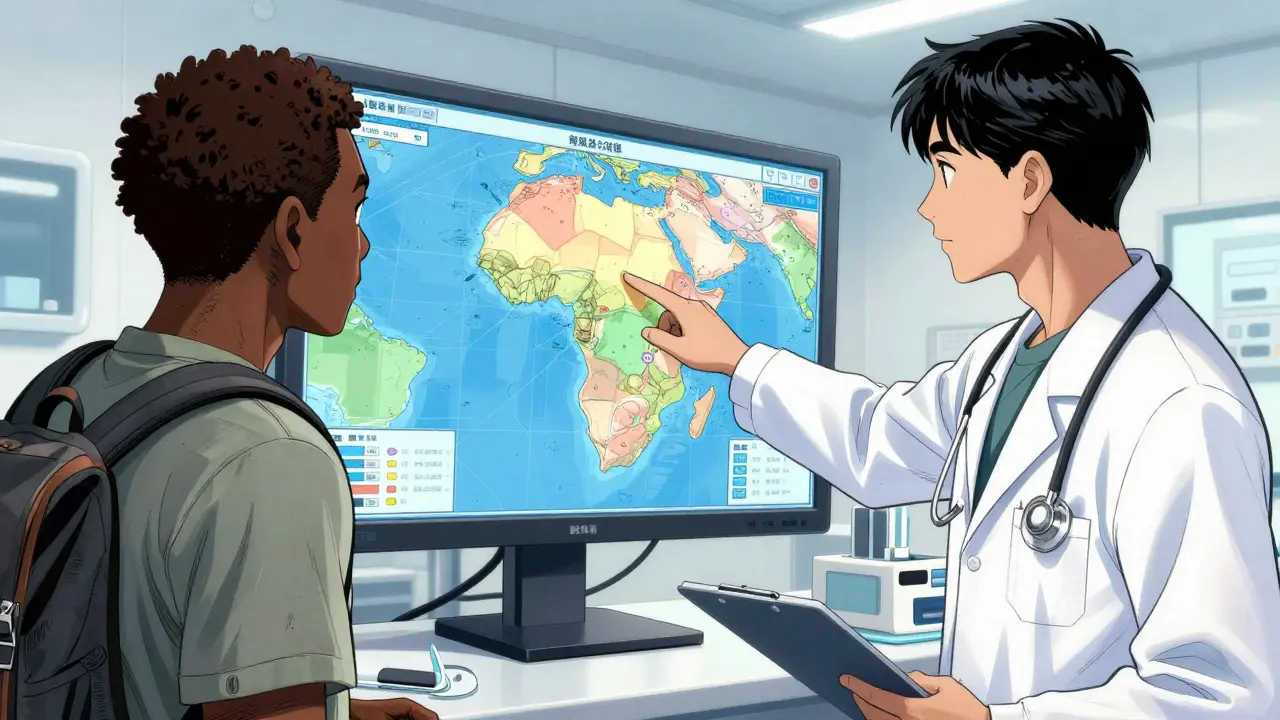
- The Itinerary Review: The provider looks at every country and region you'll visit. A city stay in Nairobi is very different from a trekking trip in rural Kenya. They assess the specific risk of malaria, dengue, or yellow fever for each exact location.
- Health Screening: They evaluate your current medical status. If you have diabetes or are immunosuppressed, certain vaccines might be off-limits, or you might need extra precautions.
- Prescription Selection: Based on the region's drug-resistance patterns, they choose the right drug. For example, they might prescribe Atovaquone-proguanil (often known as Malarone) or Doxycycline for malaria, depending on the destination's resistance levels.
- Timing Calibration: This is the most critical part. Some medications, like Mefloquine, need to be started 2 to 3 weeks before you even leave your house. If you start too late, the drug isn't in your system enough to protect you.
- Contingency Planning: You'll get "just-in-case" meds. This often includes a prescription for Azithromycin to treat traveler's diarrhea on the spot, usually at a dose of 500 mg daily for three days.
Comparing Your Options: Specialized Clinics vs. General Practitioners
You might wonder why you shouldn't just visit your regular family doctor. While your GP knows your history, they rarely have the real-time data on a sudden outbreak in Southeast Asia or the specific resistance patterns of malaria in sub-Saharan Africa. The CDC has noted that travel specialists identify about 37% more destination-specific risks than general physicians.
| Feature | Travel Health Clinic | General Practitioner (GP) |
|---|---|---|
| Risk Detection Rate | High (Specialized data) | Moderate (General knowledge) |
| Malaria Prescription Accuracy | ~92% (for high-risk areas) | ~68% (for high-risk areas) |
| Vaccine Availability | Wide range (including Yellow Fever) | Limited (often need external sourcing) |
| Itinerary Specificity | Country-by-country analysis | General regional advice |
Critical Medications and Their Timing
Timing is everything in travel medicine. If you miss the window, the medication is essentially useless. Here are the most common medications you'll encounter and the typical logic behind their use:
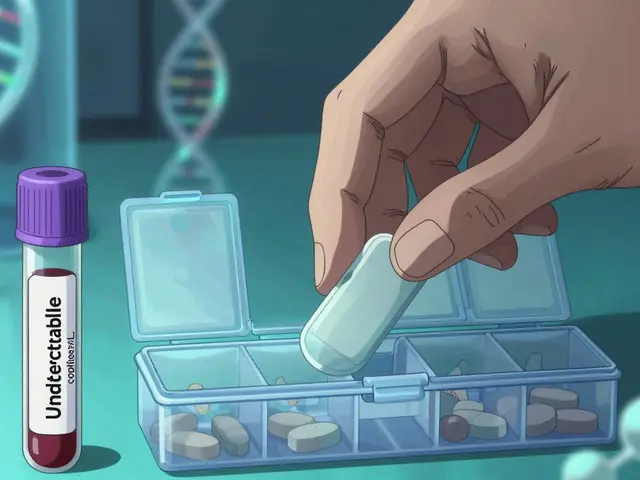
- Malaria Prophylaxis: Depending on the drug, these range from daily pills to once-weekly doses. Starting these too late accounts for nearly 28% of preventable malaria cases in travelers.
- Yellow Fever Vaccine: This must be administered at a registered clinic and requires at least 10 days to develop immunity before you cross a border. This comes with an International Certificate of Vaccination, which is often a legal requirement for entry into certain countries.
- Altitude Sickness Prevention: If you're heading to the Andes or Himalayas, clinics often prescribe Acetazolamide (Diamox). The standard approach is 125 mg twice daily, starting 24 to 48 hours before you begin your ascent.
- Traveler's Diarrhea Kits: These are "standby" antibiotics. The goal isn't to take them preventatively, but to have them ready so you don't have to find a pharmacy in a foreign city while you're sick.
Common Pitfalls to Avoid
Even with a clinic's help, travelers often make mistakes that compromise their health. One major issue is the "last-minute rush." Trying to get a consultation a week before departure is risky because many vaccines require multiple doses over several weeks to be effective. Dr. Brian Blackburn of Stanford Health Care emphasizes that the window for effective planning essentially closes two weeks before departure.
Another mistake is over-reliance on antibiotics. Some experts, including those at Johns Hopkins, have warned that overprescribing antibiotics for traveler's diarrhea without proper counseling can contribute to antimicrobial resistance. Always ask your provider exactly *when* a symptom becomes severe enough to warrant the medication, rather than taking it at the first sign of a stomach ache.

How to Prepare for Your Appointment
To get the most out of your 30-to-45-minute consultation, don't show up empty-handed. The clinic needs specific data to build your medication plan. Prepare a folder with the following:
- A detailed itinerary: List every city and rural area you plan to visit.
- Activity list: Are you staying in luxury hotels, or are you camping in the jungle? The risk profile changes drastically.
- Medical history: Include a list of allergies and any chronic conditions like asthma or diabetes.
- Vaccination records: Bring any old records you have so the clinic doesn't give you a shot you've already had.
How far in advance should I visit a travel clinic?
The ideal window is 4 to 8 weeks before departure. Some vaccines require multiple doses, and certain antimalarial medications must be started weeks before you enter the risk zone to be effective.
Do I really need a specialized clinic if I have a primary care doctor?
While your GP is great for general health, travel clinics have access to real-time disease outbreak data and specific drug-resistance patterns for different countries. They are significantly more likely to identify destination-specific risks that a general practitioner might miss.
What happens if I lose my medication while traveling?
Your travel clinic should provide you with a written list of the generic names of your medications and a copy of your prescriptions. This makes it much easier for a local doctor in another country to provide a replacement without guesswork.
Are travel clinic consultations covered by insurance?
It varies. Some university-affiliated clinics charge flat fees (often between $150 and $250) regardless of insurance. Retail clinics like CVS MinuteClinic may offer insurance coverage for the consultation, but the vaccines themselves are often billed separately.
Can I do a travel consultation virtually?
Yes, many providers, including the Mayo Clinic, now offer virtual pre-travel consultations. These are excellent for medication planning and risk assessment, though you will still need to visit a physical location to receive injections.
Next Steps and Troubleshooting
If you're traveling in the next 14 days and haven't had a consultation, don't panic, but act now. Even a last-minute visit can provide you with standby antibiotics and essential health advice. Focus on the most critical risks first-such as malaria prophylaxis-as these have the tightest timing requirements.
For those with complex chronic conditions, the best approach is a coordinated effort. Schedule your travel clinic visit first to identify the needs, then share that plan with your primary care doctor to ensure the new travel medications won't interfere with your daily prescriptions. This coordination is essential for about 42% of complex travel cases to ensure safety and efficacy.




Comments (13)
prince king
This really makes you think about the harmony between our bodies and the diverse environments of the world! 🌍 It's so important to be mindful of how we prepare for these journeys to keep our spirits and health high. ✨
Jarrett Jensen
It is quite quaint that one must be reminded of the rudimentary necessity of medical foresight. One would assume that any moderately cultured traveler would already possess the intellectual capacity to distinguish between a general practitioner and a specialist without such pedestrian guidance.
Betty Kawira
Just a heads up for anyone heading to SE Asia-definitely ask about the Japanese Encephalitis vaccine if you're spending a lot of time in rural areas. It's not always on the standard list but can be a lifesaver if you're off the beaten path!
Dale Kensok
The heuristic approach presented here fails to account for the systemic asymmetry between pharmacological intervention and indigenous epidemiological volatility. We are essentially discussing a risk-mitigation paradigm that ignores the socio-economic determinants of health in the Global South. The obsession with "preventive shields" is merely a neoliberal construct designed to sanitize the traveler's experience through chemical prophylaxis, effectively decoupling the biological entity from the ecological reality of the destination. It's an exercise in reductive bio-security that prioritizes the convenience of the Western tourist over a nuanced understanding of zoonotic transmission vectors. Truly a superficial analysis of the symbiotic relationship between host and pathogen in a globalized Anthropocene.
Stephen Johnson
Interesting perspective on the intersection of health and travel. It's a good reminder to slow down and prepare properly so we can actually enjoy the culture we're visiting without the stress of sickness.
Abhishek Charan
I completely disagree!!! 🚩 The efficacy of general practitioners is vastly underestimated here!!! 🧐 Many GPs in my region are far more updated than these "specialized" clinics that just want to upsell you on every single shot available!!! 💉🙄
Sharon Mathew
Oh please! This is such a sanitized version of reality! I've been to travel clinics and they basically treat you like a walking checklist instead of a human being! The absolute drama of a "medical plan" is just a way to charge you $200 for a conversation that takes ten minutes!
Ryan Wilson
Imagine being so clueless that you need a guide to tell you not to get diarrhea in a jungle. Absolute clown show. Just don't eat dirt and you'll be fine, you fragile little snowflakes.
Angela Cook
Why are we even talking about foreign clinics? American medicine is the gold standard regardless of where you're going! Just trust the US docs and stop acting like these specialized shops have some secret magic!
Nigel Gosling
The sheer arrogance of suggesting a "step-by-step" process for health! It is a tragedy of modern existence that we have reduced the mystery of travel to a clinical workflow. We are merely cattle being processed for export, stamped with vaccines and fed pills to ensure we don't inconvenience the hotel staff with our mortality! What a bleak, sterilized vision of adventure!
Jenna Riordan
I saw a post like this once and the person ended up getting sick anyway despite the pills. Maybe you should mention what happens if the meds actually cause a reaction.
Steve Grayson
That's a very helpful breakdown. I've used these clinics before for trips to West Africa and they really do make a difference in peace of mind.
Raymond Lipanog
It is perhaps worth considering that while the specialized data is beneficial, the relationship with a primary physician provides a holistic view of one's health that a clinic may lack. Balance is key.