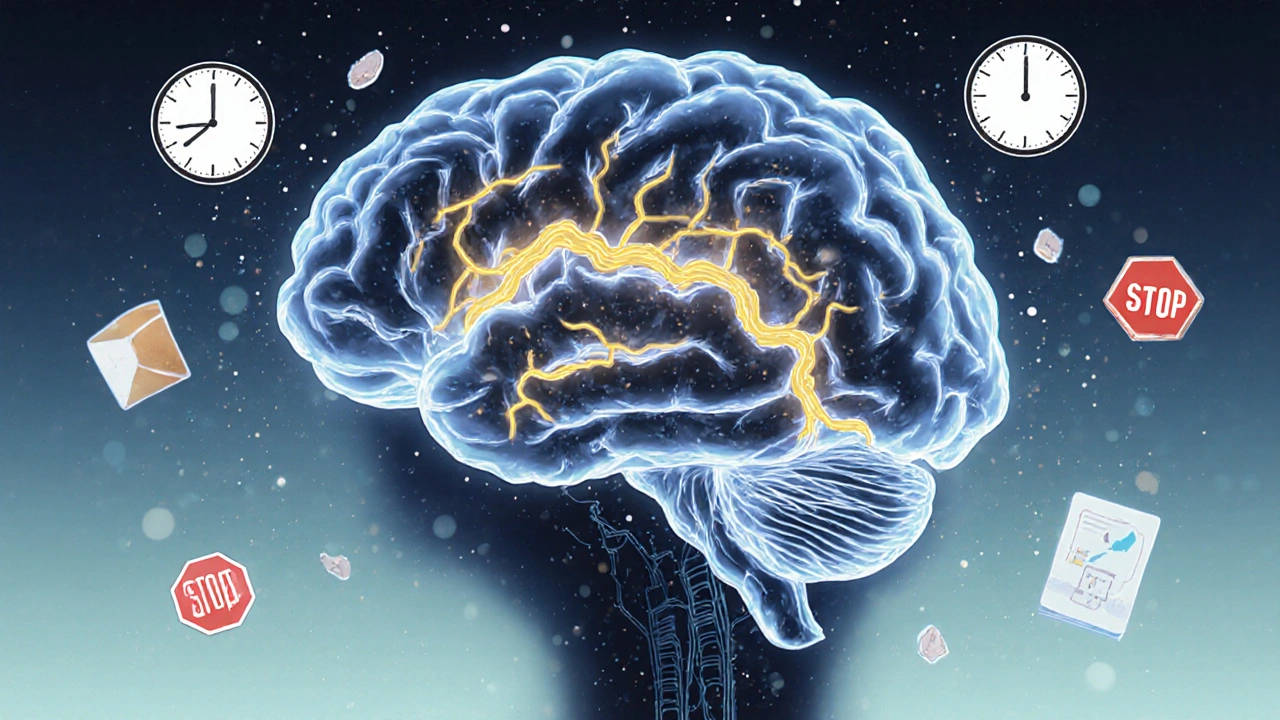
Atomoxetine doesn’t just help with focus-it reshapes how the brain handles information, memory, and decision-making. Unlike stimulants that give a quick boost, atomoxetine works slowly, quietly, and consistently. If you’re taking it for ADHD or know someone who is, you’ve probably noticed changes in how thoughts flow, how long you can stay on task, or how easily distractions pull you away. But what’s really happening inside the brain? And does it actually make you smarter-or just better at managing your mind?
What Atomoxetine Actually Does in the Brain
Atomoxetine is a selective norepinephrine reuptake inhibitor, or SNRI. That means it stops brain cells from sucking up too much norepinephrine, a chemical messenger tied to alertness, attention, and stress response. More norepinephrine stays available in the spaces between neurons, helping signals travel clearer and faster. This isn’t about excitement or energy-it’s about precision.
Studies show that in people with ADHD, the prefrontal cortex-the part of the brain responsible for planning, focus, and impulse control-often runs on low fuel. Atomoxetine boosts norepinephrine there, helping this region function more like it does in people without ADHD. A 2023 meta-analysis of 27 clinical trials found that atomoxetine improved sustained attention by an average of 38% in children and 32% in adults after 12 weeks of daily use.
It doesn’t trigger dopamine spikes like methylphenidate or amphetamines. That’s why it doesn’t feel like a stimulant. There’s no rush, no crash. Instead, it’s like turning up the volume on a quiet radio-everything becomes clearer, but nothing gets louder.
Which Cognitive Skills Improve the Most?
Not all thinking skills get better at the same rate. Research shows atomoxetine has the strongest effect on three areas:
- Sustained attention: The ability to stay focused on a boring or repetitive task for long periods. People on atomoxetine report fewer mind-wandering episodes during reading, driving, or data entry.
- Working memory: Holding and manipulating information in your head-like remembering a phone number long enough to dial it. One 2022 study using fMRI scans showed increased activity in the dorsolateral prefrontal cortex during working memory tasks after just four weeks of treatment.
- Inhibitory control: Stopping yourself from acting on impulse. This includes resisting distractions, pausing before speaking, or avoiding rash decisions. Parents of children on atomoxetine often notice fewer outbursts and better turn-taking in group settings.
Other areas like verbal fluency or long-term memory show little to no change. Atomoxetine doesn’t turn you into a genius. It helps you stop losing your train of thought.
How Fast Do Cognitive Changes Happen?
Don’t expect miracles in a week. Atomoxetine takes time. Most people start noticing subtle shifts after two to three weeks. The real gains-better organization, less mental fatigue, fewer forgotten tasks-usually appear between six and eight weeks. That’s because it’s rebuilding neural pathways, not just flooding the brain with chemicals.
One adult patient in a 2024 longitudinal study tracked her daily focus levels using a simple app. Before atomoxetine, she averaged 2.1 focused hours per day. After 10 weeks, she was hitting 5.8. She didn’t feel “hyper,” but she stopped needing to re-read paragraphs three times. That’s the hallmark of atomoxetine: it doesn’t change how you feel-it changes how you function.
Does It Work the Same for Kids and Adults?
The mechanism is the same, but the outcomes look different. In children, the biggest gains are in classroom behavior, task completion, and reducing disruptive impulses. Teachers report fewer interruptions and better follow-through on multi-step assignments.
In adults, the improvements show up in work productivity, time management, and emotional regulation. A 2023 study of 412 working adults found that those on atomoxetine were 47% more likely to meet project deadlines and 34% less likely to report feeling overwhelmed by daily tasks.
Children tend to respond faster to the drug’s effects on attention, while adults see stronger gains in executive function-like planning ahead or organizing complex projects. Both groups benefit, but the shape of the benefit changes with age.
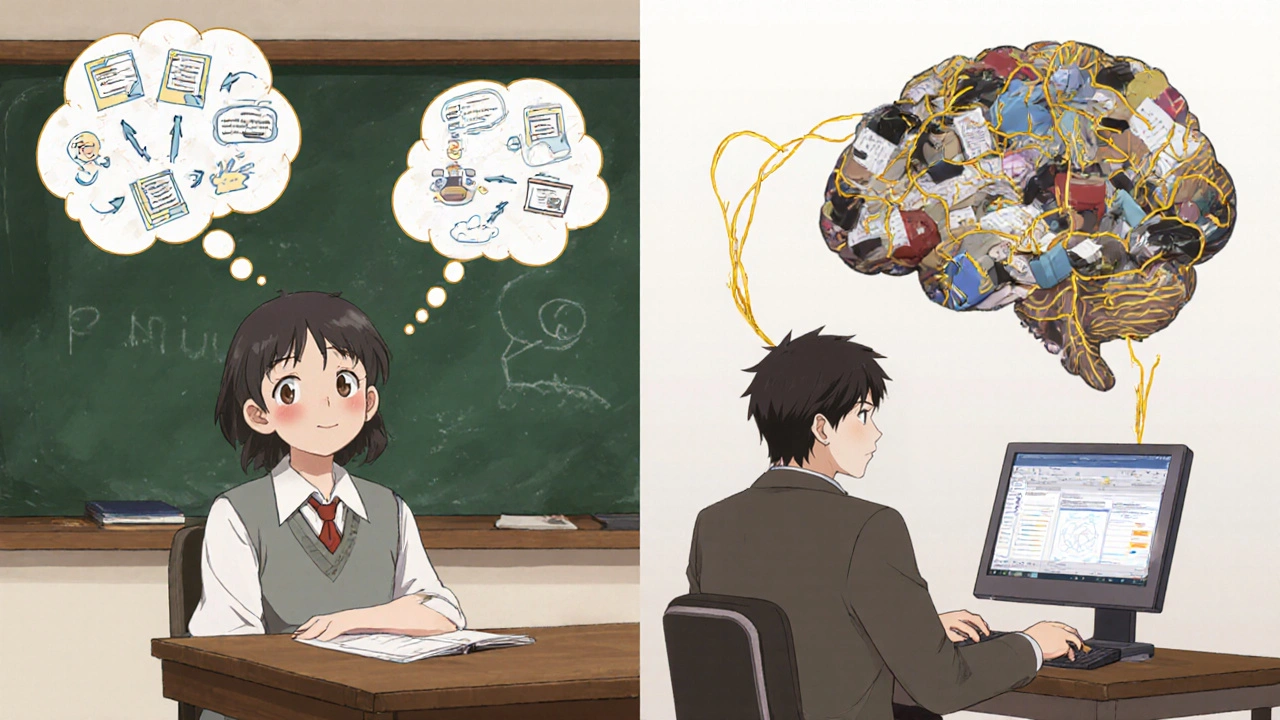
What Doesn’t Improve?
Atomoxetine isn’t a magic brain pill. It doesn’t boost IQ, creativity, or raw processing speed. It won’t help you learn a new language overnight or remember every name at a party. It also doesn’t fix problems caused by sleep deprivation, anxiety, or poor nutrition.
Some people expect it to make them more sociable or emotionally expressive. That rarely happens. In fact, a small subset of users report feeling emotionally flat at first-this usually passes, but it’s worth noting. If emotional blunting lasts beyond eight weeks, it’s worth talking to a doctor.
And while it helps with attention, it doesn’t cure impulsivity in high-stress situations. Someone under extreme pressure might still snap or make a rash call. Atomoxetine lowers the baseline of distraction, but it doesn’t remove human reactivity.
Side Effects That Can Affect Thinking
Not all side effects are physical. Some cognitive side effects are subtle but real:
- Brain fog: Especially in the first two weeks. It’s not laziness-it’s your brain adjusting to new chemical levels.
- Slower reaction times: Rare, but documented in driving simulations. Not dangerous, but worth noting if you’re learning to drive or operate machinery.
- Reduced verbal fluency: Some users report struggling to find the right word mid-sentence. This usually fades after a month.
These aren’t signs the drug isn’t working-they’re signs your brain is rewiring. Most people adapt within 4-6 weeks. If brain fog persists beyond two months, it’s time to reassess dosage or consider alternatives.
How It Compares to Other ADHD Medications
| Effect | Atomoxetine | Methylphenidate | Amphetamines |
|---|---|---|---|
| Sustained attention improvement | 32-38% | 40-45% | 42-50% |
| Working memory boost | 28% | 35% | 37% |
| Inhibitory control gain | 31% | 39% | 41% |
| Onset of action | 4-8 weeks | 1-2 hours | 30-60 minutes |
| Duration of effect | 24 hours | 4-12 hours | 4-12 hours |
| Emotional side effects | Mild flatness (transient) | Anxiety, irritability | Crash, mood swings |
Atomoxetine trades speed for stability. If you need quick results for a big presentation tomorrow, stimulants win. If you want steady, all-day focus without jitters or crashes, atomoxetine is the quieter, more reliable choice.
Who Benefits the Most?
Atomoxetine isn’t for everyone. It works best when:
- You have trouble staying on task, not just being hyper
- You’ve tried stimulants and had bad side effects (anxiety, insomnia, appetite loss)
- You’re over 18 and want a non-controlled substance
- You need consistent coverage all day, without multiple doses
- You have co-occurring anxiety-atomoxetine can help both ADHD and anxiety symptoms
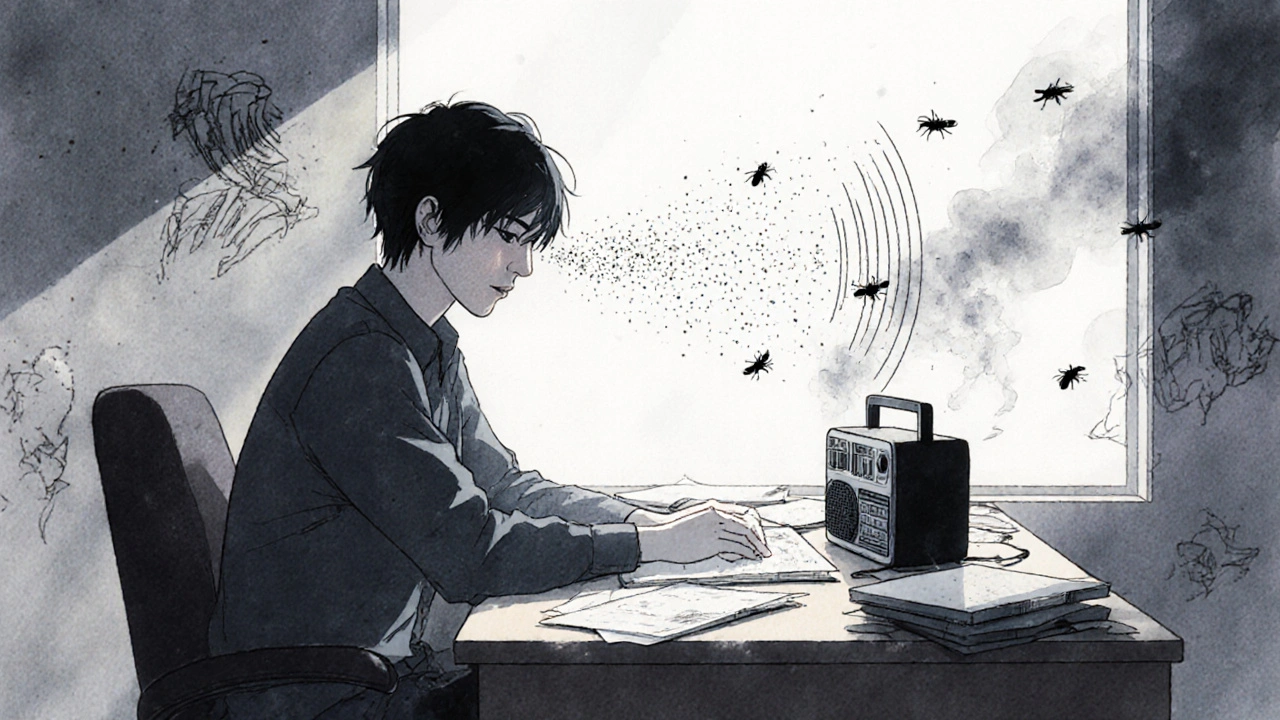
It’s less effective if your main issue is hyperactivity, impulsivity without attention problems, or if you’re easily distracted by external noise rather than internal mental chatter.
What to Expect in the First 30 Days
Day 1-7: You might feel tired, nauseous, or a little off. This is normal. Your body is learning to handle the new chemical balance.
Day 8-21: Subtle shifts begin. You notice you’re finishing emails without rereading them. You remember where you put your keys. You don’t forget appointments as often.
Day 22-30: Focus becomes automatic. You stop fighting your mind. Tasks that used to drain you now feel manageable. You might not realize how much better you feel-until you look back and realize you didn’t have a meltdown all week.
The key is patience. This isn’t a drug that makes you feel different-it makes you think differently. And that takes time.
When to Talk to Your Doctor
Call your doctor if:
- You feel emotionally numb for more than six weeks
- Your focus gets worse instead of better
- You develop new panic attacks or severe insomnia
- You have unexplained mood swings or thoughts of self-harm (rare, but possible)
Most side effects fade. But if cognitive improvements stall after 10-12 weeks, your dosage may need adjustment-or another treatment might be a better fit.
Does atomoxetine make you smarter?
No, atomoxetine doesn’t increase IQ or raw intelligence. It improves how well your brain manages attention, memory, and impulse control-especially if you have ADHD. It helps you use your existing mental abilities more effectively, not add new ones.
How long does it take for atomoxetine to improve focus?
Most people notice small improvements after 2-3 weeks, but full cognitive benefits usually take 6-8 weeks. Unlike stimulants, it doesn’t work immediately-it rebuilds brain function over time.
Can atomoxetine help with anxiety?
Yes. Because it increases norepinephrine in the prefrontal cortex, it can reduce anxiety symptoms in people with ADHD. Many patients report feeling calmer and less overwhelmed, even though it’s not approved specifically for anxiety.
Is atomoxetine addictive?
No. Atomoxetine is not a controlled substance and has no known abuse potential. Unlike stimulants, it doesn’t produce euphoria or cravings. It’s often prescribed to people with a history of substance use because of this safety profile.
Can children take atomoxetine long-term?
Yes. Long-term studies show atomoxetine is safe for children for at least two years, with no significant impact on growth or development. Many kids stay on it through adolescence and into adulthood, especially if it helps with school performance and emotional regulation.
What happens if I stop taking atomoxetine?
Cognitive benefits fade gradually over 1-2 weeks. You won’t experience withdrawal symptoms like with stimulants, but you may notice your focus slipping back to pre-treatment levels. Always consult your doctor before stopping.





Comments (8)
Philip Rindom
Man, I’ve been on this for 6 months and honestly? It’s like my brain finally stopped buffering. Used to re-read the same paragraph 5 times just to get through a work email. Now I just… do it. No rush, no crash. Just steady. Kinda wish I’d tried this sooner.
Sharon Campbell
lol i read this and thought ‘so its just adderall but slower and less fun’? like why not just drink coffee and call it a day? also who has time to wait 8 weeks for focus? i need it now.
Scott Walker
My kid’s been on it for a year. Teachers say she raises her hand before blurting now. I didn’t think it’d work, but she stopped crying over homework. 🤗 No more meltdowns after school. Worth every penny.
sara styles
Let me guess - Big Pharma paid you to write this. Atomoxetine? It’s just a chemical leash. They don’t want you thinking freely, they want you docile. The prefrontal cortex isn’t ‘low fuel’ - it’s being suppressed by a system that profits from compliant workers. You think your ‘improved focus’ is real? Or are you just conditioned to tolerate burnout better? The 2023 meta-analysis? All funded by Eli Lilly. Wake up.
Brendan Peterson
Interesting breakdown, but you’re omitting the fact that norepinephrine modulation affects the locus coeruleus differently across individuals. The 38% improvement in children is population-level - doesn’t account for genetic polymorphisms in the NET1 transporter. Some people metabolize it poorly and get no benefit. Also, the ‘emotional flatness’ you mention? That’s not transient for everyone. I’ve been on it 14 months and still feel like I’m watching my life through a foggy window.
Segun Kareem
It’s not about being smarter - it’s about being less distracted by your own chaos. I used to think my brain was broken. Turns out it was just drowning in static. Atomoxetine didn’t give me genius - it gave me silence. And in that silence? I finally heard myself think. That’s not medicine. That’s liberation.
Ashley B
So you’re telling me a drug that makes you emotionally numb is somehow ‘better’ than stimulants that make you anxious? That’s not a feature - that’s a bug. And now you’re glorifying it like it’s some zen enlightenment? No thanks. I’d rather be jittery and alive than calm and hollow. Also, I’ve met three people on this and two of them started crying for no reason. Coincidence? I think not.
Jess Redfearn
so wait so its like a slow adderall? why not just take adderall then? also my cousin took this and he got super quiet like a zombie. not cool.