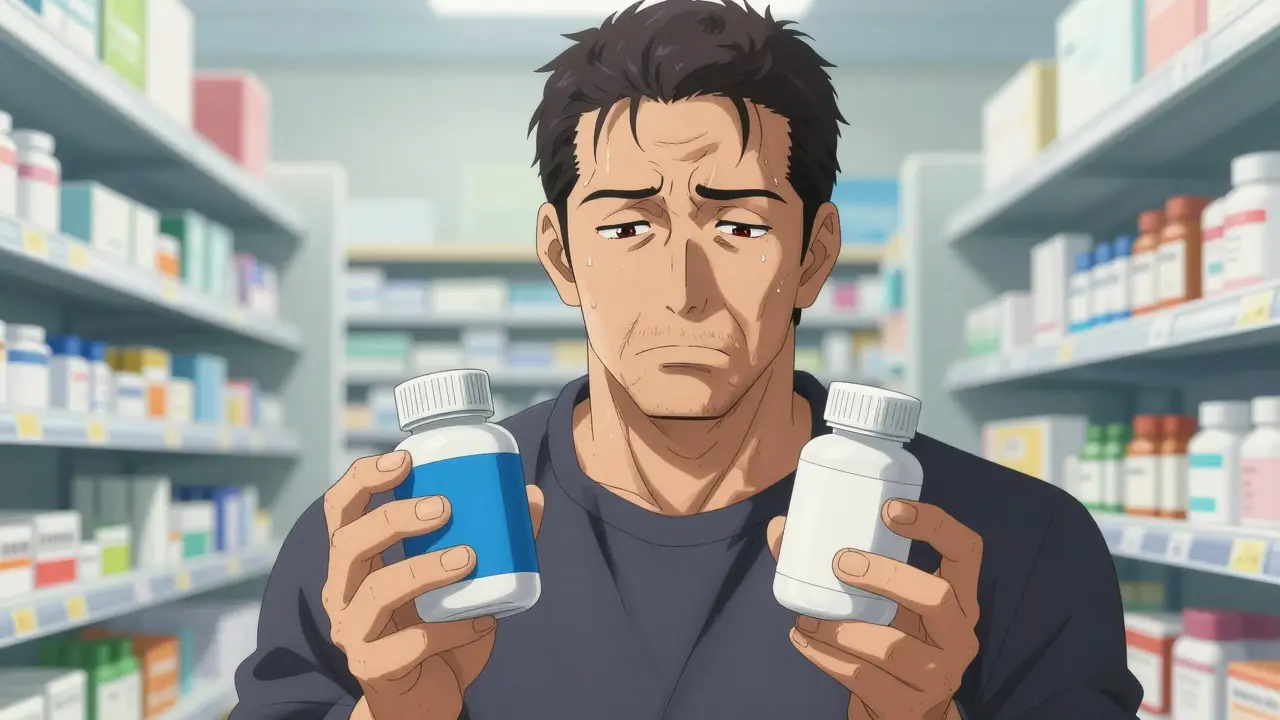
Imagine taking your daily medication and feeling a sudden wave of anxiety because the pill looks slightly different. It’s not just a placebo effect; for millions of patients, the name on the box matters more than the science inside. This is brand loyalty in action, a phenomenon where people stick to specific pharmaceutical brands even when cheaper, equally effective generics are available. It’s a stubborn habit that costs the healthcare system billions and keeps patients paying premium prices for what is often chemically identical medicine.
You might wonder why anyone would choose the expensive option when the active ingredient is the same. The answer isn’t always logical. It’s deeply psychological. From the comfort of familiarity to the fear of the unknown, several forces drive this preference. Understanding these drivers helps explain why the switch to generics hasn’t been as smooth as regulators hoped, and why some patients remain fiercely loyal to their brand-name prescriptions despite rising costs.
The Psychology Behind the Pill
At its core, choosing a brand-name drug is an emotional decision disguised as a medical one. Humans are wired to trust what they know. When a patient has used a specific brand for years, it becomes part of their routine. Changing it feels like risking stability. Research from the Indian Journal of Marketing in 2023 highlighted that brand experience and emotional attachment are stronger predictors of loyalty than price or efficacy alone. In fact, a study involving nearly 300 users found a strong positive correlation between how a patient feels about a brand and their likelihood to stay with it.
This emotional bond creates a safety net in the mind. For many, especially those managing chronic conditions, the thought of switching triggers uncertainty. Is the new pill going to work? Will I feel side effects? These questions don’t have scientific answers for most people, but they have powerful psychological weight. The brand name acts as a promise of consistency, even if that consistency is largely perceived rather than proven.
Familiarity vs. Fear of the Unknown
Familiarity is a huge driver. If you’ve taken Brand X for five years, it’s your go-to. You know how it makes you feel, when to take it, and how it fits into your day. A generic version, no matter how similar, breaks that rhythm. This is particularly true for younger generations. A Fortune survey from 2022 revealed that 35% of Gen Z consumers prefer brand-name medications, even though they are significantly more expensive. For this demographic, the brand represents quality and modernity. They trust the label because it’s associated with innovation and reliability.
On the other hand, older patients often cite fear. They worry that generics might have different inactive ingredients, leading to allergic reactions or digestive issues. While rare, these fears persist. A Reddit discussion among pharmacy students showed that nearly 70% of comments expressed concern about therapeutic fluctuations when switching to generics. One user shared a story about trying three different generics of an antidepressant, only finding relief with the original brand. Whether that was a real physiological difference or a placebo effect is debatable, but the outcome was the same: the patient stayed loyal to the brand because it worked for them.
The Role of Trust and Safety Perceptions
Trust is the glue holding brand loyalty together. Patients trust established brands because they’ve seen them advertised, recommended by doctors, or discussed in media. This trust extends to safety profiles. Even though regulatory bodies like the FDA require generics to be bioequivalent to brands, patients often don’t fully understand what that means. To them, "bioequivalent" sounds technical and distant. "Brand name" sounds safe and tested.
A GlobalData survey in 2023 found that about 40% of physicians would prescribe branded drugs if cost weren’t a factor. This professional bias trickles down to patients. If a doctor hesitates to switch, the patient assumes there’s a reason. In countries like Japan, 57% of physicians prefer brand-name drugs, partly due to stricter local approval standards for generics compared to the U.S. This creates a feedback loop: doctors prefer brands, patients trust doctors, and therefore patients prefer brands.

Price Sensitivity and Demographic Differences
If brand loyalty is so strong, why do generics account for 90% of prescriptions by volume in the U.S.? Because money talks. Price sensitivity varies wildly across demographics. Lower-educated consumers, according to a 2023 study published in PMC, were 1.54 times more likely to remain brand loyal regardless of price changes. This seems counterintuitive, but it suggests that for some, the perceived risk of switching outweighs the financial savings. They’d rather pay more for peace of mind.
In contrast, higher-income individuals or those with comprehensive insurance may not feel the pinch as much, allowing brand preferences to flourish. However, for those without insurance or with high deductibles, the math is simple. Generic drugs are on average 79% cheaper than brand-name equivalents. That’s a massive saving over time. Yet, even with this incentive, 13% of Spanish consumers refused generics entirely, showing that cultural and personal factors can override economic logic.
Medical Factors and Therapeutic Concerns
Not all medications are created equal in terms of loyalty. Some categories see near-total generic substitution, while others resist change. Calcium channel blockers, for example, have almost 100% generic penetration. Patients rarely complain about switching. But psychiatric medications tell a different story. Here, brand loyalty remains high because patients fear subtle formulation differences could affect their mental health. A slight change in how the drug releases in the body might alter mood or sleep patterns, making the brand feel indispensable.
This is where the concept of "therapeutic equivalence" gets tricky. The FDA defines bioequivalence using strict statistical bounds (80-125% confidence interval for absorption rates). Most generics fall within this range. But for narrow therapeutic index drugs-where small changes matter-a lot-patients and doctors are more cautious. Antiepileptics, for instance, have only 52% generic penetration, compared to 98% for statins. The stakes are higher, so the loyalty is stronger.

Marketing and the Power of Perception
Let’s not ignore the elephant in the room: marketing. Pharmaceutical companies spend billions on direct-to-consumer advertising. They associate their brands with hope, recovery, and normalcy. A commercial doesn’t just sell a pill; it sells a lifestyle. This branding creates an emotional connection that generics struggle to match. Generics are often marketed as "the same thing, less money," which is rational but lacks soul.
For Gen Z, this marketing resonates. They value authenticity and proof of value. If a brand has a strong support program, clear messaging, and a recognizable identity, they’re more likely to stick with it. Fortune’s analysis describes this as "value-driven brand trust." It’s not blind loyalty; it’s a calculated choice based on perceived added value. Meanwhile, in Europe, varying substitution policies influence behavior. In 15 EU countries, pharmacists can substitute generics without asking the doctor, which lowers the barrier to entry. In 12 others, explicit authorization is needed, reinforcing the brand’s dominance.
The Future of Brand Loyalty
Where does this leave us? Brand loyalty isn’t going away anytime soon, but it’s evolving. Regulatory efforts like the FDA’s Generic Drug User Fee Amendments aim to speed up generic approvals, increasing competition. Commissioner Robert Califf stated in 2023 that boosting generic competition is a top priority to combat high prices. As more generics enter the market, the sheer availability might slowly shift perceptions.
However, specialty drugs and biologics present a new challenge. Only 32% of eligible patients switched to biosimilars in the first year of availability. Complex molecules are harder to replicate, and patients are even more hesitant to switch. Deloitte predicts that generic market share will reach 95% of prescriptions by 2030, but McKinsey forecasts that premium brands with strong patient programs will hold 35-40% of key markets through 2028. Both can be true. Brand loyalty will persist where the emotional and medical stakes are highest, while fading in commodity areas like antibiotics.
For patients, the takeaway is clear: understanding *why* you prefer a brand can help you make better choices. If it’s about trust, ask your pharmacist to explain bioequivalence. If it’s about cost, check if a generic is covered by your insurance. And if it’s about fear, know that for most common medications, the science backs the switch. Your loyalty is valid, but it doesn’t have to be blind.
Are generic drugs really the same as brand-name drugs?
Yes, in terms of active ingredients and therapeutic effect. Regulatory agencies like the FDA require generics to be bioequivalent to the brand, meaning they deliver the same amount of the drug to your bloodstream at the same rate. Inactive ingredients may differ, but they shouldn’t affect how the medicine works for most people.
Why do some patients refuse to switch to generics?
Common reasons include fear of side effects from different fillers, concerns about effectiveness, and a general preference for familiar products. For certain complex medications, like psychiatric drugs, patients may believe subtle differences matter more, even if clinical data shows otherwise.
Does brand loyalty cost patients more?
Usually, yes. Brand-name drugs are on average 79% more expensive than generics. Over a year, this can add up to hundreds or thousands of dollars, depending on the medication. Insurance plans often encourage generic use through lower copays to manage these costs.
Which medications have the strongest brand loyalty?
Psychiatric medications, antiepileptics, and biologics tend to have higher brand loyalty. This is because patients and doctors are more cautious about switching drugs where small changes in dosage or delivery could impact treatment outcomes.
Can doctors force you to take a generic?
It depends on your country and insurance plan. In many places, pharmacists can substitute generics unless the prescription says "dispense as written." In the U.S., you can usually request the brand name, but your insurer might charge you a higher copay. Always check with your pharmacist or provider before assuming a switch is mandatory.