
Swelling in your lips, tongue, or throat doesn’t always come from allergies. Sometimes, it’s caused by something you’re taking every day - a medication you thought was safe. Angioedema triggered by drugs is more common than most people realize, and it can be life-threatening if missed. Unlike hives, which show up as itchy red bumps, angioedema swells deep under the skin. It can happen suddenly, without warning, and often without a rash. If you’ve ever woken up with swollen lips after starting a new pill, you’re not alone.
What Exactly Is Angioedema?
Angioedema is sudden, deep swelling beneath the skin or mucous membranes. It most often affects the face - lips, eyelids, cheeks - but can also show up in the throat, hands, feet, or genitals. When it hits the airway, it becomes an emergency. About 1 in 10 people with angioedema will experience swelling in the throat at some point. The swelling isn’t itchy like hives. Instead, it feels tight, warm, and sometimes painful. Episodes can last from hours to days.
There are two main types: allergic and non-allergic. Allergic angioedema comes from foods, insect stings, or latex. But up to 50% of cases have no clear trigger. That’s where medications come in.
Drugs That Commonly Cause Angioedema
Some medications are known to cause angioedema by messing with your body’s natural swelling controls. The biggest offender? ACE inhibitors. These are blood pressure pills like lisinopril, enalapril, and ramipril. They’re prescribed to millions of people. But about 0.1% to 0.7% of users develop angioedema on them - that’s 1 in every 150 to 1,000 people. It can happen after a few days or after years of use. No one knows why it happens to some and not others.
Another group: NSAIDs. That includes ibuprofen, naproxen, and even aspirin. These don’t cause true allergies. Instead, they shift your body’s chemical balance, increasing substances that trigger swelling. People with a history of hives or nasal polyps are more at risk. If you’ve had swelling after taking ibuprofen once, you’re likely to get it again.
Other drugs linked to angioedema include:
- Angiotensin II receptor blockers (ARBs) - like losartan or valsartan - though less often than ACE inhibitors
- Penicillin and other antibiotics - especially in people with known allergies
- Contrast dyes used in CT scans
- Some vaccines - rare, but documented cases exist
Here’s the catch: angioedema from ACE inhibitors doesn’t respond to antihistamines or epinephrine. That’s because it’s not caused by histamine. It’s caused by bradykinin - a chemical your body makes more of when ACE inhibitors block its breakdown. That’s why switching to a different blood pressure drug can stop the swelling.
Why Do Some People React and Others Don’t?
There’s no simple answer. Genetics play a role. Some people have a natural variation in their ACE enzyme that makes them more sensitive. Others have lower levels of a protein called C1 esterase inhibitor - even if they don’t have hereditary angioedema. That makes them more likely to react to drugs.
Age matters too. People over 65 are at higher risk, especially women. Black patients have a 3 to 5 times higher chance of developing ACE inhibitor angioedema than white patients. Why? Researchers think it’s tied to differences in how the body processes bradykinin.
It’s also possible to develop it after years of safe use. Someone might take lisinopril for 10 years without issue - then suddenly, their lips swell after a cold. No new allergies. No new foods. Just a drug they’ve been taking forever.

How Doctors Diagnose Drug-Induced Angioedema
There’s no blood test for it. Diagnosis is based on timing and elimination. If swelling started within days or weeks of starting a new medication - and there’s no other obvious cause - doctors suspect a drug trigger.
They’ll ask:
- When did the swelling begin?
- What medications did you start or change around that time?
- Have you had swelling before?
- Does it happen after NSAIDs or alcohol?
If ACE inhibitors are the suspected culprit, the doctor will likely stop the drug and switch you to a different class - like a calcium channel blocker or a diuretic. If the swelling stops within days, that’s strong proof.
For NSAID-induced cases, a controlled challenge test might be done under medical supervision. But that’s risky. Most doctors just advise avoiding all NSAIDs if one has caused swelling before.
What to Do If You Suspect a Medication Is the Cause
If you notice sudden swelling - especially if it’s new, unexplained, and you started a new drug - don’t wait. Call your doctor. If your tongue or throat is swelling, or you’re having trouble breathing, go to the ER immediately.
Here’s what to do next:
- Stop taking the suspected medication - but only after talking to your doctor. Don’t quit blood pressure meds on your own.
- Write down every medication, supplement, and OTC pill you’ve taken in the last 30 days.
- Take a photo of the swelling if possible. It helps doctors track changes.
- Ask your doctor about alternatives. For high blood pressure, ARBs are often tried next - but they can still cause angioedema in 10-15% of ACE inhibitor patients. Calcium channel blockers like amlodipine are safer choices.
Keep a list of drugs that triggered your swelling. Show it to every new doctor. Put it in your phone notes. Tell your pharmacist. This isn’t just about one episode - it’s about lifelong safety.
What Medications Are Safer Alternatives?
If you’ve had drug-induced angioedema, your options change. Here’s what works without the risk:
| Trigger Medication | Safer Alternative | Why It’s Safer |
|---|---|---|
| ACE inhibitor (lisinopril, enalapril) | Calcium channel blocker (amlodipine, diltiazem) | Doesn’t affect bradykinin; no angioedema risk |
| NSAID (ibuprofen, naproxen) | Acetaminophen (Tylenol) | No effect on swelling pathways |
| ARB (losartan, valsartan) | Diuretic (hydrochlorothiazide) | Low angioedema risk; often used with calcium blockers |
| Penicillin | Cephalosporin (if no cross-reactivity) or macrolide (azithromycin) | Lower allergy risk; confirmed by skin testing |
Always confirm alternatives with your doctor. Some drugs, like ARBs, are often prescribed as "safer" after ACE inhibitors - but they carry a similar risk. About 1 in 10 people who get angioedema from ACE inhibitors will get it again on ARBs.
Long-Term Management and Prevention
Once you’ve had drug-induced angioedema, you need to avoid those triggers for life. That means:
- Never taking the same drug again - even in small doses
- Telling every healthcare provider - including dentists and ER staff
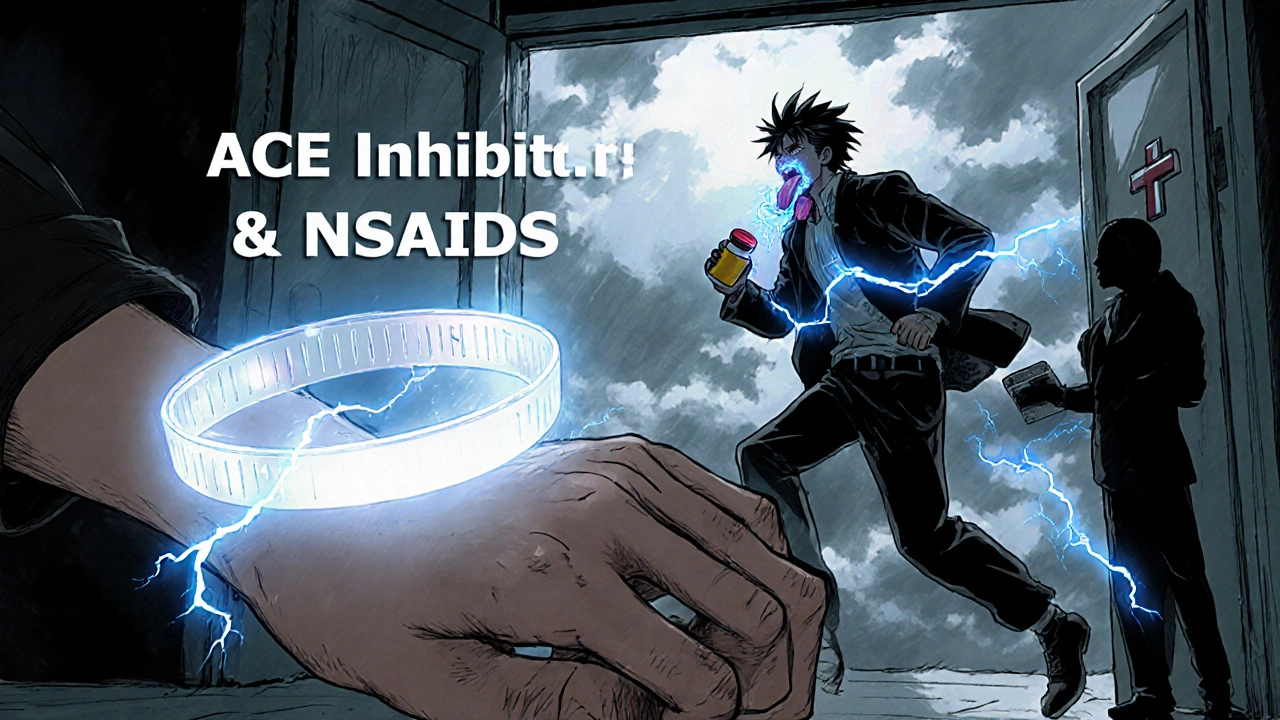
- Wearing a medical alert bracelet that says "Drug-Induced Angioedema - Avoid ACE Inhibitors, NSAIDs"
- Carrying an epinephrine auto-injector if your throat has ever swelled - even if you’re not allergic
Some people are prescribed preventive meds like icatibant or ecallantide if they have frequent episodes. These block bradykinin and are used in emergencies. But they’re expensive and not for routine use.
The best prevention? Awareness. If you’ve had swelling once, assume any new drug could be the trigger. Ask your pharmacist: "Could this cause swelling?" before you fill the prescription.
When to Seek Emergency Help
Not all swelling is an emergency. But these signs mean you need to call 911 or go to the ER right away:
- Swelling in the tongue or throat
- Difficulty swallowing or speaking
- Wheezing or shortness of breath
- Feeling like your airway is closing
- Dizziness or fainting
Even if you’ve had mild swelling before, the next episode can be worse. Don’t wait to see if it "goes away."
Final Thoughts
Medications aren’t always the villains. But when they trigger angioedema, they can turn routine care into a life-or-death situation. Millions take ACE inhibitors without issue. But for those who react, the consequences are serious - and preventable.
The key is recognizing the pattern. If swelling appears after starting a new pill, it’s not just bad luck. It’s a signal. Listen to your body. Talk to your doctor. And never assume a drug is safe just because it’s been on the market for decades.
Angioedema from drugs is rare - but when it happens, it changes everything. Know your triggers. Protect your airway. And make sure every doctor you see knows what to avoid.
Can you develop angioedema from a medication you’ve taken for years?
Yes. Angioedema from drugs like ACE inhibitors can appear after months or even years of safe use. It doesn’t always happen right away. One person might take lisinopril for 7 years without issue, then suddenly develop lip swelling after a minor illness. This is why doctors recommend stopping the drug if swelling occurs - even if you’ve used it safely before.
Are ARBs safer than ACE inhibitors if I had angioedema before?
No, not always. About 10% to 15% of people who get angioedema from ACE inhibitors will also react to ARBs like losartan or valsartan. That’s because both drugs affect the same pathway in the body. If you’ve had swelling from an ACE inhibitor, your doctor should avoid ARBs and choose alternatives like calcium channel blockers or diuretics instead.
Do antihistamines help with drug-induced angioedema?
Not usually. Antihistamines work for allergic reactions that involve histamine - like hives or food allergies. But drug-induced angioedema from ACE inhibitors or NSAIDs is caused by bradykinin, not histamine. That means antihistamines and even epinephrine often don’t help. The only reliable fix is stopping the drug and switching to a safer alternative.
Can I take ibuprofen if I had angioedema from aspirin?
It’s risky. If you’ve had angioedema from aspirin, you’re likely to react to other NSAIDs like ibuprofen or naproxen. These drugs work the same way in the body - by blocking enzymes that regulate swelling. Most doctors recommend avoiding all NSAIDs if you’ve had one reaction. Acetaminophen (Tylenol) is usually the safest pain reliever option.
Should I carry an epinephrine pen if I’ve had drug-induced angioedema?
Yes - if your swelling has ever involved your throat or breathing. Even if the reaction was mild before, future episodes can be worse. Epinephrine won’t fix bradykinin-related swelling, but it can help if there’s any allergic component or if you’re unsure of the cause. It’s a safety net. Talk to your doctor about getting one and learning how to use it.




Comments (12)
Donald Sanchez
lol i took lisinopril for 3 yrs n one day my lips looked like i got punched by a balloon animal. no hives, no itching, just puffed up like a chipmunk. doc said "oh that" like it was normal. i was like bro i coulda died lmao 🤡
Bette Rivas
This is one of the most important posts I've seen in years. Many patients don't realize that ACE inhibitor angioedema isn't an allergy-it's a bradykinin-mediated reaction. That's why antihistamines and epinephrine often fail. The key is recognizing the pattern: swelling without rash, especially after starting a new med. Once identified, switching to a calcium channel blocker or diuretic is usually safe. Document everything. Tell every provider. This isn't just medical advice-it's life-saving literacy.
Greg Knight
Hey, if you've ever had swelling from a med, I want you to know something: you're not broken. You're not weird. You're not overreacting. Your body gave you a signal, and you listened. That’s strength. Now you know what to avoid, and that’s power. Don’t let anyone tell you it’s "just a fluke." It’s your body’s way of saying "stop." Trust that. Talk to your pharmacist before filling any script. Write it down. Tell your family. Wear a bracelet. You’re not being dramatic-you’re being smart. And you’re not alone. I’ve seen too many people get dismissed until it’s too late. You’re doing better than you think.
Kenneth Meyer
The real tragedy isn’t just the swelling-it’s how little the medical system teaches about this. We’re told to watch for allergies, but bradykinin? Most docs don’t even mention it. It’s like teaching someone to avoid fire but never telling them water can drown them too. The fact that ARBs are still pushed as "safe alternatives" when they carry the same risk is systemic negligence. We need better training, better labeling, better awareness. This isn’t rare-it’s underreported.
Danielle Mazur
Did you know that the FDA approved ACE inhibitors in the 1980s without adequate testing on Black populations? Studies since then show a 3-5x higher incidence in Black patients. Yet, guidelines still don't mandate genetic screening or race-based warnings. This isn't medical oversight-it's institutional racism dressed in white coats. The pharmaceutical industry profits from silent deaths. You think your pill is safe? It's a lottery you didn't sign up for.
rachna jafri
USA thinks it's the medical god but they just sell poison in pill form. India knows this-our grandmas use turmeric, neem, and ginger for blood pressure. Why? Because they never had to learn about bradykinin because they never took these toxic Western drugs. Now you people are waking up to what we’ve known for centuries: modern medicine is a slow poison sold as salvation. Wake up, sheeple. Your body isn't broken-it's fighting your corporate masters.
darnell hunter
The clinical evidence regarding ACE inhibitor-induced angioedema is well-documented in peer-reviewed literature, including the New England Journal of Medicine and JAMA. The incidence rate of 0.1–0.7% is statistically significant and warrants formal inclusion in prescribing guidelines. However, the absence of mandatory genetic screening or race-specific contraindications remains a critical gap in pharmacovigilance. The current standard of care is inadequate and requires immediate revision.
Hannah Machiorlete
i took lisinopril for 5 years. woke up one morning with my face looking like a balloon that got left in the sun. thought i was dying. went to er, they gave me benadryl. it did nothing. i cried. they just shrugged. now i take amlodipine. no swelling. but i still get panic attacks when i see any script that starts with "l". why does no one warn you?
prasad gali
The pathophysiological mechanism involves kallikrein-kinin system dysregulation secondary to ACE inhibition, leading to bradykinin accumulation. This is distinct from IgE-mediated anaphylaxis. The absence of urticaria is a key diagnostic differentiator. Management hinges on immediate discontinuation and avoidance of cross-reactive agents, including ARBs. Prophylactic use of icatibant is indicated in recurrent cases, though cost and accessibility remain barriers in primary care settings.
Paige Basford
I had this happen after starting lisinopril-swollen tongue, couldn’t swallow. I was terrified. My doctor said, "Oh, that’s rare!" and switched me to losartan. Then it happened again. I was so mad. Turns out ARBs aren’t safe at all. I finally went to a specialist who said, "Try amlodipine." It worked. I’m so glad I didn’t give up. If you’ve had swelling, don’t settle for "probably fine." Push for alternatives. Your life is worth it.
Freddy Lopez
It’s humbling to realize how little we truly know about how our bodies interact with synthetic molecules. A pill meant to lower blood pressure can, in some, become a silent assassin. The fact that this reaction can appear after a decade of use speaks to the complexity of human biology-and our arrogance in assuming we’ve mastered it. Perhaps the real lesson isn’t just which drugs to avoid, but how deeply we must listen to our bodies before we trust the script.
Lauren Hale
If you’ve had drug-induced angioedema, you’re not just a patient-you’re a guardian. Every time you tell a new doctor, every time you write it in your notes, every time you say "no" to a risky prescription, you’re protecting not just yourself, but others who might come after you. Share this post. Talk to your friends. Make sure your pharmacist knows. This isn’t just about meds-it’s about building a culture where nobody gets dismissed again.