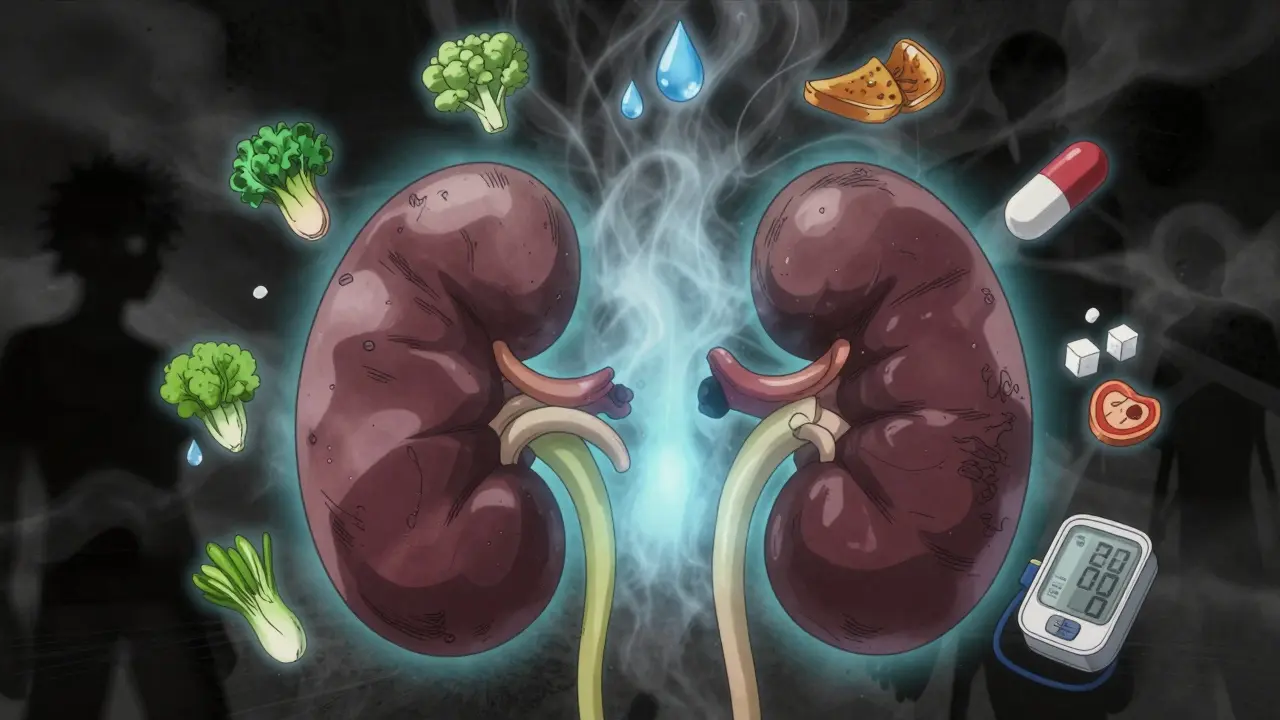
Every year, more than 37 million Americans live with chronic kidney disease (CKD), and 90% of them don’t even know it. That’s not because they’re ignoring symptoms-there often aren’t any. By the time kidney damage shows up in tests, it’s already advanced. The good news? Most cases of kidney disease are preventable. You don’t need a miracle cure or expensive treatment. You need to make a few smart, consistent changes to how you eat, move, and manage your health. And it’s not too late to start-even if you’re already dealing with high blood pressure or prediabetes.
What Really Damages Your Kidneys?
Your kidneys are your body’s filtration system. They clean about 150 quarts of blood every day, removing waste and extra fluid. When they start failing, toxins build up, blood pressure rises, and your whole body suffers. The biggest threats aren’t mysterious toxins or rare diseases. They’re everyday habits that quietly wear down your kidneys over time.
The two leading causes of kidney failure in the U.S. are diabetes and high blood pressure. Together, they account for 75% of all cases. Diabetes damages the tiny filters in your kidneys by flooding them with sugar. High blood pressure strains the blood vessels leading to and within the kidneys, making them leaky and inefficient. But here’s the key: both are controllable. Not just manageable-preventable.
Other major risk factors include obesity, smoking, excessive alcohol use, and overuse of common painkillers like ibuprofen and naproxen. These drugs, taken regularly for headaches or back pain, can cause kidney damage in 3-5% of new CKD cases each year. And if you have a family history of kidney disease, your risk jumps-especially if you’re Black or Hispanic, where rates of kidney failure are 3.4 times and 1.3 times higher than in White Americans, respectively.
How Much Salt Are You Really Eating?
Sodium is the silent killer when it comes to kidney health. Most people think they’re cutting back because they avoid the salt shaker. But 70% of the sodium we consume comes from processed foods-canned soups, frozen meals, deli meats, bread, and even sweet snacks.
The ideal daily limit is under 2,300 milligrams. That’s about one teaspoon of salt. But the average American eats over 3,400 mg a day. To cut back, start reading labels. Look for “low sodium” or “no salt added.” Swap out packaged snacks for fresh fruit, nuts, or plain yogurt. Cook more meals at home. When you do use salt, choose herbs and spices instead. Cumin, paprika, garlic powder, and lemon juice add flavor without the burden.
Why does this matter? Too much sodium makes your body hold onto water. That raises blood pressure, which forces your kidneys to work harder. Over time, this wears them out. Lowering sodium doesn’t just help your kidneys-it lowers your risk of heart attack and stroke too.
Move More, Sit Less
You don’t need to run a marathon. You don’t even need to join a gym. What you need is consistent movement.
The CDC and NHS both recommend at least 150 minutes of moderate activity per week. That breaks down to 30 minutes, five days a week. Brisk walking, cycling, swimming, or dancing all count. Add in two days of strength training-bodyweight squats, resistance bands, or lifting light weights. It doesn’t have to be intense. Just regular.
Why does this help? Exercise lowers blood pressure, improves insulin sensitivity, and helps you maintain a healthy weight. All three of those things directly protect your kidneys. In fact, losing just 5 kilograms (about 11 pounds) can reduce your risk of kidney disease by 25-30%. That’s not a guess-it’s backed by data from the National Kidney Foundation.
Start small. Take the stairs. Walk after dinner. Park farther away. Dance while you do the dishes. These tiny habits add up. And they’re easier to stick with than a rigid workout plan.

Food Matters More Than You Think
It’s not just about cutting out sugar. It’s about what you put on your plate every day.
Start with the basics: fill half your plate with fruits and vegetables. The NHS recommends at least five portions daily. That’s not just for fiber-it’s for antioxidants, potassium, and other nutrients that help your kidneys function better. Choose colorful options like spinach, berries, carrots, and bell peppers.
Choose lean proteins: chicken, fish, tofu, beans, and lentils. Avoid processed meats like bacon, sausage, and deli slices-they’re loaded with sodium and preservatives. Protein is important, but too much (over 1.2 grams per kilogram of body weight) can overload your kidneys. For most people, that means two to three servings a day, not five.
Watch out for sugary drinks. Soda, energy drinks, and sweetened teas are the #1 source of added sugar in the American diet. They contribute 7% of daily calories for most adults. That sugar doesn’t just cause weight gain-it directly harms kidney cells. Swap them for water, unsweetened tea, or sparkling water with lemon.
And don’t forget healthy fats. Avocados, nuts, olive oil, and fatty fish like salmon help reduce inflammation, which is a major driver of kidney damage.
Control Your Blood Pressure and Blood Sugar
If you have high blood pressure or diabetes, you’re already at high risk. But you’re not powerless.
For blood pressure, the target is 120/80 mm Hg. That’s not just a number-it’s a shield for your kidneys. If you’re over 130/80, talk to your doctor. Lifestyle changes can often bring it down without medication. But if you need pills, take them as prescribed. Skipping doses adds up.
For diabetes, get your A1C tested at least twice a year. If you’re prediabetic, aim to get your A1C below 5.7%. The goal isn’t perfection-it’s progress. Losing weight, moving more, and cutting sugar can reverse prediabetes in many cases. The Healthier You Diabetes Prevention Programme in the UK showed a 26% reduction in diabetes progression among participants who followed a structured plan.
And here’s the hard truth: early kidney disease has no symptoms. You won’t feel tired, swollen, or in pain. That’s why screening matters. If you have diabetes, high blood pressure, or a family history of kidney disease, ask your doctor for a simple urine and blood test. It takes five minutes. It could save your kidneys.
Stop Smoking, Limit Alcohol
Smoking is one of the fastest ways to damage your kidneys. Smokers have a 50% higher risk of kidney function decline than non-smokers. Smoking narrows blood vessels, reduces blood flow to the kidneys, and speeds up scarring. Quitting doesn’t just help your lungs-it gives your kidneys a fighting chance.
Alcohol isn’t the enemy, but too much is. The guidelines are clear: one drink per day for women, two for men. That’s one 12-ounce beer, 5 ounces of wine, or 1.5 ounces of hard liquor. Excess alcohol raises blood pressure and contributes to liver damage, which indirectly harms the kidneys. And if you’re already at risk, even moderate drinking can tip the scales.
Be Careful With Medications
Painkillers like ibuprofen, naproxen, and aspirin are fine for occasional use. But if you take them daily-for headaches, arthritis, or back pain-you’re putting your kidneys at risk. The FDA reports that these drugs cause 3-5% of new kidney disease cases each year.
If you need regular pain relief, talk to your doctor. Acetaminophen (Tylenol) is generally safer for kidneys, but it’s not risk-free either. Always check labels. Some cold and flu meds contain NSAIDs or high doses of sodium. Ask for kidney-safe alternatives. And never take more than the recommended dose.
Also, get your flu shot every year. People with kidney disease are 3-5 times more likely to end up in the hospital from the flu. Vaccination isn’t optional-it’s essential.
Stress and Sleep Matter Too
Chronic stress raises cortisol, which spikes blood pressure and blood sugar. It also leads to poor sleep, emotional eating, and skipping exercise. All of these habits hurt your kidneys.
Simple stress-reduction techniques can help. Try 10 minutes of deep breathing each day. Walk in nature. Practice mindfulness. A Johns Hopkins study found that people who practiced regular stress management had 15% slower kidney disease progression.
And sleep. Aim for 7-8 hours. Poor sleep is linked to higher blood pressure and insulin resistance. If you snore or feel tired all day, ask about sleep apnea. It’s common in people with kidney disease and makes everything worse.
You’re Not Alone
Preventing kidney disease isn’t about being perfect. It’s about making smarter choices, day after day. You don’t have to overhaul your life overnight. Start with one change: cut out sugary drinks. Add a 10-minute walk after dinner. Read one food label. That’s enough.
And if you’re already dealing with diabetes, high blood pressure, or obesity-don’t wait for a crisis. The earlier you act, the more you can protect your kidneys. Studies show that lifestyle changes are 40% more effective in early-stage kidney disease than in advanced cases.
There’s no magic pill. But there are simple, proven steps. And they work. The CDC estimates that if everyone followed these guidelines, we could prevent 25% of kidney disease cases over the next decade. That’s 300,000 fewer people needing dialysis. That’s $32 billion saved in healthcare costs.
Your kidneys are working for you right now. Give them a chance to keep working.
Can kidney disease be reversed?
In early stages (Stages 1-2), yes-lifestyle changes can stop or even reverse damage. Once scarring sets in (Stage 3 and beyond), the damage can’t be undone, but you can still slow or stop further decline. The key is catching it early. That’s why testing matters more than symptoms.
Do I need to stop eating protein if I have kidney disease?
No. Protein is still essential. But too much-especially from processed or red meats-can strain damaged kidneys. The goal isn’t to eliminate protein, but to choose lean sources (chicken, fish, beans) and keep portions moderate. A registered dietitian can help tailor this based on your kidney function.
Is drinking more water good for my kidneys?
Yes-when you’re properly hydrated. Water helps your kidneys filter waste efficiently. But there’s no magic number. Most people need about 6-8 cups a day, depending on activity, climate, and health. If you have advanced kidney disease, your doctor might limit fluids. Don’t overdo it unless advised.
Can I prevent kidney disease if I have a family history?
Absolutely. Genetics increase your risk, but they don’t determine your fate. People with a family history who control their blood pressure, manage their weight, and avoid smoking cut their risk by more than half. Screening every 1-2 years is crucial if you’re at higher risk.
What tests should I ask my doctor for?
Ask for a simple blood test (serum creatinine) to calculate your eGFR (estimated glomerular filtration rate), and a urine test for albumin. These two tests can detect kidney damage years before symptoms appear. If you have diabetes, high blood pressure, or a family history, get tested at least once a year.
Are there apps or tools to help me track my progress?
Yes. Many blood pressure monitors now sync with apps to track trends over time. There are also free apps that log sodium, sugar, and fluid intake. The American Kidney Fund offers a free digital tool that helps you set goals for diet, activity, and medication adherence. Remote monitoring programs have been shown to improve medication adherence by 37% in pilot studies.


Comments (8)
Eimear Gilroy
So much of this makes sense, but I never realized how much sodium hides in bread and yogurt. I thought I was eating clean until I checked the label on my "low-fat" granola. 3400mg? That’s insane. I’ve started swapping out packaged snacks for apple slices with almond butter-tiny change, but my blood pressure has actually dropped a bit. Also, who knew dancing while doing dishes counts as exercise? Now I’m blasting 90s pop and calling it "kidney cardio."
Martin Halpin
Let me just say this: the entire premise of this article is dangerously oversimplified. You think cutting back on ibuprofen is going to save your kidneys? What about the 40% of people who can’t afford fresh produce because of food deserts? Or the 60% who work two jobs and can’t "walk after dinner" because they’re asleep by 8 p.m.? This is rich-person medicine disguised as public health advice. And don’t even get me started on the "drink water" advice-what if you have heart failure? Or are on dialysis? This isn’t prevention, it’s victim-blaming wrapped in a kale smoothie.
Cory L
Bro. I was in denial too. I thought I was fine-ate tacos daily, chugged Mountain Dew, slept 4 hours. Then my doc said my eGFR was dropping. So I swapped soda for sparkling water with lime, started walking after work, and cut out processed meat. Six months later? My numbers are back in the green. No magic. Just consistency. You don’t need to be perfect. Just show up. And yeah, I still eat tacos. But now I make them with black beans, not beef, and skip the salt shaker. Small wins, people.
Bhaskar Anand
This article is complete nonsense. In India we have been eating lentils and vegetables for centuries and still kidney disease is rampant. You think sodium is the problem? It's the Western lifestyle. Processed food. Lazy people. No discipline. You need to stop eating sugar and drink less water. Too much water dilutes your kidneys. Also, why are you all so obsessed with testing? If you are healthy, you don't need tests. You need to work harder. Stop complaining. Take responsibility. Your body is not a machine. It is a temple. And you are neglecting it with your weak American habits.
William James
Hey everyone-just wanted to say I’ve been reading this thread and I’m so glad we’re talking about this. I’ve got prediabetes and honestly? I thought I was doomed. But reading about people making tiny changes-like walking after dinner or reading labels-it made me feel like I could actually do something. I started with one thing: I stopped drinking soda. Just that. And now I’m trying to add one veggie to every meal. It’s not about being perfect. It’s about showing up for yourself, even if it’s messy. I still forget my water bottle. I still eat cookies. But I’m trying. And that’s enough. You’re not alone in this.
David McKie
Oh, so now we’re blaming individuals for systemic failure? Let me guess-you think if I just ate more kale, my kidneys would magically heal? My brother died of CKD at 42. He worked night shifts, had no insurance, and ate what was cheapest. Your "simple changes" are a luxury. The real issue? Corporate greed. Food companies pump sodium into everything. Pharma companies profit from dialysis. Your article is a distraction. Stop preaching to the privileged and demand policy change. Universal healthcare. Food labeling laws. Subsidies for fresh produce. That’s prevention. Not yoga and lemon water.
Southern Indiana Paleontology Institute
Look, I’m from Indiana and I’ve seen this crap before. People think they can fix kidneys by eating berries and walking. Nah. My cousin had kidney failure. He was a trucker. Ate fast food. Didn’t have time for "30 minutes five days a week." He got a transplant. That’s the real solution. Stop pretending lifestyle changes fix everything. If your kidneys are gone, they’re gone. No amount of cumin is gonna fix that. And if you’re not white? You’re already at higher risk. So why are we pretending this is fair? It’s not. Get real.
Nerina Devi
As someone from India who moved to the U.S., I’ve seen how differently we approach health. Back home, we use turmeric, neem, and ginger naturally. Here, we reach for pills. But the truth? Both worlds have something to offer. I started cooking Indian meals with less salt, using fenugreek and coriander instead. And I walk 20 minutes after dinner with my kids. It’s not about perfection. It’s about rhythm. Slow down. Eat with your family. Breathe. Your kidneys aren’t just organs-they’re part of your life. And life, when lived with awareness, heals more than any diet ever could.