
Choosing the right insulin isn’t about picking the most advanced or expensive option-it’s about matching your life, your body, and your goals. For millions of people with diabetes, insulin isn’t just a drug; it’s the foundation of daily survival. But with so many types, dosing strategies, and delivery methods, it’s easy to feel overwhelmed. The good news? You don’t need to understand every detail to make a smart choice. You just need to know what works for you.
Understanding the Four Main Types of Insulin
Not all insulins work the same way. They’re grouped by how fast they start, when they peak, and how long they last. Think of them like different tools in a toolbox-each has a job.Rapid-acting insulins (like Humalog, NovoLog, and Apidra) kick in within 10-15 minutes, hit their peak in under 90 minutes, and wear off in 3-5 hours. These are your mealtime insulins. They’re designed to handle the spike in blood sugar after you eat. If you’re eating a big pasta dinner or a slice of cake, this is what you reach for. Studies show they lower A1C by 0.3-0.4% more than older short-acting insulins and cause fewer low-blood-sugar episodes.
Short-acting (regular) insulin (like Humulin R) takes 30 minutes to start, peaks around 2-3 hours, and lasts 5-8 hours. It’s cheaper and still used in some settings, especially where cost is a barrier. But it’s less precise. If you’re using it, you need to plan meals 30 minutes ahead-something most people can’t do on a busy workday.
Intermediate-acting insulin (NPH, like Humulin N) starts working in 1-2 hours, peaks between 4-12 hours, and lasts 12-18 hours. It’s often used at bedtime to cover overnight glucose. But here’s the catch: it has a strong peak. That means if you’re active during that window, you’re at higher risk for a dangerous low. The TOSCA trial found NPH causes 30% more nighttime lows than newer long-acting insulins.
Long- and ultra-long-acting insulins (like Lantus, Levemir, Toujeo, and Tresiba) are your background insulins. They don’t peak. They just… keep going. Glargine lasts 24 hours. Degludec lasts over 42 hours. This steady drip mimics what a healthy pancreas does-constant, quiet insulin flow. The BEGIN trial showed degludec cuts severe low-blood-sugar events by 40% compared to glargine. That’s not a small difference. It’s life-changing for people who wake up terrified of nighttime lows.
And then there’s inhaled insulin (Afrezza). It starts working in 12 minutes, peaks in 30, and is gone in 3 hours. It’s needle-free. Great for people with needle phobia. But it’s not for everyone. Smokers can’t use it. Lung function must be checked first. And at $1,000+ a month without insurance, it’s out of reach for many.
How Insulin Regimens Work: Basal-Bolus vs. Premixed
It’s not just about the type-it’s about how you use them. There are two main strategies.Basal-bolus therapy is the gold standard for type 1 diabetes and many with type 2. You take one long-acting insulin once or twice a day (basal) to cover your body’s baseline needs. Then you take rapid-acting insulin before meals (bolus) to handle food. This gives you maximum control. You can adjust your mealtime dose based on what you eat, your blood sugar, and how active you are. It’s flexible. It’s precise. But it requires effort. You need to count carbs. You need to check your blood sugar 4-6 times a day. You need to learn correction factors-like how much 1 unit of insulin lowers your sugar (usually 30-50 mg/dL). Most people take 6-12 weeks to get comfortable. Programs like DAFNE cut that learning time by 40%.
Premixed insulins (like Humalog Mix 75/25) combine intermediate- and rapid-acting insulins in one shot. Two shots a day-before breakfast and dinner. Simple. Convenient. But rigid. You eat the same amount of carbs at the same times, or your blood sugar goes haywire. If you skip lunch? You risk a low. If you eat more carbs than usual? You’re over-dosed. These are best for people with very consistent routines. Not for shift workers, travelers, or anyone who eats on the go.
Who Gets What? Type 1 vs. Type 2 Diabetes
Type 1 diabetes means your body makes zero insulin. You need it-every day. The American Diabetes Association says multiple daily injections (MDI) with rapid- and long-acting insulins are the standard. Many now use insulin pumps or hybrid closed-loop systems (like the MiniMed 780G), which auto-adjust basal rates. In the 2023 DIAMOND trial, 78% of users on these systems hit A1C under 7%.For type 2 diabetes, it’s more complex. You don’t always need insulin right away. Guidelines now say: start with lifestyle changes, then metformin, then GLP-1 agonists (like Ozempic or Mounjaro) or SGLT2 inhibitors (like Jardiance). These help with weight loss, protect your heart and kidneys, and lower A1C without causing lows. Insulin is the last step-unless your A1C is above 9.5% or you’re losing weight rapidly. Then, yes, insulin becomes urgent. But even then, you might start with just one shot of long-acting insulin at night. Many people never need bolus insulin.
Cost Matters More Than You Think
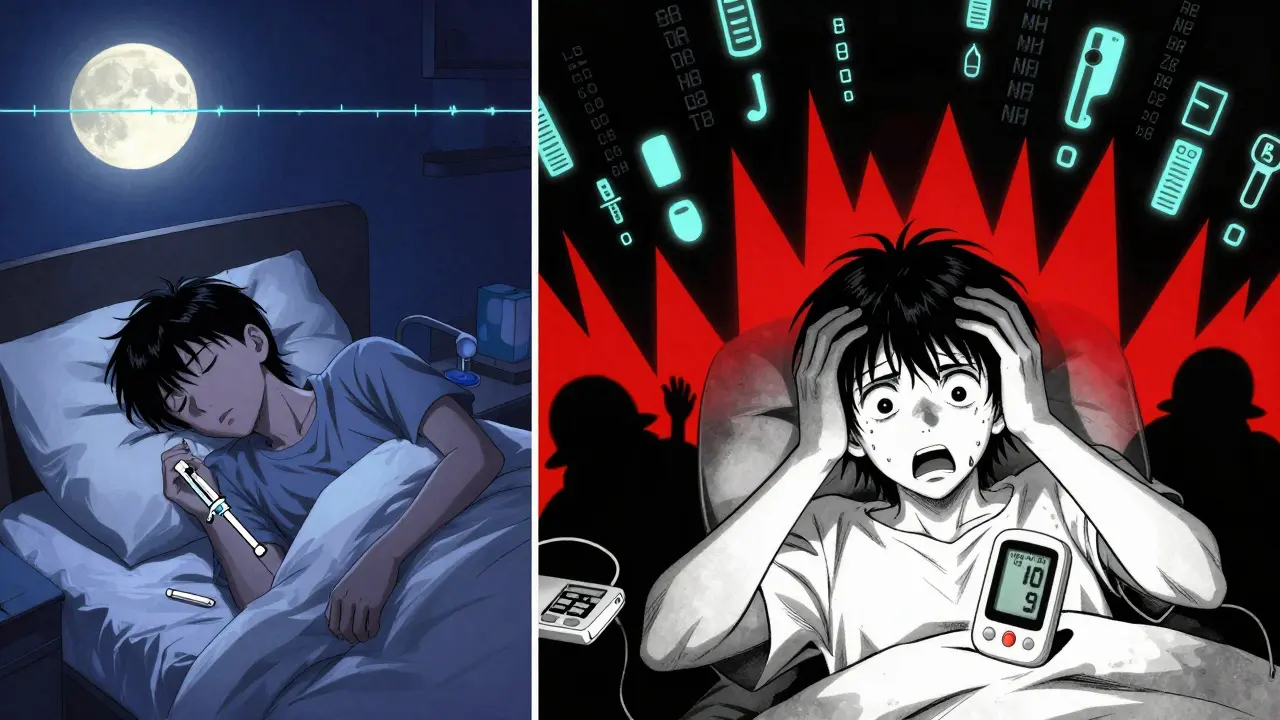
Insulin isn’t just a medical choice-it’s a financial one. In 2023, 1 in 4 insulin users admitted to rationing because they couldn’t afford it. That’s not a statistic. That’s someone skipping doses. That’s someone in the ER.Human insulin (Humulin R, Novolin N) costs $25-$35 at Walmart. It’s old, but it works. Analog insulins? $250-$350 per vial without insurance. That’s $1,000+ a month for some regimens. The Inflation Reduction Act capped insulin at $35/month for Medicare patients-and it worked. Analog use among seniors jumped 18% in the first year. But commercial insurance? Still no cap. And biosimilars like Semglee (a cheaper glargine) are only 12% of the market. They’re not widely promoted. Many doctors still default to brand names.
If you’re paying out of pocket, ask for human insulin. It’s not inferior-it’s just older. Many people manage just fine on it. The trade-off? More frequent lows. More monitoring. But it’s sustainable.
What Experts Really Say
Dr. Richard Bergenstal, former ADA president, says analog insulins are preferred because they’re more like natural insulin-with less risk of lows. But he also knows cost blocks access. Dr. Silvio Inzucchi says: “For type 2 diabetes, we now prioritize heart-protecting drugs before insulin.” That’s a shift. Insulin isn’t the first line anymore. It’s the safety net.Dr. Jane Reusch warns about inhaled insulin: “It’s great for needle-phobic patients, but if you smoke or have asthma, it’s dangerous.” And Dr. Peter Butler cautions: “Ultra-long insulins like degludec can delay dose adjustments. If your sugar stays high for days, you might not notice until it’s too late.”
Real-world data backs this up. On Drugs.com, Tresiba has a 7.8/10 rating. People love its consistency. But they hate waiting 6 hours for it to start when they need to adjust. Afrezza users are 82% happy with control-but 35% quit because of cost or lung issues.

What You Need to Do Next
You don’t need to know every insulin name. You need to know your goals:- Are you trying to avoid lows at night?
- Do you eat irregular meals?
- Can you afford $300/month?
- Are you willing to count carbs and check blood sugar 4+ times a day?
If you’re newly diagnosed, start with a certified diabetes care and education specialist (CDCES). They’re not just educators-they’re your coaches. Studies show working with one improves A1C by 0.5-1.0%.
If you’re on insulin and still having highs or lows, don’t blame yourself. Talk to your doctor about switching insulins. Maybe you’re on NPH and need glargine. Maybe you’re on a premixed and need to move to basal-bolus. Maybe you need a pump. Or maybe you just need a cheaper insulin.
Insulin isn’t a failure. It’s a tool. And like any tool, it only works if it fits your life.
What’s Coming Next
In 2024, the FDA approved the first once-weekly insulin: basal insulin icodec. It’s not available everywhere yet, but early trials show it’s as effective as daily degludec-with slightly better A1C control. It’s a game-changer for people who forget daily shots.Oral insulin is in phase 3 trials. If it works, it could replace injections for some. Smart insulins-those that turn on and off with your blood sugar-are in early testing. They’re not here yet, but they’re coming.
For now, the best insulin is the one you can take, afford, and stick with. Don’t chase the newest. Chase what works for you.
Can I use human insulin instead of analog insulin?
Yes. Human insulin (like Humulin R and NPH) is effective and much cheaper-often under $35 per vial. It works well for many people, especially those on fixed schedules. But it has a higher risk of low blood sugar, especially at night, because it peaks more sharply. If you’re willing to check your blood sugar more often and time meals precisely, human insulin is a safe, affordable option.
What’s the best insulin for type 2 diabetes?
It depends. For most people with type 2 diabetes, insulin isn’t the first choice. GLP-1 agonists (like semaglutide) and SGLT2 inhibitors (like empagliflozin) are preferred because they help with weight loss and protect your heart and kidneys. If you need insulin, start with a once-daily long-acting insulin (like glargine or degludec) at bedtime. Many people never need mealtime insulin. Only add rapid-acting insulin if your A1C stays high or you’re losing weight.
Why is my insulin so expensive?
Most insulin in the U.S. is made by three companies-Eli Lilly, Novo Nordisk, and Sanofi. They control 97% of the market. While the Inflation Reduction Act capped insulin at $35/month for Medicare, this doesn’t yet apply to most private insurance. Analog insulins cost 10-15 times more than human insulin. Biosimilars like Semglee are cheaper but not widely prescribed. Ask your doctor for human insulin or a biosimilar if cost is an issue.
Do I need to use an insulin pump?
No. Most people with diabetes use multiple daily injections (MDI) and do just fine. Pumps are best for people who want more flexibility, better A1C control (0.5-1.0% improvement), or have unpredictable schedules. But they require more training, constant maintenance, and can cause skin issues. If you’re happy with shots and your blood sugar is under control, there’s no need to switch.
What should I do if I’m having frequent low blood sugar?
First, check your basal insulin dose. Too much overnight insulin is the most common cause. Try lowering your long-acting insulin by 10-20%. If you’re on NPH, switching to glargine or degludec can cut nighttime lows by up to 50%. Also, review your mealtime doses-are you bolusing too much for small meals? Talk to your diabetes educator. You may need to adjust your carb ratio or correction factor.
Can I switch from analog to human insulin safely?
Yes, but you need to adjust your timing and doses. Human insulin takes longer to start and lasts longer than analogs. For example, if you switch from rapid-acting lispro to regular insulin, you’ll need to inject 30-45 minutes before meals, not right before. Your long-acting insulin dose may need to be lowered slightly. Always work with your doctor or diabetes educator when switching.
Is inhaled insulin a good option for me?
It’s only a good option if you have needle phobia, don’t smoke, and have healthy lungs. Afrezza works quickly and is convenient, but it’s expensive and not covered by all insurance. It’s also not recommended for people with asthma, COPD, or a history of lung disease. If you’re considering it, get a lung function test first. Most people use it as a supplement, not a replacement, for long-acting insulin.
If you’re unsure where to start, ask your doctor for a referral to a certified diabetes care and education specialist. They’ll help you build a plan that fits your life-not just your numbers.





Comments (9)
Peter Sharplin
Been on Lantus for 8 years and switched to Tresiba last year. Nighttime lows? Gone. No more 3am panic checks. The only downside? It takes forever to kick in if you need to correct a high. Had to learn to dose 6 hours ahead, which is wild but worth it.
Also, if you’re on a budget, human insulin works. I know people who use Humulin N and R and manage fine. Just gotta be meticulous. No shortcuts.
And yeah, the $35 cap? Lifesaver for Medicare folks. Still ridiculous that private insurance doesn’t follow suit.
shivam utkresth
Bro in India, here. Insulin costs me 200 rupees a vial (like $2.50) for human insulin. Analog? 2500 rupees. No contest. My doc tried to push me to Lantus but I said ‘bhaiya, I eat roti and dal, not sushi.’ NPH works fine if you eat at 8am and 8pm. No fancy carb counting. Just consistency.
Also, WHO lists human insulin as essential medicine for a reason. We don’t need Silicon Valley insulin to survive. We need access.
Joanna Domżalska
Everyone’s acting like insulin is this mystical cure-all. Newsflash: it’s just a bandaid. You’re still eating carbs, still sedentary, still ignoring the root cause. Glucagon, metformin, GLP-1s-they’re all just temporary fixes. The real solution? Stop eating processed food. Stop treating diabetes like a math problem.
And don’t get me started on pumps. People think tech solves biology? Nah. You’re just outsourcing your discipline to a machine that beeps at you.
Josh josh
just switched from premixed to basal bolus and holy shit its a game changer
used to get crashes after lunch cause my premixed was peaking wrong
now i eat what i want when i want and just dose for it
took 3 months to learn but worth it
also human insulin at walmart? yes please
no more $300 bills
bella nash
It is imperative to recognize that the pharmacokinetic profiles of insulin analogs are not inherently superior to those of human insulin in all clinical contexts. While the reduced variability in absorption may confer a marginal reduction in hypoglycemic events, this benefit must be weighed against the substantial economic burden imposed upon non-Medicare populations. The commodification of a life-sustaining medication by oligopolistic pharmaceutical entities constitutes a moral failure in public health policy.
Furthermore, the normalization of insulin pumps as a default intervention overlooks the sociocultural and psychological dimensions of self-management in chronic disease.
Geoff Miskinis
Let’s be honest-most people on insulin are just lazy. They don’t want to change their diet. They don’t want to exercise. So they take insulin like a magic pill and then wonder why they’re gaining weight. The real problem isn’t insulin-it’s the cultural entitlement to eat whatever you want and still be healthy.
And Afrezza? A luxury toy for people who hate needles but still won’t stop smoking. Pathetic.
Betty Bomber
my grandma’s on NPH and she’s 82. walks 2 miles a day, eats oatmeal, no drama.
she pays $18 a vial.
she’s happier than i am.
maybe we’re overcomplicating this.
Nicholas Miter
Just wanna say-this post was actually really helpful. I’ve been on insulin for 5 years and never thought about switching from NPH until now. I’ve been having those midnight lows and didn’t realize it was the peak.
Just talked to my CDCES and we’re switching me to degludec next week. Also gonna ask about Semglee-heard it’s way cheaper and just as good.
Also, to the person who said insulin is a bandaid? Nah. For me, it’s the difference between being alive and being in the hospital. I don’t need to be perfect. I just need to be here.
Thanks for writing this. Really.
Suresh Kumar Govindan
The entire insulin industry is a controlled pharmaceutical cartel. The three manufacturers collude to suppress biosimilars. The FDA is complicit. The Inflation Reduction Act is a distraction. Real reform requires dismantling patent monopolies and nationalizing production. Until then, you are not managing diabetes-you are surviving corporate greed.