When someone struggles with opioid or alcohol addiction, just wanting to quit isn’t enough. Cravings don’t vanish because of willpower. The brain has changed. That’s where naltrexone comes in-not as a miracle cure, but as a precise tool that interrupts the cycle at its root.
What Naltrexone Actually Does in the Brain
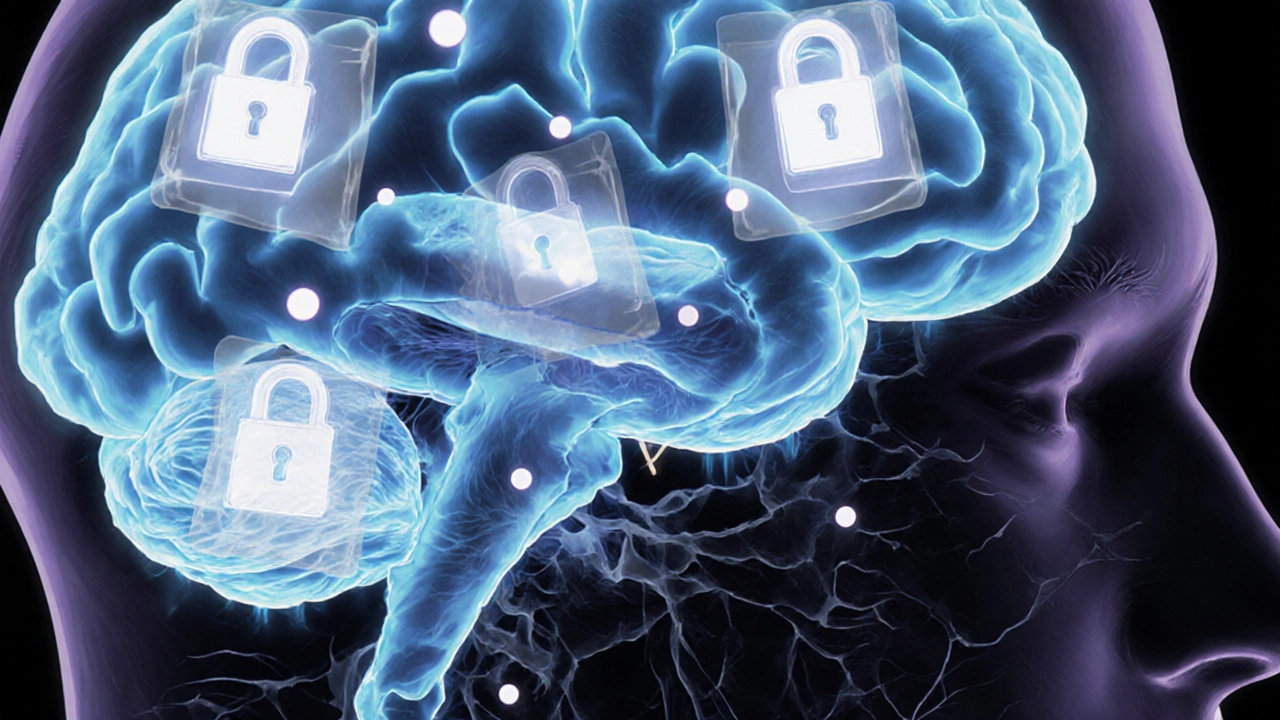
Naltrexone is an opioid receptor antagonist. That sounds technical, but it’s simple: it blocks opioid receptors in the brain. These receptors are the locks that opioids like heroin, oxycodone, or even alcohol’s endorphin-like effects turn to trigger pleasure. When someone takes naltrexone, those locks are covered with a plastic shield. Even if they use opioids or drink heavily, the high doesn’t come. No rush. No euphoria. Just a flat, ordinary feeling.
This isn’t punishment. It’s retraining. By removing the reward, the brain slowly stops associating drug use with pleasure. Over time, the urge to use weakens because the system learns: using doesn’t deliver what it used to.
Studies from the National Institute on Drug Abuse show that people on naltrexone are 50% less likely to relapse in the first three months compared to those on placebo. It doesn’t cure addiction, but it creates space for recovery to take hold.
How It Works for Alcohol Use Disorder
Many assume naltrexone only works for opioids. But it’s also FDA-approved for alcohol dependence-and the science is just as clear.
Alcohol triggers the release of endorphins, which bind to the same opioid receptors. That’s why drinking feels good, even for people who don’t enjoy the taste. Naltrexone blocks those endorphins from activating the reward pathway. People on naltrexone still drink, but the pleasure fades. One clinical trial found that patients taking naltrexone reduced their heavy drinking days by 25% compared to placebo over 12 weeks.
It’s not about making people abstain. It’s about making drinking less rewarding. That shift lets people regain control without needing to hit rock bottom first.
How It’s Taken and What to Expect
Naltrexone comes in two forms: a daily pill and a monthly injection (Vivitrol). The pill is cheaper and easier to access. The injection ensures compliance-no daily reminders needed.
But here’s the catch: you must be opioid-free for at least 7-10 days before starting. If you’re still using opioids, naltrexone can trigger sudden, severe withdrawal. That’s not dangerous in most cases, but it’s intensely unpleasant. Doctors always test for opioids first.
Side effects are mild for most: nausea (especially at first), headaches, dizziness. A small number report fatigue or trouble sleeping. Liver damage is rare, but blood tests are done before and during treatment to monitor liver health.
It’s not addictive. You don’t build tolerance. You don’t get high from it. You don’t withdraw when you stop. That’s rare in addiction treatment.
Who Benefits Most-and Who Doesn’t
Naltrexone works best for people who are motivated to change but keep slipping back because of cravings. It’s not for those who aren’t ready. If someone is still actively using and doesn’t want to quit, naltrexone won’t force them.
It’s also not ideal for people with severe liver disease. Or those who can’t reliably take a daily pill or get monthly shots. And it doesn’t help with stimulant addictions like cocaine or meth-those work on dopamine, not opioid receptors.
Real-world success comes when naltrexone is paired with counseling. A 2023 study in The American Journal of Psychiatry showed that patients on naltrexone plus weekly therapy had 40% longer periods of abstinence than those on naltrexone alone. The medication handles the biology. Therapy handles the behavior.
Why It’s Underused Despite Proven Results
Here’s the frustrating part: naltrexone is one of the most effective tools we have for addiction. Yet less than 10% of people in treatment receive it. Why?
First, stigma. Many still believe addiction treatment should be about suffering or abstinence-only programs. Medication is seen as “replacing one drug with another.” That’s false. Naltrexone doesn’t activate any receptors. It blocks them.
Second, access. Not all clinics offer it. Insurance doesn’t always cover the injection. Doctors aren’t trained to prescribe it. In rural areas, it’s nearly impossible to find.
Third, timing. People often try naltrexone too late-after multiple relapses, after losing jobs or families. It works better when used early, before the brain gets too entrenched in the cycle.
What Happens When You Stop Taking It
You don’t need to stay on naltrexone forever. Many people take it for 6 to 12 months. Some stay longer. The goal isn’t lifelong dependency-it’s to rebuild neural pathways so the brain no longer craves the substance.
When you stop, the receptors return to normal. You’re not more vulnerable to overdose than before. But here’s the warning: your tolerance drops. If you relapse after stopping naltrexone and use the same amount you used before, you could overdose. That’s why aftercare and education are critical.
People who stop naltrexone and return to using opioids are at higher risk of fatal overdose because their body no longer tolerates the dose it once did. That’s why recovery plans must include harm reduction strategies-even after treatment ends.
How It Compares to Other Medications
Naltrexone isn’t the only option. Methadone and buprenorphine are also used for opioid addiction. But they work differently.
Methadone and buprenorphine activate opioid receptors-just less intensely. They reduce cravings and withdrawal. But they can be misused. They require daily visits to clinics in many places. And they’re controlled substances.
Naltrexone doesn’t activate anything. No potential for abuse. No daily clinic visits. No risk of dependence. But it doesn’t ease withdrawal. So it’s not for someone still in acute withdrawal.
Think of it this way: methadone and buprenorphine are like crutches. Naltrexone is like removing the trigger. Which one you need depends on where you are in recovery.
Real-Life Impact: Beyond the Numbers
One woman in Halifax, 42, started naltrexone after three overdoses. She’d been on opioids for 12 years. She didn’t want to be clean. She just didn’t want to die. The pill made drinking feel like water. The cravings didn’t disappear, but they lost their power. She started therapy. Got a job. Reconnected with her kids.
She’s not “cured.” But she’s alive. And she’s rebuilding. That’s what naltrexone gives people: time. Not a fix. Not a miracle. Just enough space to choose differently.
Where to Get It and What to Ask Your Doctor
Naltrexone requires a prescription. Start with your family doctor, an addiction specialist, or a clinic that offers medication-assisted treatment. Ask:
- Can you test me for opioids before starting?
- Do you offer the monthly injection, or just the pill?
- What’s the cost, and does my insurance cover it?
- Can you refer me to counseling or peer support?
If your doctor says no, ask why. If they say it’s not effective, ask for the evidence. There’s more than 30 years of research supporting it.
It’s not a magic bullet. But for the first time in decades, we have a tool that targets addiction at the biological level-and it works.
Comments (12)
Donald Sanchez
bro naltrexone is literally the cheat code for addiction 😎 i was on it for 8 months and suddenly my cravings were just... gone. like my brain forgot how to want it. no more late-night runs to the corner store. just peace. also side effects? barely felt em. maybe a little nausea day 1. that's it. 🤯
Danielle Mazur
This is a classic pharmaceutical manipulation tactic. Naltrexone is not a treatment-it is a chemical suppression tool designed by Big Pharma to keep patients dependent on monthly injections while ignoring the root causes: trauma, societal decay, and the erosion of spiritual connection. The FDA approves what profits, not what heals.
Greg Knight
I want to say something real here-naltrexone isn’t the hero, but it’s the quiet sidekick that lets the real work happen. I’ve seen people go from lying on the floor, shaking and hopeless, to showing up to therapy, holding a job, and reading bedtime stories to their kids. It doesn’t fix everything. But it gives you the mental space to even care about fixing yourself. That’s huge. Most people don’t get that chance. This isn’t magic. It’s mercy.
rachna jafri
America thinks a pill can fix the collapse of family, culture, and dignity. We imported opioid addiction from Wall Street’s greed and now we medicate it like a glitch in a broken system. Naltrexone? A Band-Aid on a severed artery. India never had this crisis because we never lost our community bonds. You don’t need a drug-you need your village back. 🇮🇳
darnell hunter
The clinical data presented is statistically robust and methodologically sound. However, the narrative framing exhibits a concerning tendency toward emotional appeals rather than evidence-based objectivity. The assertion that naltrexone provides 'space for recovery' is not empirically verifiable as a causal mechanism, and thus constitutes a speculative interpretation.
Hannah Machiorlete
i tried naltrexone. felt like a zombie for two weeks. no high, no joy, no nothing. just... empty. like my soul got deleted. i quit. not because i didn't want to get better-but because i didn't want to feel like a ghost. what good is sobriety if you're not even alive in it?
Bette Rivas
It's important to clarify that naltrexone's efficacy is not uniform across all populations. Genetic polymorphisms in the OPRM1 gene can significantly influence receptor binding affinity, meaning some individuals metabolize or respond to the drug differently. Additionally, adherence is a critical factor-oral compliance drops significantly after 30 days without structured support. The injection form mitigates this, but access remains inequitable. Pairing with CBT or contingency management improves outcomes substantially, as the 2023 study noted. This is not a standalone solution, but a vital component of a comprehensive biopsychosocial model.
prasad gali
The pharmacological mechanism is sound, but the clinical implementation is flawed. The lack of standardized biomarker monitoring-such as plasma endorphin dynamics or fMRI reward pathway modulation-renders treatment protocols empirically opaque. Without neurophenotyping, we are engaging in pharmacological trial-and-error disguised as medicine.
Paige Basford
i just wanted to say-i started naltrexone last year and honestly? it was the first time i felt like i could breathe again. not because it made me perfect, but because it took the screaming out of my brain. i still have bad days. but now i can choose. 🤍
Kenneth Meyer
There’s a deeper truth here: addiction isn’t a moral failure, and neither is recovery. Naltrexone doesn’t erase the past, but it does dissolve the illusion that the next drink or hit will fix what’s broken. It’s not about control-it’s about clarity. For the first time, you see the chain for what it is: a loop of biology and pain. And for the first time, you realize you don’t have to keep pulling it.
Freddy Lopez
The stigma surrounding medication-assisted treatment persists because society clings to outdated notions of redemption through suffering. True healing does not require penance. It requires understanding. Naltrexone is not a substitute for willpower-it is an enabler of it. To deny someone this tool is to deny them the dignity of biological agency.
Lauren Hale
If you’re reading this and thinking about naltrexone-talk to your doctor. Ask for the injection if the pill feels overwhelming. Find a counselor who gets it. You don’t have to do this alone. And you don’t have to be 'ready'-you just have to be willing to try. One day at a time. One pill at a time. You’re worth it.