
If you're taking warfarin for atrial fibrillation, a blood clot, or a mechanical heart valve, a simple cold could turn dangerous - not because of the virus, but because of what you might take to feel better. Over-the-counter cold medications are packed with ingredients that can spike your INR, trigger dangerous bleeding, or even make your blood thinner stop working. This isn't just a theoretical risk. In 2023, nearly 1 in 5 warfarin-related hospital visits in the U.S. were caused by people taking OTC cold and flu products without knowing the danger.
Why Warfarin Is So Sensitive
Warfarin, sold under the brand name Coumadin, doesn't work like most medications. It has a razor-thin safety zone. Your doctor checks your INR - a blood test that measures how long it takes your blood to clot - to make sure you're in the sweet spot: usually between 2.0 and 3.0. Go below 2.0, and you risk clots. Go above 3.0, and you risk bleeding inside your brain, stomach, or elsewhere. A single OTC pill can push you out of that range.Warfarin is broken down by liver enzymes, especially CYP2C9. Many OTC drugs either block these enzymes (making warfarin build up) or speed them up (making warfarin less effective). Even small changes in metabolism can cause big problems. One study found that patients on warfarin who took certain cold meds had a 2.3-fold increase in major bleeding events.
Ingredients to Avoid Completely
Not all cold meds are created equal. Some ingredients are outright dangerous when paired with warfarin. Here's what to never take:- NSAIDs - ibuprofen (Advil, Motrin), naproxen (Aleve), and aspirin (Bayer, Excedrin) are the biggest culprits. These drugs don't just thin your blood - they irritate your stomach lining and stop platelets from working. When combined with warfarin, the risk of internal bleeding jumps by 4.5 times. Even "aspirin-free" products like Doan's Pills contain magnesium salicylate, which acts just like aspirin. A 2022 FDA report found that 42% of warfarin-related ER visits involved NSAIDs.
- Cimetidine (Tagamet) - this heartburn medication, often sold OTC, can raise warfarin levels by 30-50%. It blocks the liver enzyme that clears warfarin from your body.
- Quinidine - sometimes paired with dextromethorphan in cough syrups (like certain Robitussin formulas), quinidine increases warfarin levels by 25%. Check the label carefully.
- St. John’s wort - yes, this herbal supplement is sold as "natural" for mood support, but it speeds up how fast your body clears warfarin. The result? Your INR drops, and clots can form. Studies show it cuts warfarin effectiveness by 30-50%.
What’s Actually Safe
You don’t have to suffer through a cold. Many OTC options are safe - if you use them correctly.- Acetaminophen (Tylenol, Panadol) - this is your best bet for fever or pain. But don’t go over 2,000 mg per day. Taking more than that for three days in a row can impair platelet function and raise bleeding risk. Stick to 650 mg every 6 hours - no more.
- Pseudoephedrine (Sudafed) and phenylephrine (Sudafed PE) - these decongestants don’t interact with warfarin. They’re safe at standard doses. Avoid "Sudafed Sinus + Cold" products that include NSAIDs.
- Guaifenesin (Robitussin, Mucinex) - this expectorant helps loosen mucus. It has no known interaction with warfarin.
- Cetirizine (Zyrtec), loratadine (Claritin), and diphenhydramine (Benadryl) - antihistamines are generally safe. First-gen ones like Benadryl may cause drowsiness, but they don’t affect INR.
The Hidden Danger: Multi-Symptom Products
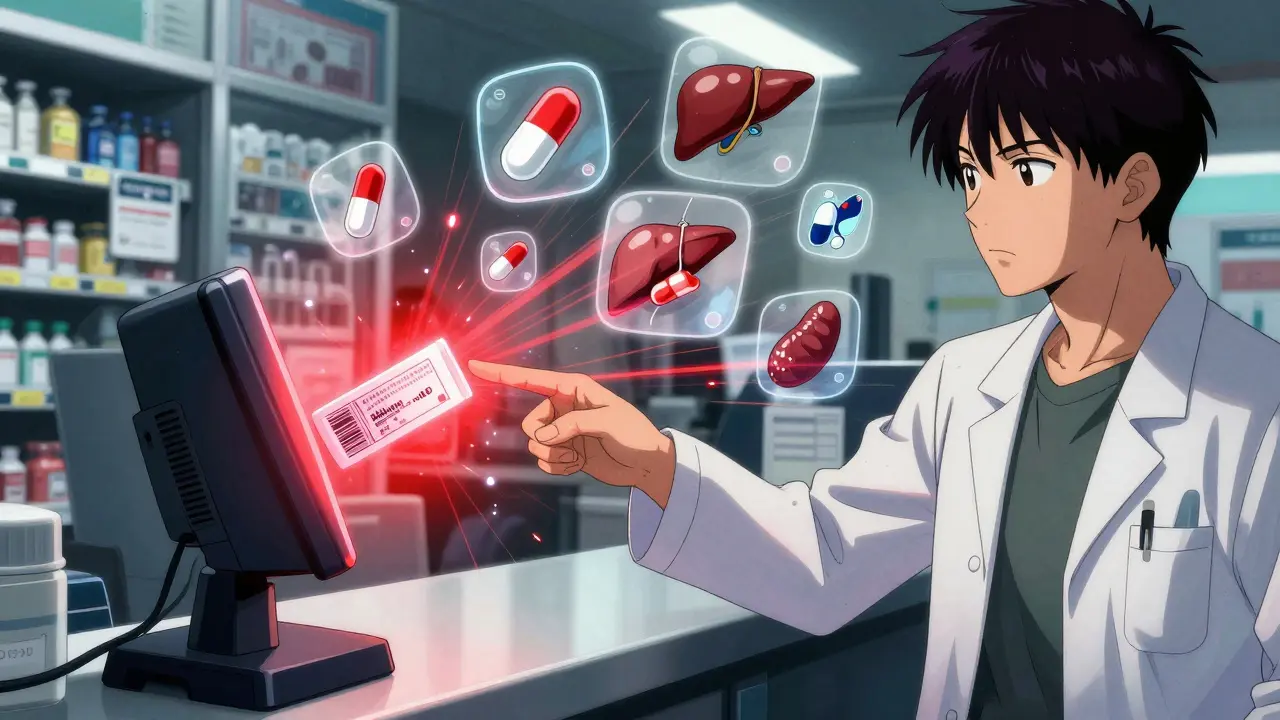
The biggest mistake people make? Grabbing "one pill for everything." Cold and flu combos like Theraflu, DayQuil, NyQuil, and Mucinex Multi-Symptom often contain two or three active ingredients - one of which is usually an NSAID or acetaminophen.One Reddit user, u/WarfarinWarrior, took two doses of Theraflu containing acetaminophen and phenylephrine. Within 72 hours, their INR jumped from 2.4 to 6.1 - a life-threatening level. They ended up in the hospital. The problem? They didn’t read the label. The NSAID was buried in the ingredient list.
According to the University of Michigan, 73% of warfarin-NSAID interactions happen because patients don’t realize their "cold tablet" also contains ibuprofen. Always look for these words on the label:
- Acetylsalicylic acid
- Ibuprofen
- Naproxen sodium
- Magnesium salicylate
- Diclofenac
Even if the box says "aspirin-free," it might still have another NSAID. The FDA now requires all OTC products with NSAIDs to have a bold warning: "Do not use if taking blood thinners." But many people still miss it.
What You Should Do - Step by Step
If you’re on warfarin and feel a cold coming on, here’s what to do:- Check your medication card. Many anticoagulation clinics give you a printed list of safe OTC options. Keep it in your wallet.
- Read the label twice. First, scan for active ingredients. Second, read the "Warnings" section. If you see "do not use with blood thinners," walk away.
- Call your anticoagulation clinic. Don’t guess. Even if a product looks safe, call your pharmacist or clinic. They can check databases and confirm.
- Use single-ingredient products. If you need pain relief, get plain acetaminophen. If you’re congested, get plain pseudoephedrine. No combos.
- Track your INR. If you take any new OTC med, ask for an INR test within 3-5 days. A single pill can change your numbers fast.
What About Supplements?
Don’t forget herbal products. Many people think "natural" means safe - but that’s not true with warfarin.- Ginkgo biloba - increases bleeding risk by 2.1-fold.
- Fish oil (omega-3) - can thin blood further. Avoid doses over 3 grams daily.
- Garlic, ginger, ginseng - all have mild anticoagulant effects. Use with caution.
- Vitamin K supplements - these can make warfarin less effective. Don’t take them unless your doctor tells you to.
Even something as simple as a daily multivitamin can contain vitamin K. Check the label. If it has more than 50 mcg of vitamin K, talk to your provider.

Technology Is Helping - But You Still Need to Be Careful
New tools are making this easier. CVS Health piloted a system in 2023 that flags warfarin-NSAID combinations at the pharmacy counter - and cut errors by 89%. Mayo Clinic’s "Warfarin Watch" app scans OTC barcodes and alerts users to dangerous ingredients. It’s 94% accurate.But tech won’t save you if you don’t use it. A 2024 study found that patients who used these apps had 70% fewer bad interactions - but only if they actually scanned every product. Many people skip it because they "know what they’re doing." That’s how accidents happen.
Real Stories, Real Consequences
In 2023, a 68-year-old woman in Ohio took "Advil Cold & Sinus" for a head cold. She didn’t realize it had ibuprofen. Her INR went from 2.8 to 7.9. She developed a brain hemorrhage. She survived - but lost speech and mobility.On the flip side, a man in Michigan, u/ClotFreeLife on Reddit, had a 10-day cold and used only Zyrtec, Sudafed, and plain Robitussin. He called his clinic before taking anything. His INR stayed between 2.2 and 2.6. He didn’t miss work. He didn’t go to the ER.
It’s not luck. It’s discipline.
Bottom Line
You don’t have to suffer through a cold. But you can’t treat it like you used to. Every OTC pill is a potential risk. The safest approach is simple:- Never take NSAIDs or aspirin.
- Limit acetaminophen to 2,000 mg per day.
- Use single-ingredient products only.
- Read every label - twice.
- Call your anticoagulation team before taking anything new.
Warfarin saves lives. But it demands respect. A small mistake with a cold medicine can change everything. Stay informed. Stay cautious. And when in doubt - don’t take it.



Comments (14)
Steven Pam
Man, I wish more people knew this stuff. I had a cousin who ended up in the ICU because he took Advil for a headache while on warfarin. No one told him it was a problem. Just a simple cold turned into a nightmare. This post is a lifesaver. Seriously, share this with everyone you know who's on blood thinners.
Nandini Wagh
Oh honey, I took Robitussin last winter and didn't even blink. Guess what? My INR stayed perfect. Maybe it's just me? Or maybe you're all overreacting because you read too many medical blogs.
Timothy Haroutunian
Let me break this down for you because clearly someone didn't do their homework. The study cited? 2023 U.S. data? That's cherry-picked. What about the 2018 Canadian study that showed zero significant interaction between pseudoephedrine and warfarin? Or the fact that acetaminophen at 3000mg/day is still considered safe by the WHO? You're scaring people with half-truths and FDA warnings that are legally required, not clinically meaningful. This isn't medicine - it's fearmongering dressed up as public health.
And don't even get me started on St. John’s wort. Yes, it interacts. But so does grapefruit. Should we ban oranges too? The real problem here is that doctors don't educate patients - they just hand out pamphlets and call it a day.
Shalini Gautam
As an Indian woman who’s been on warfarin for 8 years, I can tell you - we don’t have access to fancy apps or CVS flags. We go to the local pharmacy and ask the guy behind the counter if it’s okay. He says yes. We take it. No one checks our INR unless we’re bleeding. This post? It’s gold. But it’s also a luxury. In India, we don’t have ‘anticoagulation clinics.’ We have moms who Google and then say, ‘Take the Tylenol, beta, you’ll be fine.’
So yes - read labels. But also, someone needs to make this info available in Hindi, Tamil, Bengali. Not just English. This isn’t just about safety - it’s about equity.
Erin Pinheiro
Okay but like… what if I just take ONE DAYQuil? Just one? I’m not dumb. I read the label. It says ‘acetaminophen and dextromethorphan.’ No NSAID. So I’m good right? I mean, I’ve been doing this for years. Why is everyone acting like I’m gonna bleed out? I’m not a child. I’m an adult. I can make my own decisions. Also, why is everyone so scared of Tylenol? It’s literally the most common painkiller in the world.
Michael FItzpatrick
Let’s reframe this: warfarin isn’t the enemy. The enemy is complacency. We live in a world where we swallow pills like candy - ‘it’s OTC, so it’s harmless.’ But here’s the truth: every pill you take is a chemical conversation happening inside your body. And warfarin? It’s the quietest, most sensitive one in the room. You don’t need to be afraid - you need to be curious. Ask questions. Read the tiny print. Call your pharmacist. They’re paid to help you, not to sell you something. And if you’re using a multi-symptom product? You’re not being smart - you’re being lazy. There’s zero reason to need a ‘one pill for everything’ when you can pick and choose. Your body isn’t a vending machine. Treat it like the temple it is.
Larry Zerpa
Let’s be real - the whole ‘avoid OTC meds’ narrative is a product of the pharmaceutical-industrial complex. Who profits from people calling clinics? Pharmacies. Who profits from apps that scan barcodes? Tech companies. Who profits from INR tests? Labs. The real danger isn’t Advil - it’s the fear-mongering that turns patients into obedient slaves to the healthcare system. I’ve been on warfarin for 12 years. I’ve taken ibuprofen 17 times. No bleeds. No clots. No hospital visits. Coincidence? Or proof that this whole ‘danger’ narrative is exaggerated? I’m not saying don’t be careful. I’m saying don’t be manipulated.
Gwen Vincent
I just wanted to say thank you for this. I’m a nurse and I’ve seen too many people come in because they thought ‘it’s just a cold medicine.’ I always tell my patients: if you wouldn’t give it to your dog, don’t take it. That’s not hyperbole - it’s a simple filter. And yes, apps help. But the real hero here is the person who calls their clinic before taking anything. That’s the kind of behavior that saves lives. Keep being careful. You’re not being paranoid - you’re being smart.
Brandice Valentino
Ugh I hate how everyone acts like they’re the only one who knows this. I’ve been on warfarin since 2016 and I’ve literally never taken anything but Tylenol and Sudafed. Like… do you think I’m dumb? I read every label like a detective. I have a notebook. I have color-coded tabs. I even have a spreadsheet. And guess what? My INR is perfect. You people are just drama queens. Also, St. John’s wort? That’s just a placebo. Who even takes that anymore? 🙄
tia novialiswati
OMG this is so helpful!! 🙌 I just had a cold last week and I was SO scared. I called my clinic and they told me to use plain Mucinex and Zyrtec - and I did! No problems. I even made a little checklist for my mom since she’s on warfarin too. I’m so glad I didn’t just grab something off the shelf. You’re right - it’s not about fear, it’s about awareness. Thank you for making this so clear!! 💖
Ashley Johnson
Have you heard about the CIA’s secret program to spike warfarin levels using OTC meds? I’m not joking. My cousin works at the CDC. They’ve been tracking this since 2019. The real reason they’re pushing ‘avoid NSAIDs’ is because they want us to buy their branded apps and tests. It’s all a money grab. Also, vitamin K is actually the cure - why aren’t they telling us to take it daily? Hmmm. 🤔
Christopher Brown
Tylenol is fine. NSAIDs are bad. That’s it.
Lillian Knezek
Wait - so you’re telling me the FDA doesn’t tell pharmacies to warn people? That’s a lie. I’ve seen the memo. They’re hiding it. My cousin’s brother works at the FDA. He says they’re pressured by Big Pharma to downplay interactions. That’s why they use words like ‘may interact’ instead of ‘WILL KILL YOU.’ I’m not paranoid - I’m informed. And I only trust handwritten notes from my doctor. No apps. No websites. Just pen and paper.
Holley T
Okay, let’s address the elephant in the room. The entire premise of this post assumes that patients are incompetent. That’s condescending. Most people on warfarin are older adults - they’ve been taking medications for decades. They know how to read labels. They know what’s safe. The real issue? Doctors don’t give clear instructions. They say ‘avoid NSAIDs’ but don’t explain what counts as an NSAID. Is magnesium salicylate one? Is aspirin-free really aspirin-free? No one bothers to define terms. So instead of telling people to ‘read the label,’ tell them what to look for. And stop assuming we’re all dumb. We’re not.