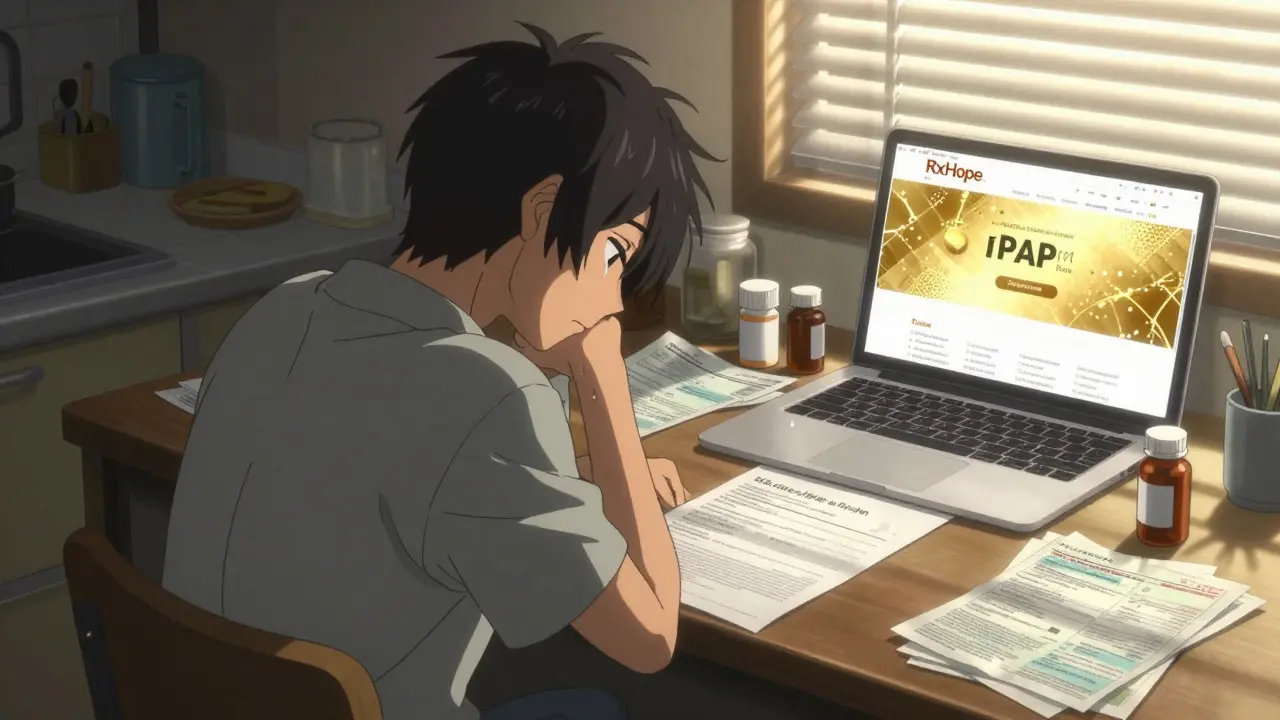
When a life-saving medication has no generic version, the cost can be overwhelming. Some drugs cost more than $10,000 a month. Without help, many people choose between paying rent or filling their prescription. That’s where patient assistance programs (PAPs) come in - they’re not a band-aid, they’re often the only thing keeping people alive.
What Patient Assistance Programs Actually Do
PAPs are free or low-cost medication programs run mostly by drug companies, nonprofits, or state agencies. They exist because brand-name drugs - especially for rare diseases, cancer, or chronic conditions - rarely have generics. Think of drugs like Soliris, Tasigna, or HIV treatments that cost half a million dollars a year. No generic can match them. So manufacturers set up PAPs to avoid leaving patients behind.
In 2022 alone, these programs gave away $4.7 billion in free drugs to over a million people. Most of that went to patients who had no insurance or couldn’t afford their copays. The goal? Stop people from skipping doses because they can’t pay. Studies show patients using PAPs are 37% less likely to stop taking their meds due to cost.
Who Qualifies - And Who Doesn’t
You don’t need to be broke to qualify. Most programs use income limits based on the Federal Poverty Level (FPL). In 2023, that meant you could earn up to $60,000 a year as a single person and still be eligible. Some programs stretch even higher - up to 400% FPL - especially for rare diseases.
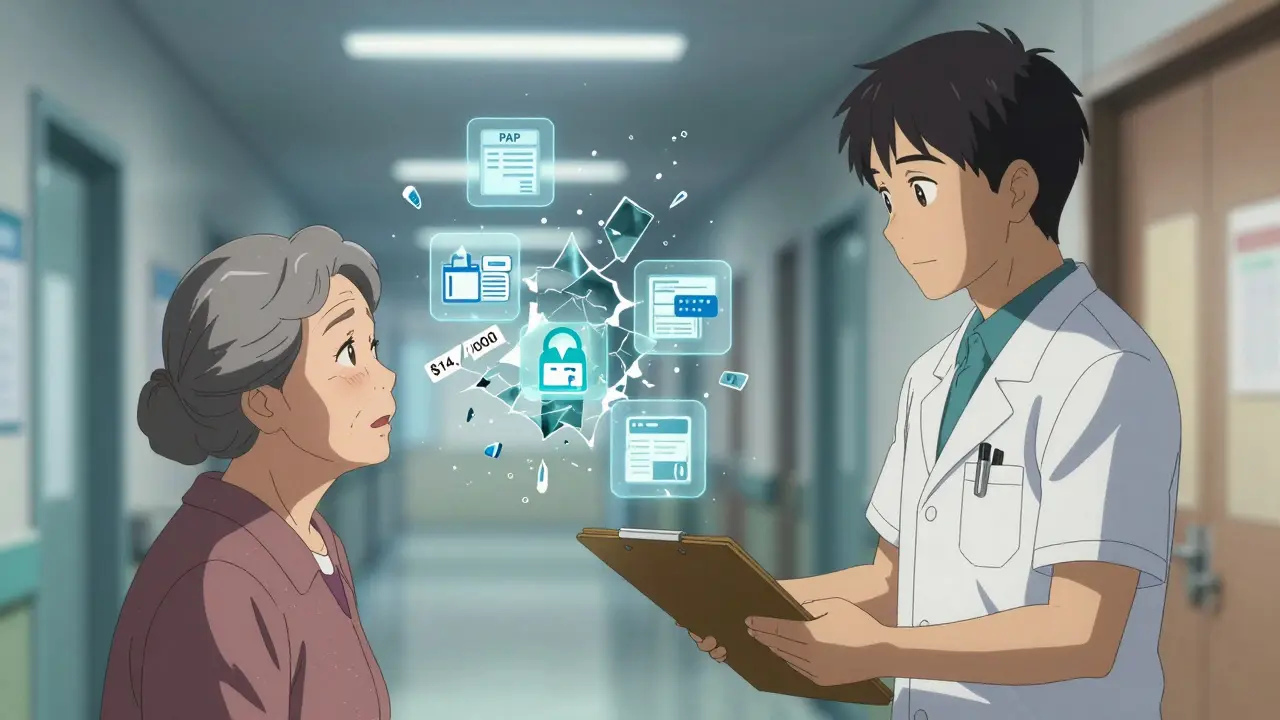
But here’s the catch: if you have Medicare, you can’t use manufacturer PAPs for Part D drugs. A federal rule from 2020 blocks it. That means seniors on Medicare have to rely on nonprofit PAPs, which are fewer and often have longer wait times.
Also, if you have private insurance, your plan might have an accumulator adjustment. That’s a sneaky policy where your PAP discount doesn’t count toward your deductible or out-of-pocket maximum. So even if your drug is free through a PAP, you’re still stuck paying thousands before your insurance kicks in. It’s like getting a gift card, then being told you can’t use it at checkout.
The Application Process - It’s Not Easy
Applying for a PAP feels like filling out five tax returns at once. You need:
- Proof of income (W-2s, tax returns, pay stubs)
- A signed prescription from your doctor
- Proof of insurance status - or proof you don’t have it
- A completed form from your provider, often requiring their signature and stamp
On average, it takes 17 fields to complete one application. The whole process can take 45 minutes just for the patient - and that’s if you have all the documents ready. Most people need help from a nurse, social worker, or patient navigator. Hospitals now hire these specialists just to handle PAPs. They’re that common.
Approval time varies. Manufacturer programs (like those from Pfizer or Novartis) usually approve within 7-10 business days. Nonprofit programs? 14-21 days. That delay can be dangerous. One cancer patient nearly quit her $14,000-a-month drug because she waited three weeks just to get approved.
Where to Start - Practical Steps
Don’t guess. Use a tool like RxHope or NeedyMeds. These sites let you enter your drug name and income, then show you every PAP you might qualify for. RxHope covers 92% of all manufacturer programs. It’s free, fast, and doesn’t require you to give personal info upfront.
Once you find a match:
- Download the application form - it’s usually on the drug company’s website under “Patient Support” or “Access Program.”
- Call your doctor’s office. Ask if they have a medication access specialist. Most do now.
- Get your doctor to sign the form. They’ll need to confirm you’re on the drug for a valid medical reason.
- Submit proof of income. If you’re unemployed, a letter from Social Security or unemployment office works.
- Wait. Follow up after 5 business days. Don’t assume it’s lost.
Pro tip: Keep copies of everything. Send applications by certified mail. Save emails. If you’re denied, appeal. Nearly half of initial denials get overturned with a second try.
What Doesn’t Work - And What Does
GoodRx and pharmacy discount cards? They’re useless for brand-name drugs with no generic. On average, they save you just 8.3% on these drugs. That’s $1,200 off a $15,000 monthly bill. Not enough.
State pharmaceutical programs? They help - but they cap assistance at $400 per month. That’s fine for blood pressure pills. Not for cancer drugs.
PAPs are the only option that can bring your cost to $0. That’s why 89% of uninsured patients relying on brand-name drugs use them. They’re not perfect, but they’re necessary.
The Hidden Problems
There’s a dark side. Drug companies set sky-high list prices - sometimes over $500,000 a year - because they know PAPs will cover most of it. That means the system lets them keep charging what they want, while patients do all the legwork. Experts call it a “flawed safety net.”
And accumulator programs? They’re getting worse. Over 78% of major insurance companies now block PAP discounts from counting toward your deductible. So you’re still stuck paying thousands even after your drug is free.
One patient in Michigan paid $20,700 out-of-pocket in a single month because her $12,000/month PAP-covered drug didn’t count toward her $8,700 deductible. Her insurance didn’t budge. She had to sell her car.
What’s Changing - And What’s Next
Some good news: drugmakers are simplifying. Eli Lilly’s “Simple Bridge” program cut its application from 17 steps to just 5. Approval now takes 48 hours. Novartis and Gilead have similar upgrades.
Electronic health records are starting to integrate PAP tools. Epic Systems is rolling out a PAP module for over 2,500 hospitals in 2024. That means your doctor might soon suggest a PAP right when they write your prescription - no extra forms needed.
But long-term, the system is under pressure. The Inflation Reduction Act banned Medicare Part D patients from using manufacturer copay assistance starting in 2025. That pushes more burden onto nonprofits. Meanwhile, drug prices keep rising. The Congressional Budget Office says PAP costs could climb 18% a year. Can companies keep funding this?

Real Stories - Not Theory
One Reddit user, u/CancerWarrior2022, wrote: “Without Gilead’s PAP for my $15,000/month HIV drug, I’d have chosen homelessness over bankruptcy. My $0 copay kept my apartment.”
Another patient with chronic myeloid leukemia had to spend 11 hours over three weeks just to get Novartis’s program to approve her $14,000/month drug. She didn’t give up. She got her medication. She’s still alive.
These aren’t rare cases. They’re daily realities for thousands.
Final Thoughts
If you’re on a brand-name drug with no generic, don’t accept the price tag. Don’t assume you’re out of options. PAPs exist because the system failed you - and they’re your best shot at staying alive without going broke.
Start with RxHope. Talk to your doctor’s office. Ask for a patient navigator. Save every receipt, every email, every signature. It’s exhausting. It’s messy. But it works.
People have saved their lives this way. You can too.
Can I use a patient assistance program if I have Medicare?
You cannot use manufacturer-sponsored PAPs for Medicare Part D drugs. Federal rules banned this in 2020. However, you may qualify for nonprofit PAPs like those from the Patient Access Network Foundation or the Chronic Disease Fund. These programs don’t rely on drug companies and often have different income rules. Always check with a nonprofit directly - don’t assume you’re ineligible.
Why doesn’t my PAP discount count toward my deductible?
This is called an accumulator adjustment. Most major insurance companies - including UnitedHealthcare, Express Scripts, and Optum - now use this policy. They treat PAP payments as if they came from a third party, not your insurance. So even if your drug is free, you still have to pay your full deductible and out-of-pocket maximum. This can leave you owing thousands even after getting PAP help. Talk to your insurer and ask if they have an accumulator policy. If they do, consider switching to a nonprofit PAP that isn’t subject to this rule.
What if my PAP application gets denied?
Denials happen - about 41% of initial applications are rejected. Common reasons: incomplete income proof, missing doctor signature, or outdated documents. Don’t give up. Appeal in writing. Include a letter from your doctor explaining why the drug is medically necessary. You can also ask a patient advocate organization (like the Patient Advocate Foundation) to help. Many appeals succeed on the second try.
Do I need to reapply every year?
Yes. Most PAPs require annual renewal. You’ll need to submit updated income documents and a new prescription. Some programs send reminders. Others don’t. Set a calendar reminder for 60 days before your current approval expires. Missing the deadline means losing your medication. Don’t wait until the last minute.
Can I use PAPs for more than one drug?
Yes. Many patients on multiple brand-name drugs - like those with autoimmune diseases or cancer - qualify for assistance on each one. Apply for each drug separately. Some nonprofits offer multi-drug assistance, but manufacturer programs are drug-specific. Keep track of each approval date and renewal deadline. Using multiple PAPs is common and allowed.
Next Steps
If you’re on a brand-name drug with no generic:
- Go to RxHope.com - enter your drug name and income to see what programs you qualify for.
- Call your doctor’s office. Ask: “Do you have a medication access specialist?”
- If you’re on Medicare, contact the Patient Access Network Foundation or the Chronic Disease Fund directly.
- Save all documents. Track deadlines. Set reminders.
- If you’re denied, appeal. Ask for help from a nonprofit patient advocate.
You’re not alone. Thousands have walked this path before you - and they got through it. You can too.

Comments (13)
Korn Deno
This system is a mirror of our values. We let corporations set prices so high that survival becomes a bureaucratic obstacle course. And we call it compassion. The real tragedy isn't the cost-it's that we've normalized this as inevitable.
People aren't asking for charity. They're asking for justice.
Aaron Sims
So... the drug companies are just doing this to look good while they jack prices up to $500K/year? 🤔 I mean, who do they think is reading this? The 1%? They know damn well no one can afford this without the 'charity' they're pretending to offer. It's a PR stunt with a side of extortion.
peter vencken
Been there. Got the paperwork. Lost 3 weeks waiting for approval while my meds ran out. My doc’s office had a whole folder labeled 'PAP Hell'.
Pro tip: if they say 'we need your 2022 tax return' - send them your 2023 pay stubs + a letter from your landlord saying you're behind on rent. Works 80% of the time. Don't overthink it.
Rama Rish
In India, we don’t have this problem. Our government subsidizes life-saving drugs. But I’ve seen friends in the US struggle. This is wrong. You shouldn’t need a PhD in bureaucracy to stay alive.
Jesse Hall
You got this 💪
Every single person who’s fought through this system is a warrior. You’re not alone. I’ve helped 12 people get on PAPs this year. If you need someone to read your forms or just vent - DM me. I’ve got coffee and patience.
Donna Fogelsong
This is all a setup. The FDA approves these drugs knowing full well they’re unaffordable. Then the pharma lobby pushes PAPs to make it look like they care. Meanwhile, Congress sits on their hands. It’s not broken - it’s designed this way. The 1% get their miracle cures. The rest get paperwork.
Sean Bechtelheimer
I think the whole system is a psyop. The PAPs? They’re tracking who’s on what drug. Next thing you know, your insurance gets flagged. Or your credit score drops. Or your kid gets denied for student loans. They want to control who lives. I’m not giving them my W-2 anymore.
Seth Eugenne
Just wanted to say - thank you for writing this. I’m a social worker in Ohio. I see this every day. The system is a nightmare, but your guide? It’s the clearest thing I’ve seen in months.
❤️ You’re making a difference.
Caroline Dennis
Accumulator adjustments are a legal loophole disguised as a policy. It’s not a bug - it’s a feature. Insurance companies are gaming the system to maximize profit. The moment a PAP discount is treated as 'third-party', your deductible resets. It’s predatory. And it’s everywhere.
Kevin Y.
Dear author - I appreciate the depth and clarity of this piece. As someone who works in healthcare administration, I can confirm: the process is indeed as arduous as you describe. The 17-field applications? Real. The 45-minute wait? Real. The emotional toll? Unquantifiable.
Thank you for giving patients a roadmap. It matters.
Raphael Schwartz
Why don't we just make generics? It's not that hard. Big Pharma just wants to milk the system. We need to break them up. Like, now. This is why America sucks.
winnipeg whitegloves
Man. I read this in Winnipeg while waiting for my chemo refill. We got free drugs here, but I still cried reading about people selling cars. That’s the real horror. Not the price tag. The fact that someone had to choose between a roof and a heartbeat.
Marissa Staples
I keep thinking about that Michigan woman who sold her car. What if she had a child? A pet? A parent to care for? This isn’t just about medicine. It’s about dignity. And we’re failing at that.