Ever stood in the pharmacy aisle feeling totally overwhelmed by the wall of boxes? You aren't alone. Most of us just grab the brand we recognize and hope for the best, but a small mistake in reading the back of a box can lead to a dangerous situation. Whether it's accidentally doubling up on a pain reliever or giving a child the wrong dose, the risks are real. The good news is that every nonprescription medicine in the U.S. follows a strict, standardized format designed by the FDA the U.S. Food and Drug Administration, the agency responsible for protecting public health by ensuring the safety and efficacy of drugs. Once you know how to spot the key sections, you can stop guessing and start feeling confident about what you're putting into your body.
Quick Summary: Master Your Medicine Cabinet
- Check the Active Ingredient: This is the actual chemical that does the work; it's the best way to avoid double-dosing.
- Verify the Use: Make sure the medicine is actually approved for your specific symptom.
- Read All Warnings: Look for "Do not use" statements, especially if you have liver issues or take blood thinners.
- Confirm the Dose: Always double-check the maximum amount you can take in 24 hours.
- Review Inactive Ingredients: Essential for anyone with allergies or specific dietary needs.
The Secret to Avoiding Double-Dosing: Active Ingredients
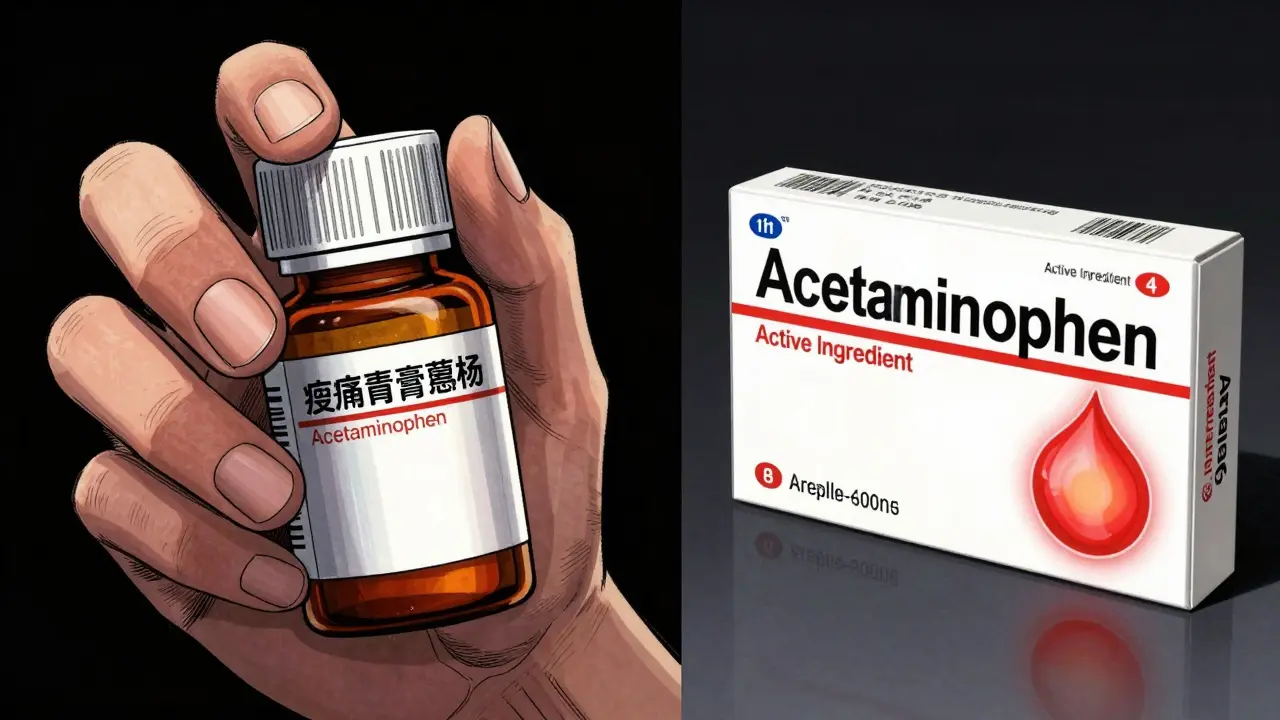
The biggest mistake people make is thinking that different brand names mean different medicines. For example, you might take a dose of Tylenol for a headache and then take a "multi-symptom" cold medicine a few hours later. If you don't check the Active Ingredients the biologically active component of a drug product that produces the intended pharmacological effect section, you might not realize that both products contain Acetaminophen a common analgesic and antipyretic used to treat pain and fever. This is how accidental overdoses happen.
When you look at the top of the label, you'll see the generic name of the drug and its concentration. A typical label for an adult pain reliever might say "Acetaminophen 325 mg." This tells you exactly what is in each pill. If you're using a liquid, it might say "160 mg per 5 mL." Be careful here-that "per 5 mL" is the concentration, not the total amount in the bottle. If you have a 4-ounce bottle, that's about 118 mL, meaning there are roughly 23 doses in that one bottle.
Matching the Medicine to Your Symptoms
It's tempting to buy the "Extra Strength" version because it sounds faster, but "extra strength" usually just means there is a higher concentration of the active ingredient-sometimes 50% to 100% more. You need to check the "Uses" section to see if the drug is actually meant for your problem. This section is strictly regulated; manufacturers can't use marketing fluff here. It will simply state what the drug "temporarily relieves," such as a sore throat or runny nose.
If your symptom isn't listed, the drug might not be the right tool for the job. Using a nasal decongestant when you actually have a dry cough won't help and might introduce unnecessary side effects. If the "Uses" section is vague or doesn't match your needs, it's time to put the box back and ask a pharmacist for a better alternative.
Navigating the Warning Signs
The "Warnings" section is arguably the most important part of the label. Many people skip it, but this is where the high-risk information lives. One of the most critical is the "Liver Warning" found on acetaminophen products. Since millions of people have underlying liver conditions, taking too much of this specific drug can cause severe, permanent damage. Specifically, exceeding 4,000 mg in 24 hours is a major red flag.
You should also look for "Contraindications"-these are the "Do Not Use" rules. For instance, if you've had an allergic reaction to a certain ingredient in the past, or if you are taking a blood thinner like warfarin, some OTC meds could cause dangerous interactions. Be especially cautious with "PM" formulations; these almost always contain Diphenhydramine an antihistamine with sedative properties often used as a sleep aid, which can make you extremely drowsy the next morning if not timed correctly.
Decoding Dosage and Directions
Reading the "Directions" isn't always as simple as it seems. A common pitfall is misinterpreting the maximum daily dose. If a label says "do not exceed 6 doses in 24 hours," some people think that means 6 pills. However, if the directions say to take 2 pills per dose, 6 doses actually means 12 pills. This is a frequent source of error that can lead to toxicity.
| Term / Unit | Equivalent / Meaning | Pro Tip |
|---|---|---|
| 5 mL | 1 Teaspoon | Always use the cup provided, not a kitchen spoon. |
| 1 mL / 1 cc | Same Volume | Commonly seen on oral syringes for kids. |
| Extra Strength | Higher Concentration | Check the mg; it's often double the regular dose. |
| PM Formula | Contains Sedative | Avoid using if you need to drive or work. |
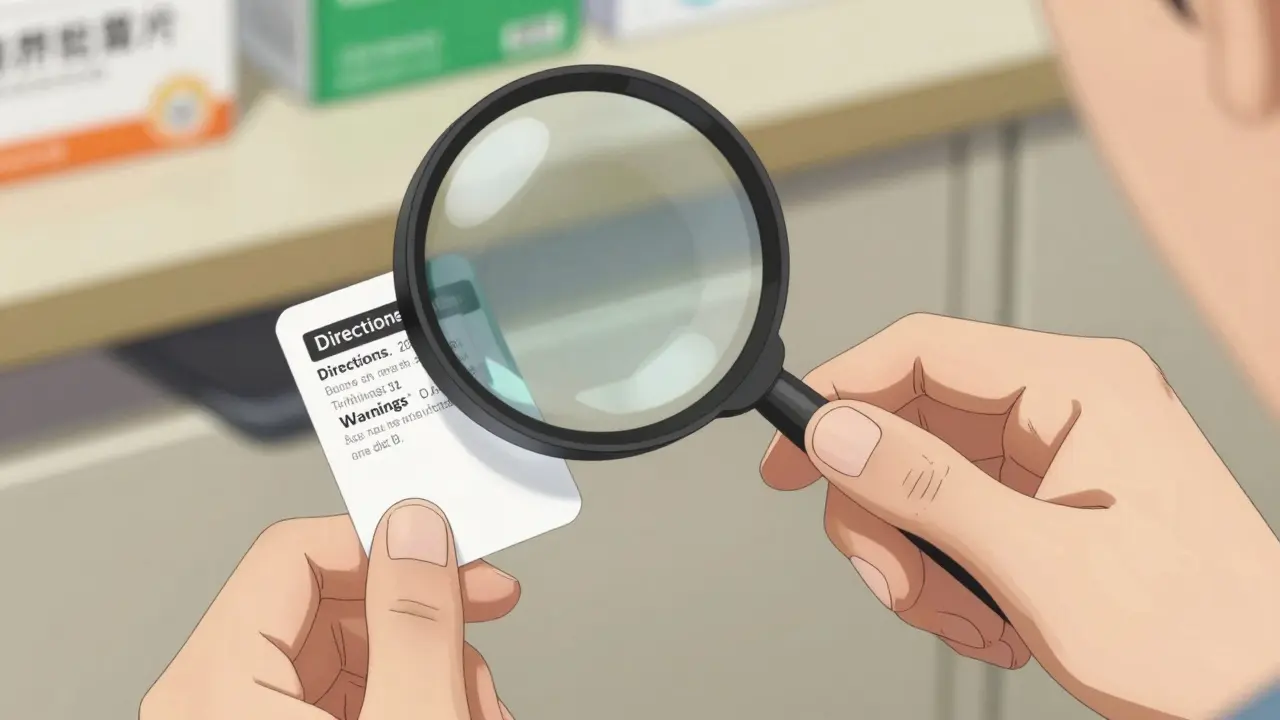
For those managing medications for seniors, the small font in the directions section can be a real hurdle. If you find yourself squinting, use a magnifying glass or a smartphone camera to zoom in. A simple mistake in a decimal point or a missed "do not take for more than 10 days" warning can turn a minor treatment into a medical issue.
The Final Checks: Inactive Ingredients and Storage
Most people ignore the "Inactive Ingredients" list, but if you have allergies, this is where the danger hides. Things like dyes, preservatives, or Croscarmellose Sodium a disintegrant used in tablets to help the drug dissolve in the stomach can cause reactions in sensitive individuals. If you're avoiding gluten or artificial colors, this is your go-to list.
Finally, check the "Other Information" for storage. Some meds need to stay between 68°F and 77°F. Leaving your medicine in a hot car or a humid bathroom can actually break down the chemicals, making the drug less effective or even harmful. If the packaging has a QR code, scan it-many major brands now provide video explanations that make these labels much easier to digest.
The 50-Second Safety Routine
If you want to be 100% sure you're safe, try the "5-Point Check" method. It takes about 50 seconds in total but can prevent a trip to the emergency room:
- Active Ingredients (12 sec): What is the chemical? Am I taking this in another medicine?
- Uses (7 sec): Does this actually treat my specific symptom?
- Warnings (19 sec): Is there a "do not use" or a liver warning that applies to me?
- Directions (8 sec): How much do I take, and what is the 24-hour limit?
- Inactive Ingredients (6 sec): Is there anything in here I'm allergic to?
What does "Extra Strength" actually mean on a label?
"Extra Strength" isn't a medical term, but a marketing one that indicates a higher concentration of the active ingredient per dose. Usually, it means the milligram (mg) amount is 50% to 100% higher than the "Regular Strength" version of the same drug. Always check the mg count to ensure you aren't exceeding the daily maximum.
Can I take two different OTC medicines if they have different brand names?
Only if they have different active ingredients. Many multi-symptom medicines contain the same active ingredients as single-ingredient medicines. For example, a cold medicine might contain acetaminophen, which is the same thing found in Tylenol. Taking both would result in a double dose, which can be dangerous for your liver.
Why is the "Liver Warning" so common on pain relievers?
The warning is primarily for products containing acetaminophen. When processed by the liver, this drug can cause severe damage if the dose is too high or if the person has pre-existing liver conditions. Following the maximum 4,000 mg per 24-hour limit is critical for safety.
What should I do if the font on the label is too small to read?
You can use a smartphone to take a photo and zoom in, or use a magnifying glass. Additionally, many brands now include QR codes on the box that link to digital, larger-print versions of the label. If you're still unsure, your pharmacist can print out the drug information for you in a larger font.
How do I know if a medicine is safe for children?
Check the "Directions" section specifically for age restrictions. Many adult medications are toxic for children. For pediatric products, dosage is often based on weight rather than just age. Always use the dosing device (syringe or cup) that comes with the medicine rather than a household spoon to avoid dosing errors.
Next Steps for Your Health
If you're managing several different medications, start a simple log. Write down the active ingredients of everything you take in a day. If you see the same chemical appearing twice, you've caught a potential error. If you ever feel confused by a label, don't guess. A quick 2-minute conversation with a pharmacist is the best way to ensure you're using your medicine safely and effectively.