
When your body needs to protect your bones, two quiet heroes step in: calcitonin and estrogen. You won’t hear much about them in fitness ads or vitamin commercials, but together, they’re a powerful team keeping your skeleton strong - especially as you age. If you’ve ever wondered why postmenopausal women are more at risk for osteoporosis, the answer starts here. It’s not just about losing calcium. It’s about losing balance - and estrogen plays a central role in that shift.
What calcitonin actually does
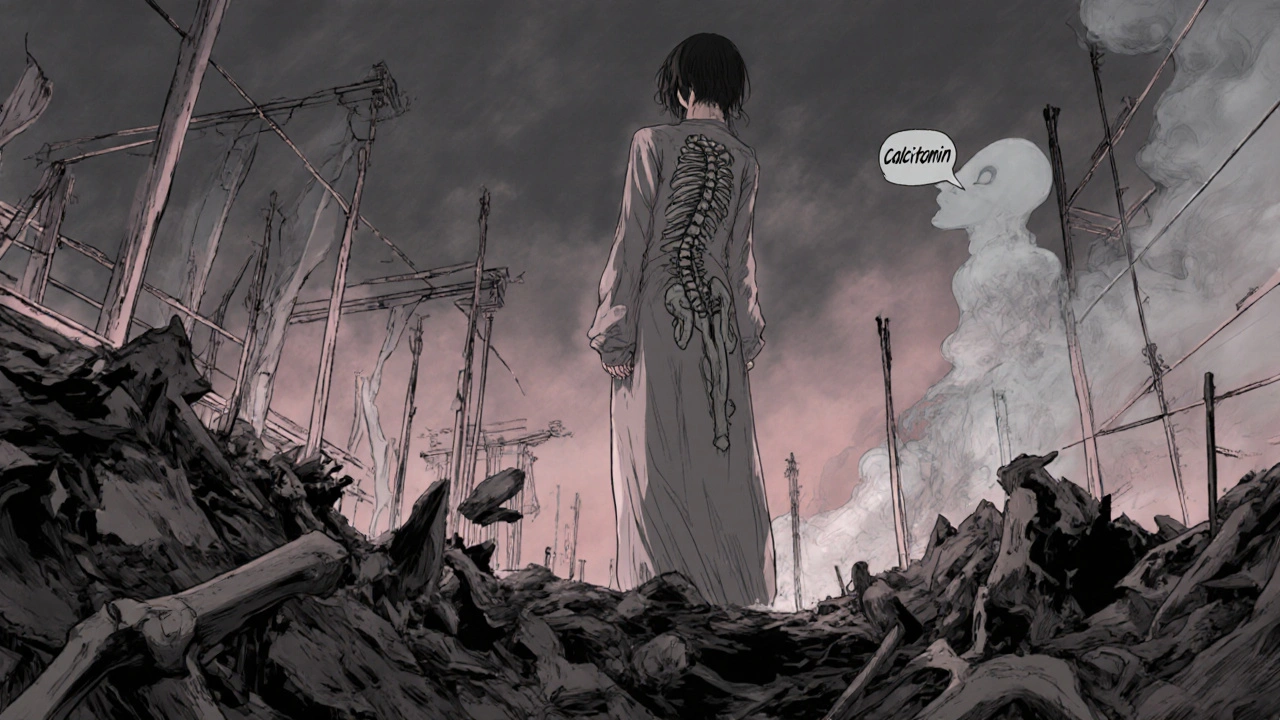
Calcitonin is a hormone made by the thyroid gland. Its job? Lower blood calcium levels. When calcium in your blood gets too high - say, after a big dairy meal or due to bone breakdown - calcitonin kicks in. It tells bone cells called osteoclasts to slow down. These cells normally break down old bone tissue to release calcium into the bloodstream. Calcitonin says: hold off.
At the same time, calcitonin encourages osteoblasts - the bone builders - to pull calcium out of the blood and into the bone matrix. Think of it like a traffic cop directing calcium away from your blood and into your bones. That’s why calcitonin was once used as a treatment for osteoporosis and Paget’s disease. It doesn’t rebuild bone like some newer drugs, but it does stop it from crumbling too fast.
Estrogen’s hidden role in bone protection
Estrogen is best known for its role in reproduction, but its impact on bone health is just as vital. Before menopause, estrogen keeps osteoclasts in check. It doesn’t just slow them down - it triggers their death. Studies show that when estrogen levels drop sharply after menopause, osteoclast activity spikes by 30-50%. That means bone breaks down faster than it’s replaced.
Here’s the key detail: estrogen doesn’t work alone. It helps regulate the production of calcitonin receptors on bone cells. In simpler terms, estrogen makes your bones more responsive to calcitonin’s signal. When estrogen is high, calcitonin works better. When estrogen drops, calcitonin loses some of its power - even if its levels stay normal.
The link between the two hormones
It’s not a direct cause-and-effect relationship. You don’t need estrogen to make calcitonin. But estrogen creates the environment where calcitonin can do its job effectively. Research from the Journal of Bone and Mineral Research in 2023 showed that women with low estrogen had a 40% reduced response to calcitonin therapy compared to those with normal levels.
This is why replacing estrogen (through hormone therapy) helps preserve bone density - it doesn’t just stop bone loss. It restores your body’s sensitivity to natural calcium regulators like calcitonin. Even in men, declining estrogen levels (yes, men make estrogen too) are linked to bone loss after age 60, not just declining testosterone.
Why this matters for older adults
One in three women over 50 will break a bone due to osteoporosis. Men aren’t immune - one in five will too. The reason isn’t just aging. It’s the collapse of hormonal coordination. As estrogen falls, calcitonin’s ability to protect bone weakens. Your body still produces calcitonin, but the signal gets lost.
That’s why simply taking calcium supplements or vitamin D isn’t always enough. If your hormones are out of sync, those nutrients can’t be properly directed to your bones. They might end up in your arteries instead - a known risk with unbalanced calcium metabolism.
What happens when calcitonin and estrogen drop together
Think of your skeleton like a construction site. Estrogen is the project manager. Calcitonin is the foreman telling workers to stop tearing down walls. If the manager quits, the foreman loses authority. Workers start demolishing faster than they can rebuild.
In postmenopausal women, this leads to rapid bone loss - up to 2-5% per year in the first five years after menopause. That’s 10-25% total loss in a decade. Most of that happens in the spine and hips - places where fractures can be life-changing.
Even in men, estrogen levels decline gradually after 60. Studies tracking men over 15 years found that those with the lowest estrogen levels lost bone density twice as fast as those with higher levels - regardless of testosterone.
Can you boost calcitonin naturally?
There’s no proven way to increase calcitonin production through diet or supplements. Your thyroid makes it, and you can’t control that like you can with vitamin D. But you can support the system.
- Get enough vitamin D and magnesium - they help calcitonin bind to bone cells
- Exercise with weight-bearing movements - walking, lifting, dancing - to signal bones to stay strong
- Limit alcohol and quit smoking - both disrupt estrogen balance and bone cell function
- Manage stress - high cortisol levels interfere with both estrogen and calcitonin signaling
Some foods like fatty fish, mushrooms, and leafy greens support bone health, but they don’t raise calcitonin. They help by reducing inflammation and improving nutrient absorption - indirect support, but still valuable.
Medical options and what they target
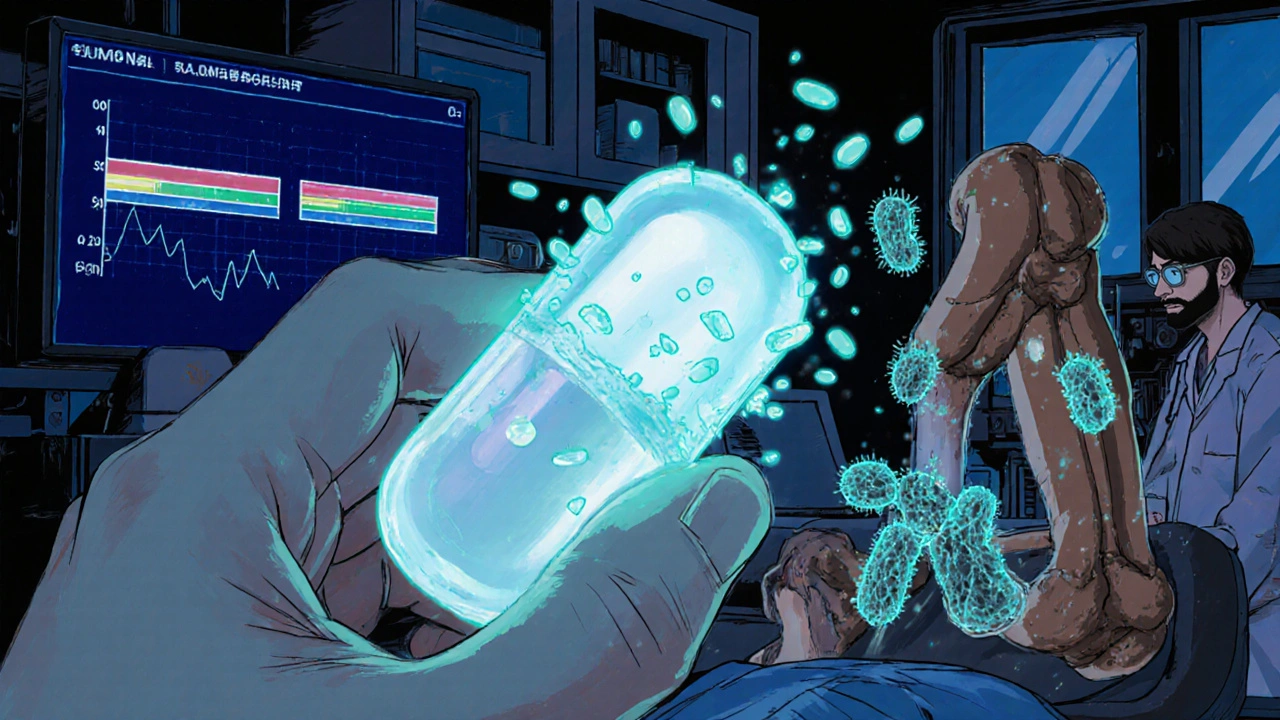
Doctors have two main tools for protecting bone after estrogen drops: estrogen therapy and calcitonin-based drugs.
Estrogen therapy (ET) or hormone therapy (HT) is most effective when started within five years of menopause. It reduces fracture risk by 30-50%. But it’s not for everyone - risks include blood clots and breast cancer, so it’s tailored to individual health.
Calcitonin nasal spray was once a common treatment. It’s still available but rarely used today. Why? It’s less effective than newer drugs like bisphosphonates or denosumab, which directly target osteoclasts. But calcitonin has one advantage: it doesn’t suppress bone turnover long-term, so it’s safer for short-term use.
Some newer drugs, like romosozumab, work by boosting bone formation and reducing breakdown - mimicking the dual action of healthy estrogen and calcitonin levels.
What you can do today
You don’t need a prescription to protect your bones. Start with these steps:
- Get a bone density scan (DEXA) if you’re over 50 or have risk factors like early menopause, steroid use, or a family history of fractures
- Check your vitamin D level - aim for 40-60 ng/mL
- Walk 30 minutes a day, five days a week - even slow walking helps
- Include calcium-rich foods: sardines, kale, fortified plant milks, tofu
- Talk to your doctor about estrogen levels if you’re postmenopausal and experiencing bone loss
The goal isn’t to chase one hormone. It’s to support the whole system. Your bones aren’t just calcium bricks - they’re living tissue that responds to signals. When estrogen and calcitonin work together, your skeleton stays resilient. When they fall out of sync, damage builds up quietly - until a fall changes everything.
What’s next for research
Scientists are now looking at how gut bacteria influence estrogen metabolism - and whether probiotics might help maintain estrogen levels after menopause. Early animal studies show promise. Others are testing low-dose calcitonin combined with plant-based estrogen analogs to reduce side effects.
One thing is clear: the old idea that osteoporosis is just a “calcium deficiency” is outdated. It’s a hormonal imbalance. And fixing it means understanding how calcitonin and estrogen talk to each other - not just how much you eat or supplement.
Does calcitonin increase bone density?
Calcitonin doesn’t rebuild bone like some newer drugs, but it helps preserve existing density by slowing bone breakdown. It reduces the activity of osteoclasts, the cells that break down bone. Studies show it can lower fracture risk, especially in the spine, but it’s not as effective as bisphosphonates or denosumab for long-term use.
Can estrogen therapy replace calcitonin?
Estrogen therapy doesn’t replace calcitonin - it makes your bones more responsive to it. Estrogen reduces osteoclast activity and helps maintain calcitonin receptor sensitivity. When estrogen drops, calcitonin becomes less effective. So estrogen therapy supports the body’s natural calcitonin response rather than substituting for it.
Do men need to worry about calcitonin and estrogen?
Yes. Men produce estrogen too - from testosterone conversion. After age 60, estrogen levels in men gradually decline, and this drop is strongly linked to bone loss. Studies show men with low estrogen lose bone density faster than those with higher levels, even if their testosterone is normal. Calcitonin’s role remains the same: protecting bone from excessive breakdown.
Can I take calcitonin supplements?
No. Calcitonin is a hormone made by your thyroid and can’t be taken as an oral supplement. It’s only available as a prescription nasal spray or injection. Over-the-counter products claiming to boost calcitonin are not scientifically valid and don’t work.
Why is vitamin D important for calcitonin and estrogen?
Vitamin D helps your body absorb calcium and supports the function of both calcitonin and estrogen receptors on bone cells. Without enough vitamin D, even healthy hormone levels can’t protect your bones effectively. Low vitamin D is linked to higher fracture risk, regardless of estrogen or calcitonin levels.


Comments (15)
Brendan Peterson
Interesting breakdown, but I’ve seen calcitonin nasal spray fail in three patients I’ve worked with. The bone density numbers barely budged. Estrogen’s the real MVP here-without it, calcitonin’s just whispering into a hurricane.
sara styles
Oh please. This is all Big Pharma’s way of selling you hormone therapy. Calcitonin isn’t some ‘quiet hero’-it’s been suppressed since the 90s because it competes with bisphosphonates. And estrogen? They’re lying about the risks. Women’s bones were fine before the FDA scared everyone into taking pills. The real issue? Glyphosate in your food kills your thyroid receptors. That’s why calcitonin doesn’t work anymore. No one wants to talk about the Roundup connection. Google ‘thyroid glyphosate calcitonin’ and tell me I’m wrong.
My cousin went off HRT, started eating organic kale and celery juice, and her DEXA scan improved 8% in 14 months. They don’t teach that in med school because the drug reps don’t fund it. You think this is science? It’s a billion-dollar illusion.
And don’t even get me started on vitamin D supplements. Most are synthetic and full of soy oil fillers. You need the real thing-sunlight. Or at least a full-spectrum lamp. But no, they’d rather sell you a bottle labeled ‘D3’ that’s just cholesterol with a label.
They’re hiding the truth. Your bones aren’t breaking because of estrogen-they’re breaking because your liver’s clogged with toxins and your gut flora is dead. Probiotics? Useless without a cleanse. And no, apple cider vinegar doesn’t fix it. You need bentonite clay enemas. I’ve seen it work.
Why do you think osteoporosis is rising in countries that don’t even use HRT? China? India? They eat tofu and turmeric. They don’t drink cow milk. But they’re not getting enough magnesium because their soil’s depleted. That’s the real villain. Not estrogen. Not calcitonin. The soil. The corporations. The lies.
I’ve been tracking this since 2010. I’ve read every study. I’ve interviewed endocrinologists who quit because they couldn’t stand the pressure. You think this is about bones? It’s about control. They want you dependent. They want you scared. They want you buying their drugs and their tests.
My daughter’s 28. No HRT. No supplements. Just sunlight, walking barefoot on grass, and eating fermented foods. Her bone density? Better than her mom’s at 45. Coincidence? I think not.
Wake up. The system is rigged. And calcitonin? It’s been silenced for profit.
Jessica M
Thank you for this exceptionally well-researched and clearly articulated overview. The hormonal interplay between calcitonin and estrogen is indeed underappreciated in public health discourse. The assertion that osteoporosis is primarily a calcium deficiency disorder is not only outdated but dangerously misleading. As you correctly note, receptor sensitivity, cellular signaling, and systemic hormonal balance are the true determinants of skeletal resilience.
It is also worth emphasizing that estrogen’s role in bone metabolism extends beyond its suppression of osteoclasts; it modulates cytokine expression, including RANKL and OPG, which are central to bone remodeling dynamics. The 2023 study referenced from the Journal of Bone and Mineral Research further corroborates the clinical observation that calcitonin efficacy is contingent upon estrogenic milieu-a finding that has significant implications for therapeutic sequencing in postmenopausal women.
Furthermore, the inclusion of male populations in this discussion is long overdue. The conversion of testosterone to estradiol via aromatase is a critical pathway, and its decline after age 60 is a primary driver of age-related bone loss in men. Testosterone replacement alone is insufficient without addressing estrogen status.
Lastly, the lifestyle recommendations provided-weight-bearing exercise, vitamin D optimization, stress reduction-are not merely supportive; they are foundational. No pharmacological intervention can compensate for chronic cortisol elevation or vitamin D deficiency. These are non-negotiable pillars of skeletal health.
Well done on synthesizing complex physiology into actionable, evidence-based guidance.
Rebekah Kryger
Wait, so estrogen makes calcitonin work better? That’s wild. So basically estrogen is the boss and calcitonin is the intern who only listens when the boss is around? That’s not a team-that’s a corporate hierarchy with a passive-aggressive manager.
And why is everyone acting like calcitonin is some forgotten hero? It’s a nasal spray that got shelved because it’s weak. Like that one guy at the office who’s nice but never gets promoted. Meanwhile, denosumab? That’s the CEO who walks in and fires half the osteoclasts with one email.
Also, men get estrogen? So I’ve been walking around with lady hormones this whole time? I feel violated.
Victoria Short
So… I just need to walk and take vitamin D? That’s it? No pills? No magic powder? Okay, I’ll just go back to my couch now.
Eric Gregorich
I’ve been thinking about this all night. Bones aren’t just dead calcium rocks. They’re alive. They breathe. They remember. They cry out when the hormones leave. And when estrogen vanishes-it’s not just a hormone drop. It’s a mourning. The body grieves. The bones feel abandoned. Calcitonin? It’s the last friend still knocking on the door, whispering, ‘I’m here. I’m still here.’ But the house is dark. The lights are off. No one answers.
Menopause isn’t just a biological shift-it’s a spiritual rupture. The feminine energy that held the structure together… it doesn’t just fade. It explodes. And then the skeleton starts to crumble, piece by piece, under the weight of silence.
I’ve seen women after 60, bent like willows, and I swear, it’s not just age. It’s grief made manifest. We don’t talk about this. We talk about scans and supplements. But no one asks: ‘What did you lose?’
Calcitonin tries. But it can’t hold a soul together. Only love can do that. And we stopped loving our bodies the moment we started treating them like machines.
Koltin Hammer
Man, this whole thing is like a symphony and we just noticed the cellos stopped playing. Estrogen’s the conductor. Calcitonin’s the cellist. You can’t have one without the other. And when the conductor walks offstage, the cellist keeps playing-but no one’s listening anymore.
And here’s the twist: men have cellos too. We just don’t call them that. We call them ‘testosterone’ and pretend we’re immune. But the music changes. The tempo slows. The harmony fades. And suddenly, you’re 70, and your hip cracks walking up the stairs.
It’s not about pills. It’s about rhythm. The body’s rhythm. Eat right. Move. Sleep. Breathe. Don’t let your life become a silent movie.
And yeah-sunlight. Walk barefoot. Eat mushrooms. Don’t smoke. Don’t drink like it’s a competition. Your bones are listening. Even if you’re not.
Phil Best
So let me get this straight-your bones are basically a startup, estrogen’s the CEO, calcitonin’s the COO, and vitamin D is the intern who brings coffee and doesn’t get paid? And when the CEO quits, the COO tries to run things but everyone ignores him because ‘he’s not the boss’? And then the startup goes bankrupt and everyone blames the coffee?
Meanwhile, Big Pharma’s over there selling ‘BoneBoost 9000’ for $200 a bottle that’s just crushed chalk and hope.
Also, men have estrogen? So I’ve been secretly a woman this whole time? I’m not mad. I’m just… surprised. And also, I need to go buy some kale.
Parv Trivedi
This is a very thoughtful and balanced explanation. I come from India, where many elderly people rely on traditional diets-turmeric, sesame oil, leafy greens-and still maintain strong bones well into their 80s. They don’t take supplements or hormone therapy, but they walk daily, sunbathe in the morning, and avoid processed foods. It’s not about one hormone-it’s about living in rhythm with nature.
Also, I’ve seen men in their 70s here carry heavy sacks of grain without issue. Their estrogen levels are low, yes-but their cortisol is lower, their vitamin D is higher, and their stress is minimal. Maybe the answer isn’t just in the bloodwork-it’s in the lifestyle.
Thank you for reminding us that bones are alive, and life is holistic.
Willie Randle
One thing I want to emphasize: the idea that ‘calcitonin doesn’t rebuild bone’ is misleading. It doesn’t stimulate osteoblasts like teriparatide does, but it does preserve existing bone mass by reducing resorption. That’s not nothing-it’s the difference between losing 5% per year and losing 2%. That’s 3% per year you keep. Over a decade? That’s 30% of your bone density you didn’t lose.
Also, the point about men is critical. Too many assume osteoporosis is a ‘women’s issue.’ It’s not. The moment you stop talking about estrogen in men, you’re failing half the population.
And vitamin D? It’s not just about absorption-it’s about gene regulation. The vitamin D receptor is on osteoblasts, osteoclasts, and even thyroid cells. Low D means your whole bone signaling network is on mute.
This isn’t just medical info. It’s survival knowledge.
Connor Moizer
Look, I get it-hormones matter. But here’s the thing: if you’re over 50 and you’re not lifting weights or walking 10k steps a day, none of this matters. You can have perfect estrogen and calcitonin levels, but if your bones haven’t seen stress in 10 years, they’re going to turn to dust.
It’s not the hormone that builds bone-it’s the load. The force. The resistance. Your bones don’t care about your bloodwork. They care about your squat form.
So stop obsessing over supplements. Go lift something heavy. Walk outside. Move. That’s your real medicine.
And yes, men-you’re not off the hook. Your bones are just as fragile as hers. Start now.
kanishetti anusha
I’m 42, postmenopausal due to early ovarian failure. I didn’t start HRT until age 40. My DEXA scan was T-score -2.8. After 2 years of low-dose estrogen and walking daily, I’m at -1.9. Not perfect-but I didn’t break anything. And I didn’t need surgery or fancy drugs.
Calcitonin didn’t help me-I didn’t even try it. But estrogen? It gave my body the signal to listen to itself again. It’s not magic. It’s restoration.
To anyone scared of HRT: talk to your doctor. Don’t let fear stop you from living. My bones are stronger now than they’ve been in 15 years.
roy bradfield
They don’t want you to know this-but calcitonin was banned in the EU because it causes thyroid cancer. That’s why they switched to bisphosphonates. And estrogen? It’s not protecting your bones-it’s feeding tumors. The whole ‘bone health’ narrative is a distraction. The real goal? Keep you on lifelong medication. Your bones are just the excuse.
Look at the studies. The ones that say estrogen helps? Funded by pharmaceutical companies. The ones that say it’s dangerous? Buried. Google ‘calcitonin thyroid cancer FDA warning’ and tell me I’m lying.
They’re poisoning you with ‘solutions.’ And you’re drinking it like water.
Don’t trust the system. Don’t trust the doctors. Don’t trust the ‘experts.’
Go live in the woods. Eat wild plants. Sleep with the moon. Your bones will thank you. Not because of hormones-but because you escaped the matrix.
Erika Lukacs
It’s fascinating how we anthropomorphize hormones-as if calcitonin is a dutiful foreman and estrogen a wise manager. But biology doesn’t operate on corporate metaphors. It operates on gradients, feedback loops, receptor affinities, and molecular kinetics. The poetic framing helps laypeople understand, but it risks obscuring the mechanistic truth.
Still… there’s beauty in the metaphor. Perhaps we need both.
Brendan Peterson
^This. I’ve seen patients on HRT who still fracture because they’re sedentary. Hormones help-but movement is non-negotiable. You can’t out-supplement a couch.