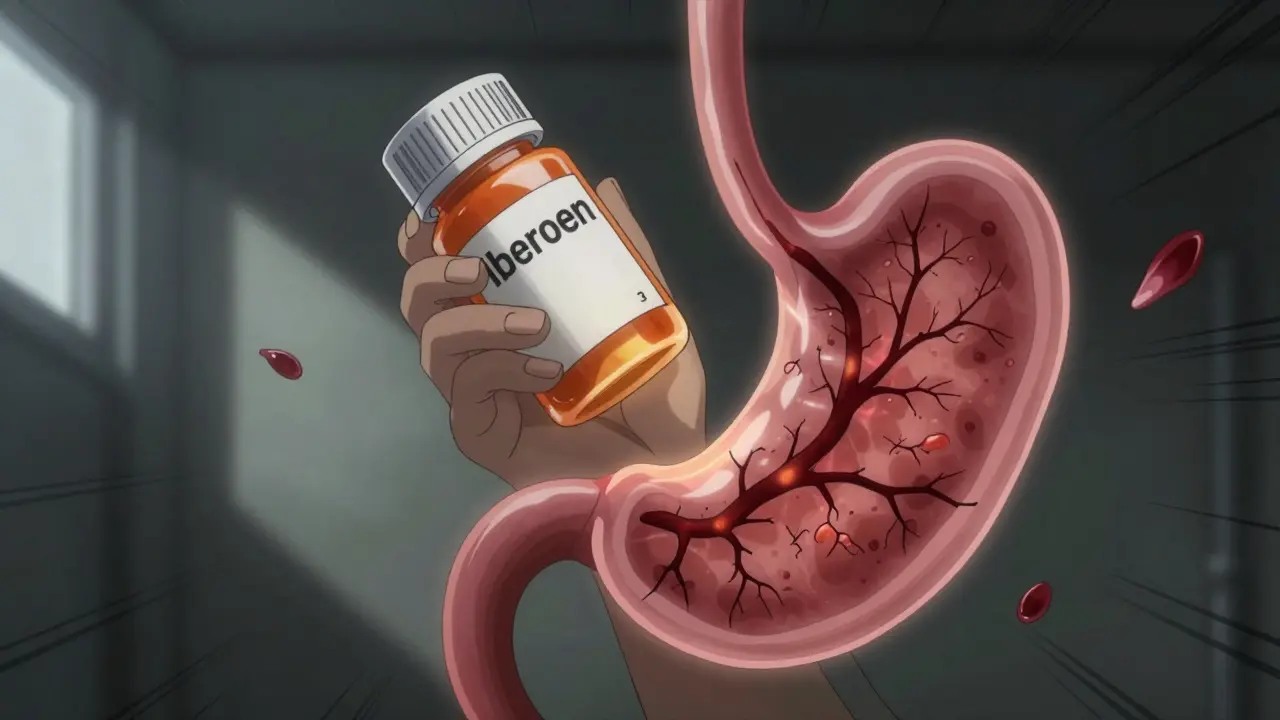
Every year, thousands of people end up in the hospital not from a fall, a car accident, or a heart attack-but from something they took to relieve a headache, a sore knee, or back pain. NSAIDs-like ibuprofen, naproxen, and even low-dose aspirin-are some of the most commonly used drugs in the world. But what most people don’t realize is that taking them too often, too long, or with other meds can silently damage their gut-and lead to life-threatening bleeding.
How NSAIDs Hurt Your Gut Without You Knowing
NSAIDs work by blocking enzymes called COX-1 and COX-2. COX-2 is involved in pain and swelling. COX-1? That’s the one that protects your stomach lining. When you take too much NSAID, you shut down COX-1-and your stomach loses its natural defense. Without that shield, stomach acid starts eating away at the tissue. This doesn’t always cause pain. In fact, up to 70% of people who take NSAIDs long-term show visible damage in their stomach or intestines during an endoscopy-even though they feel fine.
That’s the danger. You don’t get warning signs. No burning, no nausea, no discomfort. Just silent erosion. Over time, that erosion turns into an ulcer. And then, without notice, it starts bleeding. The blood might come out as black, tarry stools (called melena), or it might seep slowly into your system, causing iron deficiency anemia. Many people don’t realize they’re bleeding until they’re dizzy, pale, and struggling to climb stairs.
Who’s at the Highest Risk?
Not everyone who takes NSAIDs ends up in the ER. But some groups are far more vulnerable:
- People over 65-aging reduces stomach lining repair and slows drug clearance.
- Those with a past ulcer or GI bleed-their risk of another bleed is five times higher.
- People taking low-dose aspirin-even 81 mg daily increases GI bleeding risk 2 to 4 times.
- Those on blood thinners or antiplatelets-like clopidogrel or warfarin-combined with NSAIDs, the bleeding risk doubles.
- People with H. pylori infection-this common stomach bacteria multiplies the damage NSAIDs cause.
Here’s the scary part: nearly one-third of people hospitalized for GI bleeding were taking over-the-counter aspirin daily-without a doctor’s advice. Many thought it was "safe" because it was low-dose. It’s not.
Aspirin Isn’t Safe Just Because It’s "Low-Dose"
Aspirin is an NSAID. Even when taken as a daily heart pill, it still damages the gut. The idea that enteric-coated or buffered aspirin protects your stomach? That’s a myth. Studies show it doesn’t reduce bleeding risk at all. And increasing the dose doesn’t help your heart-it just makes bleeding worse. At 75 mg, bleeding risk is 2.3 times higher than non-users. At 300 mg? It’s nearly 4 times higher.
Doctors used to think combining aspirin with other NSAIDs was okay. Now, we know better. When someone takes aspirin and ibuprofen together, their risk of upper GI bleeding jumps 2 to 4 times. And if they’re also on a second antiplatelet drug after a heart attack? That risk skyrockets even more. In fact, the 2008 expert guidelines say: avoid NSAIDs entirely in patients on dual antiplatelet therapy.
What About COX-2 Inhibitors? Are They Safer?
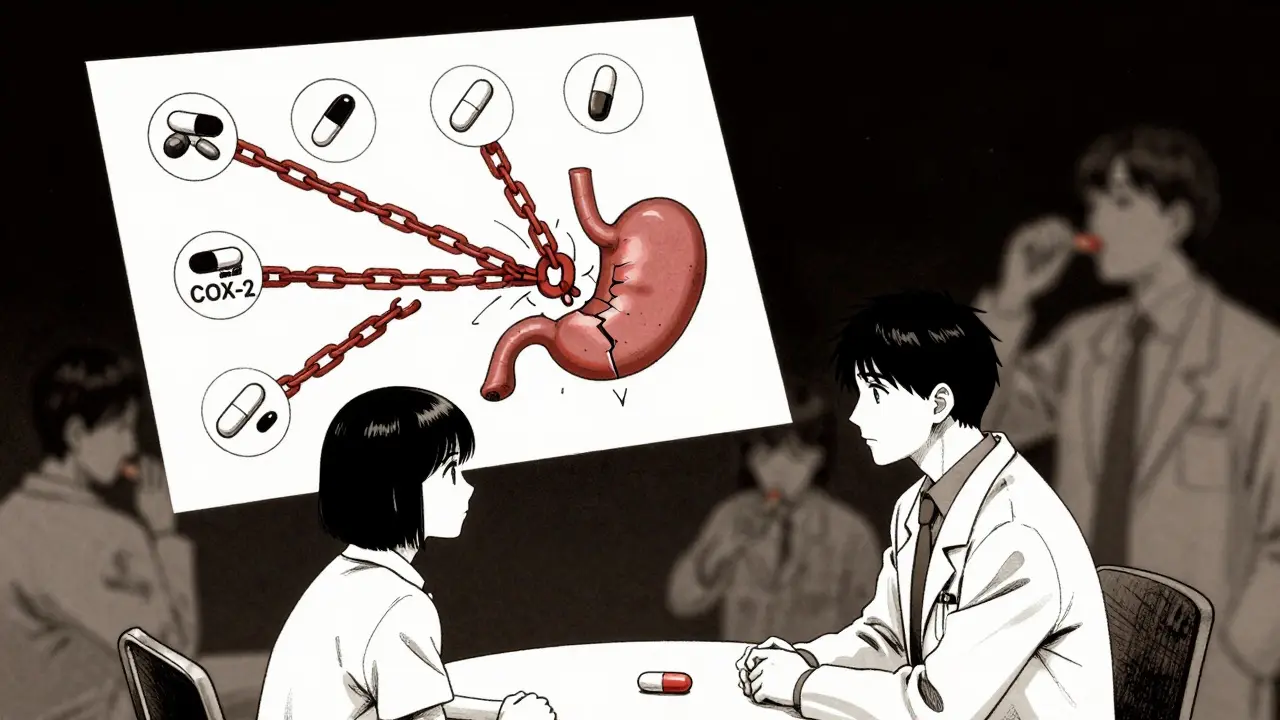
Drugs like celecoxib (Celebrex) were marketed as "stomach-friendly" NSAIDs. They were supposed to spare COX-1 and only block COX-2. That sounded perfect. But here’s the catch: when taken with aspirin, they offer no extra protection. In fact, patients on both aspirin and a COX-2 inhibitor still had a 7.5% chance of a serious GI event each year-worse than those on traditional NSAIDs with a stomach protector.
COX-2 inhibitors might help someone who’s not on aspirin and has a history of ulcers. But for most people on heart meds? They’re not the answer.
The Hidden Bleeding: Anemia Without Symptoms
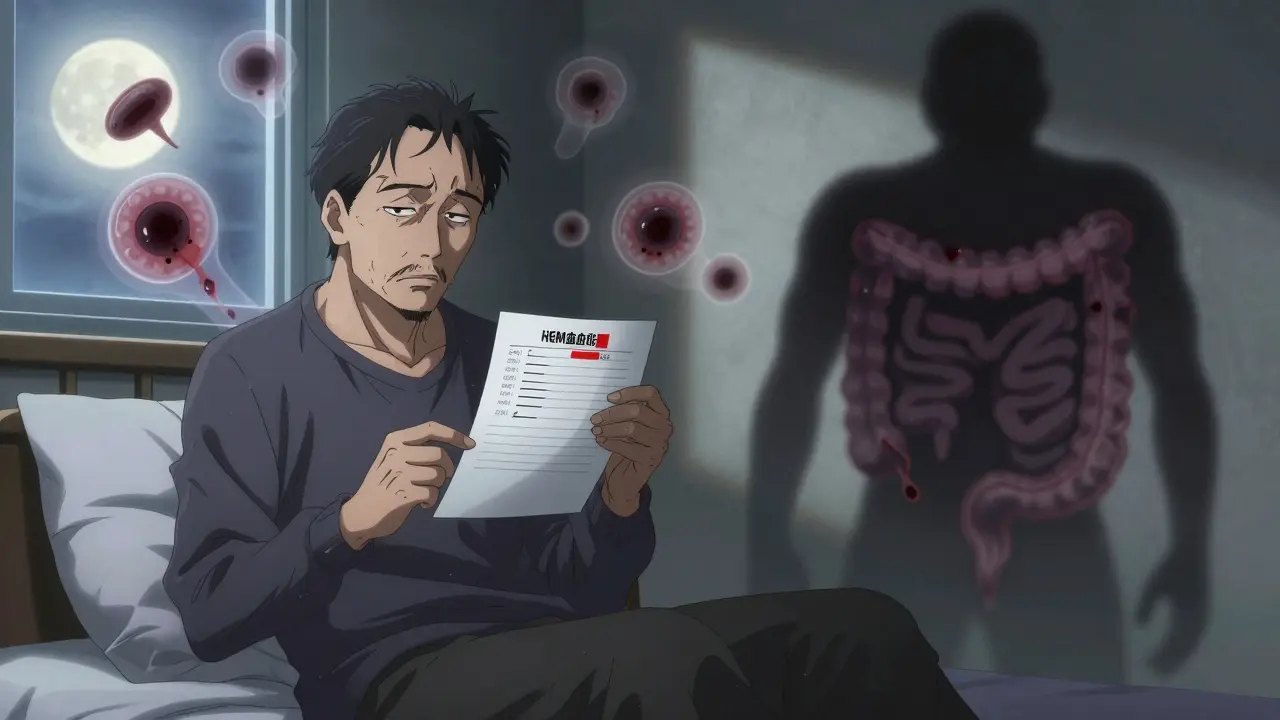
Most people think if you’re not vomiting blood or having black stools, you’re fine. But that’s not true. In clinical trials, over 50% of NSAID users developed anemia-meaning their hemoglobin dropped by more than 2 g/dL-without any visible bleeding signs. And over 60% of those anemic patients had no ulcers or lesions found during endoscopy. Where was the blood coming from? The small intestine. NSAIDs damage the entire GI tract-not just the stomach. This is called "occult bleeding." It’s slow, silent, and often missed until someone’s exhausted, weak, and their doctor runs a blood test.
What Should You Do If You’re Taking NSAIDs?
If you’re on NSAIDs regularly-whether for arthritis, back pain, or headaches-ask yourself these questions:
- Am I taking them daily or just for short flare-ups?
- Am I also taking aspirin, even if it’s "low-dose"?
- Have I ever had an ulcer or GI bleed before?
- Am I over 65 or on other blood-thinning meds?
If you answered yes to any of these, talk to your doctor. Don’t wait for symptoms. Ask for a simple blood test to check your hemoglobin. Ask if you need a proton pump inhibitor (PPI) like omeprazole to protect your stomach. But know this: PPIs help with stomach ulcers-but they don’t stop bleeding in the small intestine. They’re not a magic shield.
Alternatives to NSAIDs
There are other ways to manage pain:
- Acetaminophen (Tylenol)-doesn’t harm your gut, but don’t exceed 3,000 mg/day or you risk liver damage.
- Physical therapy-for back or joint pain, it’s often more effective long-term than pills.
- Cold or heat therapy-simple, free, and surprisingly helpful.
- Topical NSAIDs-gels or patches applied to the skin. They deliver less drug into your system, lowering overall risk.
- Weight management-losing even 5-10 pounds can reduce knee and hip pain dramatically.
For chronic pain, work with a pain specialist. Don’t just keep reaching for the bottle.
When to Go to the ER
You don’t need to panic every time you take ibuprofen. But if you notice any of these, get help immediately:
- Black, tarry, or bloody stools
- Vomiting blood or material that looks like coffee grounds
- Sudden dizziness, fainting, or rapid heartbeat
- Unexplained fatigue, pale skin, or shortness of breath
These aren’t "wait and see" symptoms. This is internal bleeding. Every minute counts.
The Bottom Line
NSAIDs aren’t evil. They help millions. But they’re not harmless either. The biggest danger isn’t taking them once in a while-it’s taking them daily without thinking about it. People assume because they’re sold over the counter, they’re safe. They’re not. The gut doesn’t scream before it bleeds. And once it does, recovery is long, expensive, and sometimes deadly.
Be smart. Be aware. Ask your doctor before you start or keep taking NSAIDs long-term. Especially if you’re on aspirin, over 65, or have a history of ulcers. There’s no shame in saying, "I need to find a safer way to manage this pain." Your stomach will thank you.
Can I take ibuprofen with low-dose aspirin?
It’s not recommended. Combining ibuprofen or other NSAIDs with low-dose aspirin increases your risk of gastrointestinal bleeding by 2 to 4 times. Even if you take them hours apart, ibuprofen can interfere with aspirin’s protective effect on the heart. If you need both, talk to your doctor about switching to naproxen or using a proton pump inhibitor-but never combine them without medical advice.
Do enteric-coated NSAIDs prevent stomach bleeding?
No. Enteric-coated pills are designed to dissolve in the intestine, not the stomach, but they don’t reduce bleeding risk. The drug still enters your bloodstream and affects COX-1 enzymes throughout your GI tract. Studies show no difference in bleeding rates between coated and regular NSAIDs. Don’t rely on packaging to protect you.
How do I know if I’m bleeding internally from NSAIDs?
Internal bleeding often has no obvious signs. You might feel unusually tired, dizzy, or short of breath. Your skin may look pale. A simple blood test can reveal low hemoglobin-an early sign of chronic blood loss. If you’ve been taking NSAIDs daily for more than a few weeks, ask your doctor for a complete blood count. Don’t wait for black stools or vomiting blood.
Are there any NSAIDs that are safer for the stomach?
No NSAID is completely safe for the stomach. COX-2 inhibitors like celecoxib may cause fewer stomach ulcers in people not taking aspirin, but they offer no protection if you’re also on heart medication. Even topical NSAIDs can still cause some systemic effects. The safest choice is to use the lowest effective dose for the shortest time possible-and avoid daily use unless medically necessary.
Should I stop NSAIDs if I’m over 65?
Not necessarily-but you need to be much more cautious. Age increases your risk of bleeding, slows drug clearance, and reduces stomach repair. If you’re over 65 and taking NSAIDs daily, talk to your doctor about alternatives like acetaminophen, physical therapy, or topical treatments. If NSAIDs are essential, ask about a proton pump inhibitor and regular blood tests to check for anemia.
Can I take NSAIDs after a heart attack?
Avoid them if you’re on dual antiplatelet therapy (like aspirin + clopidogrel). NSAIDs increase bleeding risk and can interfere with heart protection. Even short-term use after a heart attack raises the chance of another heart event or stroke. If you need pain relief, acetaminophen is usually the safest option-but always check with your cardiologist first.




Comments (10)
Sajith Shams
NSAIDs are a silent killer and nobody talks about it. I've seen patients in my clinic with hemoglobin under 7 g/dL and no idea why. They were taking ibuprofen daily for 'back pain' since 2018. No doctor ever asked. No blood test ever done. Just pills. And now they're on iron infusions and endoscopies. It's not about the drug-it's about the culture of ignoring the body until it collapses.
Adrienne Dagg
OMG this is so real 😭 I’ve been on naproxen for years for my arthritis and never thought twice. Just took it like candy. Now I’m terrified to even look at the bottle. Gonna call my doc tomorrow. Thanks for the wake-up call 🙏
Ryan van Leent
People take these pills like they're vitamins. You think your stomach is invincible? Nah. It's just waiting to bleed out while you scroll TikTok. And don't even get me started on aspirin. That shit is poison if you're not monitored. My uncle died from a bleed and he was taking 'low-dose' like it was a health supplement. Wake up
Chris Davidson
COX-2 inhibitors are not safer if you're on aspirin. The data is clear. The marketing is not. Doctors still push Celebrex like it's magic. It's not. It's just a different flavor of the same poison. And PPIs? They help a little. But they don't fix small intestine damage. That's the hidden killer. Most doctors don't even look there
Tim Goodfellow
Man this post hit me like a freight train. I used to pop ibuprofen like Skittles after gym. Now I do yoga, ice baths, and heat wraps. My knees still hurt-but at least I’m not slowly turning into a walking blood bag. The real win? Losing 12 pounds. My pain dropped 60%. No pills needed. Your body’s not a machine you can grease with chemicals
mary lizardo
The article is meticulously researched, impeccably structured, and clinically precise. One must, however, note the implicit bias toward pharmaceutical interventionism-while alternatives are listed, they are framed as secondary options rather than primary paradigms. The systemic failure lies not in NSAID use per se, but in the commodification of pain management within a profit-driven healthcare model. The fact that 30% of GI bleeds stem from OTC aspirin reflects not ignorance, but institutional negligence. One wonders how many lives are lost to the illusion of safety conferred by retail pharmacy shelves.
Kelly Mulder
Why do people think 'over the counter' means 'safe'? That's like saying 'free sample' means 'no side effects'. I read this article and immediately thought of my neighbor who takes 3 Advil a day and thinks she's being 'responsible'. She's not. She's just one ulcer away from a transfusion. And don't even get me started on enteric coating-that's a scam designed by Big Pharma to make you feel better about poisoning yourself
Glen Arreglo
I appreciate the depth here. As someone who grew up in a household where painkillers were the first response to anything-headache, cramps, sore shoulder-I’m glad someone’s saying this. My mom had a GI bleed at 68. No warning. Just weakness. We thought it was the flu. Turns out it was 3 years of daily ibuprofen. I now tell everyone: if you’re taking it daily, you’re not managing pain-you’re gambling with your gut. And nobody’s paying you to take that risk.
Alex Curran
Topical NSAIDs are way underused. I’ve had chronic shoulder pain for 8 years. Took oral NSAIDs for 5. Got a Diclofenac patch. Pain gone. No stomach issues. No anemia. No ER visits. It’s not perfect but it’s 10x safer. If you’re taking pills daily, you’re doing it wrong. Talk to a PT. Try the patch. Your gut will thank you
jessica .
the gubmint and big pharma are lying to you about NSAIDs they dont want you to know how dangerous they are so you keep buying them and dont start asking questions about why your doc pushes pills instead of real solutions like water and sunshine and sleep