Missed Blood Thinner Dose Checker
Disclaimer: This tool provides general guidelines based on standard medical advice. Always consult your specific prescription instructions or doctor.
Recommendation:
Important Note
Do you have severe symptoms?
If you are experiencing any of the following, seek immediate help regardless of missed doses:
- Sudden numbness/weakness (Stroke signs)
- Sudden shortness of breath or chest pain
- Uncontrollable bleeding or vomiting blood
- Head injury
You take your pill. You go about your day. Then, hours later, the panic sets in: Did I actually take it? Or maybe you just forgot entirely. For anyone on blood thinners, also known as anticoagulants or antiplatelet agents that prevent dangerous blood clots, this moment of doubt is terrifying. The stakes are high because these medications walk a razor-thin line between preventing a life-threatening stroke and causing severe bleeding.
The good news? Missing one dose doesn’t automatically mean disaster. But how you handle those next few hours matters immensely. The wrong move-like doubling up on pills-can be just as risky as missing the dose itself. Here is exactly what to do, broken down by medication type, so you can stop worrying and start acting safely.
The Immediate Rule: Never Double Up
Before we get into specific drugs, there is one golden rule that applies to almost every blood thinner: never take two doses at once to make up for a missed one.
It feels logical, right? If you missed a pill, taking two puts you back on track. But with anticoagulants, logic fails you. Taking a double dose spikes the concentration of the drug in your bloodstream, significantly raising your risk of major bleeding events. This could lead to internal bleeding, severe bruising, or worse. According to data from the ROCKET-AF trial, major bleeding events requiring hospitalization affect approximately 1-3% of patients annually, and self-medicating errors contribute heavily to adverse outcomes. Always stick to single-dose corrections unless your doctor explicitly tells you otherwise.
If You Take Warfarin (Coumadin)
Warfarin is a traditional oral anticoagulant that requires regular INR monitoring to maintain therapeutic levels works differently than newer drugs. It has a long half-life, meaning it stays in your system for a while (20 to 60 hours). Because of this, timing is slightly more forgiving, but strict protocols still apply.
Here is the standard protocol recommended by the National Health Service (NHS) and the Anticoagulation Forum:
- Remember within 12 hours: Take the missed dose as soon as you remember.
- Remember after 12 hours: Skip the missed dose entirely. Take your scheduled dose for the current day at its usual time.
- Next Day Realization: If you don’t remember until the next day, skip the missed dose. Do not try to catch up.
Why the 12-hour cutoff? Warfarin affects your International Normalized Ratio (INR), a measure of how long it takes your blood to clot. Your target INR is usually between 2.0 and 3.0. Taking a dose too late or doubling up can swing this number dangerously high, increasing bleeding risk. Conversely, skipping doses lets the INR drop, raising clot risk. By sticking to the "skip if late" rule, you keep your INR stable over the coming days.
Action Item: Write down the missed dose in your yellow anticoagulant record book. Tell your healthcare staff at your next blood test appointment. They may need to adjust your weekly dosage based on this error.
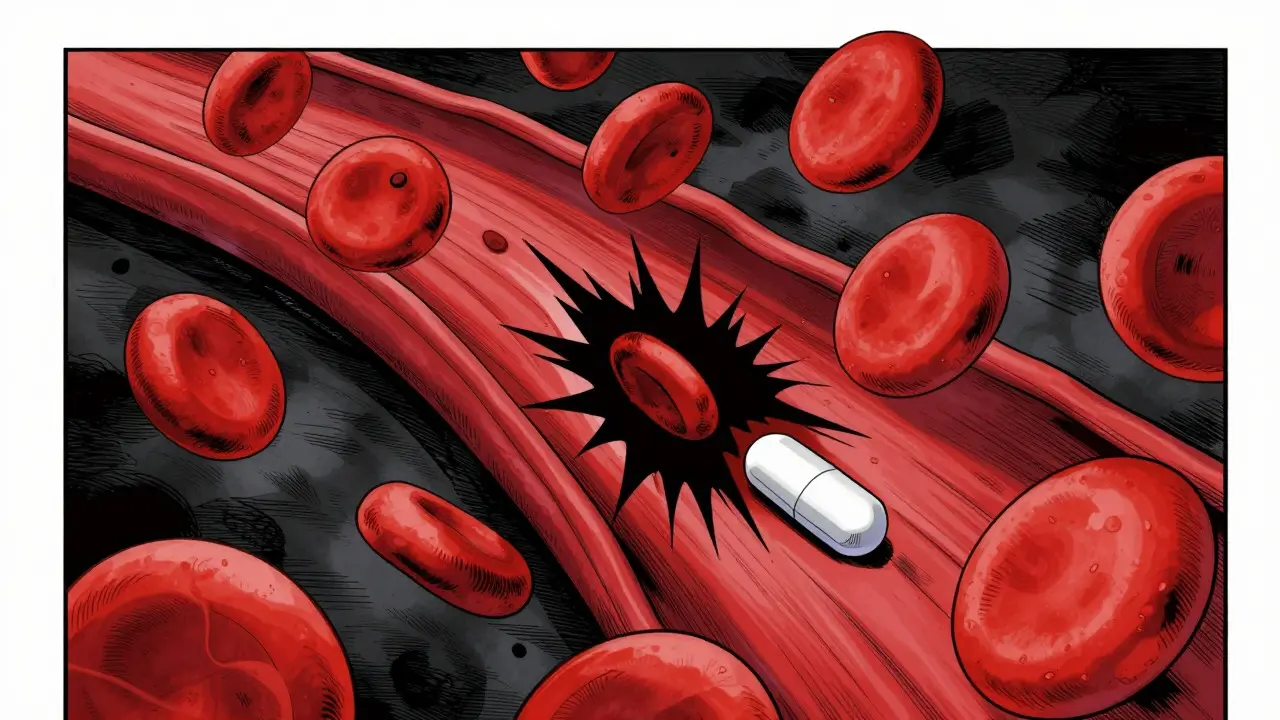
If You Take Apixaban (Eliquis)
Apixaban is a direct oral anticoagulant (DOAC) typically taken twice daily to prevent stroke in atrial fibrillation patients belongs to a class of newer drugs called DOACs. These drugs have shorter half-lives (8 to 15 hours for apixaban), which means they leave your system faster. This makes timing more critical than with warfarin.
Most people take apixaban twice a day, roughly 12 hours apart. Here is what Northwestern Medicine and Bristol Myers Squibb recommend:
- Remember same-day: Take the missed dose as soon as you remember.
- Close to next dose: If it is close to the time for your next scheduled dose (usually defined as less than 6 hours remaining), skip the missed dose.
- Never double: Return to your usual dosing schedule the next day.
For example, if you take your morning dose at 8 AM and your evening dose at 8 PM, and you realize at 5 PM that you missed the 8 AM pill, you should take it immediately. But if you realize at 7 PM, it’s safer to skip it and wait for the 8 PM dose. Why? Because taking two doses close together creates a peak in drug levels that increases bleeding risk without providing extra protection against clots.
If You Take Rivaroxaban (Xarelto) or Dabigatran (Pradaxa)
Other common Direct Oral Anticoagulants (DOACs) include rivaroxaban (Xarelto) and dabigatran (Pradaxa), which offer predictable anticoagulation without routine blood monitoring follow similar rules to apixaban but have slight variations based on their specific dosing schedules.
Rivaroxaban (Xarelto): Depending on your condition, you might take this once or twice daily.
- Once daily: If you miss a dose, take it as soon as you remember on the same day. If you don’t remember until the next day, skip it.
- Twice daily: Similar to apixaban, take it as soon as you remember unless it’s close to the next dose.
Dabigatran (Pradaxa): Usually taken twice daily.
- Same day: Take the missed dose as soon as you remember.
- Next day: Skip the missed dose and resume normal schedule.
The key theme across all DOACs is consistency. A 2021 study in *Circulation: Cardiovascular Quality and Outcomes* found that adherence rates below 80% for DOACs increased stroke risk by 57%. While one missed dose won’t spike your risk instantly, frequent misses erode the protection these drugs provide.

When to Seek Immediate Medical Help
Sometimes, a missed dose isn’t the only problem. You might have accidentally taken an extra dose, or you might be experiencing symptoms of bleeding or clotting. Knowing when to call emergency services vs. calling your doctor is crucial.
Call Emergency Services (911 or local equivalent) if you experience:
- Signs of Stroke: Sudden numbness or weakness (especially on one side), confusion, trouble speaking, vision problems, or severe headache.
- Pulmonary Embolism Symptoms: Sudden shortness of breath, chest pain that worsens when breathing deeply, coughing up blood, or rapid heart rate.
- Severe Bleeding: Uncontrollable nosebleeds, vomiting blood, or coughing up blood.
- Head Injury: If you fall and hit your head while on blood thinners, seek care immediately. Even minor trauma can cause intracranial bleeding.
Contact Your Doctor or Anticoagulation Clinic Soon If You Notice:
- Excessive Bruising: Large bruises appearing without injury.
- Blood in Urine or Stool: Red or brown urine, or black, tarry stools (indicating gastrointestinal bleeding).
- Prolonged Minor Bleeding: Nosebleeds or gum bleeding that lasts longer than usual.
- Multiple Missed Doses: If you’ve missed more than one dose, call your clinic for advice on whether you need an INR check (for warfarin users) or a dose adjustment.
| Medication | If Remembered Same Day | If Remembered Next Day | Monitoring Required? |
|---|---|---|---|
| Warfarin | Take if <12 hours late; else skip | Skip missed dose | Yes (INR testing) |
| Apixaban (Eliquis) | Take ASAP unless close to next dose | Skip missed dose | No (routine) |
| Rivaroxaban (Xarelto) | Take ASAP | Skip missed dose | No (routine) |
| Dabigatran (Pradaxa) | Take ASAP | Skip missed dose | No (routine) |
Preventing Future Misses: Practical Strategies
Willpower is not a reliable strategy for medication adherence. A 2020 study in the *Journal of the American Heart Association* highlighted "weekend non-adherence" patterns, where patients are more likely to miss doses during weekends due to disrupted routines. To combat this, build systems that work even when you’re tired or distracted.
- Use Pill Organizers: Weekly pill boxes with compartments for morning and evening doses provide visual confirmation. If the slot is empty, you took it. If it’s full, you didn’t.
- Set Alarms: Use your phone to set recurring alarms for medication times. Label them clearly (e.g., "Take Eliquis").
- Link to Habits: Pair your medication with an existing daily habit, like brushing your teeth or drinking your morning coffee. This creates a mental trigger.
- Keep a Log: For warfarin users, the yellow record book is mandatory. For others, a simple calendar app or notebook helps track missed doses for discussion with your doctor.
- Auto-Refill Prescriptions: Run out of meds? That’s a guaranteed missed dose. Set up auto-refills with your pharmacy to ensure you always have a supply.
Remember, blood thinners are powerful tools. They save lives by preventing strokes and pulmonary embolisms. But they require respect and precision. By understanding the specific rules for your medication and having a plan for mistakes, you take control of your health rather than letting anxiety dictate your actions.
What happens if I miss one dose of Eliquis?
If you miss one dose of apixaban (Eliquis), take it as soon as you remember on the same day, unless it is close to your next scheduled dose (within 6 hours). If it is close to your next dose, skip the missed dose and return to your regular schedule. Never take two doses at once. One missed dose slightly increases clot risk temporarily, but doubling up increases bleeding risk significantly.
How long does it take for warfarin to wear off if I miss a dose?
Warfarin has a long half-life of 20 to 60 hours. This means it takes several days for its effects to fully diminish after stopping or missing doses. However, your INR level will begin to drop, potentially moving you out of the therapeutic range (2.0-3.0) within 24-48 hours depending on your metabolism. This is why consistent daily dosing and regular INR monitoring are critical for warfarin users.
Can I drink alcohol if I miss a blood thinner dose?
Alcohol can interact with blood thinners, particularly warfarin, affecting liver function and INR levels. If you miss a dose, adding alcohol complicates the situation further by potentially increasing bleeding risk or altering drug metabolism. It is best to avoid alcohol until you have resumed your regular dosing schedule and consulted with your doctor, especially if you are unsure about your current anticoagulation status.
Do I need to see a doctor if I miss a dose of Xarelto?
For a single missed dose of rivaroxaban (Xarelto), you usually do not need to see a doctor immediately if you follow the correct remediation steps (take it ASAP or skip if close to next dose). However, if you miss multiple doses, experience signs of bleeding or clotting, or are unsure what to do, contact your healthcare provider. They may advise additional monitoring or temporary adjustments.
What are the signs of a blood clot while on blood thinners?
Even on blood thinners, clots can form, especially if doses are missed. Signs include sudden swelling, pain, or redness in one leg (DVT); sudden shortness of breath, chest pain, or coughing up blood (PE); and sudden weakness, numbness, speech difficulties, or severe headache (stroke). Seek emergency care immediately if any of these symptoms occur.