Hypoglycemia Risk Assessment Tool
This tool helps you understand your personal risk of low blood sugar (hypoglycemia) based on your diabetes medications and other health factors. According to the article, 1 in 4 insulin users experience at least one severe low each year. Early identification can help prevent dangerous episodes.
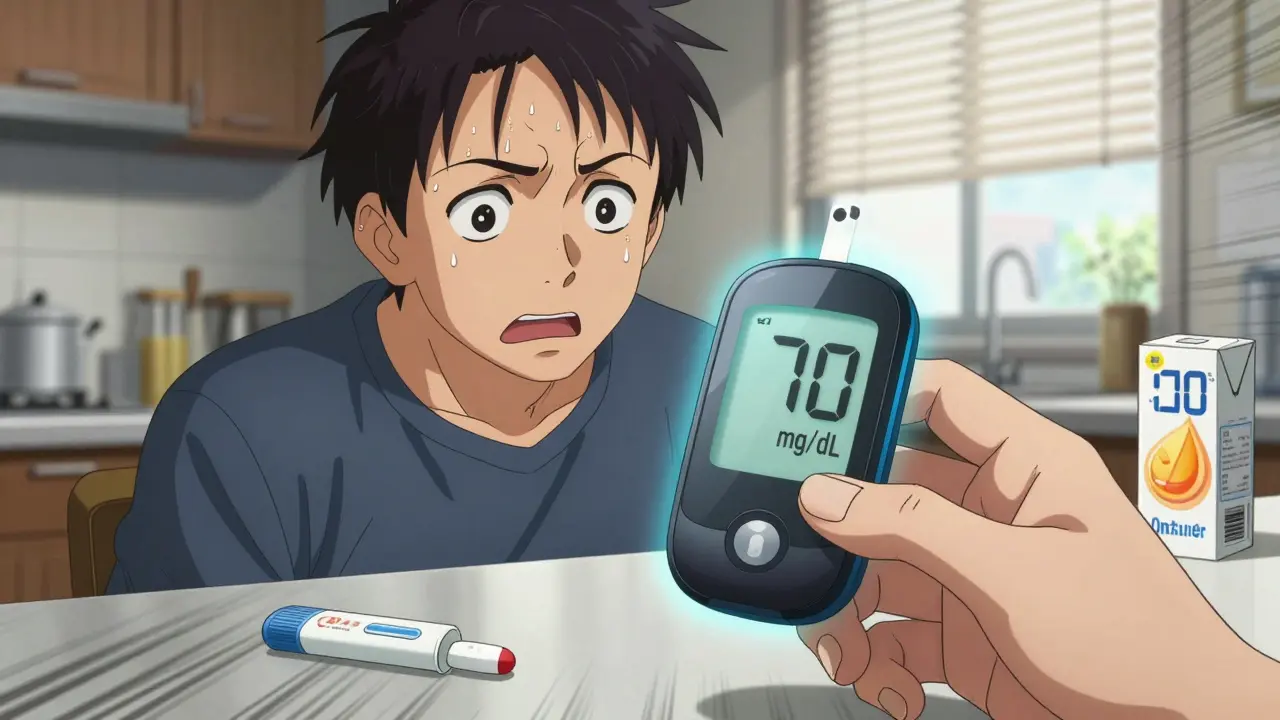
Low blood sugar isn’t just a nuisance-it can be dangerous. If you’re taking insulin, sulfonylureas, or meglitinides for diabetes, you’re at risk for hypoglycemia. Blood glucose below 70 mg/dL triggers symptoms like shaking, sweating, confusion, or worse. And it’s more common than most people realize: 1 in 4 insulin users has at least one severe low each year. But here’s the good news: you don’t have to live in fear. With the right plan, you can prevent most lows and handle them safely when they happen.
Know Which Medications Put You at Risk
Not all diabetes drugs cause low blood sugar. Some are much safer than others. If you’re on insulin-whether it’s long-acting, rapid-acting, or a mix-you’re in the highest risk group. About 20-40% of people using insulin experience hypoglycemia annually. Sulfonylureas like glimepiride or glyburide are next in line, with 15-30% of users having lows each year. Meglitinides like repaglinide also carry a high risk, especially if meals are skipped.On the flip side, metformin rarely causes lows. GLP-1 agonists like semaglutide and SGLT2 inhibitors like empagliflozin have less than 5% risk. That’s why doctors often start with these before adding insulin or sulfonylureas-especially for older adults or people with a history of lows.
If you’re unsure which meds you’re taking and how risky they are, check your prescription label. Look for the drug class. If you’re on a combination pill, like Janumet (metformin + sitagliptin), your risk is still low because sitagliptin doesn’t cause hypoglycemia on its own. But if it’s Glucovance (metformin + glyburide), you’re now in the high-risk category.
Recognize the Warning Signs-Before It’s Too Late
Hypoglycemia hits in two stages. The first is your body’s alarm system: sweating, trembling, heart racing, hunger, or dizziness. These happen around 65-70 mg/dL. If you ignore these, your brain starts to starve. That’s Level 2 hypoglycemia-below 54 mg/dL. Now you might feel confused, sluggish, or have trouble speaking. Seizures or unconsciousness can follow.Here’s the scary part: after 15+ years with diabetes, especially type 1, you might lose these warning signs. This is called hypoglycemia unawareness. About 25% of long-term type 1 patients and 10% of type 2 patients develop it. You won’t feel the shake or sweat. One minute you’re fine, the next you’re collapsing.
If you have this, you need a different strategy. Relying on symptoms won’t work. You need to check your blood sugar constantly-even when you feel fine. That’s where continuous glucose monitors (CGMs) make a huge difference. Studies show CGMs cut severe lows by nearly half. If you’re not using one, ask your doctor why.
The 15-15 Rule: What to Do When Your Blood Sugar Drops
When your glucose hits 70 mg/dL or below, you need fast-acting sugar-quickly. The standard advice is the 15-15 rule: take 15 grams of fast carbs, wait 15 minutes, then recheck.But here’s where most people mess it up:
- Don’t use candy bars, chocolate, or cookies. They have fat and protein, which slow sugar absorption.
- Don’t drink soda unless it’s regular (not diet). A full can has about 40g of sugar-way too much. Stick to glucose tablets or juice.
- Glucose tablets are ideal: each tablet is 4g. Take 3-4. Or use 4 oz (half a cup) of regular juice or 1 tablespoon of honey.
After 15 minutes, check again. If you’re still below 70, repeat. Once you’re back above 70, eat a small snack with protein and carbs if your next meal isn’t in the next hour. A piece of toast with peanut butter works. Skipping this step is why people crash again an hour later.
And never, ever use artificial sweeteners to treat a low. They won’t raise your blood sugar. I’ve seen patients drink diet soda and wait for hours while their glucose keeps dropping.
Prevention Starts With Your Daily Routine
Most lows aren’t random. They’re predictable. And you can stop them before they start.Meal timing matters. If you take a meglitinide like repaglinide, you need to eat within 15 minutes of taking it. Skip the meal? You’re setting yourself up for a low. Same with rapid-acting insulin-don’t inject before a meal you’re not sure you’ll eat.
Exercise changes your needs. Physical activity can lower blood sugar for hours after. If you go for a walk, bike, or lift weights, check your glucose before, during (if it’s long), and after. You might need to eat 15g of carbs before or reduce your insulin dose. No one-size-fits-all rule here-track what works for you.
Alcohol is a silent trigger. It blocks your liver from releasing glucose. One drink can cause a low hours later, especially at night. Always eat when you drink. And never drink on an empty stomach. If you’re using insulin, reduce your evening dose by 20-30% if you plan to drink.
Medication interactions. Beta-blockers for high blood pressure can hide your low symptoms. If you’re on metoprolol or atenolol, you’re more likely to have unawareness. Tell your doctor. They might switch you to a different blood pressure med.
Emergency Tools You Need Right Now
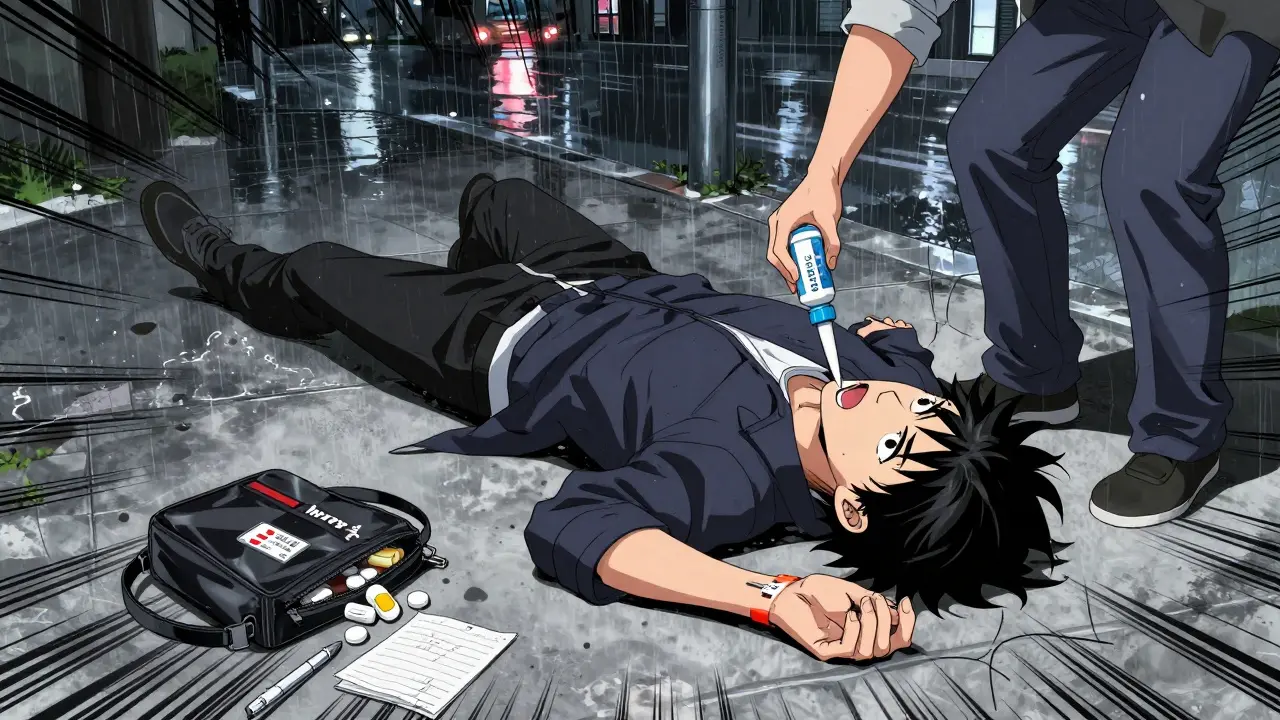
Even the best plans fail sometimes. That’s why you need a backup.Glucagon is non-negotiable. If you pass out or can’t swallow, you need someone to give you glucagon. The old kits required mixing powder and liquid-a messy, stressful 3-minute process. Now, there’s Baqsimi (nasal spray) and Gvoke (pre-filled syringe). Both work in seconds. Keep one at home, one at work, and one in your bag. Make sure your partner, kids, or coworkers know where it is and how to use it.
CGMs save lives. Dexcom G7, Freestyle Libre 3-they alert you before you hit 70. Some even predict a low 20 minutes ahead. The cost is high-$89-$130/month-but Medicare now covers them for all insulin users. If you’re denied, appeal. The data is clear: CGMs reduce hospital visits by 48%.
Keep a ‘hypo bag’ in your car, purse, desk, and gym bag. Include: glucose tablets, a note with emergency contacts, glucagon, and a medical ID bracelet. If you’re found unconscious, this tells responders what to do.
Track Patterns-Not Just Numbers
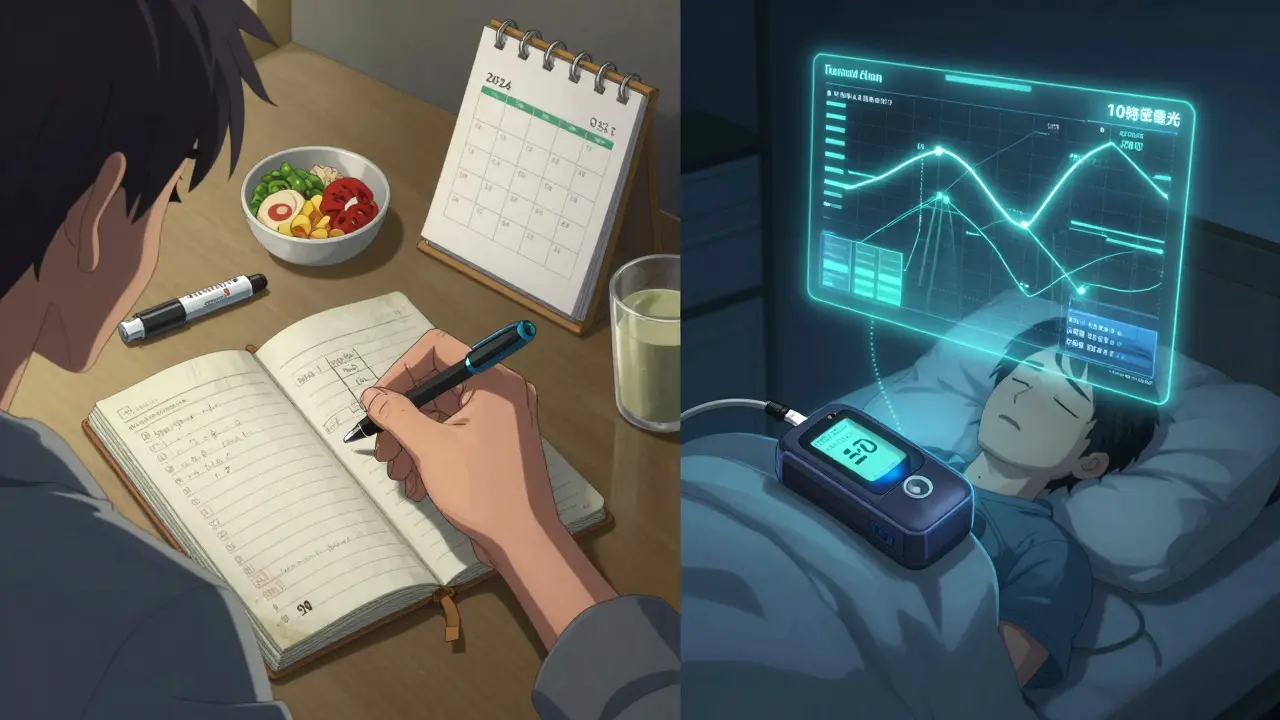
Logging your blood sugar isn’t enough. You need to connect the dots.Use a simple log: date, time, glucose level, medication taken, food eaten, activity done, and how you felt. After a week, look for patterns. Do you always drop after lunch? After walking the dog? After taking your afternoon insulin?
Studies show people who track this way reduce lows by over 50% in three months. The Joslin Diabetes Center found that structured logs-where you write exact grams of carbs, not just “a sandwich”-are the most accurate. Guessing carbs is the #1 reason people get lows after meals.
Apps like Glooko or mySugr can help, but paper logs work too. The key is consistency. If you log for two weeks, then quit, you won’t see the patterns. Make it part of your daily routine, like brushing your teeth.
Work With Your Doctor-Don’t Just Accept What’s Given
Your HbA1c goal isn’t one-size-fits-all. For most adults, 7% is fine. But if you’re 75, have heart disease, or have had lows before, aiming for 7% might be too aggressive. The American Diabetes Association now recommends 80-130 mg/dL for older adults with multiple health issues. That’s not giving up-it’s staying safe.Ask your doctor: “Am I at high risk for lows?” They should use the 8-point hypoglycemia risk score from the HYPO-RESOLVE study. It’s quick, accurate, and built into many electronic records now. If they don’t know it, bring a printout.
Also ask: “Can I switch to a lower-risk medication?” If you’re on glyburide, switching to glimepiride cuts your low risk by 20-30%. If you’re on long-acting insulin, ask about degludec or glargine U-300-they’re more stable and cause fewer lows.
And if you’re on insulin, ask about smart pens or closed-loop systems. The Tandem x2 pump with Control-IQ reduces nighttime lows by 3+ hours per night. It’s expensive, but if you’re having frequent lows, it’s worth the cost.
What’s Coming Next
The future of hypoglycemia management is getting smarter. In 2023, the FDA approved dasiglucagon (Zegalogue)-a liquid glucagon that works in 10 seconds, no mixing needed. AI-driven insulin dosing systems are being tested right now. Early results show they could cut hypoglycemia by 60%.By 2030, most insulin users will be on some form of automated system. But even now, you don’t need to wait. Start with what’s available: CGM, glucagon, glucose tablets, and better logging. These aren’t luxuries-they’re essentials.
Managing hypoglycemia isn’t about perfection. It’s about awareness, preparation, and knowing your limits. You can live well with diabetes-and avoid the scary lows-if you take control now.




Comments (12)
Elizabeth Ganak
Just started using a CGM last month and holy cow it’s changed everything. I used to panic every time I felt a little dizzy, but now I see the trend before it crashes. No more midnight glucose checks with a shaking hand.
Nicola George
So let me get this straight-you’re telling me the solution to a life-threatening condition is… buying more expensive gadgets? Wow. Just wow. My grandma managed diabetes in the 80s with a paper log and a prayer. Guess we’ve all become too lazy to suffer properly.
Robyn Hays
I love how this post doesn’t just throw advice at you-it gives you the *why*. Like, yeah, glucose tablets > candy bars, but it’s because fat slows absorption and your liver’s glycogen stores are already tapped. It’s not magic, it’s biochemistry. And honestly? That’s the kind of clarity people need. I’ve sent this to three friends already.
Also-glucagon nasal spray? I didn’t even know that existed. My brother’s been on insulin for 18 years and still uses the old vial-and-syringe kit. Time to upgrade his emergency kit.
Liz Tanner
For anyone reading this and thinking ‘I can’t afford a CGM’-Medicare covers it if you’re on insulin. Medicaid does too in most states. Call your provider, ask for the CPT code 95250. If they say no, file a formal appeal. They’re required to review it. Don’t let cost be the reason you’re scared to sleep.
Babe Addict
Actually, the 15-15 rule is outdated. Recent ADA guidelines suggest 10-15g for most adults, and 20g if you’re over 70 or have cardiovascular disease. Also, glucose gel is superior to tablets because it’s absorbed faster sublingually. And no one talks about the fact that fructose in juice can delay recovery-pure dextrose is the gold standard. Just saying.
Satyakki Bhattacharjee
God gave us willpower. Why do we need machines to tell us when we’re low? This is not progress. This is surrender. Back in my village, we ate bitter neem leaves and prayed. That’s how you build strength.
Liz MENDOZA
To the person who said CGMs are too expensive-I get it. I was there. I worked two jobs for a year to afford mine. But here’s the truth: one ER visit for a severe low costs more than a year of CGM supplies. This isn’t a luxury. It’s insurance. And you deserve to live without fear.
Anna Weitz
Why do we treat hypoglycemia like it’s a villain to be defeated when it’s just the body screaming for balance? We’re not fighting biology-we’re negotiating with it. The real problem isn’t the meds or the sugar-it’s that we’ve been taught to fear our own physiology instead of listening to it
Kylie Robson
Actually, the HYPO-RESOLVE risk score has been superseded by the 2024 ADA-HYPO-2 algorithm, which incorporates continuous glucose variability metrics and insulin sensitivity indices. You’re using a 2020 model. Also, degludec’s half-life isn’t truly ‘more stable’-it’s just a longer tau constant with higher intra-patient variability in lean vs obese patients. Just FYI.
Caitlin Foster
OMG I JUST REALIZED I’VE BEEN USING DIET SODA TO TREAT LOWS FOR 3 YEARS 😭😭😭 I’M SO STUPID WHY DID NO ONE TELL ME?? I’M GOING TO BUY A CGM TOMORROW AND A GLUCAGON NASAL SPRAY AND A ZEGALOGUE AND A TANDEM X2 AND I’M GOING TO BE A DIABETES WARRIOR!!
Todd Scott
Let me share something from my time working as a diabetes educator in rural Kenya. In villages without electricity, people use the ‘fingertip test’-they pinch the skin on their inner arm. If it feels cold and clammy, they know it’s low. They don’t have CGMs, but they have generations of lived knowledge. We in the West are so obsessed with tech that we forget the wisdom of simple observation. That’s not to say tech isn’t helpful-but don’t throw out the baby with the bathwater. The human body is still the most accurate sensor we have.
Also, in some cultures, sugar is considered ‘hot’ and is avoided during fever or stress. That’s why some patients resist glucose tablets. It’s not noncompliance-it’s cultural health belief. Always ask. Always listen.
Monika Naumann
As a medical professional trained in India, I find this article dangerously misleading. In our healthcare system, we prioritize affordability and accessibility. CGMs are luxury items. Glucagon sprays are unaffordable for 90% of the population. To suggest these are ‘essentials’ is elitist. We teach patients to use jaggery, bananas, and home remedies. We teach them to recognize subtle signs-like irritability or slurred speech-before trembling begins. This article speaks to the privileged. It does not speak to the world.