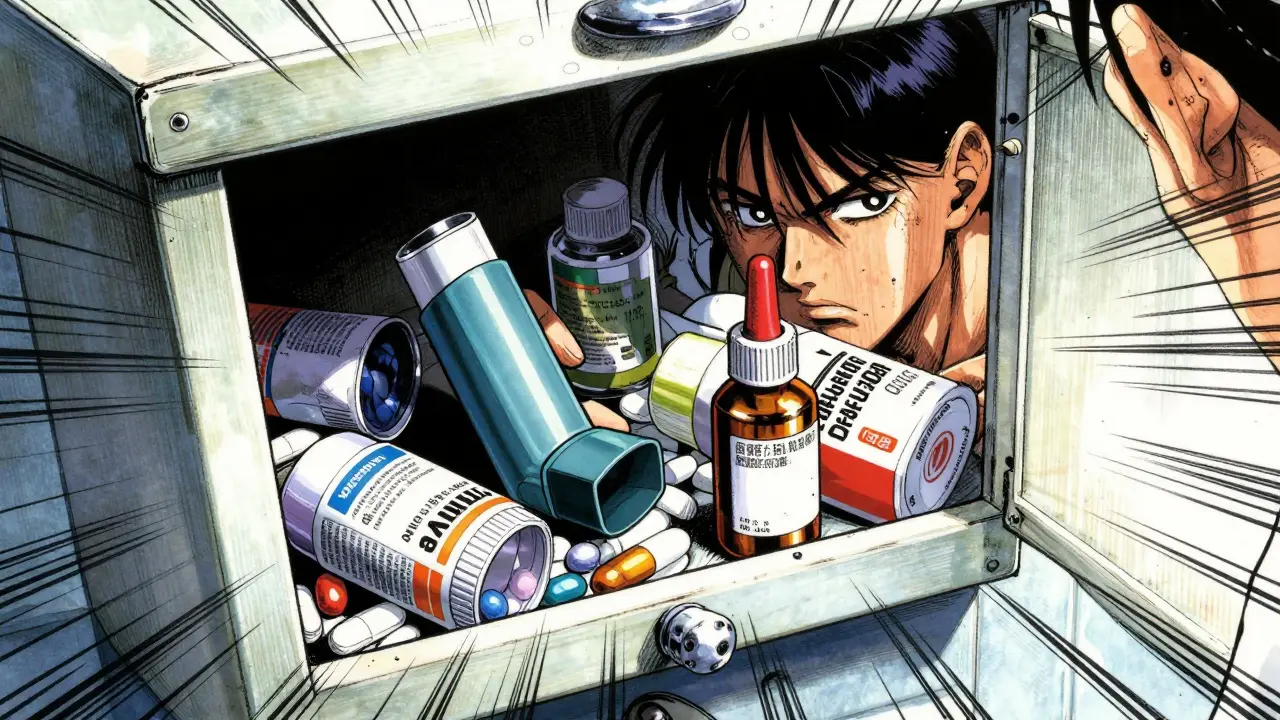
Check your medicine cabinet right now. Do you see that old asthma inhaler from last winter? What about the bottle of eye drops sitting in the bathroom drawer since your last cold? Most of us keep these items around "just in case," but using them after they expire is a gamble with your health. In fact, an FDA survey found that roughly 80% of people have used meds past their expiration date. While some pills might lose potency slowly, things like expired inhalers, eye drops, and creams degrade in ways that can be dangerous or ineffective when you need them most.
You aren't just risking a weaker dose; you're risking infection, environmental harm, and even fire hazards if you throw pressurized cans in the trash incorrectly. The good news? You don't need to guess how to handle them. There are clear, safe ways to manage these specific types of medications so you stay healthy and keep your home safe.
Why Expiration Dates Matter More Than You Think
Manufacturers set expiration dates based on rigorous stability testing. That date isn't just a suggestion; it’s the final day the company guarantees the drug is fully potent and safe. For most meds, this window is 12 to 24 months after manufacturing. But why does this matter for inhalers and drops specifically?
Think of an inhaler not just as medicine, but as a mechanical device. It has a propellant and a metering valve. Over time, the chemical bonds in the propellant break down. A study in the *Journal of Aerosol Medicine* (2021) showed that dry powder inhalers can lose 15-20% of their potency within six months of expiring if exposed to humidity. Soft mist inhalers, like Combivent Respimat, face similar issues with pressure dropping by 25% at 18 months post-expiration. If you’re having an asthma attack, getting only 60-70% of the required dose could mean the difference between breathing normally and ending up in the emergency room. The American College of Allergy, Asthma, and Immunology notes that improper management of these respiratory meds contributes to about 12% of avoidable asthma ER visits annually.
Eye drops are another story entirely. They aren’t just losing strength; they’re becoming breeding grounds for bacteria. Ophthalmic solutions lack the same preservative power over time. A 2022 study in *Clinical Ophthalmology* found that artificial tears stored at room temperature showed significant microbial growth within seven days of expiration, with contamination rates hitting 38%. Putting dirty drops in your eyes can lead to serious infections like keratitis.
The Specific Risks of Each Type
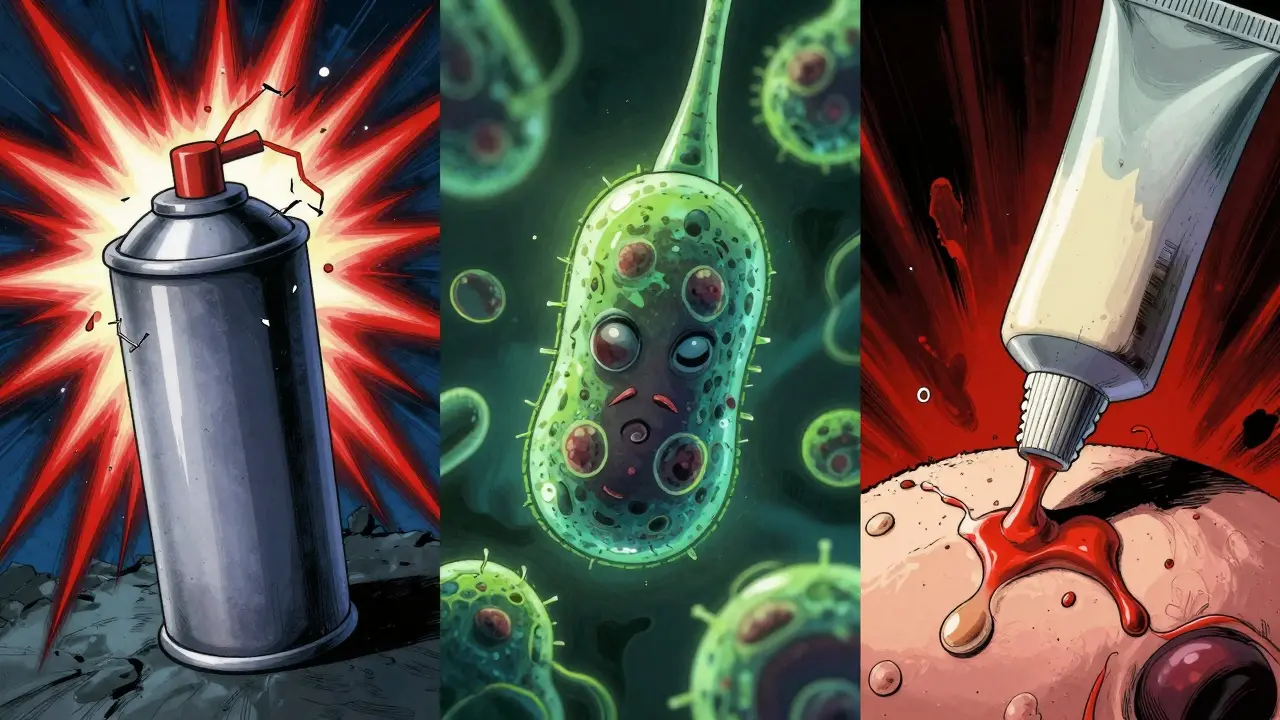
Not all expired meds are created equal. Here is what happens when you push past the date for these three categories:
- Inhalers (MDIs, DPIs, SMIs): The biggest risk is unpredictability. Dr. Robert Citard from Purdue University noted that expired albuterol inhalers can have dose variance increase from 5% in fresh units to 35% in those 12 months past expiration. Plus, they contain pressurized gas. Throwing them in regular trash creates an explosion risk if crushed in landfills.
- Eye Drops: The primary danger is biological. The American Academy of Ophthalmology reports that 42% of expired eye drop samples tested showed microbial contamination at 30 days post-expiration. Even if the solution looks clear, it may be teeming with bacteria.
- Topical Medications (Creams/Ointments): These are generally safer but less effective. Hydrocortisone cream, for example, retains about 90% potency for six months after expiration if kept cool (below 25°C). However, if it gets hot (30°C), that potency drops to 65%. Worse, the base ingredients can separate, causing skin irritation rather than relief.
Where to Dispose: Take-Back Programs Are Best
The safest way to get rid of these items is through a drug take-back program. This keeps chemicals out of our water supply and ensures hazardous components like inhaler propellants are handled correctly. As of early 2024, there were over 11,000 registered collection sites across the U.S., including many police stations and pharmacies.
| Method | Safety Level | Best For | Accessibility |
|---|---|---|---|
| Pharmacy Take-Back | High | All types (Inhalers, Drops, Creams) | High (CVS, Walgreens locations) |
| DEA National Take-Back Day | High | Large quantities, controlled substances | Medium (Twice yearly events) |
| Mail-Back Kits | High | Inhalers (specifically designed kits) | Medium (Requires ordering kit) |
| Home Trash Disposal | Low/Moderate | Non-hazardous liquids/creams only | High (Immediate access) |
If you live near a major pharmacy chain like CVS or Walgreens, check if they have a drop box. Many do. For inhalers specifically, some states offer free prepaid mailers. Washington State, for instance, recommends these kits because standard trash disposal poses explosive risks due to residual pressure in the canisters.
How to Dispose at Home If No Program Is Available
If you can’t find a take-back site, you must dispose of them at home carefully. Never flush eye drops or creams down the toilet unless the label explicitly says to do so (very few do). Flushing contaminates waterways; the U.S. Geological Survey detected medication residues in 80% of U.S. waterways tested in 2022.
- Mix with Unpleasant Substances: For liquid drops and creams, mix the medication with something unappealing like used coffee grounds, cat litter, or dirt. This prevents pets or children from accidentally ingesting it.
- Seal Tightly: Place the mixture in a sealed plastic bag or container. Remove any personal information from the original packaging before throwing it away.
- Handle Inhalers Carefully: This is tricky. You cannot easily mix the contents of a pressurized inhaler. If possible, try to spray the remaining medication into the air in a well-ventilated area outdoors until it stops hissing. Then, puncture the canister (if instructions allow) or place it in a rigid container to prevent crushing in the trash truck. Check local hazardous waste guidelines, as many areas classify empty inhalers as hazardous waste due to toxic propellants.

Common Mistakes to Avoid
It’s easy to make errors here. One big mistake is assuming that because a pill looks fine, an inhaler does too. Inhalers are mechanical devices. Just because it sprays doesn't mean it's delivering the right dose. Another error is storing meds in humid bathrooms. Heat and moisture accelerate degradation. Keep meds in a cool, dry place, but still check dates regularly.
Also, don't rely on the "Shelf Life Extension Program" (SLEP) findings for your home meds. SLEP found that 88% of drugs remained potent years after expiration, but that was under ideal military storage conditions. Your bathroom cabinet is not a climate-controlled bunker. And crucially, SLEP excludes pressurized inhalers, which degrade differently.
When to Replace vs. When to Recycle
Set a calendar reminder every six months to audit your med cabinet. If an inhaler is within three months of expiring, use it up if prescribed, or swap it for a new one if you have insurance coverage. Don't wait until the very last day. For eye drops, once opened, they usually expire in 28 days regardless of the printed date on the bottle. Mark the opening date on the side with a marker. If it’s been open longer than a month, toss it, even if the expiration date says 2027.
For topical creams, if the texture changes, smells odd, or separates, discard it immediately. It’s not worth the risk of a skin reaction.
Can I use an expired inhaler in an emergency?
Ideally, no. An expired inhaler may deliver inconsistent doses, with variance increasing significantly past the expiration date. During a severe asthma attack, you need full potency. If you have no other option, use it while calling emergency services, but understand it may not work effectively. Always carry a fresh rescue inhaler.
How long do eye drops last after opening?
Most single-use vials should be discarded immediately after use. Multi-dose bottles typically expire 28 days after opening due to bacterial contamination risks, regardless of the printed expiration date on the bottle. Write the opening date on the bottle to track this.
Is it safe to throw empty inhalers in the regular trash?
Generally, no. Empty inhalers often contain residual pressurized gas and toxic propellants, making them hazardous waste. Throwing them in regular trash can pose explosion risks in landfills. Use a take-back program or follow local hazardous waste disposal guidelines. Some pharmacies accept them in special bins.
Do expired topical creams cause harm?
They are less likely to cause acute harm compared to expired inhalers or eye drops, but they lose effectiveness. Hydrocortisone, for example, degrades faster in heat. Using degraded cream may irritate your skin without providing the intended anti-inflammatory benefit. Discard if the texture or smell changes.
Where can I find a drug take-back location near me?
You can search for DEA-approved collection sites online or visit major pharmacy chains like CVS or Walgreens, many of which have drop boxes. You can also call the Medicine Safe Disposal Hotline or check with your local police department for scheduled take-back events.