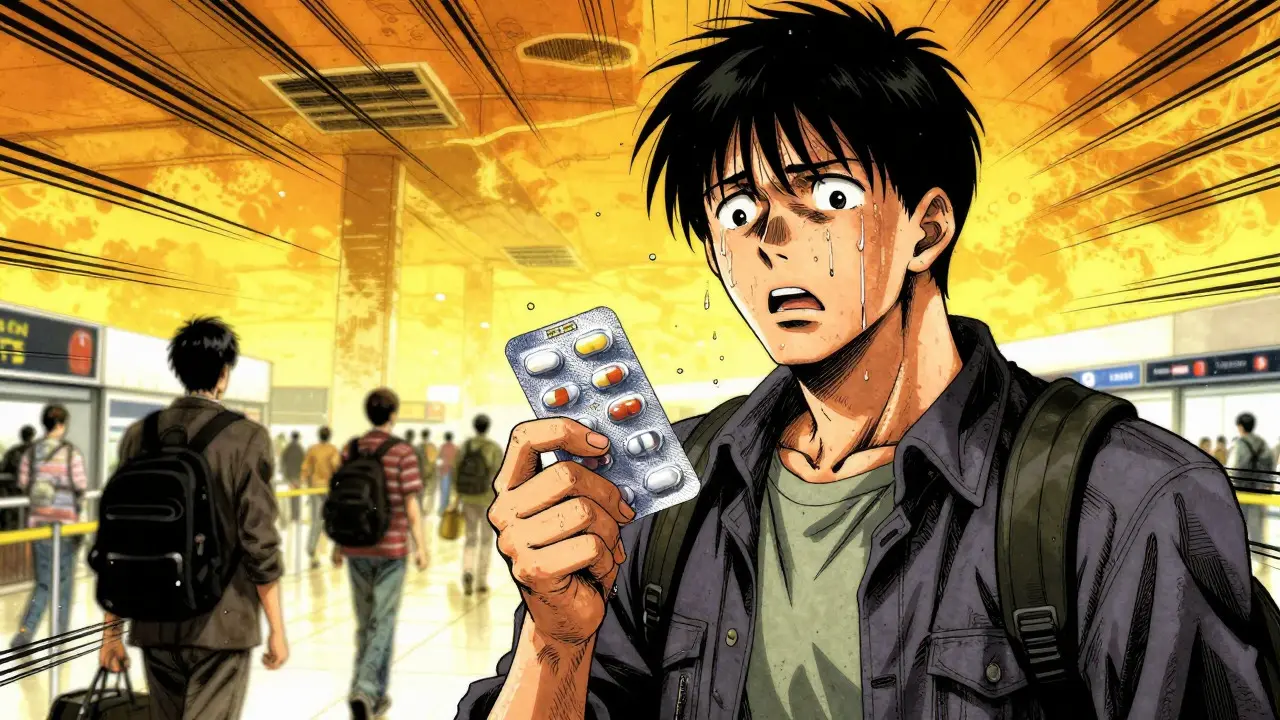
Imagine standing in a humid airport terminal or a sweltering hotel room, realizing your life-saving medication has been sitting in the wrong temperature for hours. For millions of travelers, this isn't just an inconvenience-it's a health crisis waiting to happen. Keeping travel medications within their shelf life during long trips is less about luck and more about strict preparation. If you rely on prescription drugs, especially those sensitive to heat or cold, understanding how environmental factors degrade pharmaceuticals is critical. This guide breaks down exactly how to protect your meds from expiration before you even return home.
Why Temperature Matters More Than You Think
We often assume that if a pill looks fine, it works fine. That assumption can be dangerous. The concept of medication shelf life during travel revolves around preserving pharmaceutical efficacy when exposed to varying environmental conditions. It’s not just about keeping things "cool"; it’s about maintaining specific thermal ranges. According to the World Health Organization's Good Distribution Practices, improper storage leads to $200 billion in wasted medications globally every year. But beyond the waste, there is the risk of failure.
Studies published in the Journal of Pharmaceutical Sciences show that just 30 minutes outside recommended temperature ranges can reduce the efficacy of certain biologics by up to 25%. Dr. Sarah Thompson, Director of Pharmacy at Baystate Health, notes that while a daily vitamin might survive a hot car, a less-effective heart medication or asthma inhaler can have fatal consequences. Heat, air, light, and moisture are the enemies. For example, aspirin breaks down into vinegar and salicylic acid when exposed to humidity, which can cause stomach irritation instead of pain relief. Understanding these chemical changes is the first step in protecting your health.
Know Your Medication’s Specific Needs
Not all medications are created equal when it comes to storage. To keep them within shelf life, you must know where they belong on the spectrum. The American Pharmacists Association reports that approximately 78% of medications require standard room temperature storage, defined as 68°F to 77°F (20°C to 25°C). These drugs can usually tolerate short excursions to 59°F to 86°F (15°C to 30°C), as specified in USP General Chapter <1079>.
However, about 12% of prescriptions fall into the "cold chain" category. This includes insulin, EpiPens, and certain injectable biologics like adalimumab. These must be maintained strictly between 36°F and 46°F (2°C to 8°C). A 2021 University of Florida study found that Humalog insulin loses 1.2% potency per hour when stored at 77°F instead of the recommended refrigerated range. Injectable biologics are even more sensitive, with JAMA Internal Medicine documenting a 30% efficacy loss after just 48 hours at room temperature. Then there are freezer-stable medications, making up about 5% of specialty pharmaceuticals, which need temperatures between -4°F and 5°F (-20°C to -15°C). Ask your pharmacist specifically: "How long can this medication stay out of refrigeration?" before you pack.
| Medication Type | Temperature Range | Tolerance for Excursion | Common Examples |
|---|---|---|---|
| Room Temperature | 68°F-77°F (20°C-25°C) | High (up to 86°F/30°C briefly) | Antibiotics, Blood Pressure Meds |
| Cold Chain (Refrigerated) | 36°F-46°F (2°C-8°C) | Low (Potency loss starts quickly) | Insulin, EpiPen, Biologics |
| Freezer-Stable | -4°F-5°F (-20°C--15°C) | Very Low | Certain Specialty Vaccines |
| Light-Sensitive | Varies | None (Direct sunlight degrades) | Nitroglycerin, Some Antibiotics |
Packing Smart: Tools and Techniques
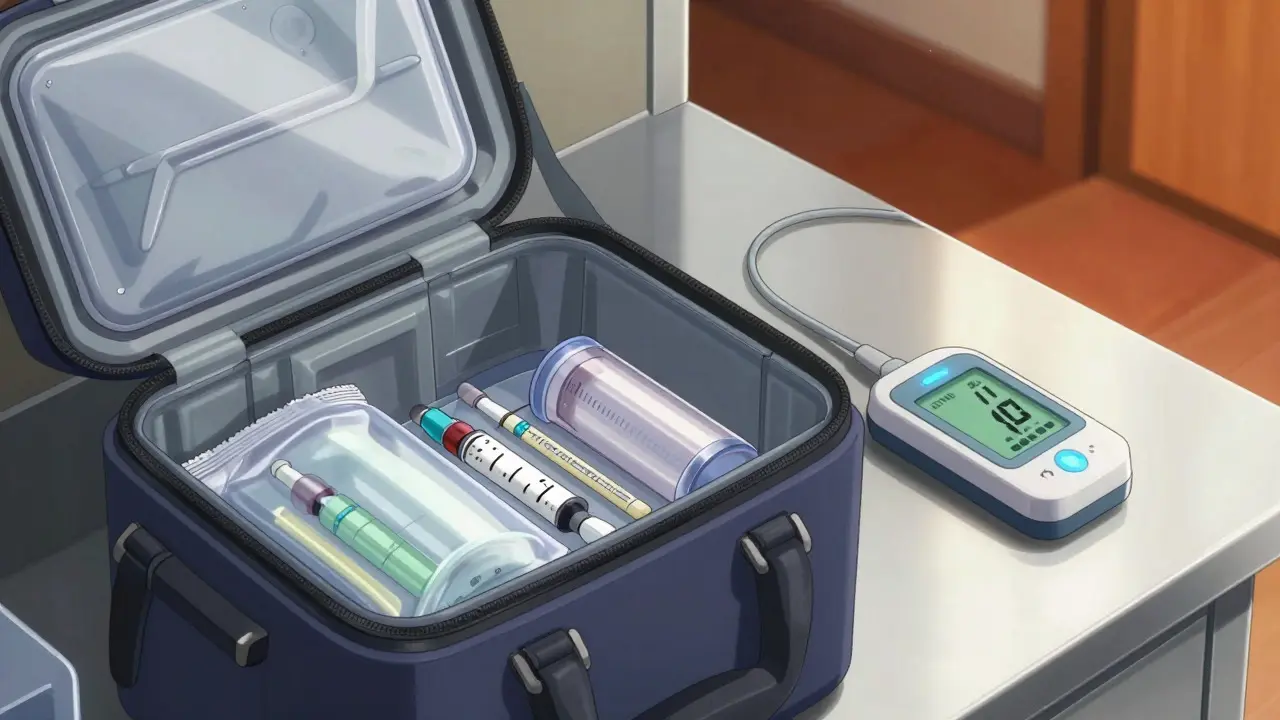
Once you know your medication’s needs, you need the right gear. Standard insulated bags typically maintain temperature for only 12 to 24 hours. For longer trips, medical-grade coolers are essential. The Bocapharmacy Group’s 2023 Cooler Performance Study shows these can maintain stability for 48 to 72 hours. When choosing cooling elements, avoid traditional ice packs if possible. The TSA’s 2022 Pharmaceutical Transport Assessment found that gel packs outperform ice packs by 37% in consistency because they maintain the 36°F-46°F range without freezing the medication, which can also damage it.
Innovative solutions like the Frio cooler wallet use evaporative cooling activated by water, maintaining 38°F-42°F for 48 hours even in 95°F heat, as reported by travelers in Southeast Asia. For high-tech monitoring, consider devices like TempTraq sensors. Validated in a 2022 Journal of Travel Medicine study, these detect 98.7% of temperature excursions. Newer options include 3M’s TempTrend labels, approved by the FDA in May 2023, which change color if exposed to unsafe temperatures. Using these tools ensures you aren’t guessing whether your medicine is still good.
Navigating Air Travel and Security
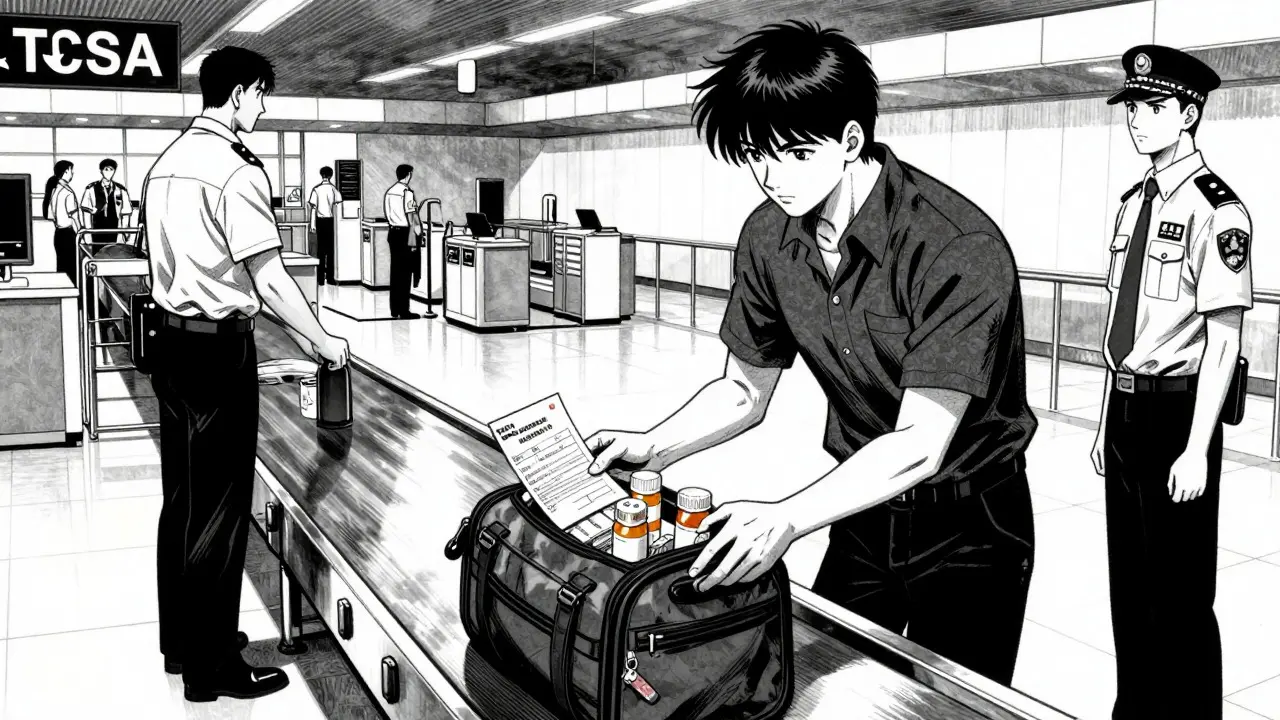
Air travel introduces unique challenges, from cabin pressure to security checkpoints. The International Air Transport Association (IATA) implemented stricter temperature monitoring protocols effective January 1, 2024. To comply and ensure safety, arrive two hours early for domestic flights and three hours for international ones. This buffer allows time for TSA screening.
Crucially, always keep medications in their original containers with prescription labels. Albuquerque Hospital documented an incident where a traveler’s meds were confiscated in Thailand because they lacked original labeling, violating customs regulations. At security, declare your medications. Bring printed instructions from your doctor detailing storage requirements. The TSA allows reasonable quantities of medically necessary liquids, gels, and aerosols in carry-on bags, exempt from the standard 3-1-1 rule. Never check your primary supply of temperature-sensitive medication; cargo holds can reach extreme temperatures.
Handling Humidity and Light Exposure
It’s not just heat that kills shelf life; humidity and light are silent destroyers. A comprehensive analysis of traveler reviews on Enlyte.com revealed that 22% of medication failures stemmed from exposure to humidity, often from storing pills in hotel bathrooms. Bathrooms are steamy saunas compared to bedrooms. Store medications in a dry drawer or closet instead. For light-sensitive drugs like epinephrine, the Wilderness Medical Society warns that direct sunlight for just 15 minutes can degrade concentration by up to 18%. Always keep these in opaque containers or dark bags. If you’re traveling to tropical regions, consider waterproof pill cases to prevent moisture ingress.
Planning Ahead: The 14-Day Rule
Preparation shouldn’t start at the airport. The Bocapharmacy Group recommends initiating travel medication planning 14 to 21 days before departure. Use this window to consult your healthcare provider about travel-friendly formulations. Many pharmaceutical companies now offer temperature-stable versions of common drugs that extend allowable excursion times by up to 72 hours. Check if your medication has such an alternative. Also, calculate your dosage carefully. Pack extra supplies-enough for at least three days beyond your expected return date-to account for delays. Set phone alarms for doses, as 78% of families traveling with pediatric medications rely on them to prevent missed doses during disrupted routines.
What to Do If Storage Fails
Despite best efforts, accidents happen. If your medication experiences a significant temperature excursion, don’t panic, but act quickly. Check for physical changes: discoloration, crumbling tablets, or cloudiness in liquids. If you used a temperature indicator label, note the color change. Contact your pharmacist or doctor immediately. They can advise if the batch is compromised or if you need a replacement. In emergencies, local pharmacies may provide temporary substitutes, though this requires prior research into international equivalents. Remember, taking degraded medication is often worse than skipping a dose, as it may provide false security while failing to treat the condition.
Can I take expired medication on a trip?
Generally, no. Expired medications may lose potency or become toxic. However, some studies suggest certain solid oral drugs retain efficacy slightly past expiration if stored perfectly. For travel, where conditions are variable, stick to unexpired meds to ensure safety and effectiveness.
How do I keep insulin cool without electricity?
Use a Frio cooler wallet or a medical-grade cooler with gel packs. Gel packs are preferred over ice to prevent freezing. Activate the Frio with water for evaporative cooling, which maintains safe temperatures for up to 48 hours in hot climates.
Does TSA allow liquid medications?
Yes. TSA exempts medically necessary liquids from the 3-1-1 rule. Declare them at security, keep them in original labeled containers, and bring a doctor’s note. You may need to separate them for X-ray screening.
What happens if my medication gets too hot?
Heat can degrade active ingredients, reducing efficacy. For example, insulin loses potency rapidly above 86°F. Check for physical changes and consult a pharmacist. If in doubt, replace the medication rather than risk treatment failure.
Should I store meds in the hotel bathroom?
No. Hotel bathrooms are humid and prone to temperature swings. Store medications in a dry, cool drawer or closet away from direct sunlight and moisture to preserve their integrity.

Comments (8)
Alli Crumley
Oh look, another pseudo-intellectual trying to find deep meaning in ice packs :) Seriously though, your jargon-heavy rambling misses the point entirely. The 'thermodynamic reality' isn't a philosophy, it's physics. You don't need to ponder the 'entropy of travel' to know that insulin denatures at high temps. It’s basic biochemistry, not a metaphysical crisis. Stop overcomplicating simple logistics with your grandiose narrative about 'agency'. Most people just want to know which bag to buy without reading a dissertation on existential dread. The data is clear: heat kills efficacy. End of story. No need for the dramatic flair.
Marc H
I simply cannot fathom why anyone would subject themselves to such bureaucratic nonsense as checking temperature logs at security checkpoints, it is truly a testament to the absurdity of modern air travel that we must treat our life-saving medication like contraband rather than medicine. The sheer drama of declaring your pills to TSA agents who likely couldn't care less about your blood sugar levels is enough to make one question the very fabric of civilized society. One imagines the poor traveler standing there, sweating profusely, while the agent stares blankly at a gel pack as if it were an alien artifact from a distant galaxy. It is tragic, really, that we have reduced healthcare to a game of hide-and-seek with airport security.
Chris McQuaid
You’re missing the forest for the trees here, my friend. The issue isn’t the TSA agents’ lack of empathy; it’s the fundamental misunderstanding of how pharmaceuticals interact with environmental variables. People think ‘room temperature’ means ‘anywhere indoors,’ but as the post correctly notes, hotel bathrooms are steam rooms that destroy chemical integrity faster than you can say ‘dehydration.’ It’s not drama; it’s chemistry. If you don’t respect the molecular structure of your meds, they won’t respect your biology. Simple cause and effect. Stop whining about the process and start respecting the science.
sam howard
yeah its all pretty obvious really most people just dont read labels or check their fridge temp so they end up with useless juice in a vial anyway its not rocket science just common sense tbh
Samuel Hershberger
That is a fair observation, Sam! It really does come down to awareness and preparation. I always recommend travelers create a specific 'medication kit' well before departure, including backup power sources for coolers if needed. It gives such peace of mind knowing you have a plan. Have you tried using those digital loggers mentioned in the article? They are incredibly helpful for verifying that your meds stayed within range during long layovers. Let us know if you have any other tips for keeping things organized!
Mathew Stuckey
Great points everyone! 🌟 I love how this community shares practical advice. 😊 Staying safe is key! 👍
John Divers
The consensus here suggests that proactive measures significantly mitigate risk. One might argue that the psychological comfort of preparedness is equally valuable as the physical protection of the medication. It fosters a sense of control in unpredictable environments. A harmonious approach to travel health involves both technical knowledge and emotional readiness. Thank you for contributing these diverse perspectives.
Ambria St louis
Indeed!; We must embrace the complexity of our journeys; and acknowledge that every pill represents a promise of health; kept intact only through diligence.; The humidity; the light; the heat; they are all challenges; but also opportunities; to refine our practices.; Let us support one another; in this vital endeavor.; For our well-being; depends on it.; Truly.; It is inspiring.; To see such engagement.; Keep shining!;