
You might think adding a natural herb to your routine is a safe way to support your health, but when it comes to prescription meds, the math isn't always simple. If you're taking Metformin is a first-line medication used by millions globally to manage blood glucose levels in people with type 2 diabetes, adding a supplement like goldenseal to your diet could actually make your medication less effective. It's a strange contradiction: a plant that can lower blood sugar on its own might actually stop your primary diabetes drug from working properly.
The Tug-of-War Between Goldenseal and Metformin
To understand what's happening, we first have to look at Goldenseal is a botanical product containing berberine, often used for its antimicrobial and anti-inflammatory properties. While it's popular in wellness circles, research from Washington State University has shown it doesn't play well with metformin. Specifically, goldenseal interferes with how your gut absorbs the medication.
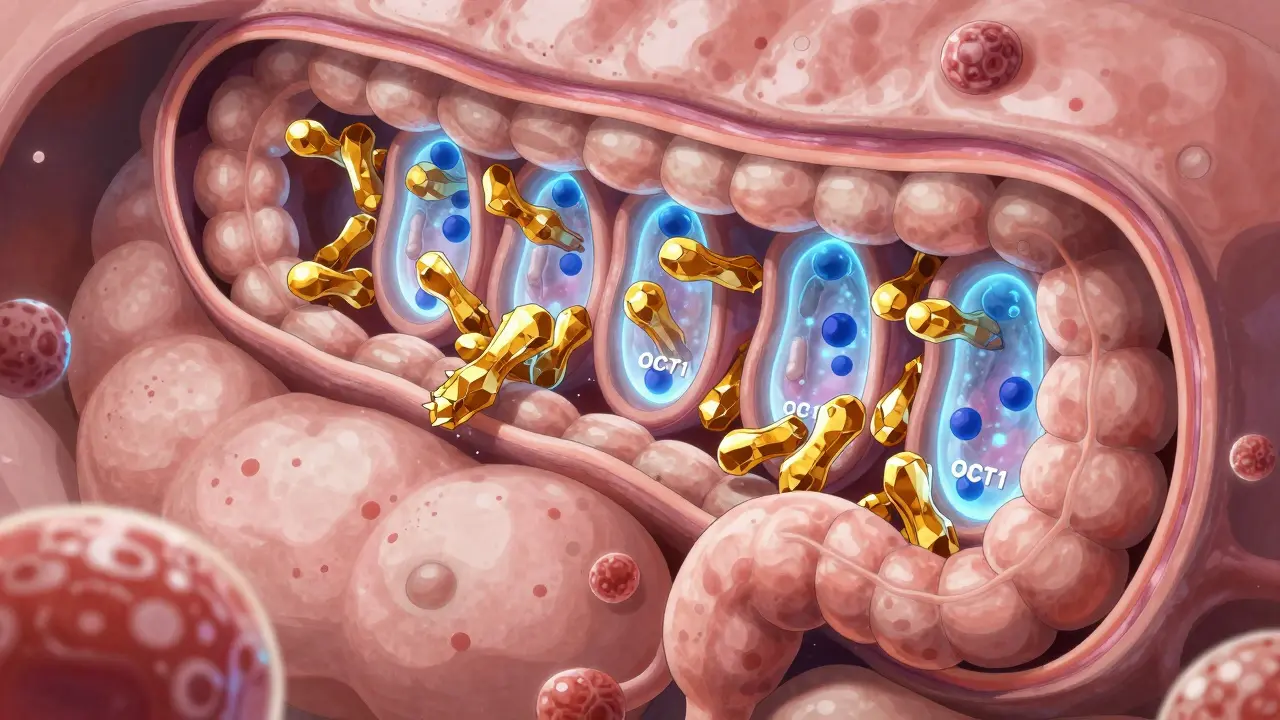
Think of your intestines like a series of gates. For metformin to get into your bloodstream and start lowering your blood sugar, it needs to pass through specific "gates" called OCT1 is the organic cation transporter 1, a protein that facilitates the movement of metformin across cell membranes in the gut. Goldenseal essentially crowds these gates, blocking metformin from entering. This means less of the drug reaches your system, which could leave your blood sugar higher than your doctor intended.
Does Your Dose Matter?
Interestingly, this interaction isn't the same for everyone. It depends heavily on how much metformin you take. Based on a clinical study published in 2025, the "blocking" effect of goldenseal is much stronger at lower doses. If you're on a low dose, you might see a significant drop in how much medication actually hits your system; if you're on a very high dose, the effect almost disappears.
| Metformin Daily Dose | Reduction in Max Concentration (Cmax) | Reduction in Total Exposure (AUC) |
|---|---|---|
| Low (500-750 mg) | ~25% Decrease | ~20% Decrease |
| Moderate (1000-1500 mg) | ~14% Decrease | ~14% Decrease |
| High (2000-2550 mg) | No significant change (0%) | No significant change (0%) |
Why the difference? It comes down to saturation. At high doses, there is so much metformin trying to get through the gut wall that it essentially pushes past the interference caused by the goldenseal. But for those on a starting dose or a maintenance low dose, the risk of reduced medication efficacy is very real.
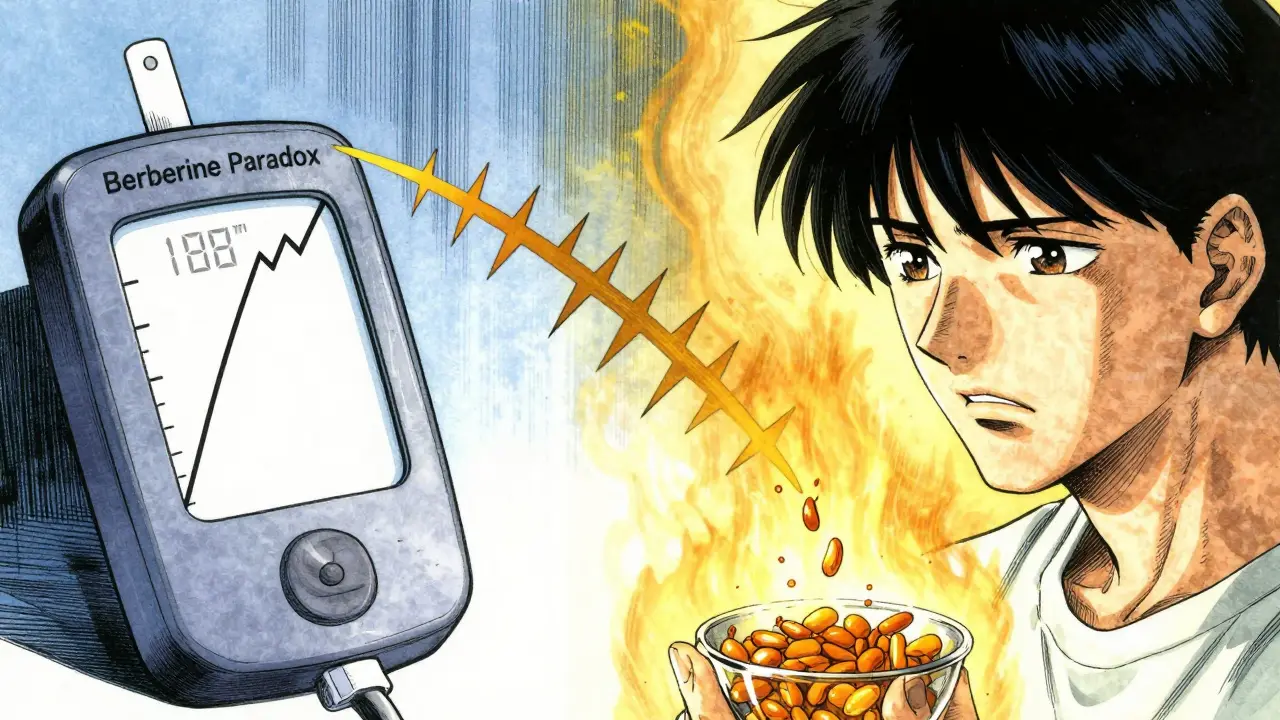
The Berberine Paradox: Lowering Sugar While Blocking Meds
Here is where it gets confusing. Goldenseal contains a compound called Berberine is an alkaloid found in goldenseal and other plants known for its ability to lower fasting glucose and improve insulin sensitivity. On its own, berberine is actually quite good at lowering blood sugar. In fact, some studies show it can reduce HbA1c levels.
This creates a "dual-risk" scenario. On one hand, goldenseal blocks your metformin, which could cause your blood sugar to spike. On the other hand, the berberine in the goldenseal might lower your blood sugar independently. In some clinical trials, patients' HbA1c actually dropped from 6.8% to 6.5% even while their metformin levels were lower. You might think, "Great, it's doing the work for me," but this is dangerous because it's unpredictable. You aren't in control of your dosage, and you're relying on a supplement that varies in strength from bottle to bottle.
What This Means for Your Daily Routine
If you're managing type 2 diabetes, the most important thing is stability. Unpredictable swings in blood glucose can lead to long-term complications. The MSD Manual warns that this interaction can hinder glucose control, and because the effects are dose-dependent, you can't simply guess if you're safe.
If you've noticed that your blood sugar readings are suddenly climbing despite taking your medication exactly as prescribed, take a look at your supplement cabinet. Are you taking goldenseal for a cold or as a general wellness tonic? This could be the hidden culprit. Most people don't realize that herbal products can act like drugs in the body, changing how other medications are processed.
Practical Tips for Managing Your Supplements
You don't have to abandon natural health, but you do need a strategy to stay safe. Start by keeping a full list of every herb, vitamin, and mineral you take. When you visit your doctor, don't just say "I take some vitamins"-be specific. Mention goldenseal by name.
- Time your doses: While research into the perfect time gap is ongoing, separating supplements from medications can sometimes help, though it may not fully stop the OCT1 transporter blockage.
- Monitor closely: If you start a new herbal supplement, check your glucose levels more frequently for the first two weeks to spot any trends.
- Look for alternatives: If you want the glucose-lowering benefits of berberine without the specific complex interactions of the whole goldenseal plant, ask your pharmacist about standardized berberine extracts.
- Be wary of "natural" labels: Just because something comes from a root doesn't mean it's inert. Goldenseal is powerful enough to inhibit CYP3A enzymes by about 40%, similar to how grapefruit juice affects certain statins.
The Big Picture: Why Vigilance Matters
With millions of people using metformin, this isn't just a niche concern. The American Diabetes Association emphasizes the need for a routine assessment of all supplements. Because goldenseal is among the top 20 most common botanical supplements in the US, the chance of an accidental interaction is higher than many doctors realize.
The goal of diabetes management is to keep your numbers in a tight, predictable range. Adding a variable like goldenseal introduces chaos into that equation. Whether it's through blocking absorption in the gut or adding its own hypoglycemic effect, it changes the chemistry of your treatment plan without your knowledge.
Will goldenseal make my metformin stop working completely?
It likely won't stop it completely, but it can significantly reduce how much reaches your bloodstream. For people on lower doses (500-750mg), it can reduce the maximum concentration of the drug in the body by about 25%. This can lead to poorer blood sugar control over time.
Does goldenseal cause low blood sugar (hypoglycemia)?
Yes, it can. Because goldenseal contains berberine, which has its own glucose-lowering properties, it can potentially add to the effect of your diabetes meds. This creates a confusing situation where the herb blocks the drug but simultaneously lowers blood sugar on its own.
Is this interaction dangerous for everyone on metformin?
It is most concerning for those on low to moderate doses. Research shows that people taking high doses (over 2000mg) of metformin don't see a significant change in drug levels when taking goldenseal, likely because the transport system in the gut is already saturated.
How long does it take for goldenseal to start affecting metformin?
Studies indicate that the interaction becomes statistically significant after about 6 days of goldenseal administration. It isn't always an instant reaction, which is why some people might not notice the effect immediately.
Should I stop taking goldenseal immediately?
You should consult your healthcare provider before making changes to your supplement or medication routine. Sudden changes in your supplement intake can shift your blood glucose levels, and your doctor may need to adjust your metformin dose accordingly.


Comments (9)
prince king
It is truly fascinating how the balance of nature interacts with our modern chemistry 🌿. The idea of saturation in the gut is such a poetic way to look at biological limits! ✨
Peter Minto
Who cares about some weird plant anyway?? Just take your meds and stop messin with stuff that aint proven in real americans hospitals!! total waste of time!
lalit adesara
Western medicine is too rigid. Nature's wisdom is often ignored by those seeking quick fixes.
Justin Crice
The mechanism involving the OCT1 organic cation transporter is a critical pharmacokinetic variable here. It's essentially a competitive inhibition scenario where the botanical alkaloids possess a higher affinity for the transporter protein, thereby reducing the systemic bioavailability of the biguanide compound. One must consider the implications of this on the overall glycemic index stability given the erratic concentrations of berberine in non-standardized extracts.
Jarrett Jensen
The presentation of this data is pedestrian at best. One would assume a basic understanding of pharmacological antagonism is common knowledge, yet we are forced to endure these simplified analogies about "gates." It is quite tiresome to witness the general public's utter lack of scientific literacy regarding the basic principles of metabolic interference. Truly an embarrassing state of affairs for the educated class.
Raymond Lipanog
While the terminology may be simplified, it serves a vital purpose in bridging the gap between complex biochemical processes and patient safety. It is perhaps more prudent to prioritize clarity and accessibility over academic rigor when the stakes involve human health and the prevention of unpredictable glucose fluctuations.
Jenna Riordan
I wonder if your doctor knows you're taking this stuff. Probably not since most people hide their supplement cabinets during checkups anyway.
Angela Cook
We need to stick to the guidelines that our own top US medical boards provide! Why are we even talking about these herbs when we have the best medicine in the world right here!
Michael Yoste
I totally get why you'd want to feel more "natural," but honestly, you're just playing a dangerous game with your blood sugar. It's a bit sad that people trust a bottle of root powder more than a licensed physician, but I'm here to help you see the light if you're ready to actually get healthy!