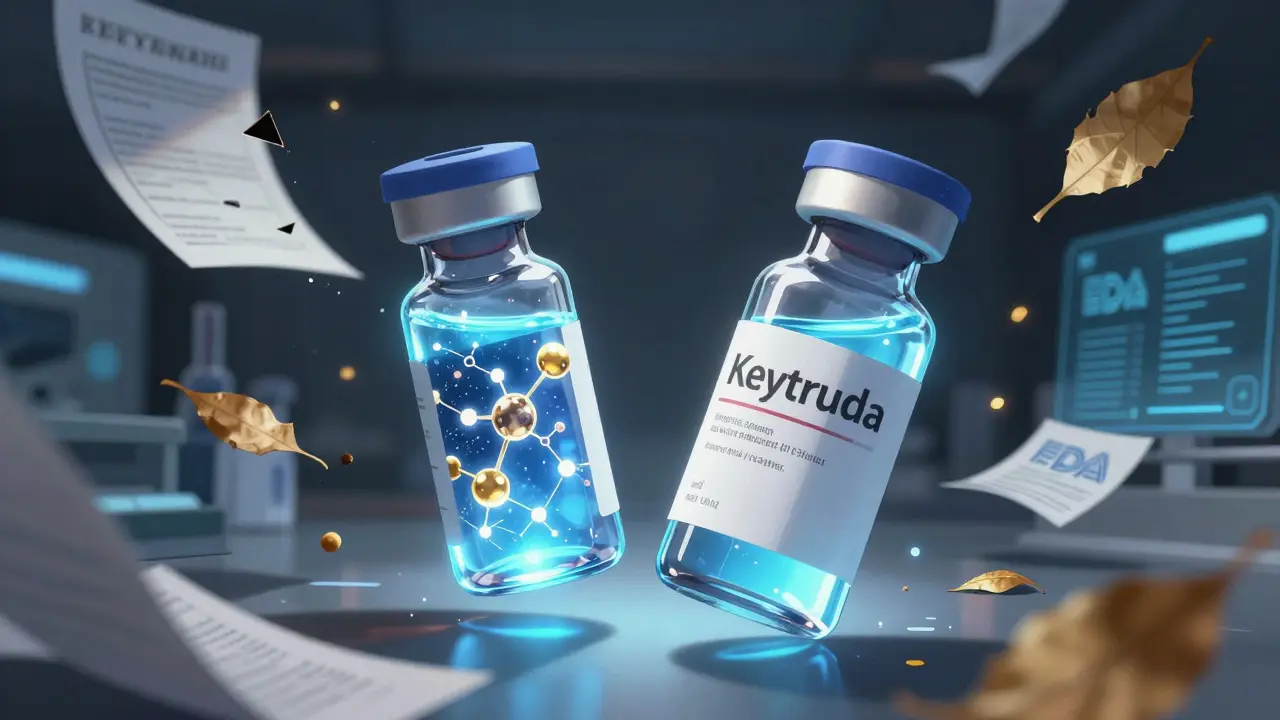
Between 2025 and 2030, over $200 billion in annual global sales for top biologic drugs are set to lose patent protection. This isn’t just a financial event-it’s a turning point for patient access, healthcare costs, and how medicines are made. Biosimilars are stepping in to fill this gap, offering near-identical versions of complex drugs like Keytruda, Humira, and Eylea at significantly lower prices. But unlike generic pills, biosimilars aren’t simple copies. They’re intricate biological products made from living cells, requiring years of development, billions in investment, and precise regulatory approval just to prove they work like the original.
What Makes Biosimilars Different From Generics?
When a small-molecule drug like Lipitor goes off-patent, manufacturers can easily copy its chemical structure and make a generic version. Biosimilars are different. They’re made from living organisms-cells engineered to produce proteins like antibodies. Even tiny changes in how those cells are grown, fed, or processed can alter the final product. That’s why a biosimilar isn’t called a “generic.” It’s called a biosimilar because it must be shown to be highly similar to the original, with no meaningful difference in safety or effectiveness.
The FDA requires biosimilar makers to run hundreds of lab tests comparing their product to the reference drug. They must prove the molecule has the same shape, structure, and behavior. Then they test it in clinical trials-often with just a few hundred patients-to confirm it works the same way in the body. This process takes 7 to 10 years and costs between $150 million and $250 million per product. That’s far more than the $1-$5 million it typically takes to make a generic pill.
Which Biologics Are Losing Patents Soon?
The biggest names coming off patent protection are the blockbuster drugs that dominate oncology and autoimmune disease treatment. Here’s what’s coming next:
- Eylea (aflibercept) - Lost exclusivity in 2025. Already, three biosimilars (Yesafili, Opuviz, Enzeevu) are on the market. U.S. sales were $5.9 billion in 2023.
- Enbrel (etanercept) - Patent expired in 2023. Sandoz’s biosimilar launched at a 35% discount and quickly gained traction.
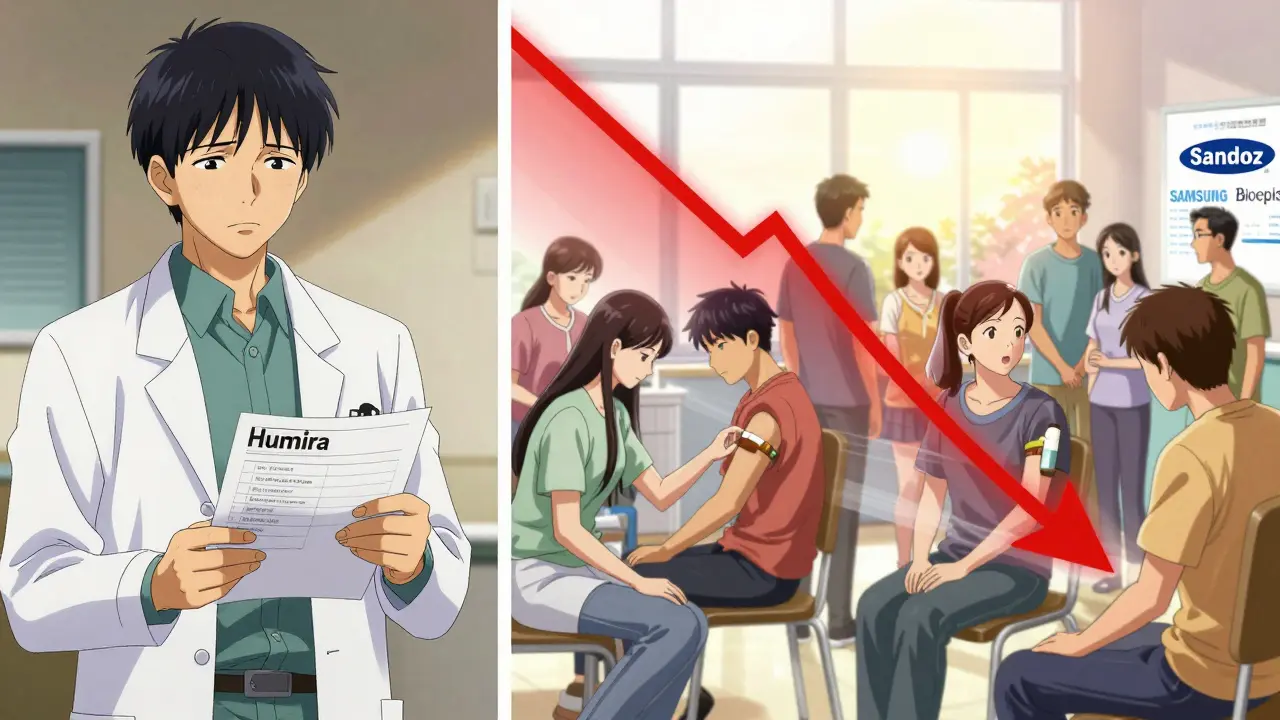
- Humira (adalimumab) - After years of legal delays, 12 biosimilars entered the U.S. market in 2023. Within 18 months, they captured 80% of new prescriptions.
- Keytruda (pembrolizumab) - The world’s top-selling cancer drug, with $25.5 billion in 2024 sales. Its main patent expires in 2028, but Merck has filed 237 related patents to delay competition. Fourteen companies are already in late-stage trials.
- Cosentyx (secukinumab) - Patent expires in 2029 in the U.S., but Samsung Bioepis’ biosimilar is already approved in Europe and expected to launch there in 2026.
These aren’t minor drugs. They treat millions of people with cancer, rheumatoid arthritis, psoriasis, and macular degeneration. When biosimilars enter, prices drop-but not always right away.
Why Do Biosimilars Take So Long to Reach Patients?
Even after the FDA approves a biosimilar, it can take 12 to 24 months before it’s widely used. Why? It’s not just about approval-it’s about money, rules, and inertia.
Medicare Part B pays providers based on the drug’s average sales price (ASP). That means if a doctor gives a $10,000 reference drug, they get paid 6% of that-$600. If they give a $7,000 biosimilar, they get paid only $420. So financially, there’s no incentive for providers to switch. Some hospitals have had to create internal policies to force the switch.
Insurance companies play a big role too. Some plans still list the original drug as the preferred option. Others require patients to try the brand-name drug first before covering the biosimilar-a process called “step therapy.” And many patients don’t even know they’re being switched. Pharmacists often substitute biosimilars without telling them, unless the drug is labeled “interchangeable.” Only 12 biosimilars in the U.S. have that designation so far.
Electronic health records also lag behind. Hospitals and clinics need months to update their systems to recognize biosimilar names and codes. Kaiser Permanente took nearly a year to fully integrate biosimilar substitution for filgrastim products.
Who’s Winning the Biosimilar Race?
The biosimilar market is being led by a handful of specialized companies:
- Sandoz (Novartis) - The market leader with 28% U.S. share after buying Biocon’s biosimilars business in 2024. They’ve launched biosimilars for Enbrel, Neupogen, and others.
- Samsung Bioepis - A South Korean company with a $450 million manufacturing plant. They’ve partnered with Biogen and Merck to bring Eylea and Cosentyx biosimilars to market.
- Celltrion - A Korean firm with biosimilars approved in over 80 countries. Their Remsima (infliximab) is one of the most widely used.
- Alvotech - An Icelandic startup that signed a $1.2 billion deal with Regeneron in early 2025 to co-develop Eylea biosimilars.
- Coherus BioSciences - Focused on oncology biosimilars, including Keytruda, and already in Phase 3 trials.
Big pharma isn’t sitting still. Merck, Pfizer, and Bristol Myers Squibb are creating their own “authorized generics”-versions of their drugs made by a partner company, sold under a different brand but at the same price. It’s a way to keep revenue flowing even after patents expire.
Cost Savings Are Real-But Not Guaranteed
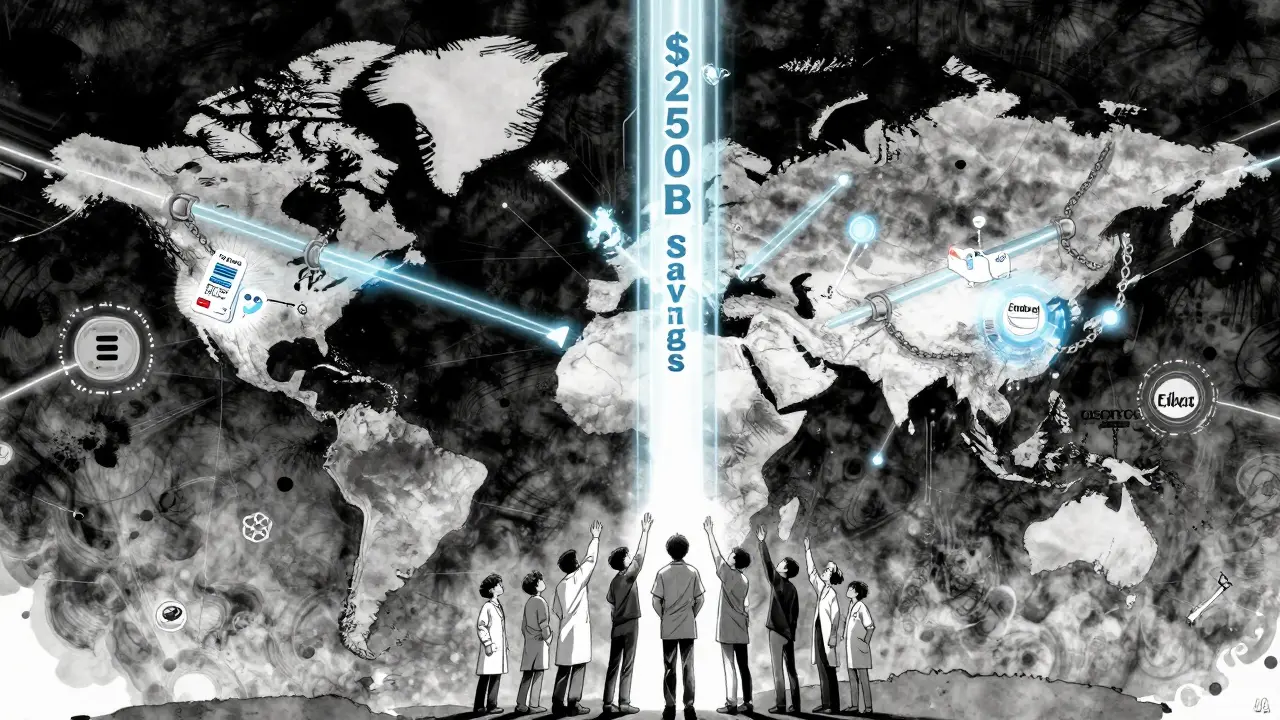
The RAND Corporation estimates biosimilars could save the U.S. healthcare system $250 billion over the next decade. The Congressional Budget Office projects Medicare will save $51 billion from 2026 to 2035. Those numbers are real-but they depend on how fast biosimilars are adopted.
Europe shows what’s possible. In countries like Germany and Sweden, biosimilar use for drugs like Humira and Enbrel exceeds 70%. That’s because governments set strict price caps and require substitution. In the U.S., adoption is stuck at 30-40% for most products.
Why the gap? U.S. drug pricing is tangled in rebates, discounts, and pharmacy benefit manager (PBM) deals. PBMs often get a bigger cut from expensive brand-name drugs. That creates a hidden incentive to keep prices high. Some payers are changing this. Cigna now offers $0 copays for biosimilars on its Medicare Advantage plans, while Centene mandates their use for new patients on TNF inhibitors.
Are Biosimilars Safe?
Yes-when used correctly. The FDA requires rigorous testing to prove biosimilars are as safe and effective as the original. In real-world use, millions of patients have received biosimilars without issues.
But there are exceptions. In oncology, where drugs like Keytruda and Opdivo are used in combination with chemotherapy, even small differences in how the immune system reacts can matter. Dr. Richard Pazdur from the FDA’s Oncology Center reported cases where patients switching between rituximab biosimilars and the reference drug had unexpected immune reactions. That’s why some doctors prefer to stick with the original for cancer patients.
For autoimmune diseases like rheumatoid arthritis or Crohn’s disease, the data is much clearer. Dr. Laura Chow at the University of Washington found no difference in outcomes between Humira and its biosimilars in over 500 patients. The Cancer Support Community’s 2024 survey showed 78% of patients were satisfied with cost savings-but 34% were confused about whether they were getting a biosimilar or the original.
What’s Next for Biosimilars?
The FDA is trying to speed things up. In 2025, they released new guidance to make approval easier for complex drugs like antibody-drug conjugates. They also updated the Purple Book-its official database of biosimilars-to require real-time patent updates. This could cut down on the legal delays that held back Humira biosimilars for nearly a decade.
More companies are entering the space. Over 412 biosimilar candidates are currently in development, targeting 87 different reference products. The global market, worth $12.7 billion in 2024, is projected to hit $80 billion by 2030.
But challenges remain. Will payers truly shift incentives to favor biosimilars? Will doctors feel confident enough to prescribe them for cancer? Will patients understand what they’re getting? The answers will shape not just drug prices, but who gets treated-and how quickly.
What Patients and Providers Should Watch For
If you’re a patient:
- Ask if a biosimilar is an option for your treatment.
- Know that switching to a biosimilar is usually safe-but don’t be afraid to ask questions if you notice new side effects.
- Check your insurance plan. Many now have $0 copays for biosimilars.
If you’re a provider:
- Update your EHR system to include biosimilar names and codes.
- Understand your payer’s substitution rules-some require prior authorization.
- For oncology, consider sticking with the reference product for complex cases until more long-term data is available.
The next five years will redefine how we treat chronic and life-threatening diseases. Biosimilars aren’t just cheaper versions of expensive drugs. They’re a chance to make life-saving treatments accessible to more people than ever before.
Are biosimilars the same as generic drugs?
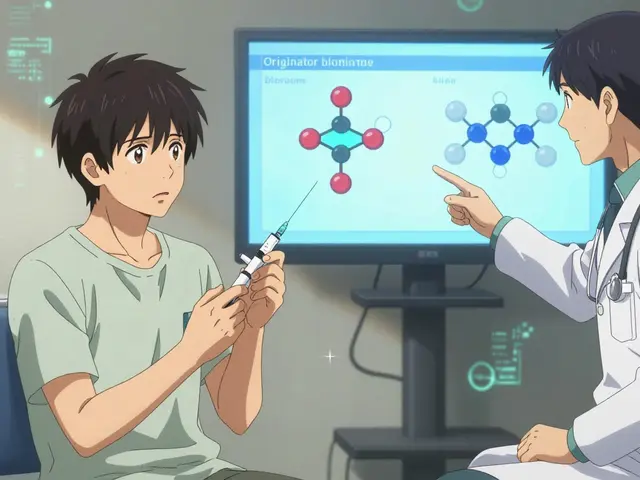
No. Generic drugs are exact copies of small-molecule pills, made from simple chemicals. Biosimilars are complex proteins made from living cells. They’re highly similar to their reference biologic but not identical. Even tiny differences in how they’re manufactured can affect how they work in the body. That’s why biosimilars require much more testing than generics.
When will Keytruda biosimilars be available?
Keytruda’s main patent expires in 2028, so biosimilars are expected to launch that year. Fourteen companies, including Coherus BioSciences and Merck’s own partner, are already in Phase 3 clinical trials. However, Merck holds over 200 additional patents that could delay entry until 2030 or later.
Why are biosimilars cheaper than the original drugs?
Biosimilars cost less because they don’t need to repeat expensive clinical trials proving safety and effectiveness from scratch. Instead, they rely on data from the original drug. Manufacturing is still costly, but competition drives prices down. Biosimilars typically launch at 15-35% lower than the reference product, with some reaching 50% off after multiple competitors enter the market.
Can pharmacists substitute biosimilars without telling me?
Yes-if the biosimilar is designated as “interchangeable” by the FDA. Only 12 biosimilars have that status so far. For non-interchangeable biosimilars, substitution rules vary by state and insurer. Some require the prescriber to allow substitution, others don’t. Always check your prescription label or ask your pharmacist if you’re unsure.
Do biosimilars work as well in cancer treatment?
For most cancers, yes. Clinical trials and real-world data show that biosimilars for drugs like rituximab and trastuzumab work just as well as the originals. But in complex cases-like combination therapies for lung or colorectal cancer-some oncologists prefer the original drug until more long-term data is available. The FDA and major cancer societies continue to monitor outcomes closely.
Why is the U.S. slower to adopt biosimilars than Europe?
Europe has simpler pricing rules and government-led substitution policies. In the U.S., drug pricing is controlled by private payers, pharmacy benefit managers, and rebate deals that often reward higher-priced drugs. Medicare pays providers based on the drug’s list price, so there’s little financial incentive to switch. Also, legal battles over patents have delayed many biosimilars for years.
What’s the difference between a biosimilar and an interchangeable product?
An interchangeable biosimilar meets a higher standard: it can be substituted for the reference drug without the prescriber’s involvement, just like a generic. To qualify, the manufacturer must prove that switching back and forth between the biosimilar and the original won’t increase risk or reduce effectiveness. Only 12 products have this status in the U.S. as of 2025.


Comments (9)
Art Van Gelder
So let me get this straight-we’re talking about biologics that cost more than a luxury car, made from living cells that could theoretically have a soul if we believed in that stuff, and now we’re gonna replace them with cheaper versions that are… *almost* the same? Like swapping a Stradivarius for a violin that sounds good until you play it in a wind tunnel. I’m not mad, I’m just fascinated. The fact that we can engineer proteins with the precision of a Swiss watch but still can’t get a pharmacy to tell you if you’re getting the real thing? That’s the real horror story here.
Kathryn Weymouth
It’s staggering how much of the delay in biosimilar adoption comes down to reimbursement structures, not science. Providers are financially disincentivized to switch, patients are confused, and PBMs profit from high list prices. The system isn’t broken-it was designed this way. We need policy reform that decouples provider payment from drug list price. Otherwise, we’re just rearranging deck chairs on the Titanic.
Julie Chavassieux
…and then there’s the fact that your pharmacist can swap your $10k cancer drug for a $6k version without telling you… and you won’t even know until you check the bottle… or until you start feeling weird… or until your insurance denies the next refill because it’s ‘not the same’…
Herman Rousseau
Big win for patients if this works right! 💪 Biosimilars = more people getting treated, less bankruptcy, less waiting. We’ve got the tech, we’ve got the science, now we just need the will. Kudos to Sandoz, Samsung Bioepis, and Alvotech for pushing this forward. Let’s make sure payers and docs get on board too! 🙌
Johnnie R. Bailey
What’s really interesting is how this mirrors broader patterns in innovation adoption. The biosimilar isn’t the bottleneck-the system is. We’ve built a healthcare economy that rewards complexity and opacity. The real question isn’t whether biosimilars work-it’s whether we’re willing to dismantle the incentives that keep the old system alive. In Europe, they cut through the noise with price caps and mandatory substitution. Here? We’ve got 237 patents, PBMs, EHR delays, and doctors who don’t want to explain another switch to a scared patient. It’s not about science. It’s about power.
And yet, when you look at the data-78% patient satisfaction, no difference in autoimmune outcomes-it’s hard not to feel like we’re holding back progress out of fear, not fact.
The irony? The same companies that spent billions patenting Keytruda are now quietly building their own ‘authorized generics.’ So they’re not fighting biosimilars-they’re just trying to be the biosimilar. That’s not innovation. That’s capitalism.
Jeremy Hendriks
Let’s be real nobody cares about the science anymore its all about who owns the patent and who can afford to pay lawyers for 10 years to delay the inevitable
the real biosimilar is the one that wins the lawsuit not the one that works better
and dont get me started on how the FDA lets companies slap ‘interchangeable’ on something after 3 clinical trials and call it a day
we’re not saving money we’re just moving the profit around
Aliyu Sani
yo so biosimilars is like the african version of pharma-same medicine but cheaper because we dont need all the fancy labs and marketing hype
us got 14 companies ready for keytruda but still waiting on merck’s legal circus
in nigeria we just use generics for everything and live to tell the tale
why we gotta make it so complicated
Nader Bsyouni
so you're telling me a protein made in a bioreactor is somehow less real than one made in a lab that cost 10 billion to develop
the FDA is just a marketing department for big pharma
if it works why does it matter if it was grown in a petri dish or a billionaire's dreams
we're not saving lives we're saving spreadsheets
Vikrant Sura
lol biosimilars
cost savings? sure
but who's gonna pay for the 1000 page regulatory docs
also keytruda sales are still going up
so maybe the market doesn't care