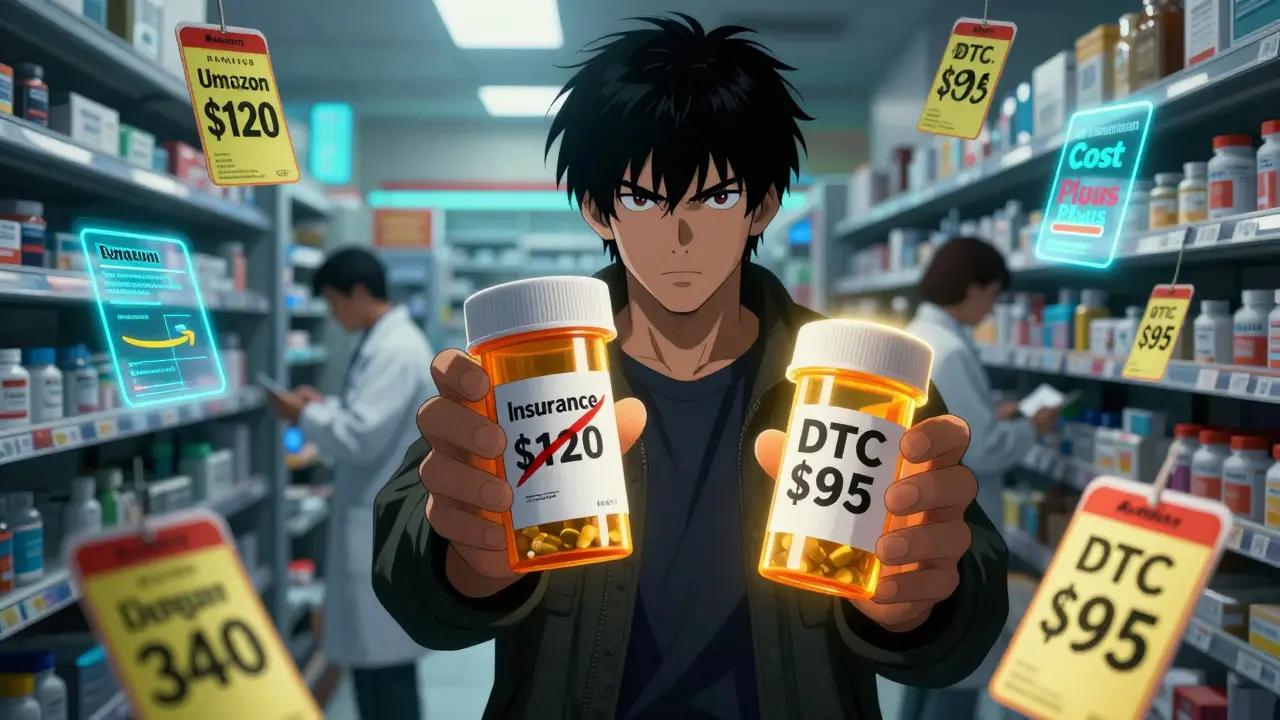
When you need a prescription filled, you probably don’t think about how much the pharmacy is paying for the drug - you just want it cheap and fast. But if you’re paying out of pocket, or your insurance has a high deductible, the difference between using your insurance and buying directly from a direct-to-consumer generic pharmacy can be hundreds of dollars. And it’s not always clear which option saves you more.
Over the last few years, companies like Mark Cuban Cost Plus Drug Company, Amazon Pharmacy, Costco, Walmart, and Health Warehouse have popped up as alternatives to traditional pharmacies. They don’t use insurance. They don’t deal with pharmacy benefit managers (PBMs). Instead, they sell generic drugs at cost plus a small markup - sometimes as low as 15%. That sounds great, right? But here’s the catch: sometimes your insurance still beats them.
How DTC Pharmacies Work (And Why They’re Different)
Traditional pharmacies work through PBMs - middlemen between drug makers, insurers, and pharmacies. PBMs negotiate rebates and formularies, but those deals rarely translate to lower prices at the counter for you. A drug might cost $500 to make, but after rebates, markups, and fees, you pay $120 out of pocket. That’s not transparency. That’s a maze.
DTC pharmacies cut out the middlemen. They buy drugs directly from manufacturers, often in bulk, and sell them at a fixed price. Mark Cuban Cost Plus Drug Company, for example, adds only a 15% markup to the cost they pay. Amazon Pharmacy and Costco do something similar. No insurance claims. No formulary restrictions. You just pay cash, and you know exactly what you’re paying.
For people without insurance, or those with high-deductible plans, this is a game-changer. But for people with good insurance? It’s not always better.
Savings for Expensive Generics: Big Wins
Not all generic drugs are created equal. Some - like those used for rare conditions, cancer support, or neurological disorders - are expensive even when generic. A 30-day supply of certain drugs can cost over $500 at a regular pharmacy. But at DTC pharmacies, the same drug might drop to $100 or less.
A 2024 study in the Journal of General Internal Medicine looked at the 50 most expensive generic drugs covered under Medicare Part D. The results? For these high-cost drugs, DTC pharmacies saved patients a median of $231 per prescription. That’s a 76% drop in price compared to retail. Amazon Pharmacy had the lowest price on 47% of these drugs. Mark Cuban Cost Plus Drug Company came in second with 26%. Costco and Health Warehouse were far behind.
If you’re on a drug like ezetimibe (for cholesterol), lenalidomide (for multiple myeloma), or pioglitazone (for diabetes), checking a DTC pharmacy could save you hundreds each month. For someone paying out of pocket, that’s life-changing money.
Savings for Common Generics: Not So Much
Now let’s look at the everyday drugs - the ones most people take: atorvastatin, metformin, lisinopril, levothyroxine. These are cheap even at retail pharmacies. In fact, many are priced at $10 or less with insurance.
The same 2024 study found that for these common generics, DTC pharmacies only saved an average of $19 per prescription. That’s not nothing - but it’s not a windfall either. Costco had the lowest price on 31% of these drugs. Amazon was second at 27%. Walmart was third at 20%. Mark Cuban Cost Plus Drug Company? Only 10% of the time.
Here’s the twist: if your insurance plan has a $10 copay for generics, you’re already getting the best deal. Paying cash at a DTC pharmacy might save you a few dollars - or cost you more.
The Big Problem: Missing Drugs
Here’s where DTC pharmacies fall apart: they don’t carry everything. The study found that one in five of the most expensive generics simply weren’t available on any major DTC platform. That means if you’re on a drug like glatiramer acetate (for MS) or osimertinib (for lung cancer), you can’t use these services at all.
CVS Health’s 2023 study looked at 79 neurological generics. Mark Cuban Cost Plus Drug Company carried only 33 of them. And of those 33, only two were cheaper than what insured patients paid out of pocket. For patients with neurological conditions, DTC pharmacies didn’t help - they made things worse.
Why? Because drug manufacturers don’t always sell to these new players. They have long-term contracts with PBMs. They don’t want to undercut their own distribution channels. So even if DTC pharmacies are cheaper, they can’t get the drugs they need.
Who Actually Saves the Most?
Let’s break it down by person:
- If you’re uninsured: DTC pharmacies are your best friend. For expensive drugs, you could save 70-90%. For common ones, you’ll still pay less than retail.
- If you have high-deductible insurance: Check both your insurance price and the DTC price. Sometimes the DTC price is lower. Sometimes your insurance gives you a better deal after you hit your deductible.
- If you have good insurance with low copays: Stick with your pharmacy. Paying cash at a DTC pharmacy might save you $5 - or cost you $15 more.
- If you take multiple medications: This gets complicated. You might save on one drug at Amazon, another at Costco, and a third at Walmart. But tracking all of them? That’s a full-time job.
There’s no single winner. You have to shop around - for each drug, every time.
What About Costco, Walmart, and CVS?
You might be thinking: “But I can get $4 generics at Walmart.” And you’re right. Costco and Walmart have been offering cash prices for years - often cheaper than DTC pharmacies. In fact, the USC Schaeffer Center found that 90% of commonly prescribed generics in Medicare Part D cost less than $20 at Costco.
So why do DTC pharmacies even exist? Because they’re more transparent. You know exactly what you’re paying. No hidden fees. No surprise charges. And for drugs that aren’t on Walmart’s $4 list - like expensive neurological or cancer drugs - DTC pharmacies sometimes have the only affordable option.
The Real Cost: Time and Effort
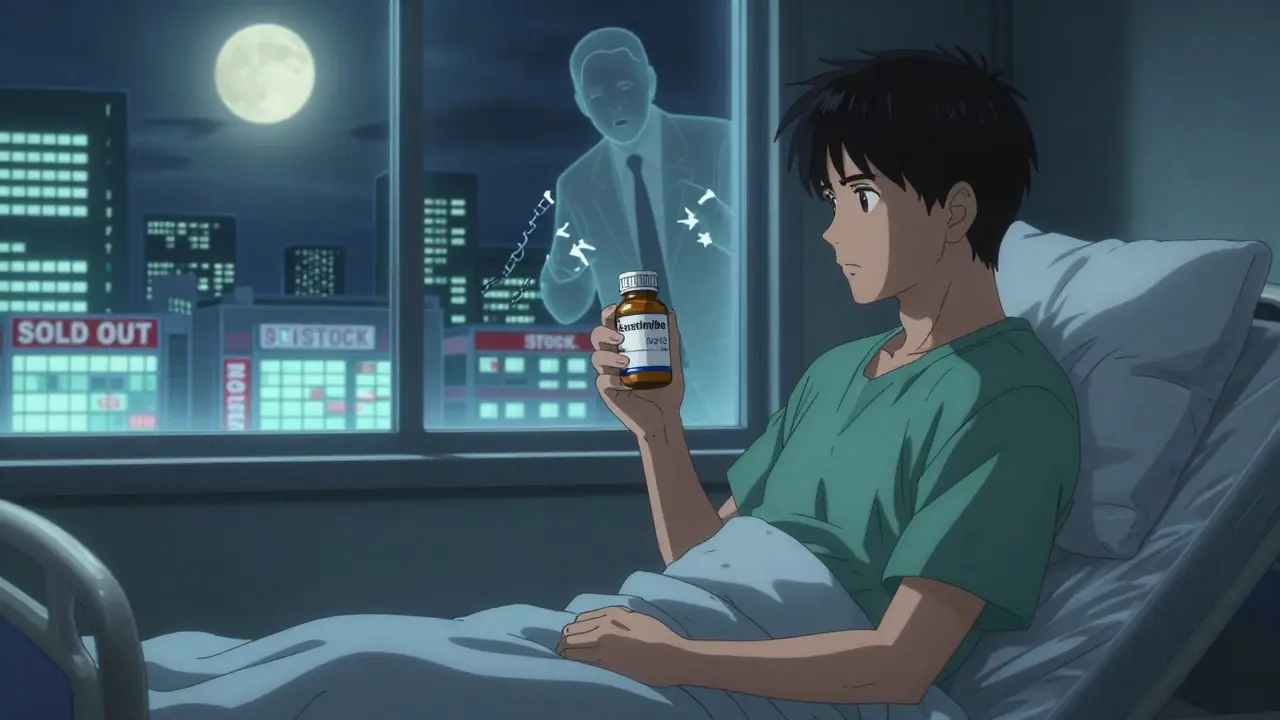
Here’s the thing no one talks about: shopping for drugs online takes time. You can’t just walk in and get your script. You have to:
- Know the exact drug name and dosage
- Check 4-5 different websites
- Compare prices per pill (not just per bottle)
- Check shipping times and refill policies
- Pay with a credit card (some don’t take HSA/FSA)
And you have to do this every time your prescription runs out - or if your doctor changes the dose. For someone managing three chronic conditions, that’s 30+ price checks a year. That’s not saving money. That’s a second job.
There’s no app that tells you the cheapest price across all pharmacies - DTC or retail. The study authors said it plainly: “There are no simple, accurate, and comprehensive tools to help patients identify the lowest-cost generic drug across all pharmacy channels.”
Should You Switch?
Here’s how to decide:
- Do you take one or two expensive generics? Check Amazon, Mark Cuban Cost Plus, and Costco. You might save $200+ per month.
- Do you take 5+ common generics? Stick with your insurance. Check your pharmacy’s cash price first. If it’s under $15, you’re fine.
- Do you have insurance with a $10 copay? Don’t bother. You’re already getting the best deal.
- Are you uninsured or underinsured? DTC pharmacies are your lifeline. Start with Amazon and Costco.
And always check your insurance plan’s mail-order option. Sometimes your insurer will ship you a 90-day supply for $20 - even cheaper than DTC.
The Bottom Line
Direct-to-consumer pharmacies aren’t magic. They’re not going to replace insurance. But for certain people - especially those without coverage or those on expensive drugs - they’re the only way to afford treatment.
The real winners? People who take the time to compare. The losers? People who assume DTC is always cheaper - or that insurance always wins. The truth is, it depends on your drug, your plan, and your patience.
If you’re paying cash for prescriptions, don’t just accept the first price you see. Spend 10 minutes. Check three sites. You might save hundreds - or realize you’re already getting the best deal.
Are DTC pharmacies cheaper than insurance?
It depends. For expensive generics, DTC pharmacies often save you $200 or more per prescription. For common generics, insurance with a $10 copay is usually cheaper. Always compare your insurance price with DTC prices before deciding.
Which DTC pharmacy is cheapest?
For expensive generics, Amazon Pharmacy is cheapest 47% of the time. Mark Cuban Cost Plus Drug Company is second at 26%. For common generics, Costco wins 31% of the time, followed by Amazon at 27%. There’s no single winner - you need to check each drug individually.
Can I use DTC pharmacies if I have insurance?
Yes. You can pay cash at a DTC pharmacy even if you have insurance. But your insurance won’t cover it, and the cost won’t count toward your deductible. Only do this if the DTC price is lower than your insurance copay.
Why don’t DTC pharmacies carry all drugs?
Drug manufacturers often have exclusive contracts with PBMs and don’t sell to DTC pharmacies. This means many expensive or specialty drugs - especially for neurological, cancer, or rare conditions - aren’t available. One in five of the most costly generics can’t be found anywhere on DTC sites.
Is it worth the effort to shop around?
If you take one or two expensive medications, yes. Saving $200/month is worth 10 minutes of research. If you take five or more common drugs, the time investment usually isn’t worth it - especially if your insurance already gives you low copays.


Comments (11)
Pat Mun
Man, I wish I’d known about this sooner. I’ve been paying $300 a month for my dad’s medication through insurance, and last month I finally checked Amazon Pharmacy-$87. Just like that. No hassle, no forms, no waiting for prior auth.
It’s wild how the system is designed to keep you confused. PBMs make it look like insurance is saving you, but really? They’re just moving money around while you bleed cash.
I started comparing every script now. Even my cheap ones. Turns out Costco’s price on levothyroxine is half what my local pharmacy charges. And I don’t even have a membership.
It’s not magic. It’s just transparency. And yeah, it takes time. But when you’re saving hundreds, it’s worth it. I set a reminder every 30 days to check prices. It’s like budgeting, but for your health.
Also, don’t sleep on mail-order from your insurer. My plan lets me get a 90-day supply for $15. That’s cheaper than DTC for some stuff. So yeah, compare. Always compare.
Sophia Nelson
This whole post is just corporate propaganda wrapped in a spreadsheet. Who cares about ‘transparency’ when you’re still paying out of pocket? DTC pharmacies are just another way for billionaires to profit off sick people while pretending to be heroes.
steve sunio
lol u think this is new? i been buyin my meds off amazon since 2021. cost plus? pfft. walmart been doin $4 generics since like 2006. why u all actin like this is a revelation? 🤡
Ernie Simsek
Y’all are overcomplicating this 😅
Here’s the cheat code: if you’re on anything over $100/month? Go straight to Amazon or Mark Cuban. Done.
If it’s metformin or lisinopril? Check your insurance copay first. If it’s under $15? Walk away.
I use both. My cancer med? DTC. My blood pressure? Insurance. My thyroid? Costco. It’s not hard. Just open 3 tabs and compare. Takes 5 mins.
Also-yes, they don’t carry everything. But if your drug’s not there? That’s not their fault. It’s the manufacturers’ fault for being greedy.
And PS-use HSA cards. Some DTC sites take them now. Game changer. 💸
Reggie McIntyre
I love how this whole thing feels like a rebellion against the system. Like, we’re not supposed to know how this works, right? But now? We’re hacking it. And honestly? That’s beautiful.
It’s not just about money-it’s about dignity. No more begging for a discount. No more being told ‘your plan doesn’t cover it.’ Just… you pay. You get it. Simple.
And yeah, the time investment sucks. But imagine if we had one app that just aggregated all prices-DTC, retail, mail-order. Like a GasBuddy for prescriptions.
I’d donate $100 to whoever built that. I’d use it every damn month. Imagine not having to Google ‘cost of ezetimibe at walmart vs amazon vs costco’ every 30 days.
We’re so close to fixing this. We just need a little tech, a little transparency, and zero patience for the middlemen.
Gloria Ricky
Just wanted to say thank you for this post. I’m on 4 meds, two of which are crazy expensive. I was about to quit taking one because I couldn’t afford it.
After reading this, I checked Mark Cuban Cost Plus. It was $110 instead of $520. I cried. Not because I was happy, but because I was mad I didn’t know this sooner.
I’m still nervous about shipping times and refills, but I’m trying it. If anyone has tips on how to order without stressing? Lmk. I’m a nervous newbie.
Also-yes, I’m using my HSA card now. It’s weird to pay cash and then get reimbursed. But it works. 🙏
Stacie Willhite
I’ve been doing this for two years now. I take three expensive meds. I used to have to choose between food and medicine. Now? I eat. I sleep. I don’t panic.
It’s not perfect. Sometimes the package is late. Sometimes the website crashes. But it’s better than being scared.
For anyone else out there struggling-don’t give up. You’re not lazy. You’re not dumb. The system is rigged. But you’re smarter than it thinks you are.
Jason Pascoe
Interesting read. I’m from Australia, and here we have the PBS-Pharmaceutical Benefits Scheme. It’s not perfect, but it caps out-of-pocket costs at around $30 per script. I can’t imagine having to compare 5 sites every month.
Still, the principle is the same: transparency matters. Even if the system’s broken, knowing the real cost helps you push back.
It’s funny-here, we don’t have ‘DTC pharmacies’ because we don’t need them. But I get why they’re necessary in the US. It’s not about choice. It’s about survival.
Sonja Stoces
OMG you’re all so naive. DTC pharmacies? Please. They’re just a front for Amazon and Mark Cuban to get your data and then sell it to Big Pharma. You think they’re doing this out of the goodness of their hearts? LOL. They’re setting up monopolies. Wait till they control 80% of the market and raise prices. Then you’ll be stuck.
Also-how do you know they’re not getting kickbacks from manufacturers? You think they’re not playing the same game? 🤔
Annie Joyce
For anyone wondering how to start: I made a spreadsheet. Columns: Drug Name, Dose, Insurance Price, Amazon, Mark Cuban, Costco, Walmart, Shipping Time, HSA Accepted? (Y/N).
It took me 3 hours. Now I update it every month. It’s saved me $1,200 this year.
Also-call your pharmacy. Sometimes they’ll match DTC prices if you ask. I did. They did. No one told me that. Just… ask.
You’d be shocked how often they say yes. It’s wild.
Reggie McIntyre
That spreadsheet idea? Genius. I’m stealing it. Also-what if we crowdsourced this? A shared Google Sheet where people drop in prices for their drugs? Like a living database?
I’d use it. I’d share mine. I’d even pay for a domain name. This is the kind of tool we need. Not another ad. Not another corporate blog. Just… real data.
Who’s with me?