Feeling constantly drained despite getting enough sleep? Struggling to maintain muscle mass or noticing a drop in your sex drive that won't go away? You are not alone. Millions of men experience these exact issues, often blaming aging or stress before realizing the root cause might be male hypogonadism, also known as low testosterone. This condition occurs when the testes do not produce enough testosterone, a hormone critical for male sexual development, muscle strength, and overall well-being. While it is a common medical issue, it is frequently misunderstood, leading many men to suffer in silence or pursue ineffective remedies.
Understanding hypogonadism goes beyond just knowing you have "low T." It involves recognizing specific symptoms, distinguishing between different types of hormonal failure, and navigating the complex landscape of diagnosis and treatment. With new therapies emerging and guidelines evolving, making informed decisions about your health requires clarity on what actually works and what poses risks. Here is everything you need to know about identifying, diagnosing, and treating male hypogonadism effectively.
Understanding Male Hypogonadism: Types and Causes
To treat hypogonadism correctly, doctors must first determine why testosterone levels are low. The condition is categorized into two main types based on where the problem originates in the body's hormonal feedback loop.
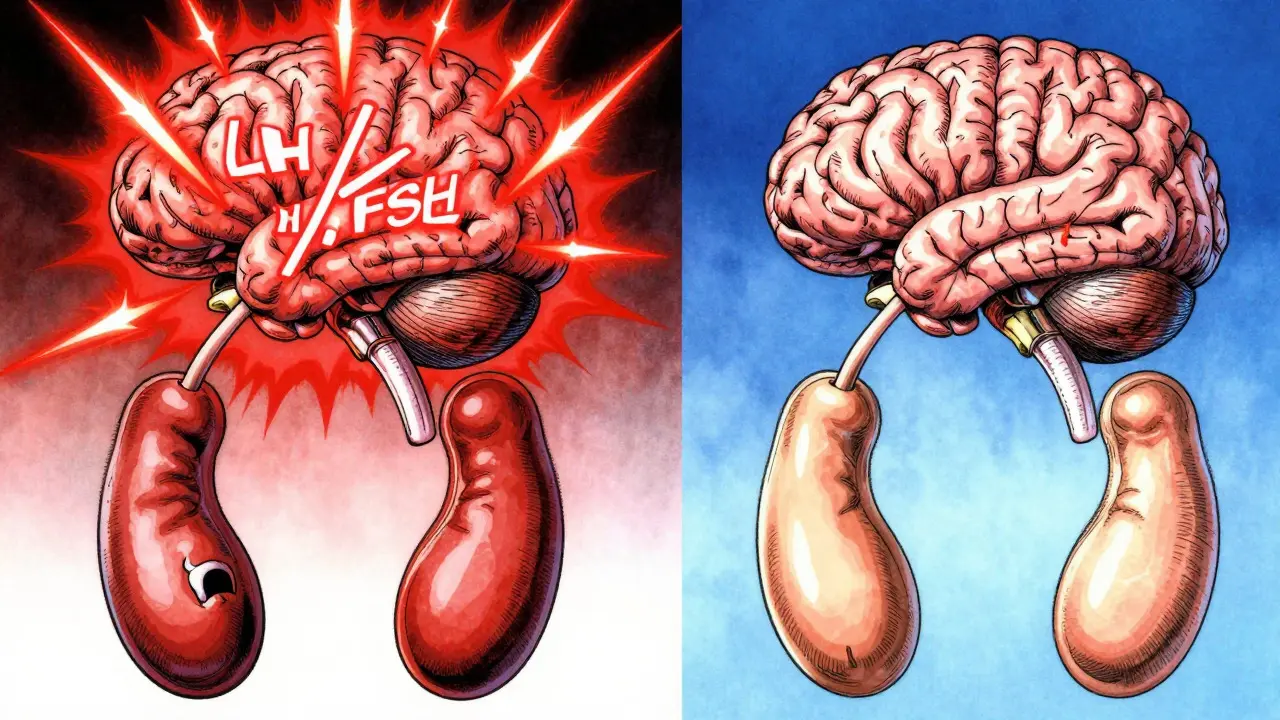
Primary Hypogonadism happens when the testes themselves fail to produce adequate testosterone. In this scenario, the brain (specifically the pituitary gland) senses the low levels and pumps out more stimulating hormones-luteinizing hormone (LH) and follicle-stimulating hormone (FSH)-to try to force the testes into action. Consequently, blood tests will show low testosterone but high LH and FSH levels. Common causes include genetic conditions like Klinefelter syndrome, which affects about 1 in 500 to 1,000 male births, or physical damage from injury, infection (such as mumps orchitis), or chemotherapy.
Secondary Hypogonadism, which accounts for the majority of cases (85-90%), stems from a problem in the brain rather than the testes. The hypothalamus or pituitary gland fails to send the correct signals to the testes. Here, both testosterone and LH/FSH levels are low. Obesity is a major driver of secondary hypogonadism; excess fat tissue converts testosterone into estrogen, disrupting the hormonal balance. Other culprits include pituitary tumors, chronic opioid use, and certain medications.
| Feature | Primary Hypogonadism | Secondary Hypogonadism |
|---|---|---|
| Origin of Problem | Testes | Pituitary Gland or Hypothalamus |
| LH/FSH Levels | Elevated (>10 mIU/mL) | Low or Normal (<3 mIU/mL) |
| Common Causes | Klinefelter syndrome, Mumps, Trauma | Obesity, Pituitary tumors, Opioids |
| Prevalence | 10-15% of cases | 85-90% of cases |
Recognizing the Symptoms of Low Testosterone
Testosterone influences nearly every system in the male body, so its deficiency manifests in diverse ways. However, not every tired man has low testosterone. Doctors look for a cluster of specific, persistent symptoms rather than isolated complaints.
The most reliable indicators involve sexual function. Approximately 78% of symptomatic men report decreased spontaneous erections, while 85% experience a significant drop in libido (sex drive). Reduced nocturnal penile tumescence (morning erections) is another strong clinical marker, present in over 80% of cases. Beyond sexual health, physical changes are evident. Men with long-standing hypogonadism often see a 20-30% decrease in lean muscle mass and a corresponding increase in body fat, particularly around the abdomen. Bone density can decline by 2-3% annually without treatment, raising the risk of osteoporosis and fractures.
Other subtle signs include:
- Mild anemia (hemoglobin dropping below 13.5 g/dL)
- Persistent fatigue and lack of energy
- Mood disturbances, including irritability or depression
- Reduced testicular volume (under 15 mL)
- Hot flashes or sweating episodes
If you notice several of these symptoms persisting for more than six months, it is time to consult a healthcare provider. Self-diagnosis is risky because conditions like sleep apnea, thyroid disorders, and depression can mimic low testosterone symptoms.
Diagnosis: Getting the Testing Right
One of the biggest pitfalls in diagnosing hypogonadism is inaccurate testing. Testosterone levels fluctuate throughout the day, following a circadian rhythm. They peak early in the morning, typically between 8:00 AM and 11:00 AM, and decline significantly by afternoon. Therefore, diagnostic blood tests must be drawn during this early window to ensure accuracy.
Clinical guidelines from the American Urological Association define low testosterone as serum levels below 300 ng/dL. However, a single test is never enough. Diagnosis requires at least two separate morning measurements showing levels below this threshold. Furthermore, the method of testing matters. Mass spectrometry is the gold standard for precision. Cheaper immunoassay methods can produce false-positive results up to 20% of the time, potentially leading to unnecessary treatment.
If total testosterone levels fall in the borderline range (250-350 ng/dL), doctors may order a free testosterone test using equilibrium dialysis. Free testosterone is the fraction of the hormone not bound to proteins and is biologically active. Treatment is considered if free levels drop below 65 pg/mL alongside consistent symptoms. Additional tests for LH, FSH, prolactin, and hematocrit help determine the type of hypogonadism and rule out other underlying conditions.
Treatment Options: Testosterone Replacement Therapy (TRT)
For men with confirmed symptomatic hypogonadism, Testosterone Replacement Therapy (TRT) is the cornerstone intervention. The goal is not just to raise numbers on a lab report but to alleviate symptoms and improve quality of life while minimizing risks. Several delivery methods exist, each with distinct pros and cons.
- Transdermal Gels: Applied daily to clean, dry skin on shoulders or arms. These provide steady hormone levels and are easy to use. However, there is a risk of transferring the gel to partners or children through skin contact, documented in about 1.5% of household contacts. Adherence is generally higher with gels compared to injections.
- Injections: Typically administered intramuscularly every 2 to 4 weeks. Injections are cost-effective ($30-50 monthly) but cause peaks and troughs in hormone levels, which can lead to mood swings or energy fluctuations. They require medical supervision for administration.
- Buccal Systems: A patch applied to the gum above the incisor twice daily. It absorbs directly into the bloodstream, avoiding liver metabolism, but can cause gum irritation.
- Subcutaneous Pellets: Small rods inserted under the skin via a minor surgical procedure every 3 to 6 months. Pellets offer stable levels without daily maintenance but are expensive ($500-1,000 per procedure) and cannot be easily adjusted or removed once implanted.
- Oral Capsules: Newer formulations like Jatenzo (testosterone undecanoate) offer high bioavailability (95%) when taken with fatty meals. This eliminates transfer risks associated with gels but requires strict dietary adherence.
Recent large-scale studies, such as the NIH-funded Testosterone Trials, have shown that TRT significantly improves sexual function, increases bone density, and reduces anemia. However, benefits for cognitive function or general physical performance are less clear. Only 25-35% of men achieve complete symptom resolution, indicating that lifestyle factors and other health issues often play a role.

Risks, Side Effects, and Monitoring
While TRT is effective, it is not without risks. The FDA mandates black box warnings regarding potential cardiovascular events, particularly in men over 65 during the first 90 days of treatment. Observational studies have suggested a slight increase in myocardial infarction risk, though recent data presents conflicting views. Some experts argue that properly treated men see reduced all-cause mortality, highlighting the importance of individualized care.
Common side effects include:
- Polycythemia: An increase in red blood cell count (hematocrit >50%), which thickens the blood and raises clotting risk. About 15% of users require therapeutic phlebotomy (blood donation) to manage this.
- Acne and Skin Issues: Occurring in roughly 35% of users due to increased oil production.
- Testicular Atrophy: Shrinking of the testes (25% of users) because external testosterone suppresses natural production.
- Prostate Health: Men with untreated severe prostate cancer should avoid TRT. Regular PSA monitoring is essential for all patients.
Men with untreated severe heart failure or existing erythrocytosis are generally advised against starting TRT. Close monitoring is crucial. Patients should have their hematocrit checked every 3-6 months, along with PSA levels and symptom assessments. If side effects outweigh benefits, discontinuation or dosage adjustment is necessary.
Lifestyle Changes and Natural Management
Before jumping to medication, especially for obesity-related hypogonadism, lifestyle modifications can yield significant results. Research shows that losing just 10% of body weight can increase testosterone levels by 150-200 ng/dL. For many men, this improvement is enough to resolve symptoms without needing lifelong hormone replacement.
Key strategies include:
- Weight Loss: Reducing visceral fat lowers the conversion of testosterone to estrogen.
- Resistance Training: Strength training boosts natural testosterone production and preserves muscle mass.
- Sleep Hygiene: Prioritizing 7-9 hours of quality sleep supports hormonal regulation.
- Stress Management: Chronic stress elevates cortisol, which antagonizes testosterone.
Studies indicate that 65% of men with obesity-related hypogonadism who achieved a 10% weight loss were able to discontinue TRT within 18 months. This highlights that for some, hypogonadism is a reversible condition driven by metabolic health rather than permanent glandular failure.
How long does it take for TRT to work?
Most men report noticeable improvements in energy levels within 2 weeks of starting treatment. Sexual function, such as libido and erectile quality, typically improves within 4 to 6 weeks. Physical changes like increased muscle mass and decreased body fat may take 3 to 6 months to become apparent, especially when combined with exercise.
Is testosterone replacement therapy safe for the heart?
The cardiovascular safety of TRT is debated. The FDA warns of potential increased risk of heart attack and stroke, particularly in older men during the initial months of treatment. However, recent studies suggest that appropriately monitored men may see neutral or even beneficial effects on cardiovascular markers. Men with pre-existing severe heart failure should generally avoid TRT. Regular monitoring of hematocrit and lipid profiles is essential.
Can low testosterone cause infertility?
Yes, traditional TRT can suppress sperm production by signaling the brain to stop stimulating the testes. If fertility is a concern, men should discuss alternative treatments like Clomiphene citrate or hCG injections, which boost testosterone while preserving or enhancing spermatogenesis. Sperm banking before starting TRT is also an option for those planning future pregnancies.
What is the difference between primary and secondary hypogonadism?
Primary hypogonadism originates in the testes, resulting in low testosterone and high LH/FSH levels as the brain tries to compensate. Secondary hypogonadism originates in the brain (pituitary or hypothalamus), leading to low testosterone and low or normal LH/FSH levels because the signal to produce testosterone is weak or absent.
Do I need lifelong testosterone therapy?
It depends on the cause. Men with genetic conditions like Klinefelter syndrome or permanent testicular damage usually require lifelong TRT. However, men with secondary hypogonadism caused by obesity, sleep apnea, or medication may be able to discontinue therapy if they address the underlying issue, such as losing weight or changing medications.