Garlic & Anticoagulant Interaction Risk Estimator
This tool helps estimate potential bleeding risks based on your medication type and garlic supplement usage. It is not a substitute for professional medical advice.
Risk Assessment
High RiskRecommended Actions
⚠️ This estimator provides general educational information. Always consult your healthcare provider before changing supplements or medications.
You might think grabbing a handful of garlic pills for your heart health is harmless. After all, it’s just food, right? But if you’re taking blood thinners like warfarin, a common anticoagulant used to prevent blood clots or newer drugs like apixaban, that "harmless" supplement could be quietly turning up the dial on your bleeding risk. It’s not just a theoretical concern; real patients have ended up in emergency rooms with nosebleeds that wouldn’t stop or surgeons who had to convert minimally invasive procedures into open surgeries because they couldn’t get the bleeding under control.
The core issue lies in how garlic supplements, derived from Allium sativum, interact with your body’s clotting mechanisms. While we love garlic for its flavor and potential cardiovascular perks, concentrated supplements pack a punch that fresh garlic in your stir-fry doesn’t. The culprit is a sulfur compound called ajoene. This compound irreversibly stops platelets from sticking together, which is great for preventing clots but dangerous when combined with medications already doing the same job. If you’re on an anticoagulant, adding garlic can push your blood’s ability to clot so low that minor cuts become major problems.
Why Garlic Makes Blood Thinner Than You Expect
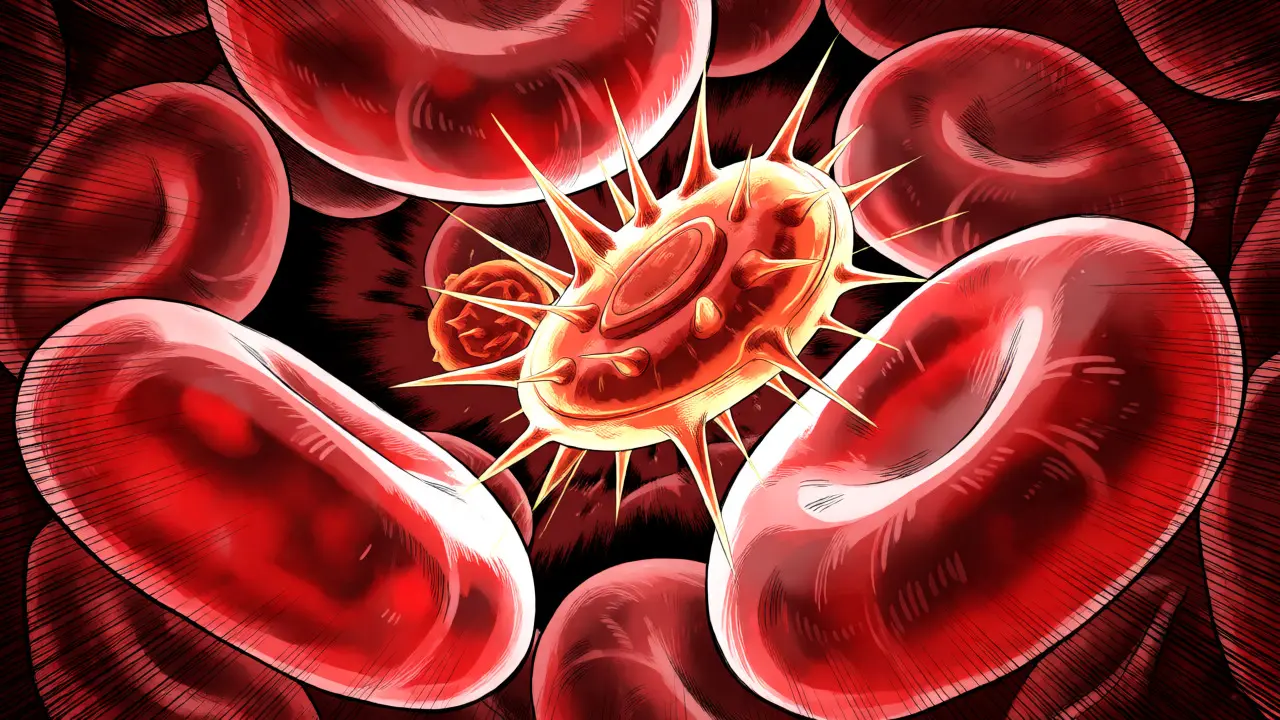
To understand the risk, you have to look at what happens inside your bloodstream. Your platelets are tiny cell fragments responsible for forming plugs when a vessel is damaged. Garlic supplements don’t just slow these down; they interfere with the machinery platelets use to activate. Specifically, ajoene blocks cyclooxygenase (COX) enzymes and fibrinogen receptors on the platelet surface. Think of it as jamming the gears of a car. Once those gears are jammed by garlic, they stay jammed until your body produces new platelets, which takes about 7 to 10 days.
This effect isn’t mild. Studies show that standard doses of garlic supplements can inhibit platelet aggregation by 20% to 40%. For someone not on medication, this might mean slightly easier bruising. But for someone taking warfarin, whose therapeutic window is narrow, this extra inhibition can spike their INR (International Normalized Ratio) by 1.0 to 2.5 points. An INR of 2.5 is often considered safe and effective for stroke prevention. Add garlic, and that number might jump to 4.0 or higher, putting you in a zone where spontaneous bleeding becomes a real threat.
Not All Garlic Is Created Equal
If you’re worried about interactions, you might assume all garlic products carry the same risk. They don’t. The potency varies wildly depending on how the supplement was made. This inconsistency is one of the biggest headaches for doctors trying to assess patient risk.
| Preparation Type | Ajoene Content | Antiplatelet Effect | Bleeding Risk Profile |
|---|---|---|---|
| Garlic Oil Macerate | High (0.5-1.0 mg/g) | Strong | High - Most potent form |
| Powdered Garlic | Moderate (0.1-0.3 mg/g) | Moderate | Moderate - Common in capsules |
| Aged Garlic Extract | Negligible | Weak | Lower - May be safer alternative |
Aged garlic extracts, such as Kyolic, undergo a fermentation process that breaks down much of the ajoene. As a result, they have significantly less antiplatelet activity compared to raw garlic powder or oil. However, even aged extracts aren’t entirely risk-free, especially at high doses. The problem is labeling. Many bottles don’t list the exact amount of active compounds, leaving you guessing. A 2019 FDA warning highlighted that potency can vary up to 15-fold between brands, meaning two identical-looking pills could have vastly different effects on your blood.

Surgical Red Flags: Why Doctors Want You Off Garlic
If you’re scheduled for any procedure-even a simple dental extraction-your surgeon will likely tell you to stop taking garlic supplements. This isn’t overcautiousness; it’s based on hard data. The American Society of Anesthesiologists recommends discontinuing garlic 14 days before surgery. Why so long? Because once your platelets are inhibited, they don’t recover instantly. You need time for your bone marrow to churn out fresh, functional platelets.
Ignoring this advice has led to documented complications. In one case reported in the *Annals of the Royal College of Surgeons*, two patients undergoing laparoscopic colorectal surgery experienced generalized capillary oozing. The surgeons couldn’t see specific bleeding vessels; everything was just leaking. They had to convert the keyhole surgery to an open operation and create temporary ileostomies to manage the situation. Both patients had been self-medicating with garlic supplements without telling their doctors. Another case involved an elderly man who developed a spinal epidural hematoma-a dangerous bleed around the spinal cord-after taking high-dose garlic supplements, requiring emergency laminectomy.
Dental work is another common trap. Many people think, "It’s just a tooth pulling," and keep taking their supplements. But dentists often hold back on prescribing certain painkillers or antibiotics if they know you’re on blood thinners. Adding garlic complicates hemostasis, leading to prolonged bleeding after extractions or implants. If you’re seeing a dentist, explicitly ask: "Should I pause my garlic supplement?" Don’t assume they’ll catch it unless you tell them.
Comparing Risks: Garlic vs. Other Supplements
How does garlic stack up against other popular herbal remedies known to affect bleeding? It sits in the middle-to-high risk category. Ginkgo biloba is generally considered higher risk because it inhibits platelet aggregation more strongly (30-50%). Fish oil, while popular, has a weaker effect (10-20%) at standard doses. Garlic falls between them, but its widespread use makes it clinically significant.
The unique danger with garlic is the lack of supervision. When you take aspirin, your doctor knows you’re on an antiplatelet agent. With garlic, many patients don’t even consider it a "drug." A 2022 GoodRx survey found that 83% of garlic users didn’t know it interacted with blood thinners. This ignorance gap is where accidents happen. Patients continue taking garlic during warfarin therapy, unaware that their INR levels are drifting dangerously high.

Practical Steps for Safe Coexistence
So, do you have to give up garlic forever? Not necessarily, but you need a strategy. If you’re stable on anticoagulants and want to continue garlic for perceived heart benefits, here’s how to manage the risk:
- Talk to your pharmacist: Bring the actual bottle to your next appointment. Labels matter. Look for standardized extracts or aged garlic if you want lower risk.
- Monitor your INR closely: If you’re on warfarin, check your INR weekly when starting or stopping garlic. Even small changes can signal an interaction.
- Pause before procedures: Stop garlic supplements at least 7-14 days before any surgery, including dental work. Tell your provider exactly what you’ve taken.
- Watch for signs of bleeding: Unusual bruising, dark stools, pink urine, or nosebleeds lasting longer than 10 minutes are red flags. Call your doctor immediately.
For those on Direct Oral Anticoagulants (DOACs) like apixaban or rivaroxaban, monitoring is harder since routine blood tests aren’t standard. This makes caution even more critical. There’s no easy way to measure if the garlic is affecting your drug levels in real-time, so conservative avoidance is often the best policy.
The Future of Garlic Regulation
The market is changing. With global sales hitting $1.27 billion in 2022, regulators are paying attention. The FDA is working on draft guidance to require standardized labeling of ajoene content, which would help consumers make informed choices. Meanwhile, manufacturers are developing "ajoene-free" versions to appeal to safety-conscious buyers.
However, regulation moves slowly. Until labels are consistent, you remain the primary gatekeeper of your own safety. The evidence for garlic’s antiplatelet effects is robust, backed by decades of research. Ignoring it puts you at unnecessary risk. Conversely, quitting cold turkey without medical advice might leave you missing out on potential modest blood pressure benefits. The key is communication. Make sure your healthcare team knows exactly what’s in your cabinet, not just what’s in your prescription pad.
Can I eat garlic in food if I take blood thinners?
Generally, yes. Culinary amounts of garlic used in cooking are usually safe for most people on anticoagulants. The risk primarily comes from concentrated supplements, oils, or extracts that deliver much higher doses of active compounds like ajoene than you’d get from a clove of garlic in a meal. Always consult your doctor if you drastically change your dietary intake.
How long should I stop garlic before surgery?
Most guidelines recommend stopping garlic supplements 7 to 14 days before surgery. The American Society of Anesthesiologists suggests 14 days due to the irreversible nature of platelet inhibition. This allows your body enough time to generate new, unaffected platelets to ensure proper clotting during the procedure.
Is aged garlic extract safer than regular garlic pills?
Aged garlic extract typically contains negligible amounts of ajoene, the compound responsible for strong antiplatelet effects. Therefore, it may pose a lower bleeding risk compared to garlic oil or powdered garlic supplements. However, individual responses vary, so it’s still important to discuss any supplement use with your healthcare provider.
What are the signs of excessive bleeding from this interaction?
Look for easy or unexplained bruising, petechiae (tiny red spots on the skin), prolonged bleeding from cuts, frequent nosebleeds, bleeding gums, heavy menstrual periods, or blood in urine or stool (which may appear black/tarry). If you experience severe headache, dizziness, or weakness, seek medical attention immediately as these could indicate internal bleeding.
Does garlic interact with all blood thinners?
Yes, garlic’s antiplatelet effects can enhance the action of both traditional anticoagulants like warfarin and newer direct oral anticoagulants (DOACs) like apixaban, rivaroxaban, and dabigatran. Since DOACs don’t have routine monitoring tests like INR for warfarin, the interaction can be harder to detect, making cautious avoidance or close clinical observation essential.