Imagine reaching for a cup on a high shelf or buttoning your shirt, only to hit an invisible wall. Your shoulder isn't just sore; it feels stuck, rigid, and painfully tight. This is the hallmark of frozen shoulder, medically known as adhesive capsulitis. It is a condition where the capsule surrounding your shoulder joint thickens and tightens, trapping you in a cycle of pain and stiffness that can last years if left unmanaged.
You are not alone in this struggle. Approximately 2% to 5% of the general population will face this issue at some point. For those with diabetes, the risk jumps significantly to 10-20%. The good news? You don’t have to wait out the natural 24-to-40-month course of the disease. With the right mobilization strategies, you can cut recovery time down to 6-12 months. Here is how to understand what is happening inside your shoulder and how to move through it safely.
What Is Happening Inside Your Shoulder?
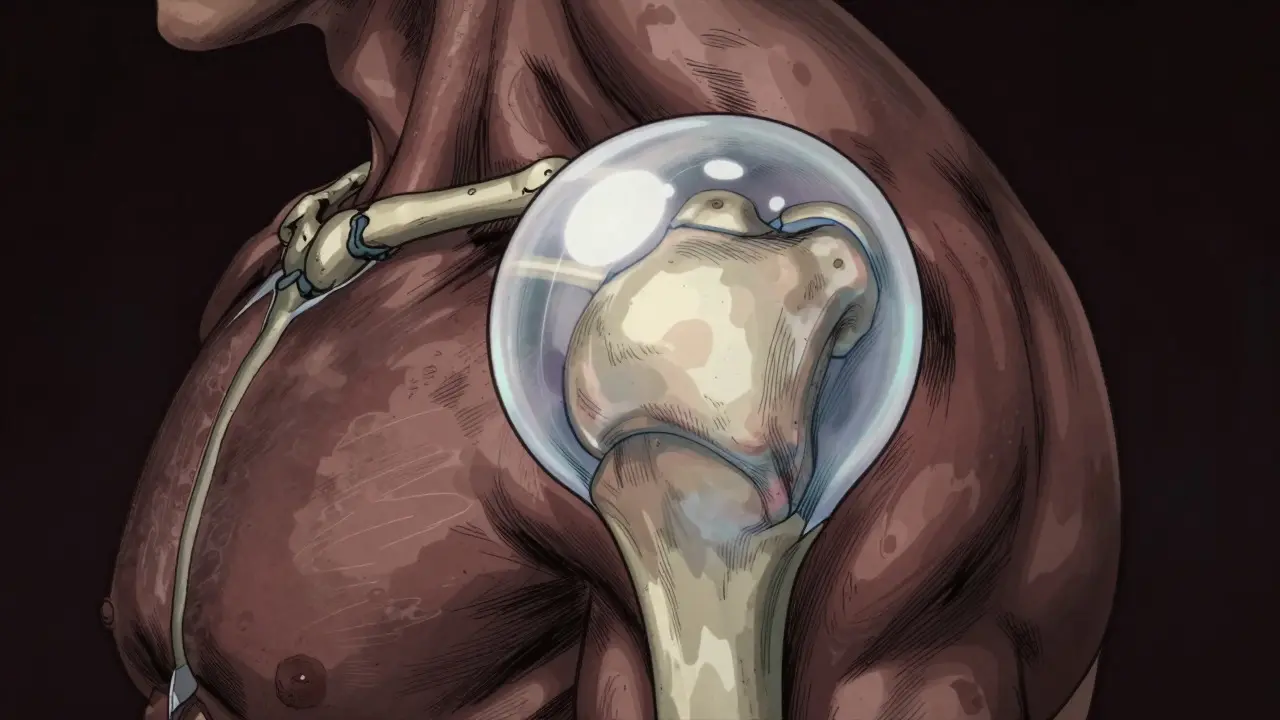
To fix the problem, you first need to understand the mechanics. Your shoulder joint, specifically the glenohumeral joint, is wrapped in a sleeve-like structure called the joint capsule. In a healthy shoulder, this capsule is loose enough to allow full rotation. In adhesive capsulitis, inflammation causes this capsule to thicken and shrink.
Think of it like a balloon that has been deflated and glued shut. Studies from the Hospital for Special Surgery show that during the "frozen" phase, the volume of your joint capsule drops by about 45%, shrinking from a normal 30-35 mL to just 10-15 mL. This physical contraction is what blocks your movement. Contrary to the name "adhesive" capsulitis, actual sticky adhesions are rare. The primary issue is capsular contracture-the tightening of the tissue itself.
This condition follows a specific pattern known as the "capsular pattern." If you notice that your external rotation (turning your arm outward) is the most limited, followed by abduction (lifting your arm sideways), and then internal rotation (reaching behind your back), you are likely dealing with frozen shoulder rather than a rotator cuff tear. Rotator cuff issues usually preserve passive motion (when someone else moves your arm), whereas frozen shoulder restricts both active and passive movement.
The Three Stages of Frozen Shoulder
Frozen shoulder is not static; it evolves. Recognizing which stage you are in dictates your treatment strategy. Jumping into aggressive stretching too early can make things worse, while doing too little later on can prolong stiffness.
- The Freezing Stage (Painful Phase): Lasting from 6 weeks to 9 months, this is when pain is at its peak. Movement hurts, especially at night. The capsule is inflamed. The goal here is pain management and gentle maintenance of whatever motion you still have, not forcing new range.
- The Frozen Stage (Stiff Phase): Spanning 4 to 6 months, the pain may subside, but the stiffness becomes severe. This is when the capsule is most contracted. This is the prime window for more aggressive mobilization techniques.
- The Thawing Stage (Recovery Phase): Lasting 6 months to 2 years, your range of motion gradually returns. Pain is minimal, and focus shifts to strengthening the muscles around the shoulder to support the newly regained mobility.
Mobilization Strategies: What Works and When
Physical therapy is the cornerstone of treatment, but not all exercises are created equal. The American Academy of Orthopaedic Surgeons recommends supervised physical therapy over home-only programs during the freezing phase, citing a 28% faster recovery rate. Here are the most effective mobilization strategies, categorized by their purpose.
Gentle Pendulum Exercises
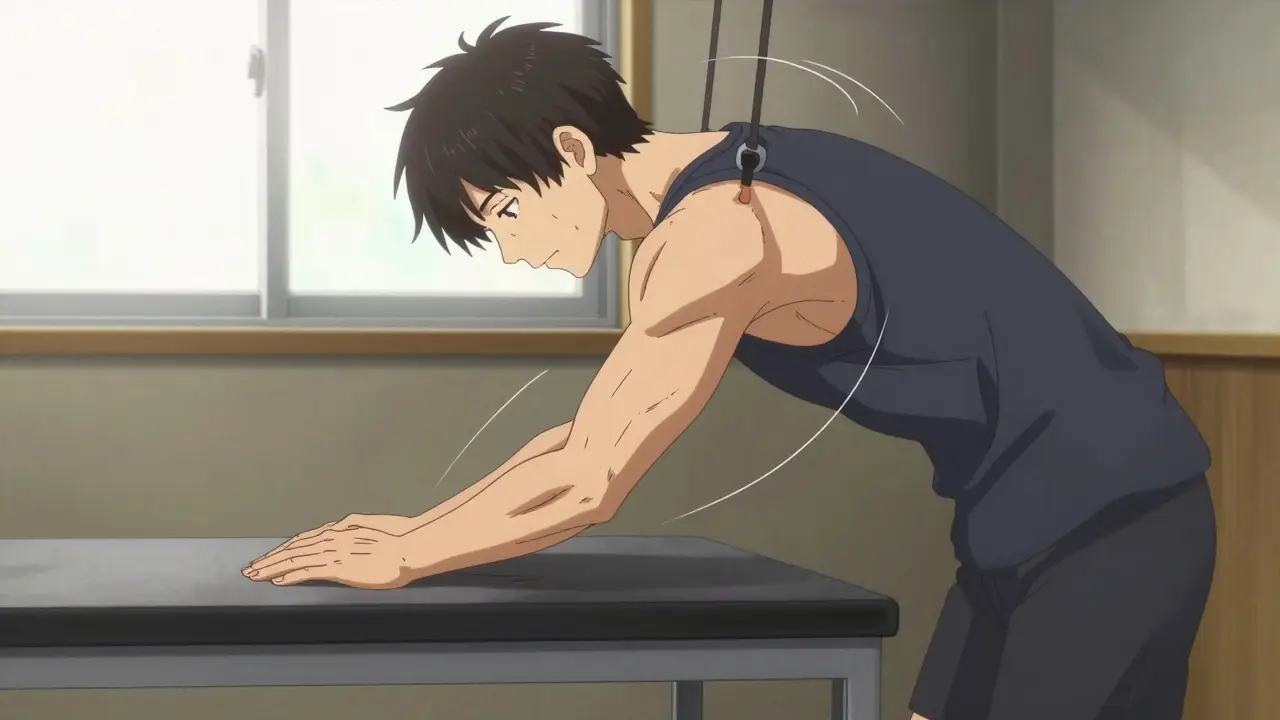
These are ideal for the early freezing stage. Lean forward, letting your affected arm hang loosely like a dead weight. Use your body’s momentum to gently swing your arm in small circles. This helps lubricate the joint without straining the tight capsule. Reddit users in physical therapy communities frequently cite this as the most beneficial early intervention, with many reporting improvements in external rotation after just four weeks of daily 5-minute sessions.
Towel Stretches for Internal Rotation
As you move into the frozen stage, you need to target the axillary recess of the capsule. Hold a towel behind your back with your unaffected hand overhead and your affected hand below. Gently pull the towel up with your good arm to stretch the affected one. This mimics the motion of tucking in a shirt or zipping a swimsuit-functional movements that are often the hardest to perform.
Doorway Stretches for External Rotation
Stand in a doorway with your forearm against the frame at a 90-degree angle. Gently lean forward until you feel a stretch in the front of your shoulder. Since external rotation is typically the most restricted motion (limited by 60-70% in many cases), this stretch is crucial. Start with short holds (15-30 seconds) and repeat several times a day.
Wand Exercises
Using a lightweight stick or broom handle, hold it with both hands. Use your good arm to lift the affected arm forward and upward. This allows you to control the pace and intensity of the stretch, ensuring you stay within your pain tolerance. Dr. John K. Eno from the Hospital for Special Surgery advocates for this "gentle progressive stretching" approach, warning that forcing range too early can exacerbate inflammation.
| Condition | Pain Level | Passive Motion | Key Differentiator |
|---|---|---|---|
| Frozen Shoulder | High (especially at night) | Limited | Capsular pattern restriction (External Rotation > Abduction > Internal Rotation) |
| Rotator Cuff Tear | Moderate to High | Preserved | Weakness is prominent; passive motion remains full |
| Osteoarthritis | Dull, Aching | Limited | Bony crepitus (grinding); history of trauma or age-related wear |
Navigating Pain and Nighttime Discomfort
Pain is the biggest barrier to consistent exercise. About 78% of patients report nocturnal pain that disrupts sleep. To manage this, avoid sleeping directly on the affected shoulder. Instead, try sleeping on your back with a pillow under the affected arm to keep it slightly elevated and supported. Alternatively, sleep on the unaffected side with a pillow hugged against your chest to prevent the affected arm from falling across your body, which stretches the tight capsule.
Heat application before exercises can also be a game-changer. Applying a warm compress for 10-15 minutes increases blood flow and makes the tissue more pliable, allowing for deeper stretches with less discomfort. Many patients find that combining heat with gentle movement reduces pain scores significantly compared to stretching cold tissues.
When to Seek Medical Intervention
While self-care and physical therapy work for most, some cases require medical escalation. Corticosteroid injections are commonly used to reduce inflammation during the freezing phase. The American Academy of Family Physicians notes moderate evidence for short-term pain relief (4-8 weeks), though long-term functional benefits are debated. These injections can buy you the comfort needed to participate effectively in physical therapy.
If six months of conservative management yields no improvement, surgical options like manipulation under anesthesia (MUA) or arthroscopic capsular release may be considered. However, experts caution against premature surgery. Dr. Robert K. Morgan of the Cleveland Clinic advises reserving MUA for stubborn cases, as early aggressive manipulation can cause fractures or soft tissue damage. Always ensure red flags like fever, unexplained weight loss, or night sweats are ruled out, as these could indicate autoimmune or neoplastic conditions rather than simple adhesive capsulitis.
Pro Tips for Faster Recovery
- Consistency Over Intensity: Ten minutes of gentle stretching twice a day is better than one hour of painful forcing once a week. Micro-trauma from overstretching leads to more inflammation.
- Track Your Progress: Use a simple protractor app or mark your progress on a wall. Seeing even a 5-degree improvement can be highly motivating.
- Manage Expectations: Recovery is non-linear. You may have bad days where pain spikes. This is normal. Don’t stop entirely; just scale back the intensity.
- Use Technology: New devices like the FDA-cleared ShoulderROM provide real-time feedback on your range of motion, helping you ensure you are performing exercises correctly at home.
Frozen shoulder is a marathon, not a sprint. By understanding the biology of the condition and applying targeted mobilization strategies at the right time, you can reclaim your mobility. Start gently, stay consistent, and partner with a physical therapist who understands the nuances of adhesive capsulitis. Your shoulder can thaw, and you can get back to living life without limitations.
How long does frozen shoulder last without treatment?
Without treatment, frozen shoulder is a self-limiting condition that typically resolves on its own in 24 to 40 months. However, some patients may experience symptoms for up to 11 years. Treatment can significantly shorten this timeline to 6-12 months.
Is frozen shoulder caused by injury?
Not necessarily. While prolonged immobilization after an injury can trigger it, adhesive capsulitis often develops spontaneously. It is strongly associated with systemic conditions like diabetes mellitus, thyroid disorders, and cardiovascular disease, rather than acute trauma.
Can I cure frozen shoulder with exercise alone?
For many patients, yes. Consistent, guided physical therapy focusing on range-of-motion exercises is the first-line treatment. However, in severe cases or those resistant to conservative care, interventions like corticosteroid injections or surgery may be necessary to achieve full function.
Why is my shoulder more painful at night?
Nighttime pain is a classic symptom of the freezing stage. Lying down can increase pressure on the inflamed joint capsule, and the lack of distraction from daily activities makes the pain more noticeable. Strategic pillow positioning and anti-inflammatory medication can help manage this.
What is the difference between frozen shoulder and rotator cuff tear?
The key difference lies in passive range of motion. In a rotator cuff tear, you may have weakness and pain, but someone else can usually move your arm through its full range. In frozen shoulder, the joint itself is stiff, so both active (you moving it) and passive (someone else moving it) motion are significantly restricted.